
The Roan Highlands 2025
Summer | Southern Appalachian Mountains | North Carolina + Tennessee
From the journal: June 27, 2025 (travel day)
I love thunderstorms. They remind me of fireworks. Not the aesthetic parts, but all the feeling parts. The intensity. Something so demanding and powerful it cannot be ignored. I’m experiencing a thunderstorm this evening in a tent as I lie on my back underneath a canopy of mature trees at Roan Mountain State Park in Tennessee.
I woke earlier today at 2:00am to travel from my home in Virginia to Roan Mountain. It’s now 2:00pm. I’ve arrived and setup camp but I’m a zombie, incapable of anything meaningful. Twelve hours seems to be my hard cap at this age! This whole thing–the travel and the nighttime driving–it was all so much easier when I was younger, a change I’m still working to accept. Worn down and dysfunctional from the long drive, I lie inside my tent drifting on the edges of sleep. It’s an early summer afternoon outside, right on the boundary of too warm for comfort inside of the tent.
At 7:00pm I wake from my eventual drift. I can feel a change in the atmosphere. The open screens on either side of my tent are letting in a soft breeze. The green leaves above are shimmering, showing their lighter undersides. A small stream about fifty yards away flows, perhaps a bit stronger and louder than upon my arrival. Children continue to play within the campground but the sky flashes bright several times with implied urgency. Shortly thereafter, the air splits violently, a loud warning. I can feel the thunder through the ground when it hits. It’s pure atmospheric energy.
From a distance I hear the sound of a stiff wind coming, but not a leaf flutters on the trees outside of my tent. My brain connects the dots: rain. Fat heavy drops hit the canopy I’ve erected above my tent. I’ve always loved this moment, the barrier between me and the natural world minimal yet sufficient, nothing more than a few millimeters of fabric. I’m dry and comfortable, laying atop a four-inch-thick foam and cotton mattress, ready and eager to experience this sensory gift of life. It rains. Hard.
The sound of water falling in a forest is loud, chaotic, and drowning, yet still pleasant, for me. Beyond my shelter I can hear it striking the leaf canopy, dripping, pooling. I can hear the roar of the nearby stream growing. There are no longer any sounds from neighboring campers or children playing. Nothing beyond the rain exists in the moment; the illusion of being alone in the forest made complete by the storm. I just lie and listen. To hell with a phone app and artificial “green noise.” This is the real thing. And it’s wonderful.
Eventually, the rains stop just as quickly as they came. Sounds of life return: play, cars, campfires. The smell of food being cooked. The blink of fireflies light the darkening air as night advances.
Today, before I setup camp, I drove to the top of the mountain. I saw the destruction of Hurricane Helene. It was my first time up into the Southern Appalachian Spruce-Fir Forest atop Roan High Knob since the storm last year. Typically, this habitat is a place of immense mystery and magic, for me. A dark place often existing within low cloud. A place characterized by moisture, moss, fog, and the sweet smells of Christmas. Today, I found a place upside down. It was jarring. Sunlight was bright and plentiful. Where the forest once stood dark and mysterious was only downed timber and drying soils. Logging operations were active. It was hot and bright. Just too much of everything. The magic, for me, was absent. The place was right before me, as real as the rain on my tent as I write this, but the spirit I had associated with the landscape was gone, absent. Will it recover? Will this place regain its magic?
My primary feeling in the moment was regret. I knew that this habitat—these high-elevation Spruce Fir forests—were special. Yet, I didn’t prioritize their story behind my lens. I went to these forests—this mysterious cloud forest—and pulled from the magic I found therein. I sheltered in its beauty. But rarely did I pull my camera and work the place. They say you don’t miss something until it’s gone. I wonder, will this return? Will I?
I don’t know if I’ll be able to slip back into sleep so soon after my extended afternoon siesta, but I place the pen atop my journal, set my alarm, and power down the string lights hanging from the ceiling of my tent. Tomorrow is my first ascent of the grassy balds atop Roan. It will begin in the complete darkness of early morning. I’ve done this hundreds of times. It feels familiar. However, I’m at that interesting intersection in life where the confidence of my youth is waning and the unsurety of age is advancing. Everything that was once sure is suddenly more unpredictable and unknown. What happened? Is aging some graceful acceptance of the increasing unknown?
Tomorrow morning is day one, one foot in front of the other. Building new habits. Reorienting my mind and body towards task. Finding beauty in the landscape. Connecting myself. Visually communicating. This is the work. This is the dream.
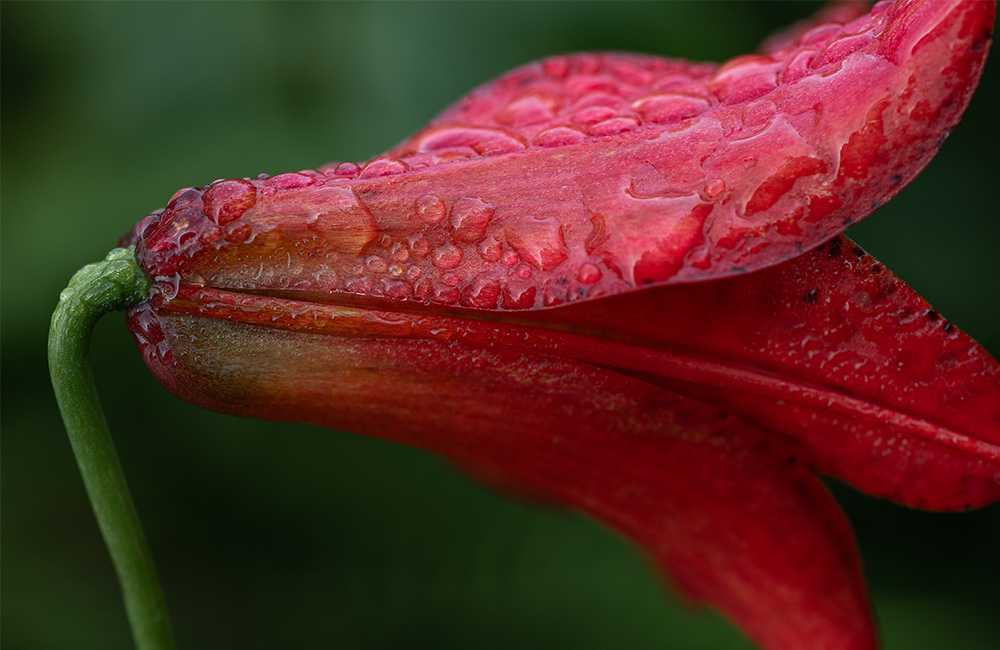
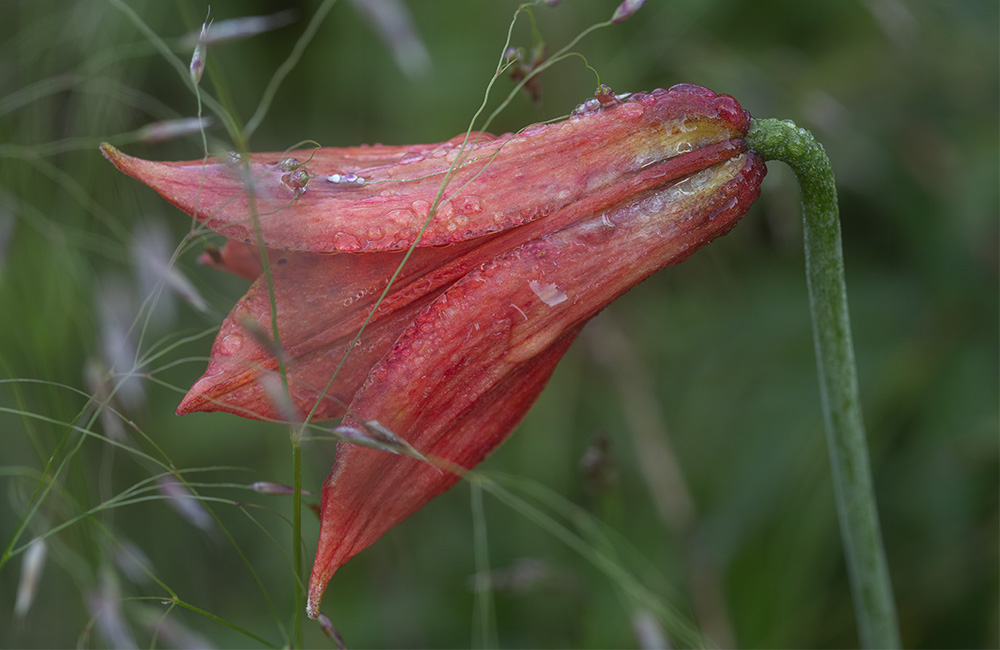
(Above): The rare Gray’s Lily (Lilium grayi) wildflower.
From the journal: June 28, 2025 (day one)
I want to know place more fully; to round out my portfolio and my knowledge with increasing depth. Experiential depth. I do not wish to constantly chase new places, to lick only the very surface of things. So, the way I practice photography is to return to the same places over and again. I repeatedly demand introspection from myself: why this place, this landscape?
For nearly twenty years I’ve travelled to the Roan Highlands in mid-June for the annual Catawba Rhododendron bloom. During these trips, I’ve worked hard to find powerful compositions but I’ve also become, by necessity, somewhat passive in the process. For the compositions to reach their full potential, I require the weather Gods to punch my ticket. And I’ll be damned if it hasn’t happened a few times! The resultant attention on these “trophy” images has been outsized. My business reinforces this big game strategy of landscape photography. As the photographer, I’ve never been sold, however. This is not how I want to experience place. A few exceptional shots always fail to represent the richness and diversity of the natural world (and the experience), for me. What opportunity costs am I forefeiting to capture the few? Is this what is required to be a top-tier photographer of the landscape?
I find myself approaching the landscape–the places I love–not only during moments of high fashion but also during the more authentic moments of casual everyday beauty. The real place. The messy bits and imperfections. The rough edges. The same scenes and compositions but without the obscenly beautiful light or the perfectly peak blooms or the mysteriously captivating atmospherics. Don’t get me wrong, I crave these peak moments within place. But, the question I’m turning for myself of late is, can I still recognize beauty and the integrity of place without perfect conditions? Can I translate these things behind the lens? Will anyone respond? How can I push forward photographs of understated beauty with the same impact as the moments of peak conditions? What does a photograph made with curiosity and shared with humility look and feel like? How does it differ? Are these even the right questions?
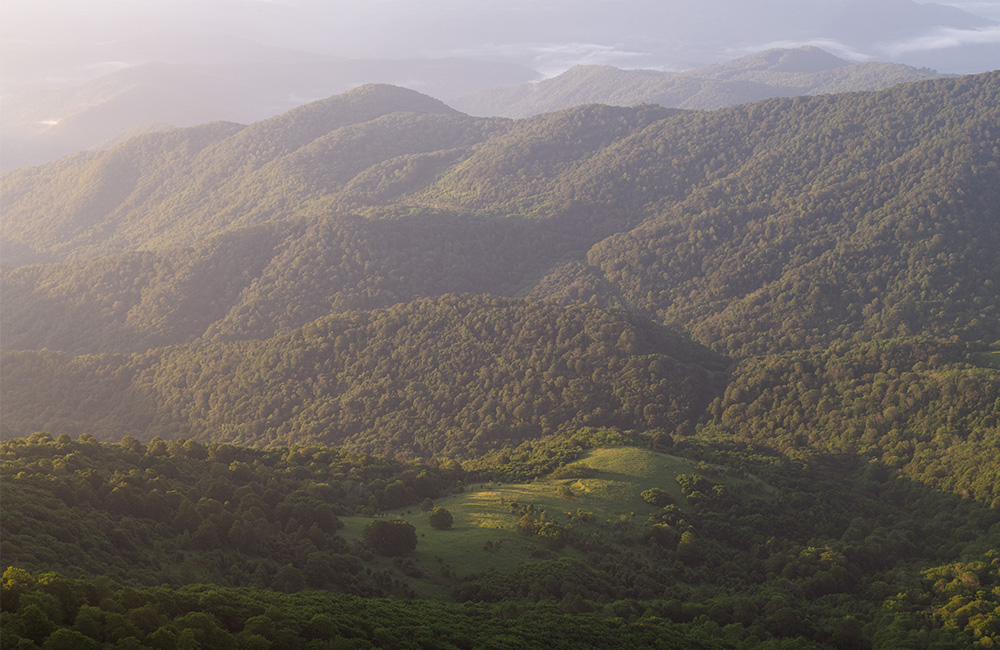
(Above): Viewing east / southeast from the saddle of Grassy Ridge Bald in the Roan Highlands.
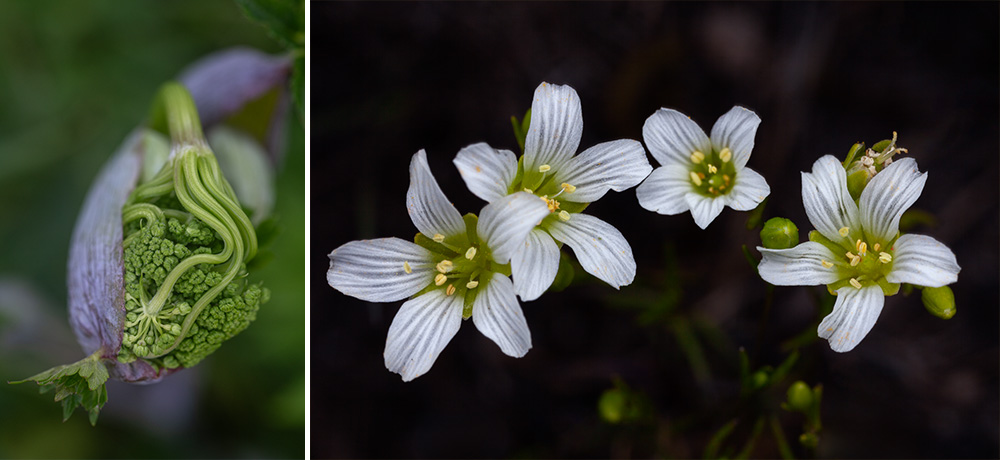
(Above left): Mountain Angelica. (Above right): Greenland Sandwort.
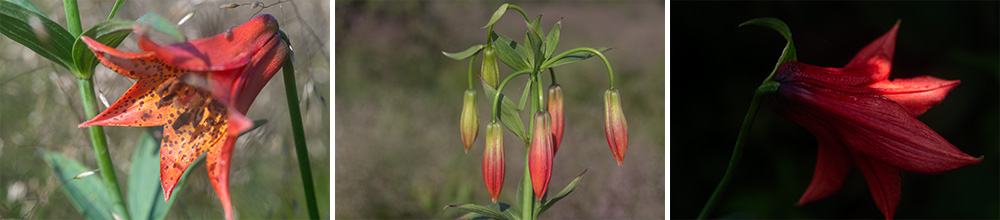
(Above): Gray’s Lily flowers and buds within the grassy bald habitat.
From the journal: June 29, 2025 (day two)
I’m best with a narrow focus. At Roan, my options are neatly defined. From Carver’s Gap north via the Appalachian Trail lie the grassy balds. Open vistas. Good vantages for busy skies. Rare wildflowers: Gray’s Lilies, Greenland Sandwort, and Three-Tooth Cinquefoil, to name a few. Lots of hiking. To the south of Carver’s Gap, via either the Appalachian Trail and/or the paved access road, high-elevation Southern Appalachian Spruce-Fir habitat, a cloud forest. This is the most endangered forest-type of the Southern Appalachians—and the highest quality stand remaining. Spreading Avens and Roan Mountain Bluets, two federally endangered plants can be found here. Mossy, damp, moody forests. And below Carver’s Gap, the state park and campground. Rosebay Rhododendron, ghost pipes, and all assortment of humid hiking and fungi. This is the gameboard. My job is to navigate the board during unknown and unknowable conditions to tell the most compelling story of place.
This morning, I walked north on the Appalachian Trail from Carver’s Gap up onto the grassy balds. Clear, dark, star-filled skies gave way to increasing fog and low cloud. Moisture thick within the air. I stopped short of Grassy Ridge, opting to view first light from the backside of Jane’s Bald.
There’s a phenomenon in the Southern Appalachians where low cloud sinks and inverts, hugging the treetops while moving across the mountainous landscape like a flowing atmospheric stream. It’s captivating to witness and it happened for me this morning. As the sun poked above a low-hanging horizon-level cloud, the entire mass began to thin and move, following invisible air currents up and over the gap in front of me. The whole thing occured in less than a couple minutes—maybe five exposures on the camera. Situated atop a high peak, my position was quickly swallowed by cloud. Visibility zero. The moment passed; a bit of Roan magic. Did I capture it? Was I in an optimal position on the gameboard this morning?
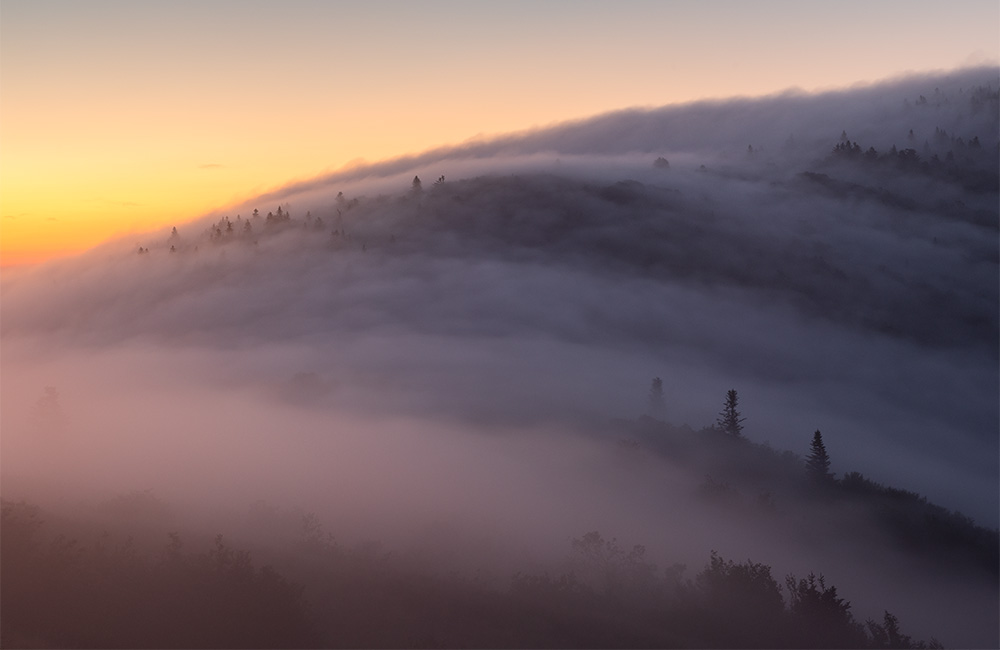
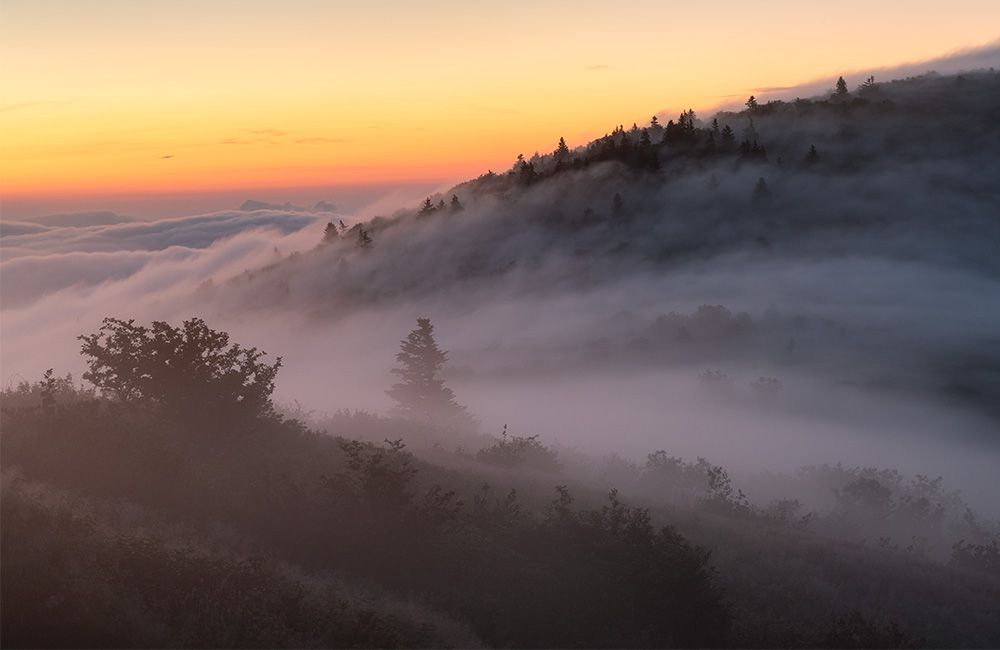
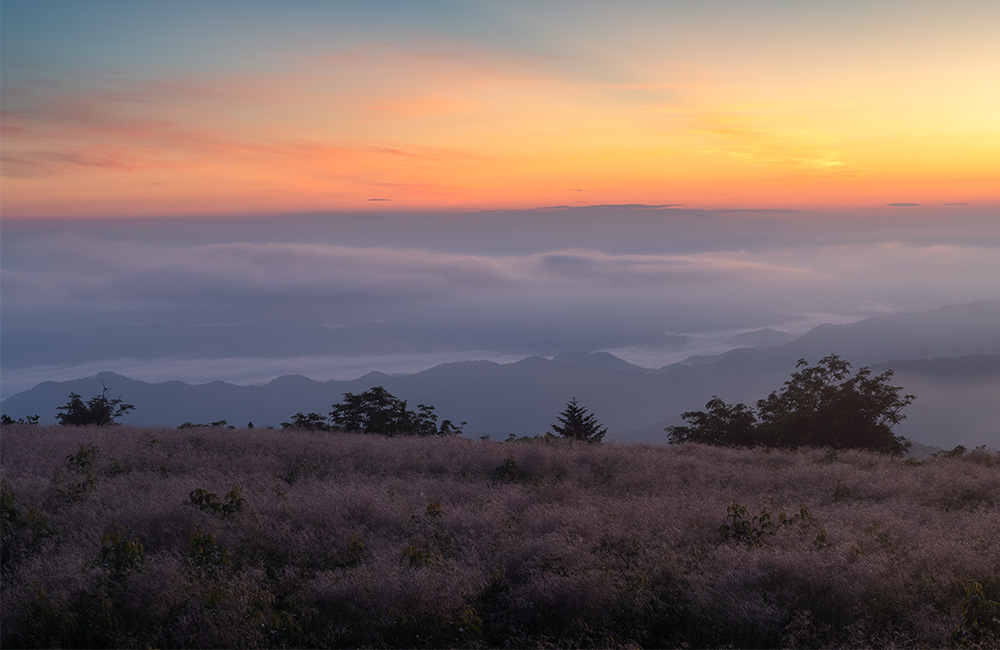
(Above): Sunrise from Jane’s Bald during a cloud inversion.
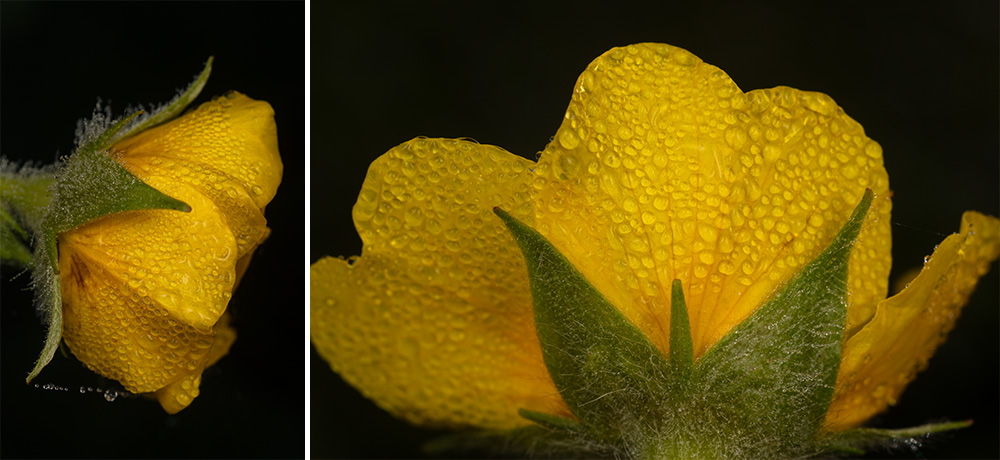
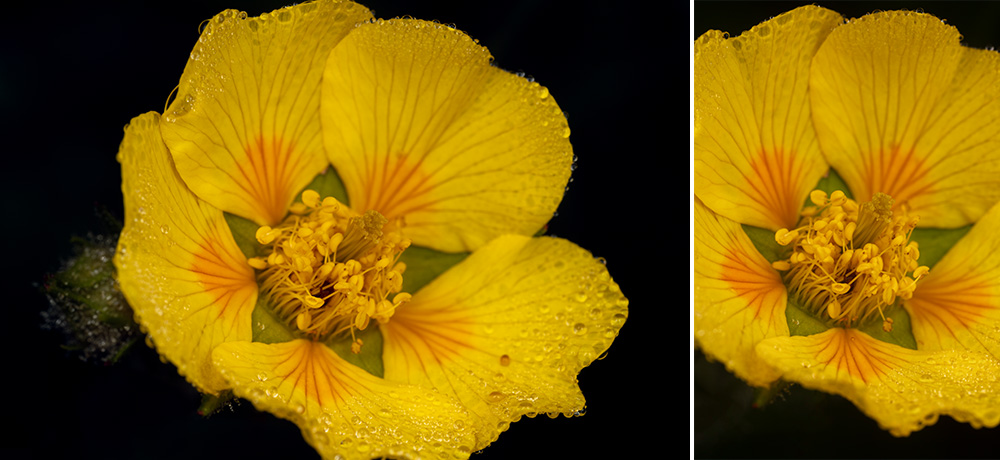
(Above): Spreading Aven wildflowers, federally endangered species.
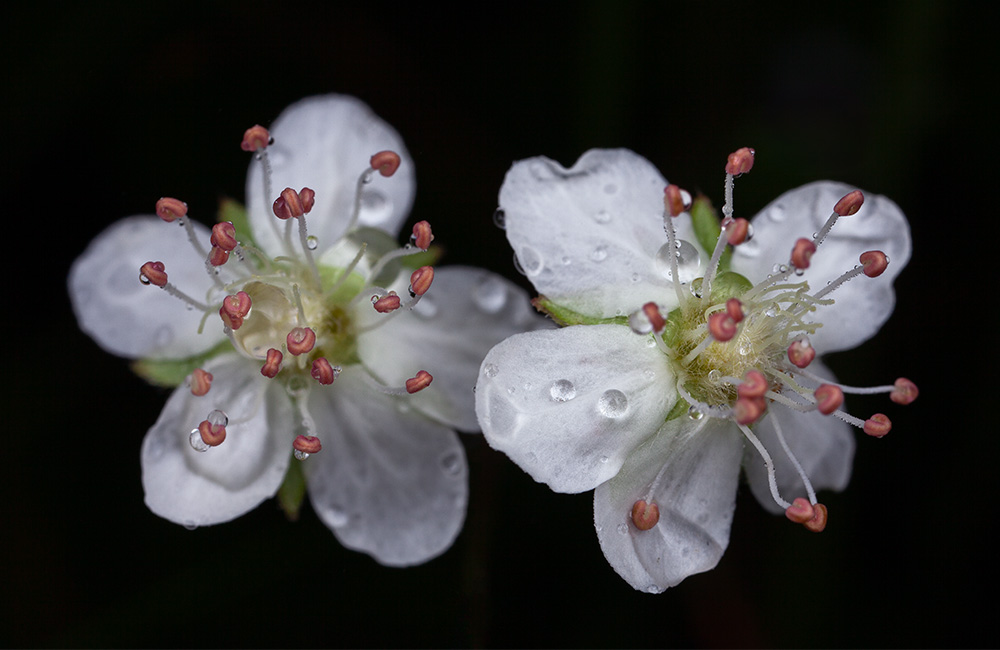
(Above): Three-Tooth Cinquefoil wildflowers within grassy bald habitat.
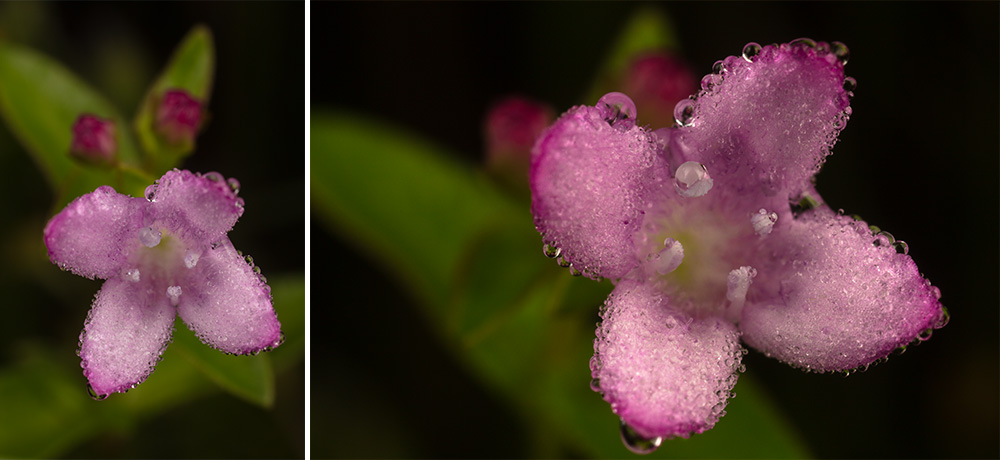
(Above): Roan Mountain Bluet wildflowers, federally endangered species.
From the journal: June 30, 2025 (day three)
Legs tired. Muscles sore. Energy low. Shoulders tired of pack weight. The routine is becoming, well, routine. Up at 3:30am. On the balds by 4:00am. Climbing by torch under skies dark and heavy with stars. Not a bad way to begin the day: active, inspired, and hopeful.
Another relatively cloudless sky this morning presents the rare opportunity to watch the sun crest the high peaks from atop the balds. I setup on a cluster of large stones within the long grasses atop Grassy Bald facing generally northeast, viewing out towards Grandfather and Hump Mountain. As I wait patiently, a small family of deer work up the open balds and join me. They regard my presence with curiosity but not much caution. Their company is welcome. We spend the better part of a half-hour together, the shutter and mirror my only sounds; the soft rip of grass and grazing theirs.
The grassy balds are wet with dew on this morning. The long grasses and overgrown foliage paint my clothing with excess water. Waterproof boots become a liability when moisture enters from above. I slosh forward. By the time I pass through the overgrown trail on the backside saddle of Grassy Ridge, I’m soaked through and through. No different had I jumped fully clothed into a river! It’s uncomfortable, but it’s the price of admission this morning.
I take my time on the bald following sunrise, which is not easy as I’m soaking wet and relatively cold at elevation. I work Grassy Ridge with the macro lens. This landscape hides so many treasures for those who seek them. By the time I make it back to Carver’s Gap I want nothing more than to kick off my wet boots and socks. The sun is high in the sky now. I sit in the truck bed drying my bare, pruned feet and heavy boots. The parking area is filling with morning hikers. It’s only just after nine in the morning and I feel I’ve already squeezed an entire day’s worth out of this morning’s adventure. It’s a familiar and satisfying feeling.
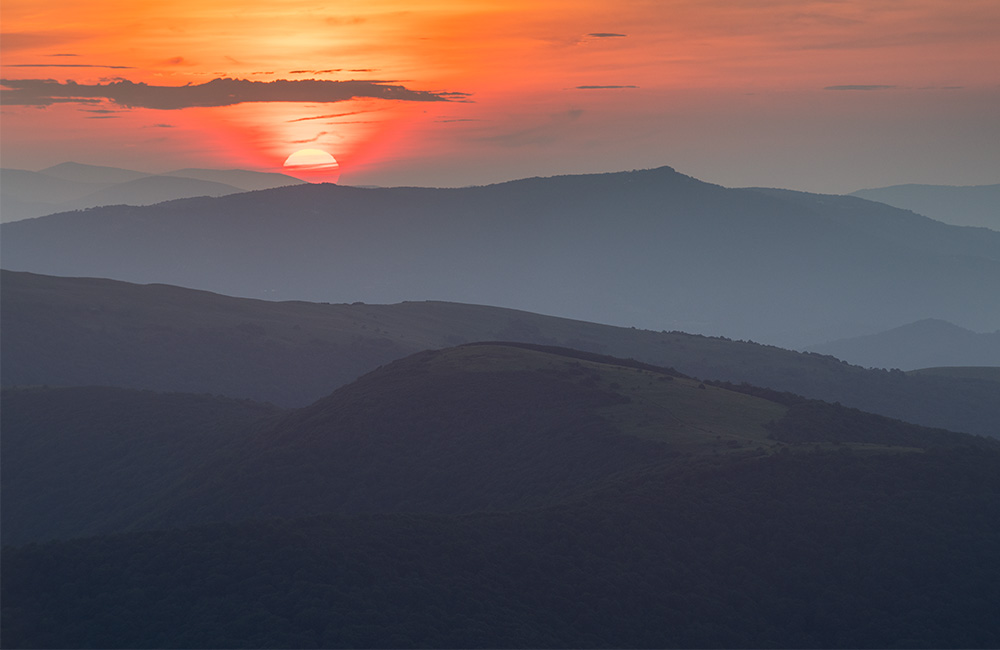
(Above): Sunrise from Grassy Ridge Bald in the Roan Highlands.
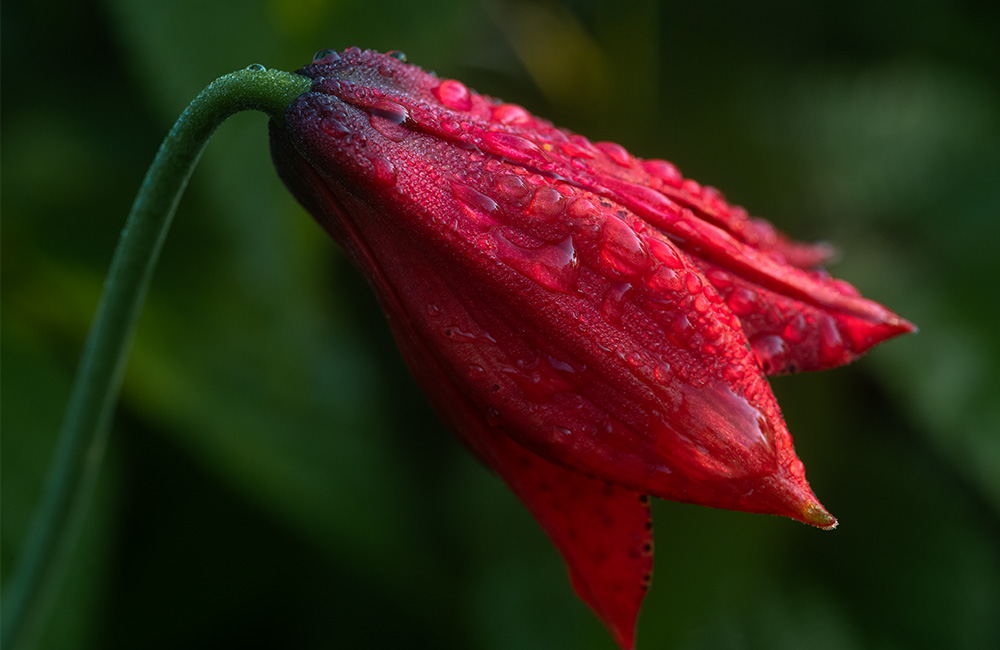
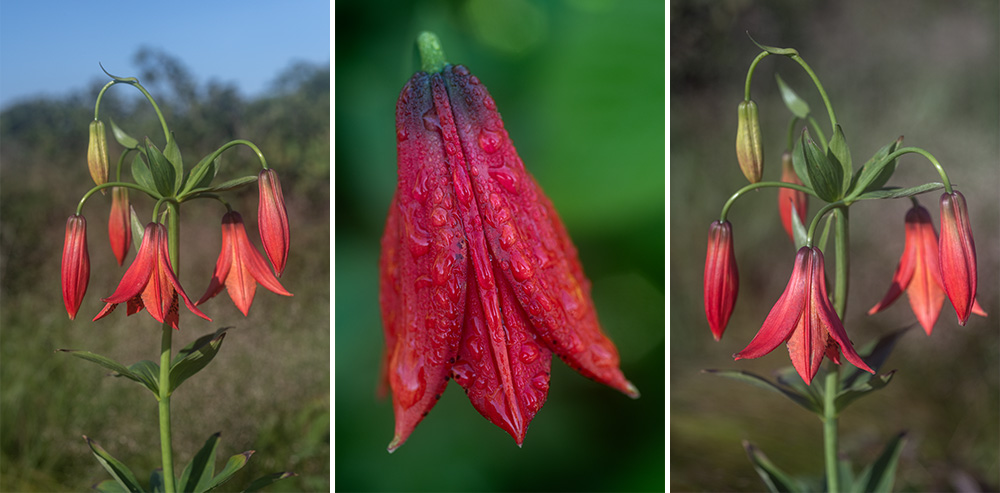
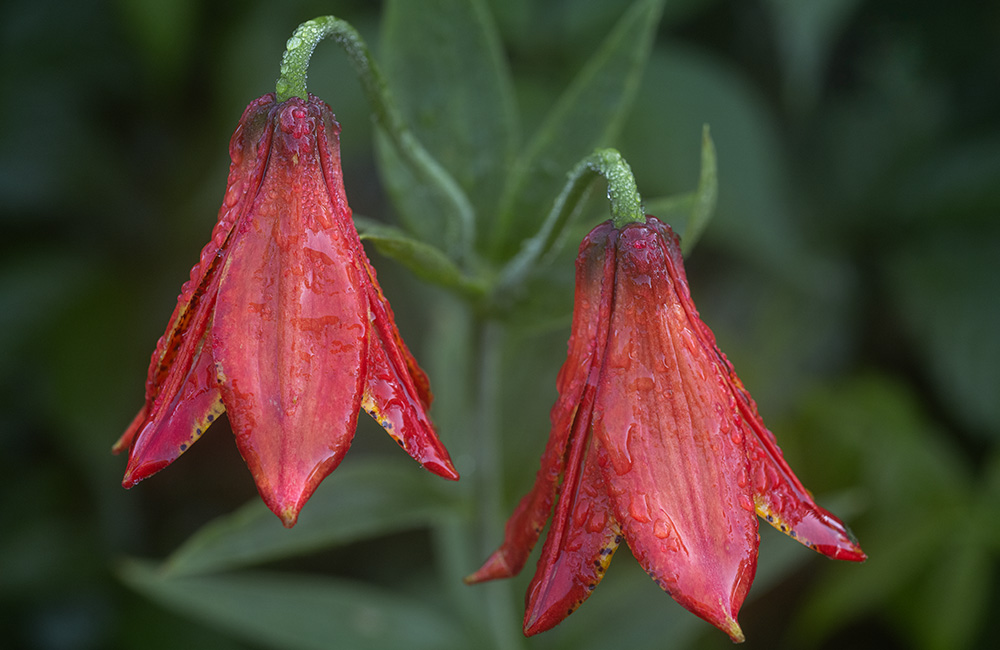
(Above): Gray’s Lily wildflowers within grassy bald habitat.
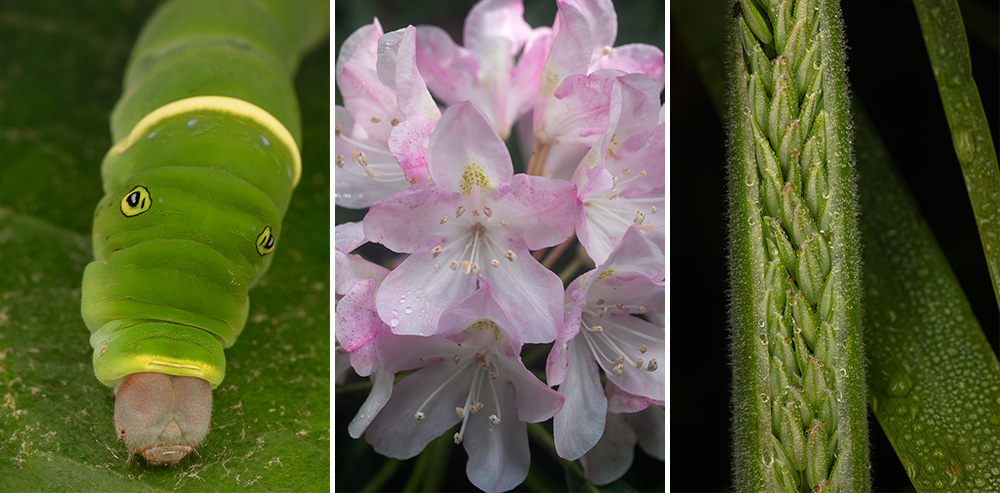
(Above left): Swallowtail caterpillar. (Above center): Rosebay Rhododendron blooms. (Above right): Grass with morning dew.
From the journal: July 01, 2025 (day four)
Several failed starts—an evening session on Round Bald and another morning on Jane’s Bald—leave me reevaluating strategy. My boots are still soaking wet; I need rest and sunlight!
I spend time wandering around in the Southern Appalachian Spruce-Fir Forest, damaged as it remains from Hurricane Helene. I’m not very productive behind the lens. I simply don’t know how to photograph this habitat, but I do know that time spent in place is the foundational move towards figuring it all out.
Smell is the first thing I associate with the Southern Appalachian Spruce-Fir Forest. It’s sweet. Luxurious. Strangely fresh. For lack of a better descriptor, these forests smell like Christmas to me.
The forests are dark, always. There are no broad leaves to reflect the light above, only dark needles. Whether canopy, cloud or fog, light doesn’t penetrate deeply. When light does squeeze through, it’s often in beautiful rays and shafts made tangible by thick moisture in the air.
The trees are dark too. Green, moss-covered roots criss-cross shallow about the ground, intersecting and connecting in chaotic patterns. Leafless branches reach dark, naked, moss-drenched arms in all directions. Moisture drips. When visible, the bark of these trees tends reddish in color.
It’s quiet here. The forest floor is a plush mat of fallen needles threading through lush beds of green mosses. I hear few birds; see little wildlife. There are no fallen leaves to crunch underfoot. Damp branches are more elastic than brittle; they don’t snap underfoot. Carpets of moss serve as sound dampening. Wildflowers are limited and occur mostly on edges and near openings. Rare plants hang onto cliffsides or crowd into grassy openings, enduring hardship for access to light and other resources. What does thrive within the forest, however, is fungi. Orange and gray and brown, taking advantage of the moisture and the darkness, I assume.
Spiders live within the forest too. The moisture-laden air illuminates their webs with intricate beaded designs resembling twinkle lights. While hardly representing the special nature of this habitat, these dew-laden spiderwebs have been a bright spot for me behind the lens. I’m otherwise without plan. I spend time learning.
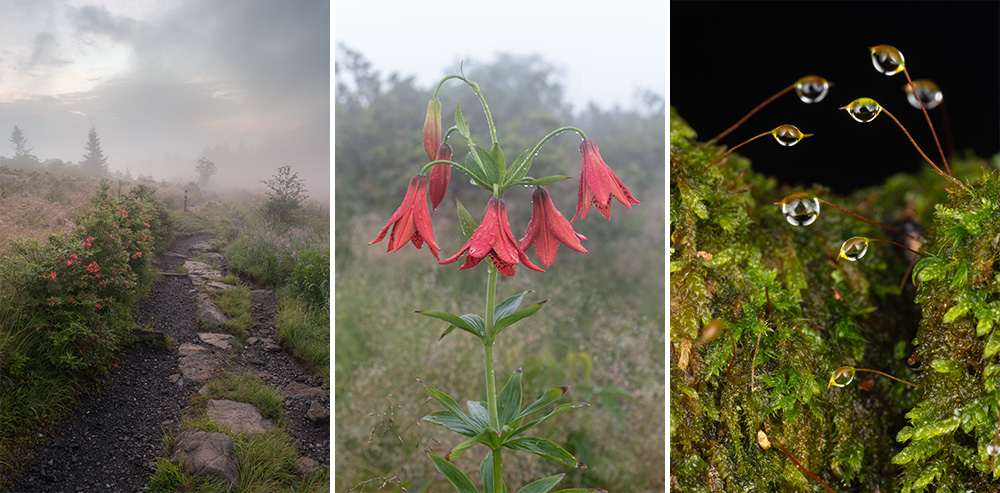
(Above left): Appalachian Trail Engine Gap. (Above center): Gray’s Lily wildflower. (Above right): Moss spores.
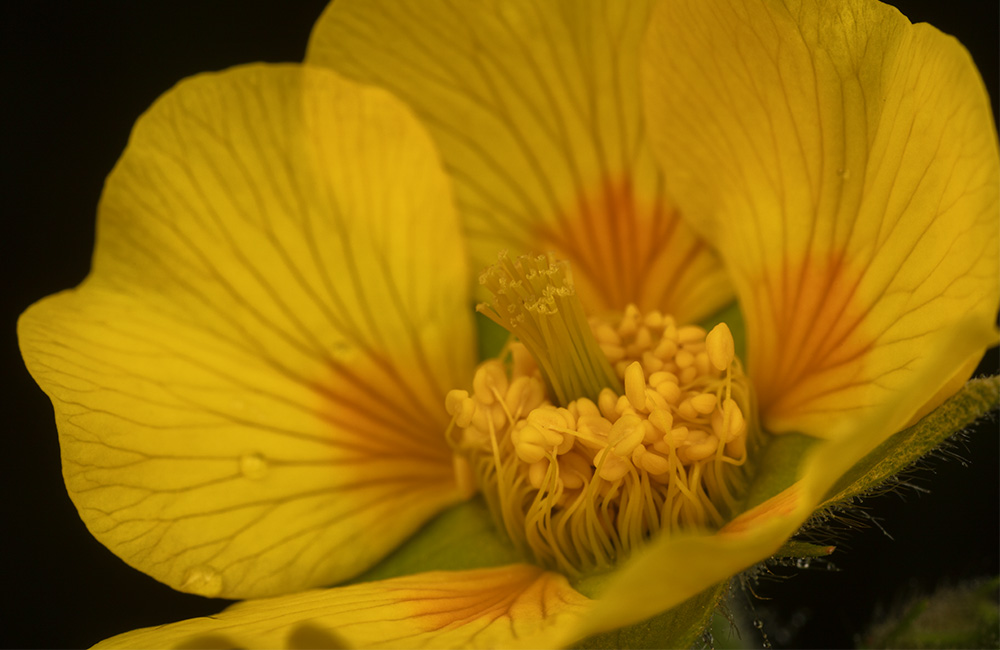
(Above): Spreading Aven wildflower, federally endangered species.
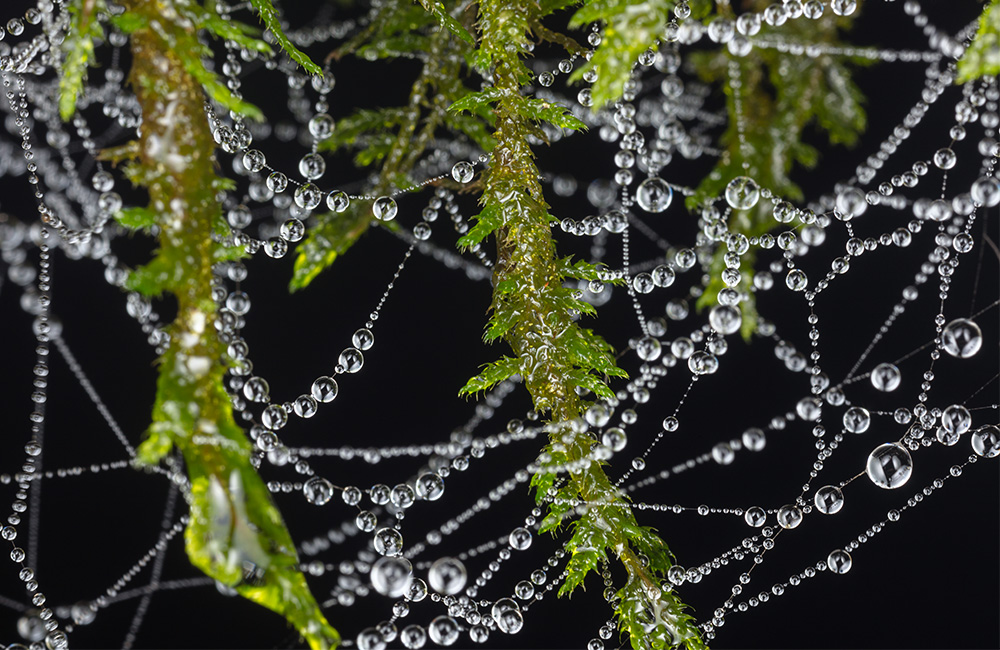
(Above): Spiderwebs collecting moisture and dew, Southern Appalachian Spruce-Fir cloud forest.
From the journal: July 02-04, 2025 (day five-seven)
The morning of July 2nd my feet make the choice for me. My boots (two pairs) have been wet for days. I can’t bring myself to put dry, comfortable feet back into them! Heavy rains overnight made for wonderful sleeping conditions in the tent. On the other hand, the wet, grassy balds just got even damper. I forego my daily hike up the grassy balds and instead drive up to the formal gardens and Roan High Bluff. I’ll pick up details behind the lens today: spreading avens, roan mountain bluets, wildflowers and grasses. And I think, afterwards, I might take a zero-day afternoon. I need to kick my feet up and rest. I’ve got a good book waiting at camp and I’m looking forward to the downtime.
The mountain is moody. There’s no way to predict its feelings without showing up. It’s like that with many high places, I think. They are independent. Apart. Special. My 4:00am start up the Appalachian Trail on July 3rd starts with clear, starry skies. No clouds rest on either horizon. But the winds have shifted, I think. It’s the coolest morning thus far, maybe fifty degrees and breezy. By the time I climb up Jane Bald, visibility is near zero. Cloud or fog, it doesn’t much matter. The contours of the mountain have become only an idea. Sunrise comes and goes without notice, lost to the cloak.
At this point in the trip, my back is giving out. I’ve been running this past week as if I’m twenty-three and not forty-three. It’s only discomfort at this point but the warnings are clear. This is the difficult part of aging for me: learning to identify and respect the constantly shifting boundaries. What’s possible, and not? Where can I push, and when should I abide?
A quick drive up to the Southern Spruce-Fir forests finds surprisingly clear conditions after the morning fog-out on the balds. Macro proves productive with heavy dew droplets clinging to the rare wildflowers in this area. I focus my lens on the Spreading Avens. I think I read somewhere that they are in the Rose family?
Tomorrow morning kicks off the holiday weekend. I expect increased traffic and visitation. I’ll have to skirt around the margins, find my moments. I need relative solitude to create. It’s been a good week.
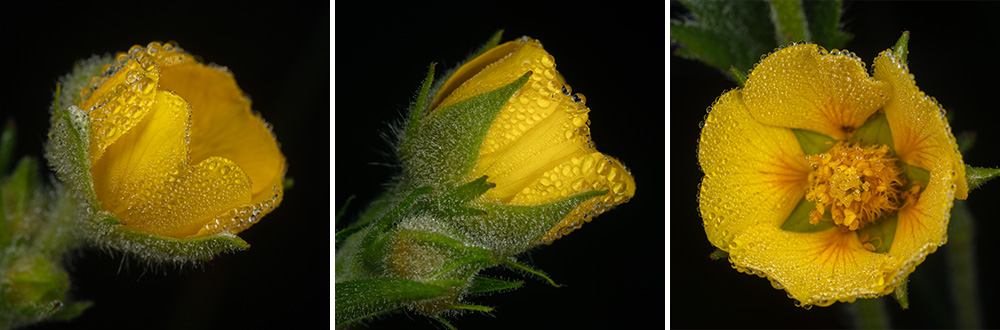
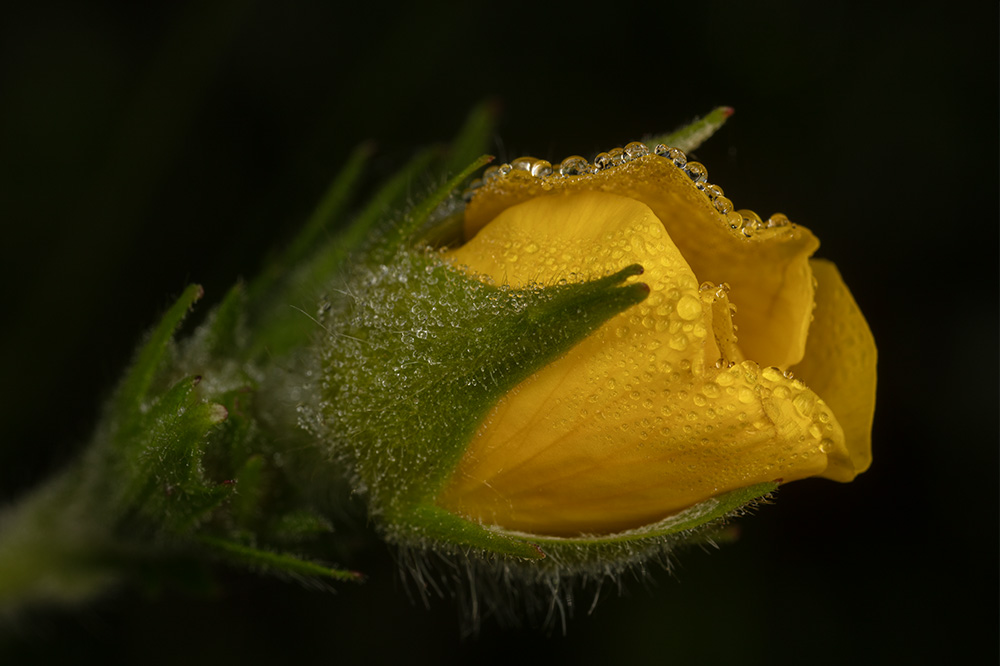
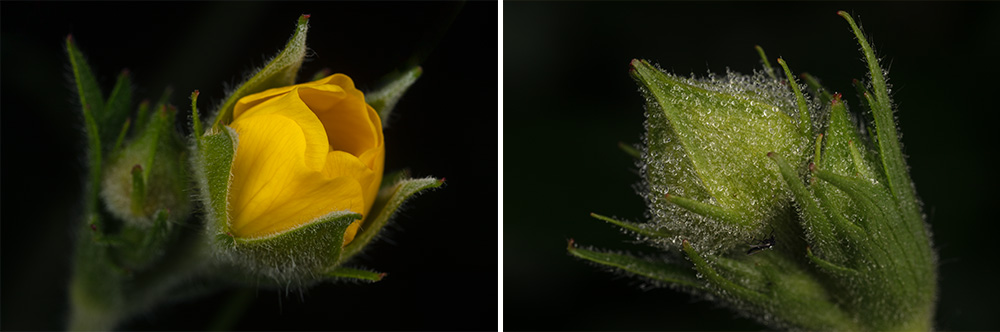
(Above): Spreading Aven wildflowers, federally endangered species.
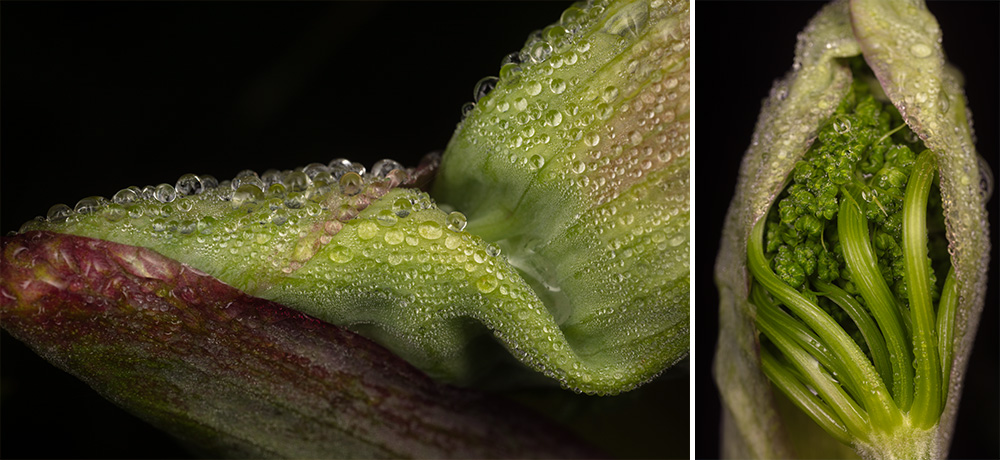
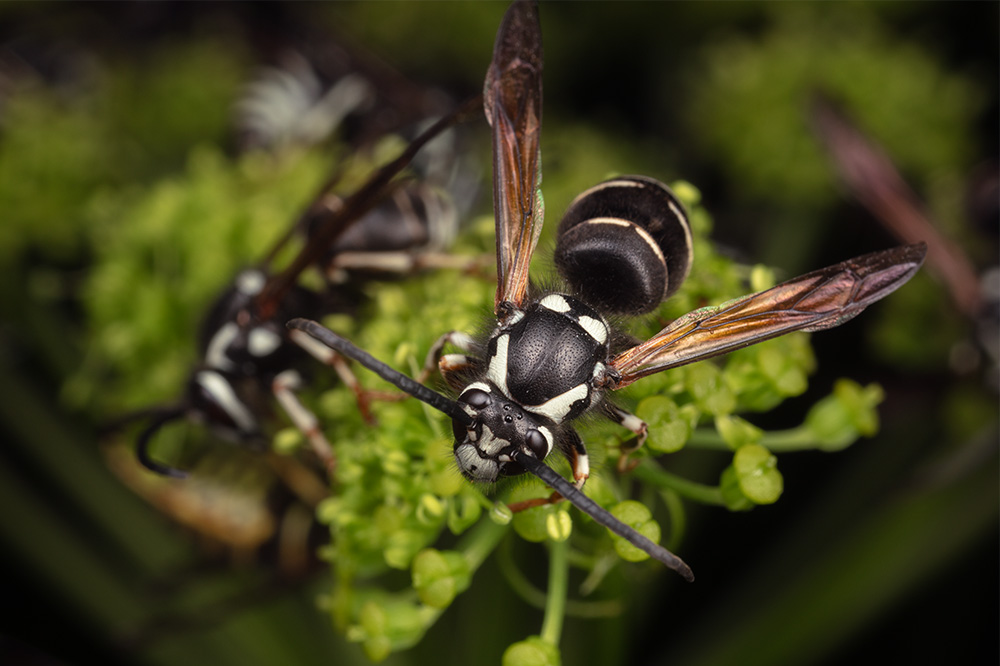
(Above): Mountain Angelica and Sweat Bees drunk on nectar, Roan High Knob.
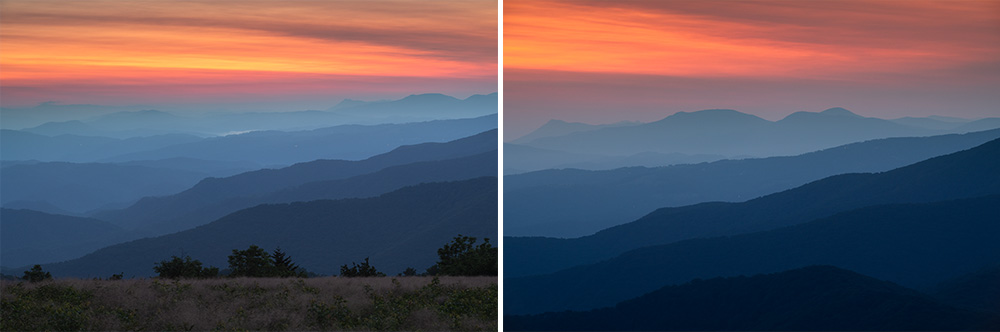
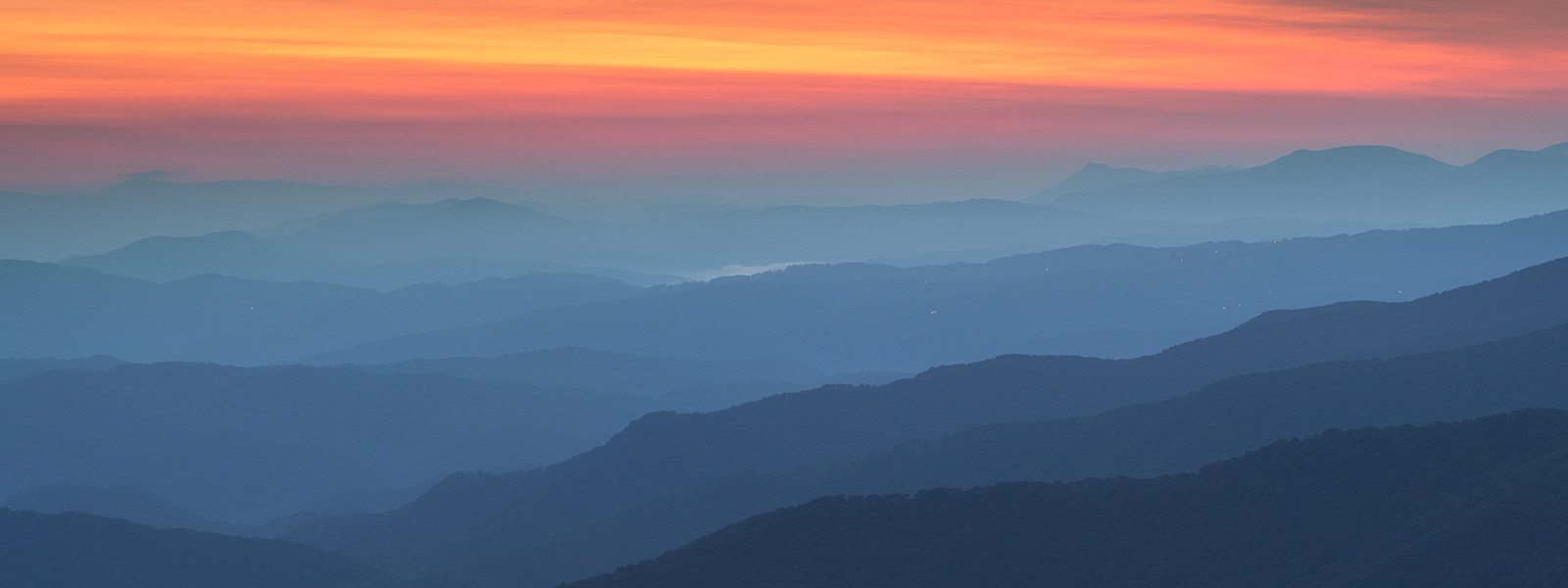
(Above): Sunrise ridges from Round Bald, Roan Highlands.
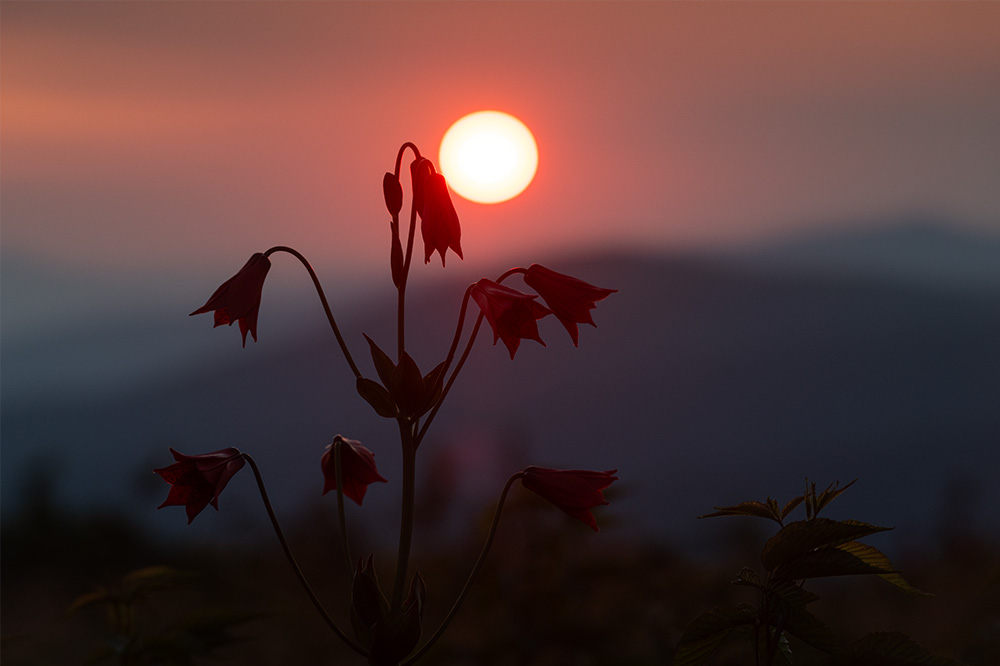
(Above): Sunrise Gray’s Lily wildflowers.
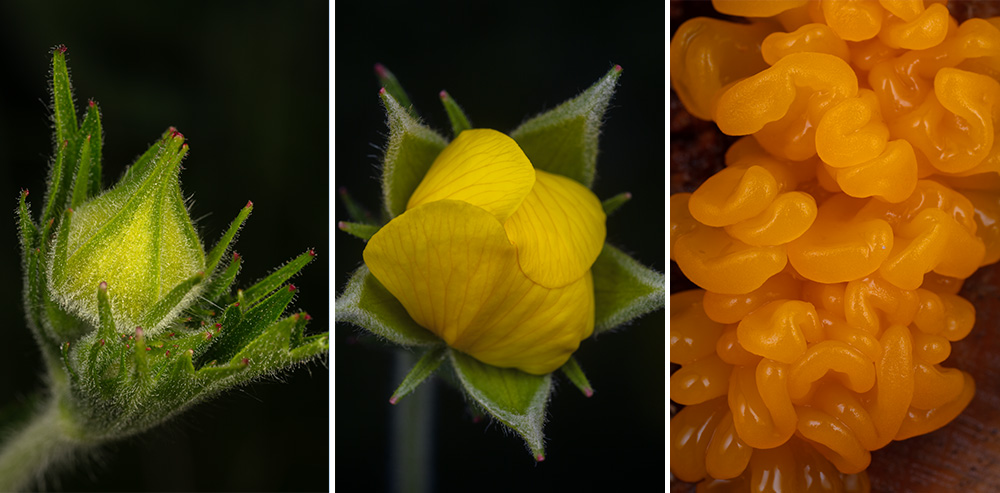
(Above left + center): Spreading Aven wildflowers. (Above right): Witches Butter fungus.
0 Comments