The Blue Ridge Parkway (BRP)

The Blue Ridge Parkway is a green corridor of forested, sinuous roadway connecting Shenandoah National Park in Virginia to Great Smoky Mountains National Park in North Carolina.  It is the longest linear park in the United States at 469 miles.  The long length–and the lack of gates and boundaries–gives the Blue Ridge Parkway a feeling of expansiveness that is different from most National Park units.

The Blue Ridge Parkway is well known for its views–the overlooks.  For me, however, the defining characteristic of the Blue Ridge Parkway–and of the Southern Appalachian Mountains–is biodiversity.  The southern section of the Blue Ridge Parkway, in particular, is where the roadway passes through some of the most biologically diverse regions in the temperate world.  Biodiversity is observed in the Southern Appalachians through plants and trees, and is visually represented through the enormous variety of colors, shapes, blooms, flowers, and leaves.  I attempt to represent this diversity and richness with my photography.

My centers of gravity when working the Blue Ridge Parkway are the federal campgrounds placed directly along the roadway.  These campgrounds are where I base my operations, and where my photographs often center and radiate outwards from.  At this time, most of my images are from the southern North Carolina portions of the roadway.  I hope, with continued time and resources, to bring the same depth of imagery to my catalog of the Virginia sections of Blue Ridge Parkway.
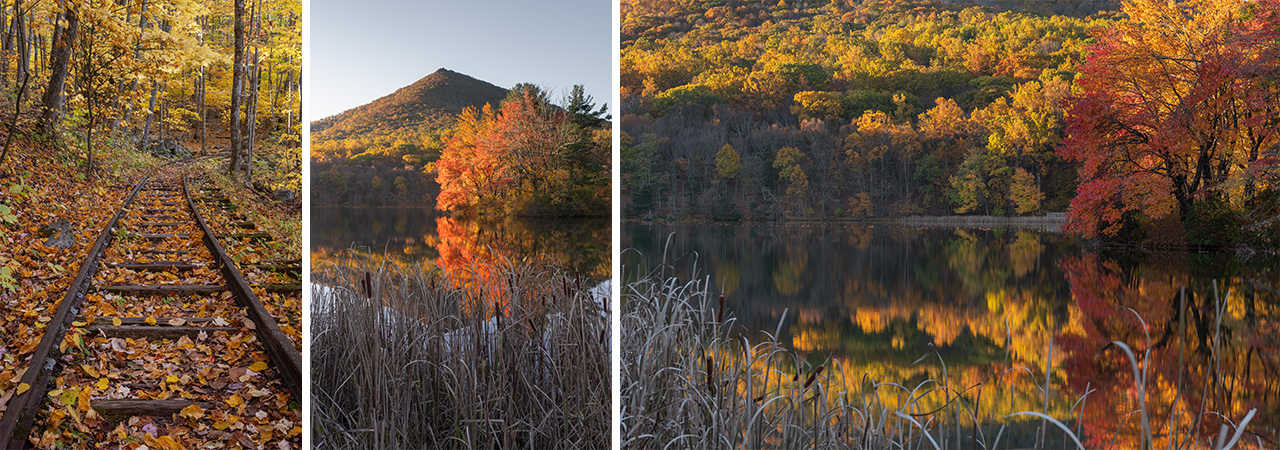
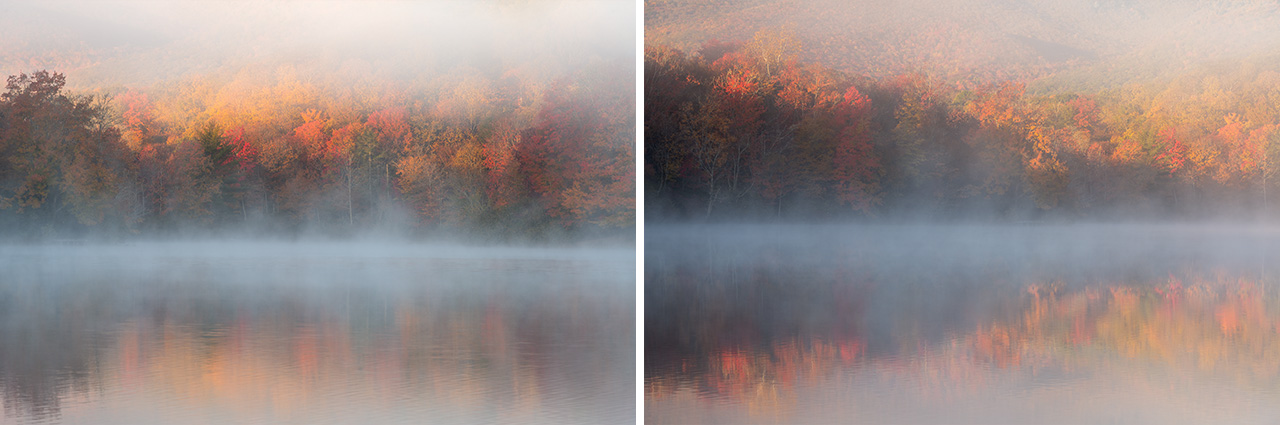
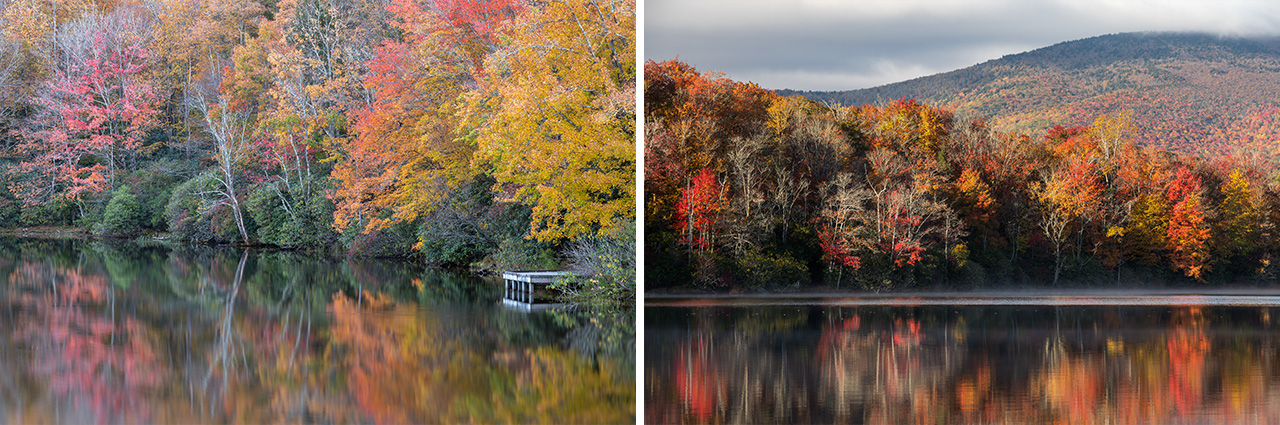
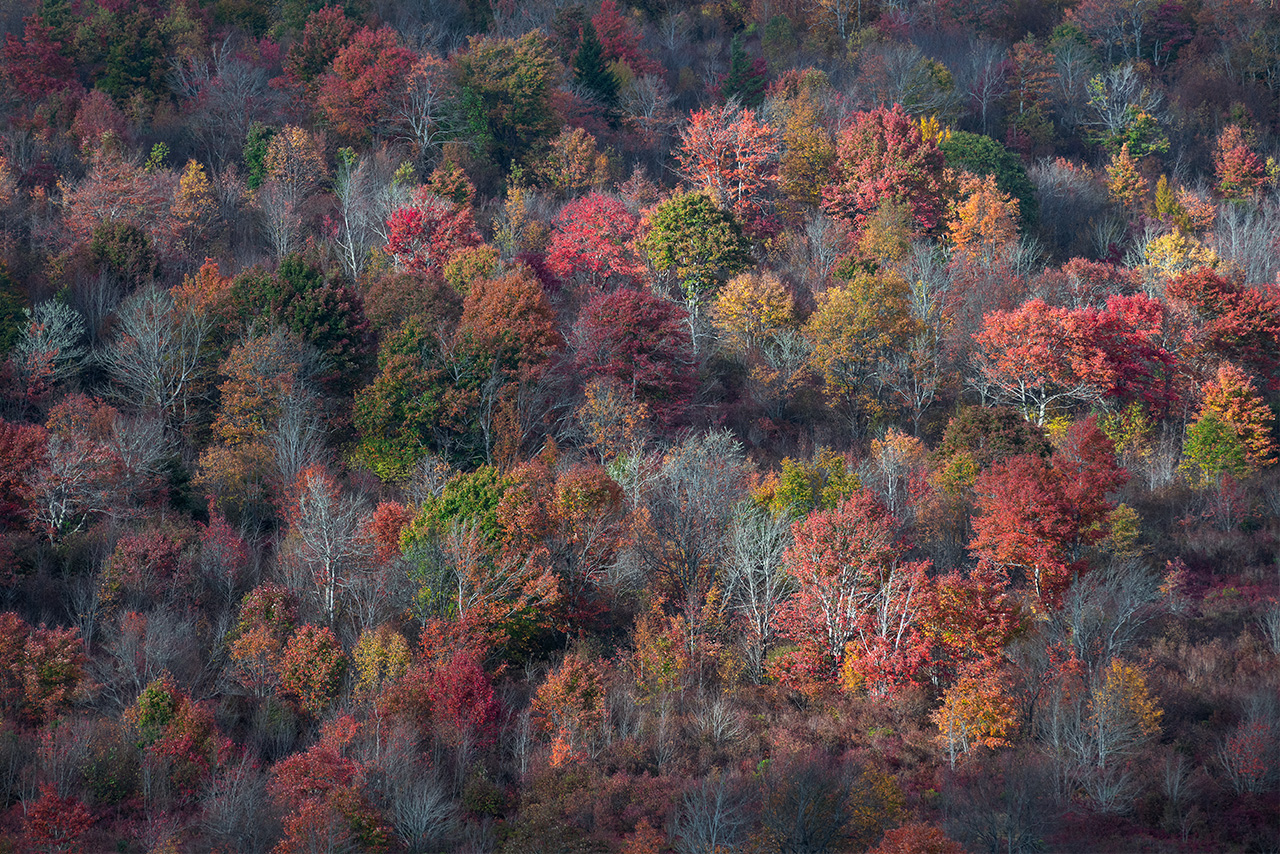
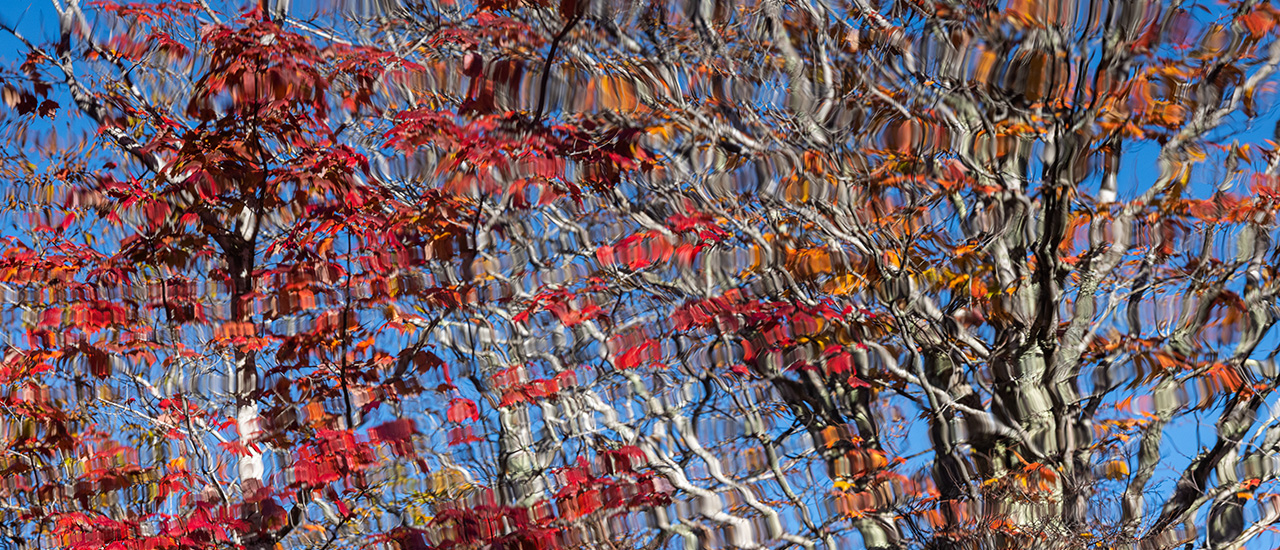
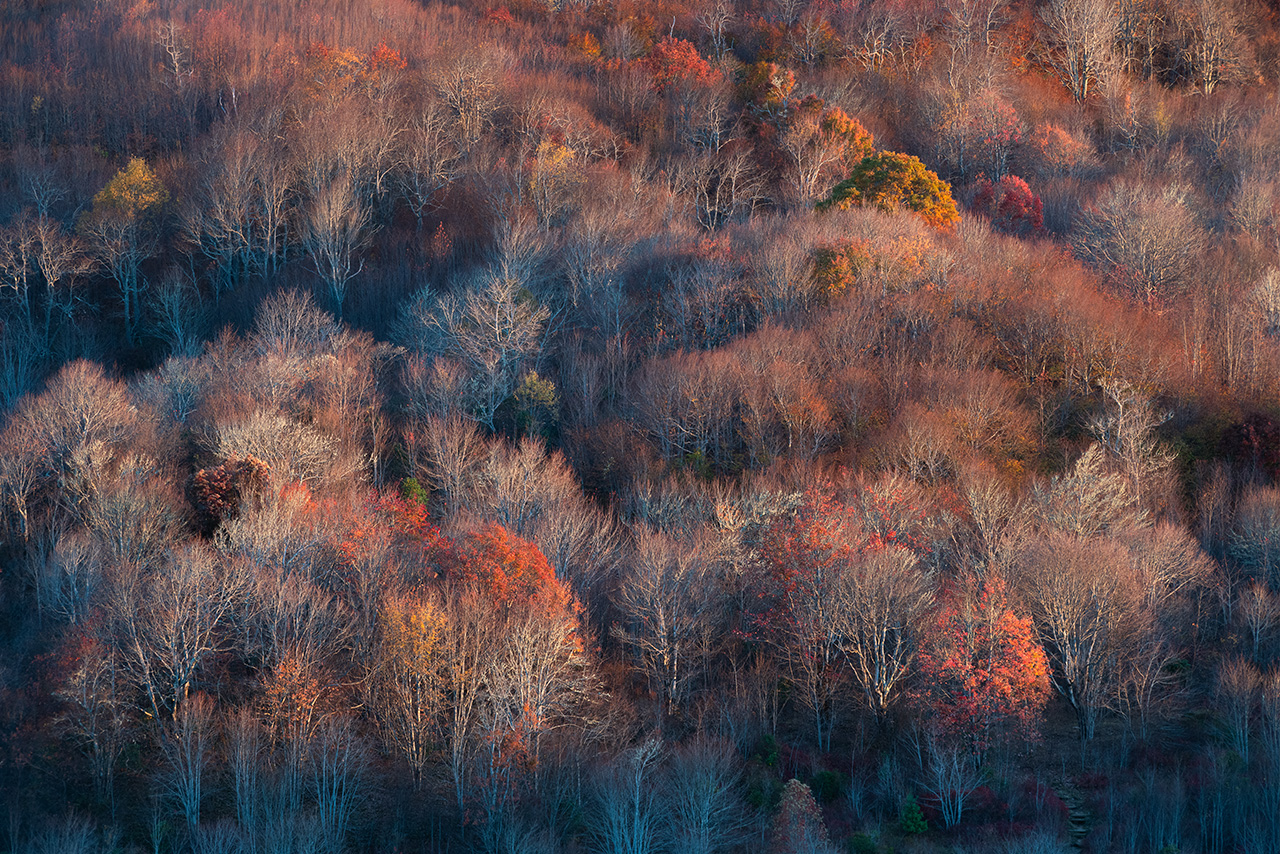
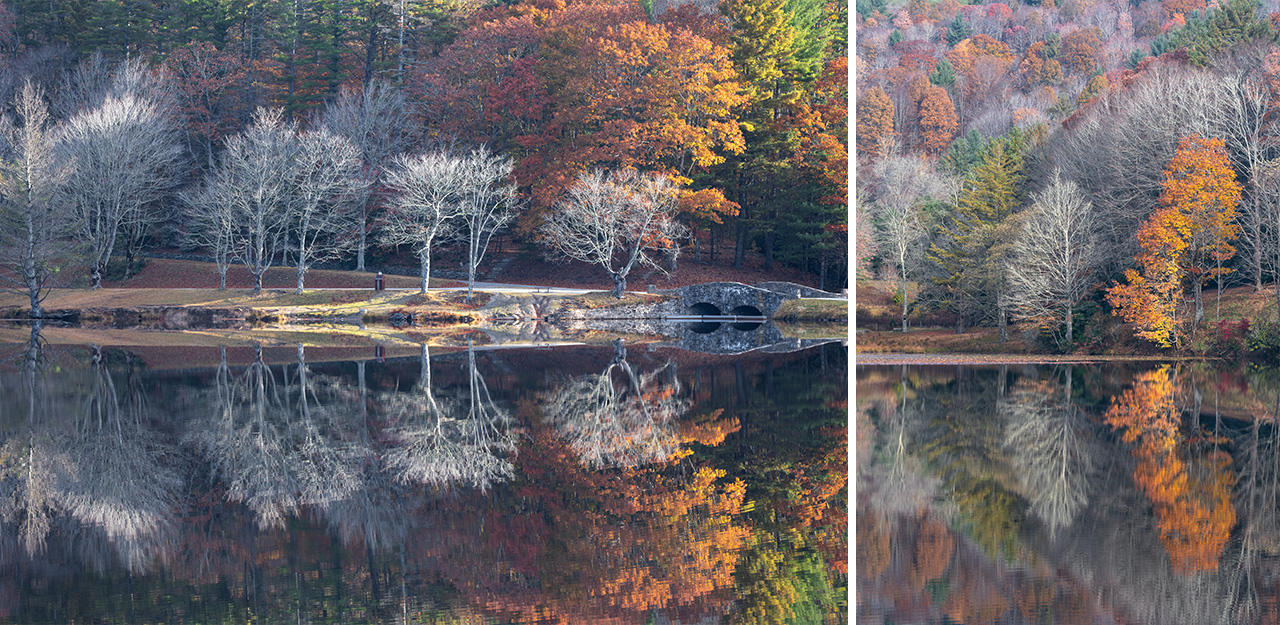
(Left) Milepost 34.  Yankee Horse Ridge Overlook.  Autumn leaves fall along the remnants of Irish Creek Railroad, a forty-two inch narrow gauge track historically run by South River Lumber Company.  (Center and Right) Milepost 85.  Peaks of Otter.  Autumn foliage around Abbott Lake in Bedford County, Virginia.  Abbott Lake is a 24-acre reservoir directly off the Blue Ridge Parkway.  Peaks of Otter Lodge sits on its banks.
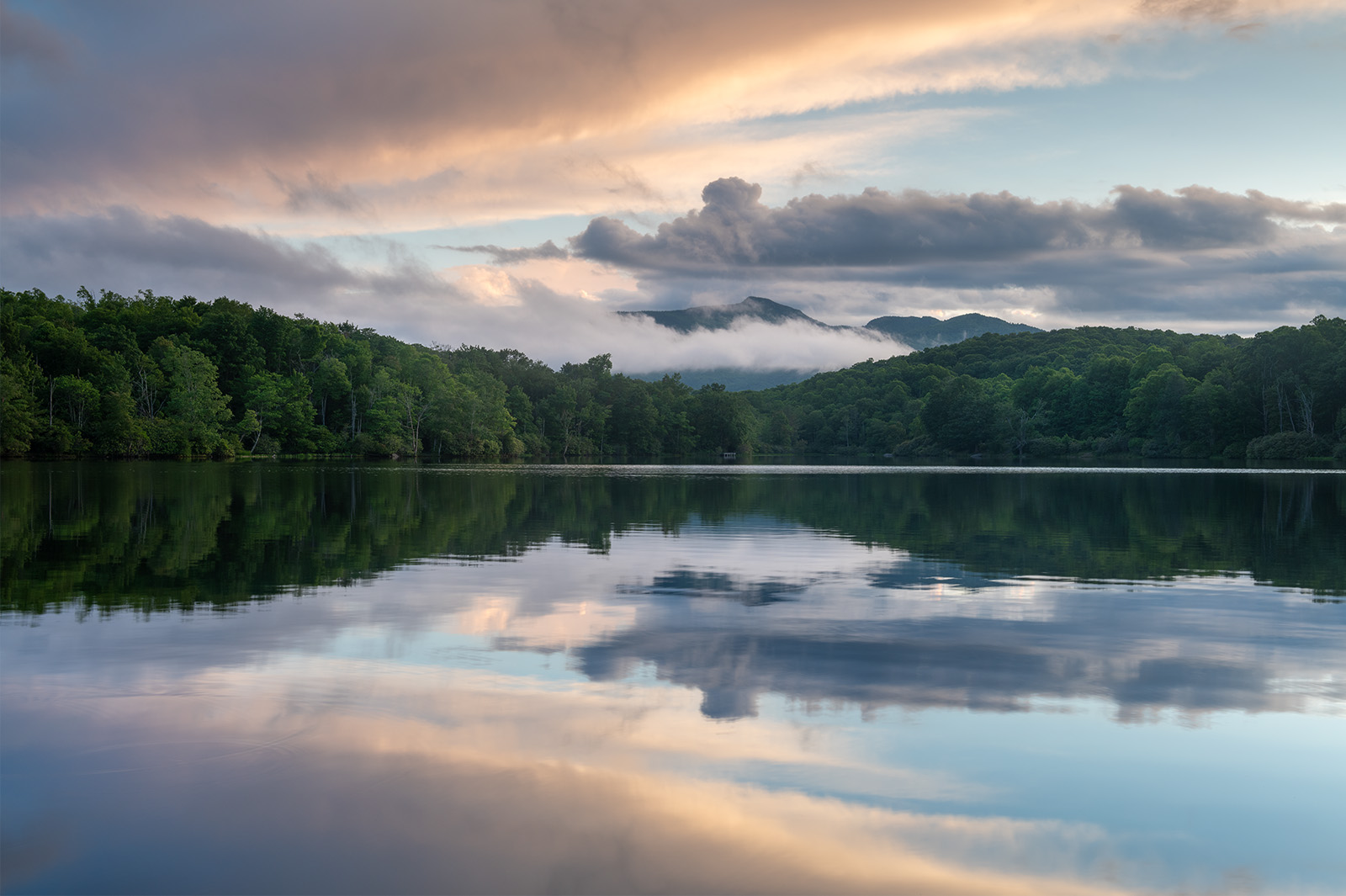
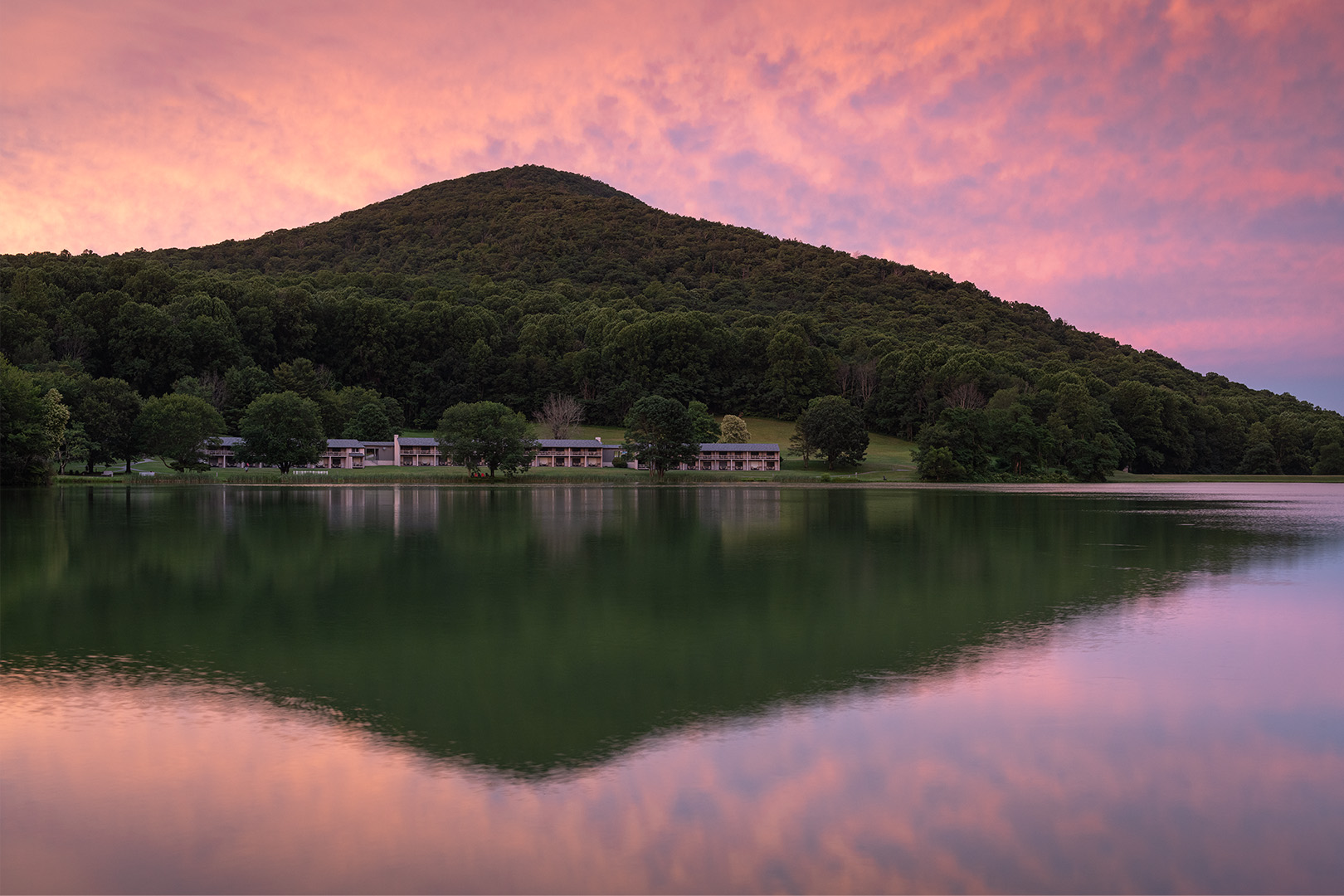
Milepost 86.  Sunset paints the sky above Peaks of Otter Lodge on Abbott Lake along the Blue Ridge Parkway.  Both Abbott Lake and Peaks of Otter Lodge were constructed in 1964.  There are sixty-three guest rooms.  Abbott Lake was named for Stanley William Abbott, a landscape architect widely known as the father of the Blue Ridge Parkway.
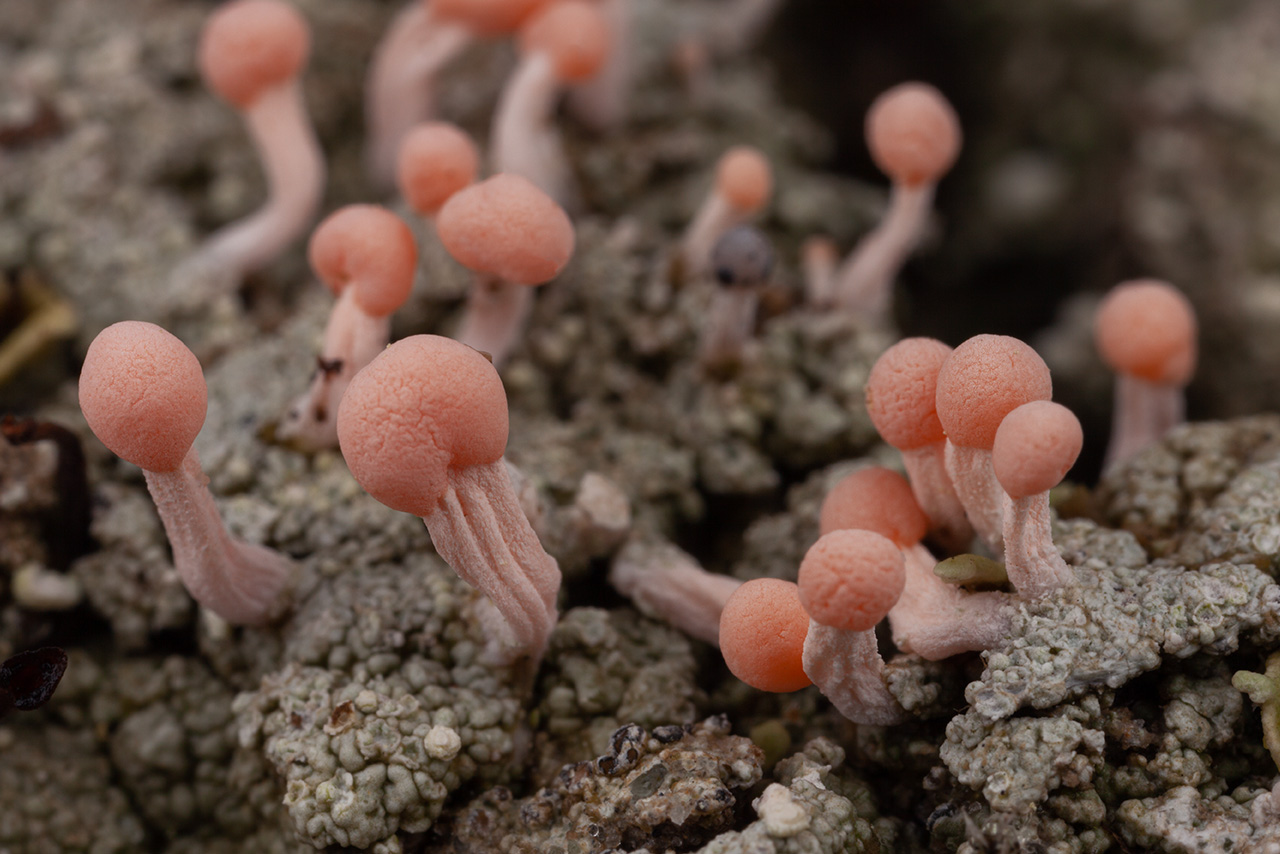
Milepost 230.  Little Glade Mill Pond Overlook.  Pink Earth Lichen (Diabaeis baeomyces) growing on the banks.  Lichen are neither plants nor mushrooms, but a combination of a fungus and an algae.  This little fruticose lichen is quite striking with its unique pink coloring.  I’ve found it growing in many locations up and down the length of the Blue Ridge Parkway.
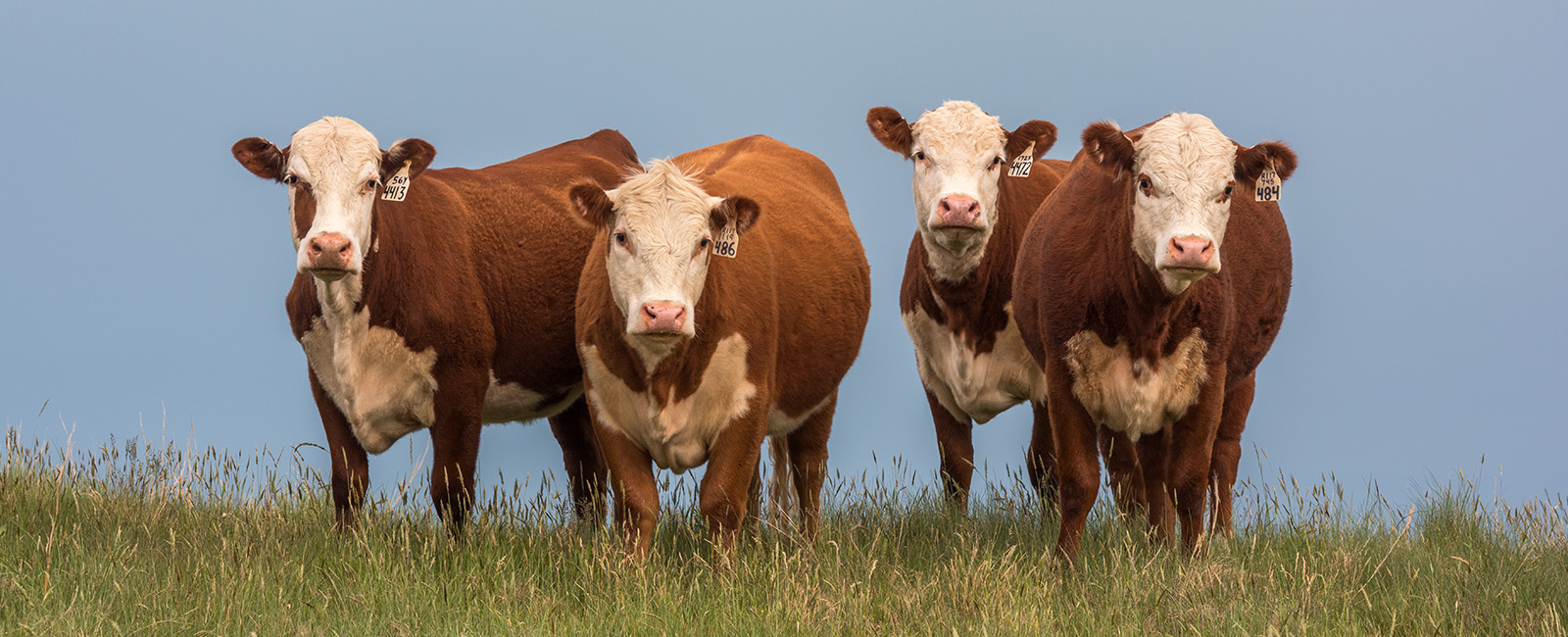
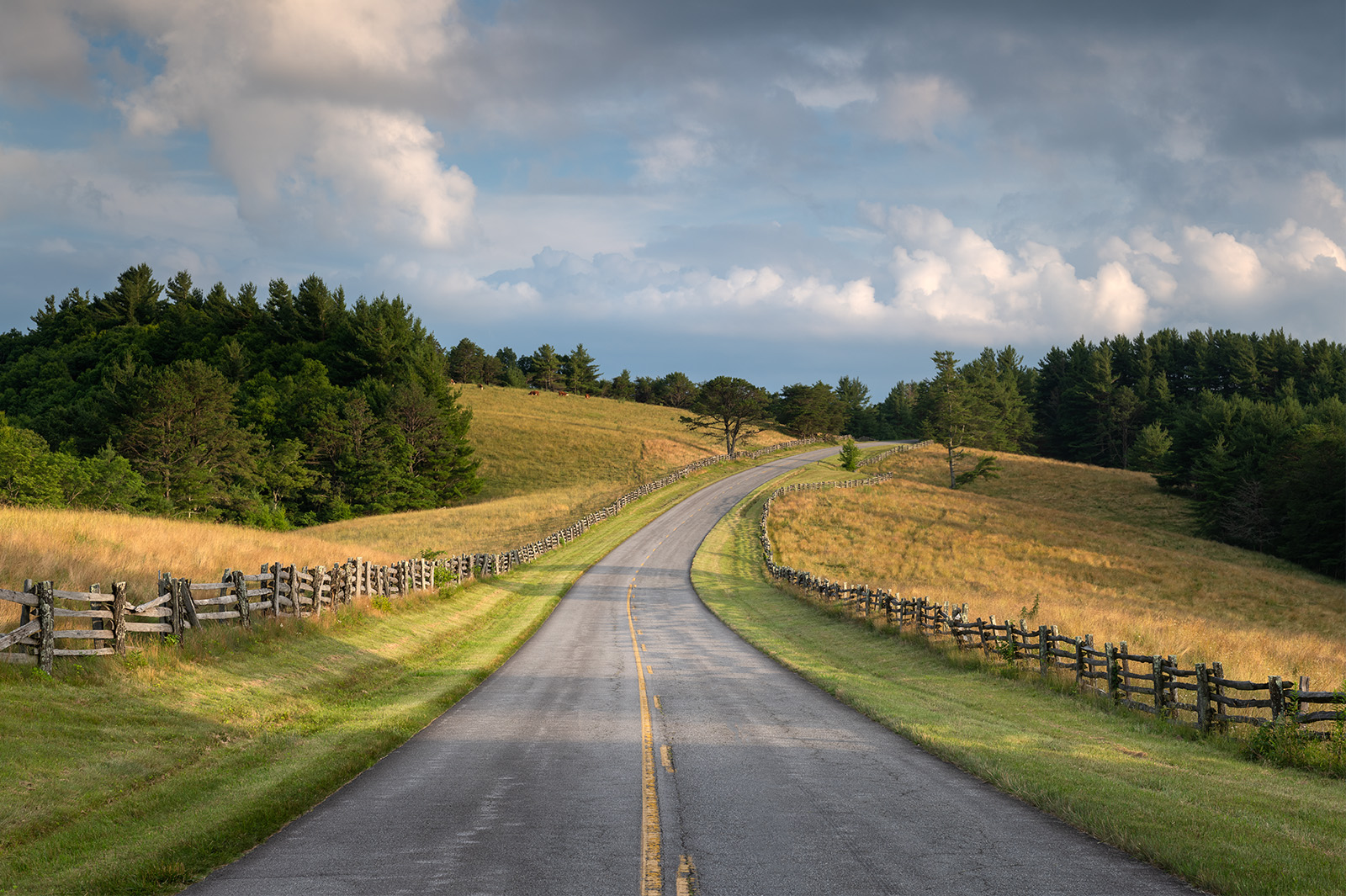
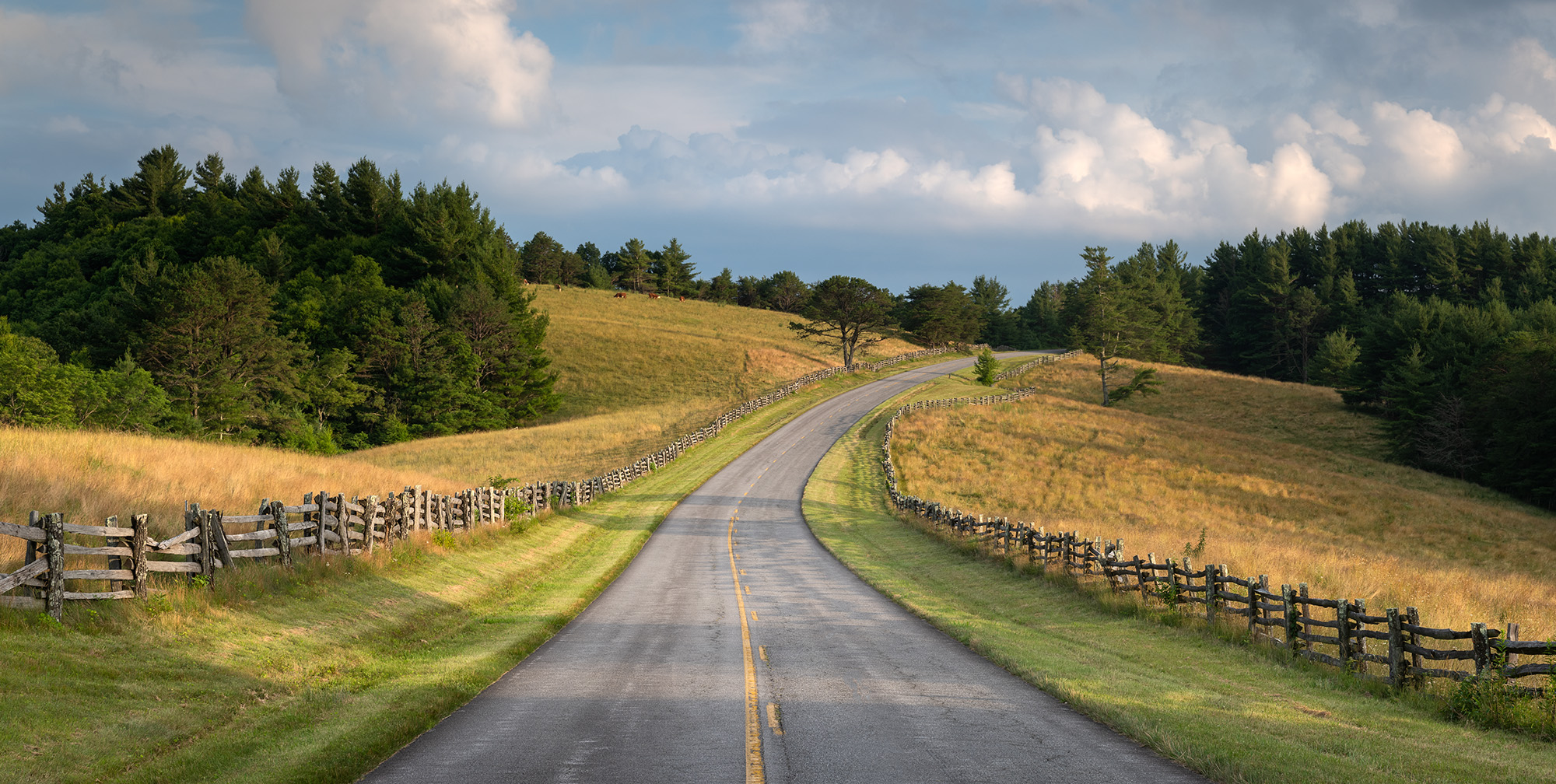
Milepost 241.  The Blue Ridge Parkway enters the Highlands Region in northwestern North Carolina near Doughton Park.  Here, in Doughton Park, the roadway passes through upland meadow bounded by chestnut post-and-rail fencing.  Cattle graze these areas, maintaining a pastoral feel.
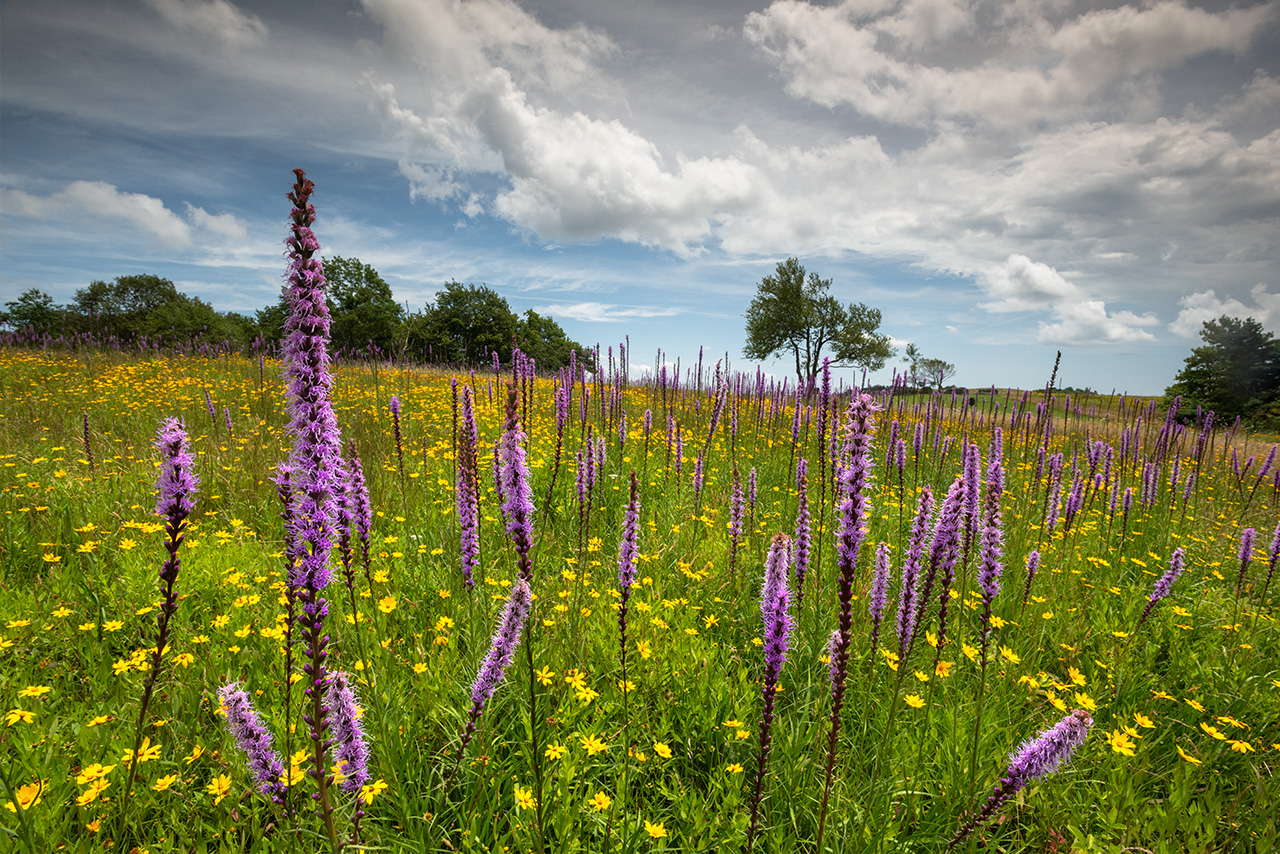
Milepost 241.  The meadows of Doughton Park come alive in July.  The tall, willowy stalks of Blazing Star mix in with the bright, sunny yellow of Coreopsis and the flourescent orange of Butterfly Weed.  These open landscapes are a phenomenal summer celebration at elevation along the Blue Ridge Parkway.
Milepost 241.  Wildflowers celebrate the summer season along the Blue Ridge Parkway within Doughton Park.  Tall purple Blazing Star amidst yellow Coreopsis dominate the meadows.  Look closer and a variety of milkweed will also be present.  An occasional Green Fringed Orchid might be hiding as well!
Milepost 245.  The Blue Ridge Parkway passes through the southern section of Doughton Park.  Doughton Park is the largest recreation area along the length of the Blue Ridge Parkway.  It is known for its highland meadows and grazing cattle, as well as summer wildflower display and numerous hiking trails.  Doughton Park sits at roughly the half-way mark on the Blue Ridge Parkway.
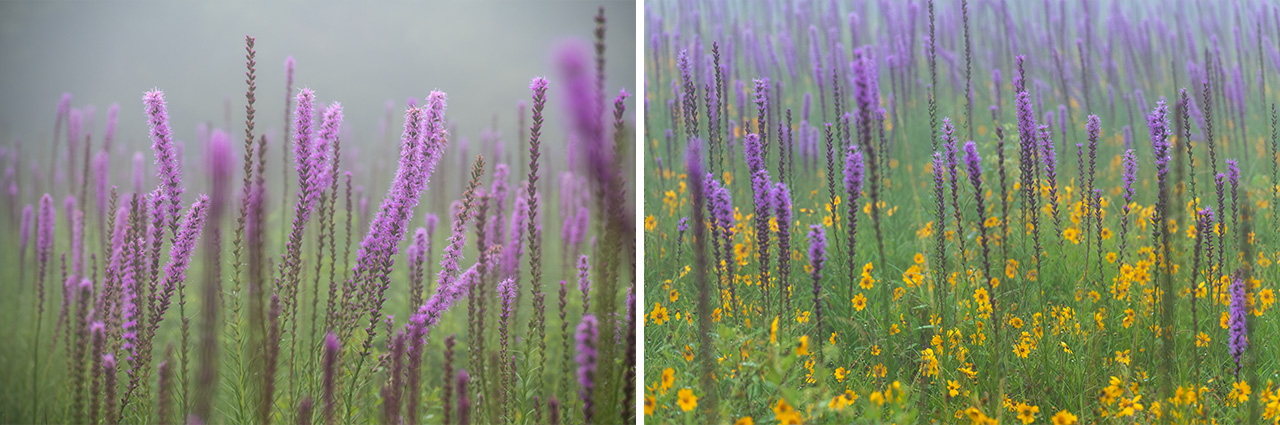
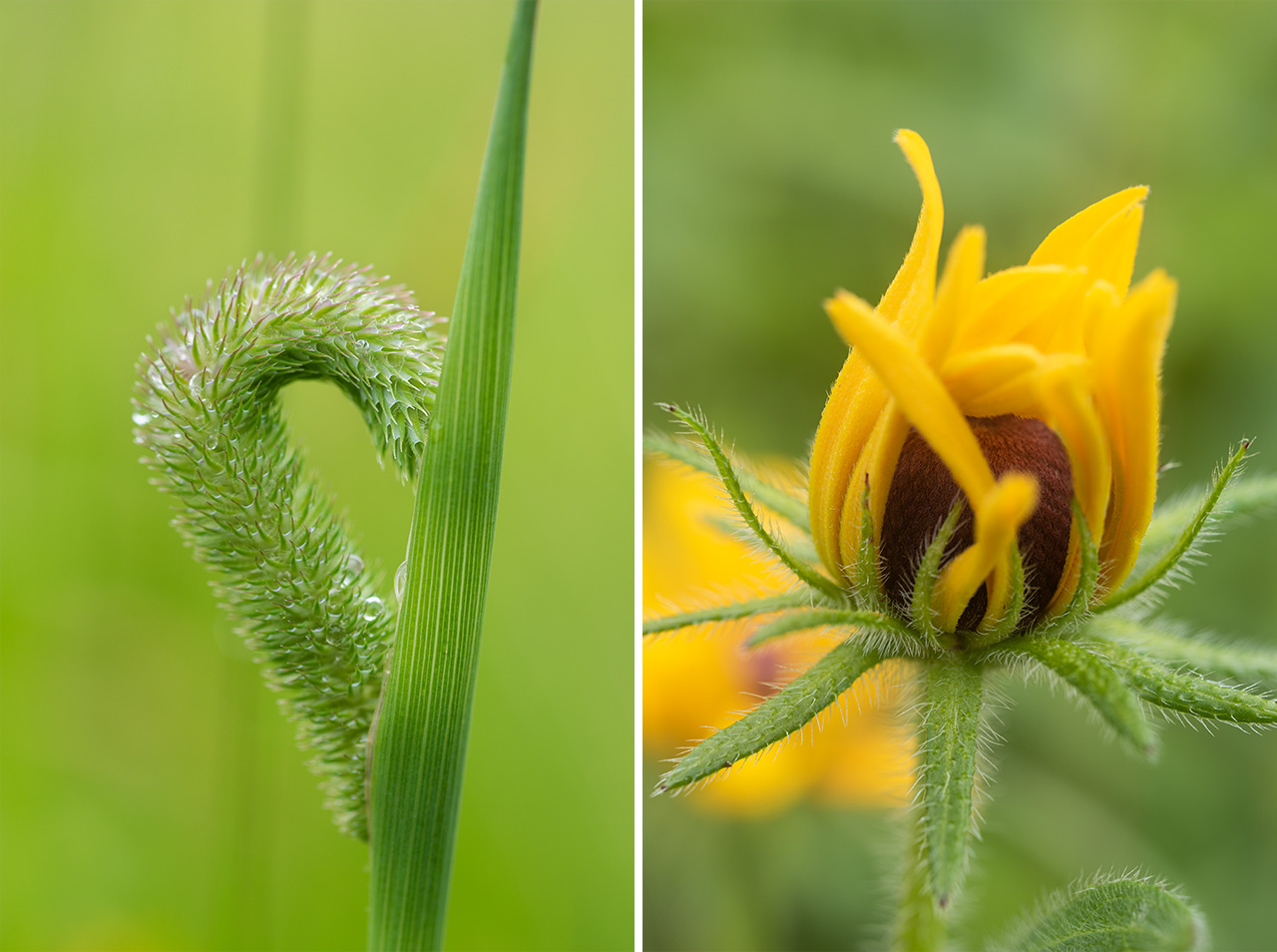
Milepost 241.  (Left) Grass bloom within the meadows of Doughton Park.  (Right) A Black-Eye Susan wildflower begins to unfurl within the open, highland meadows of Doughton Park along the Blue Ridge Parkway.  The meadows of Doughton Park are a macro photographers dream!
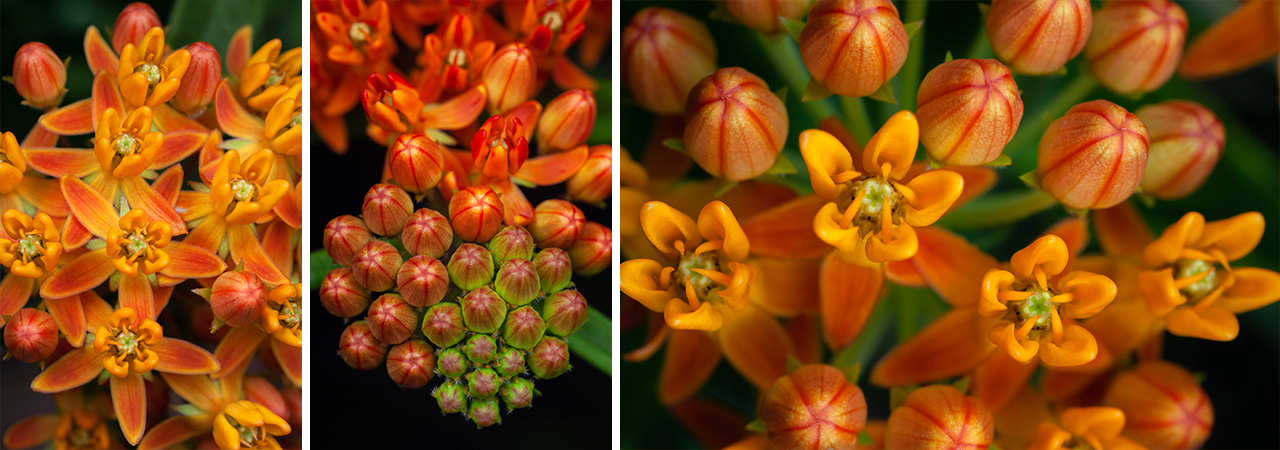
Milepost 241.  Butterfly Weed has the undeniable orange coloring–similar to a flame azalea–that demands attention.  It grows in abundance around the meadows that surround The Bluffs Restaurant and the Blue Ridge Parkway within Doughton Park.
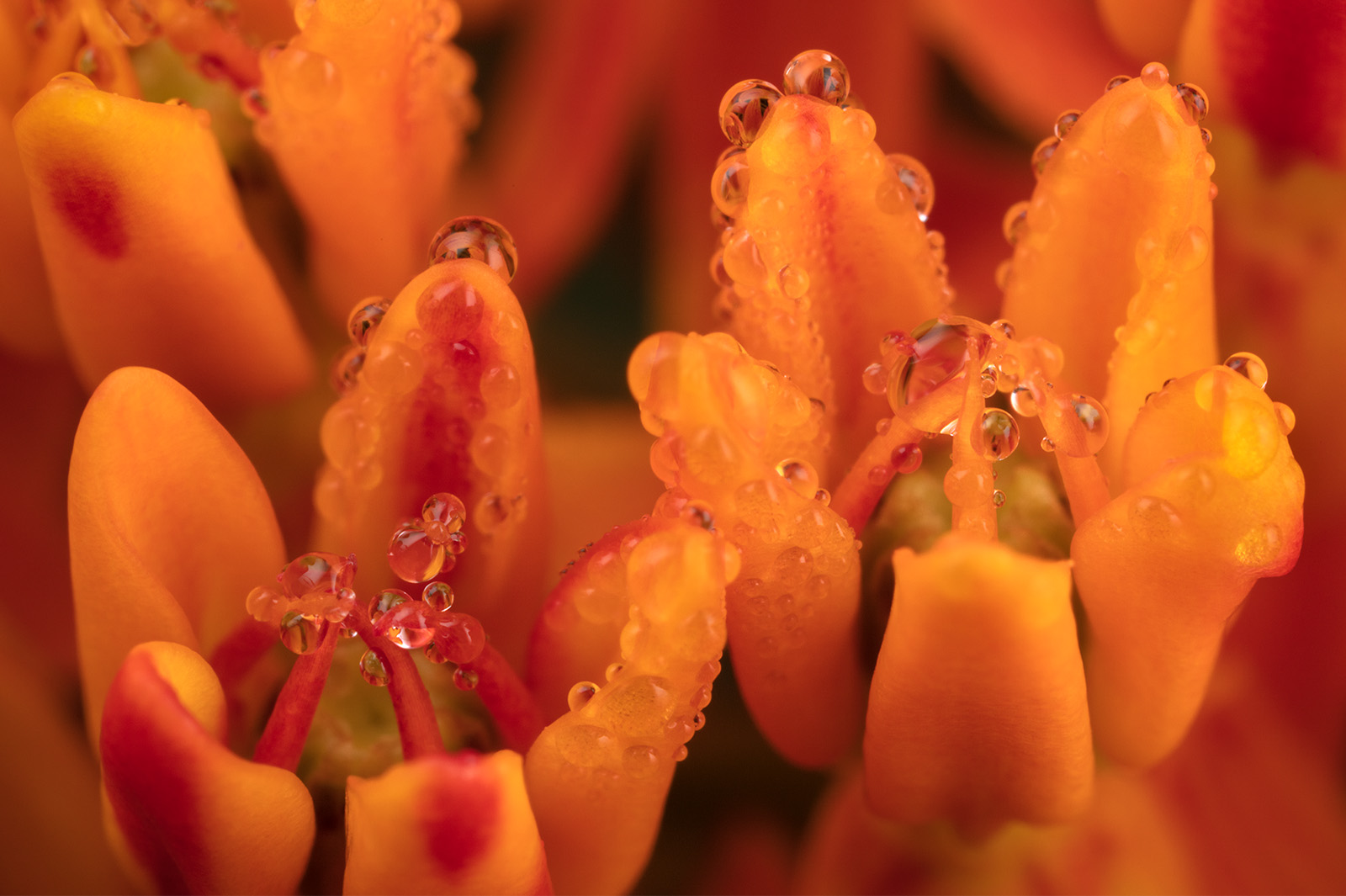
Milepost 241.  The details are always what get me!  On this morning, the vibrant orange Butterfly Weed along the Blue Ridge Parkway within Doughton Park delicately gathered dew on their flowering petals and stamens.  I used a macro rig that could photograph at two- to three-times life-size to capture these intimate details.
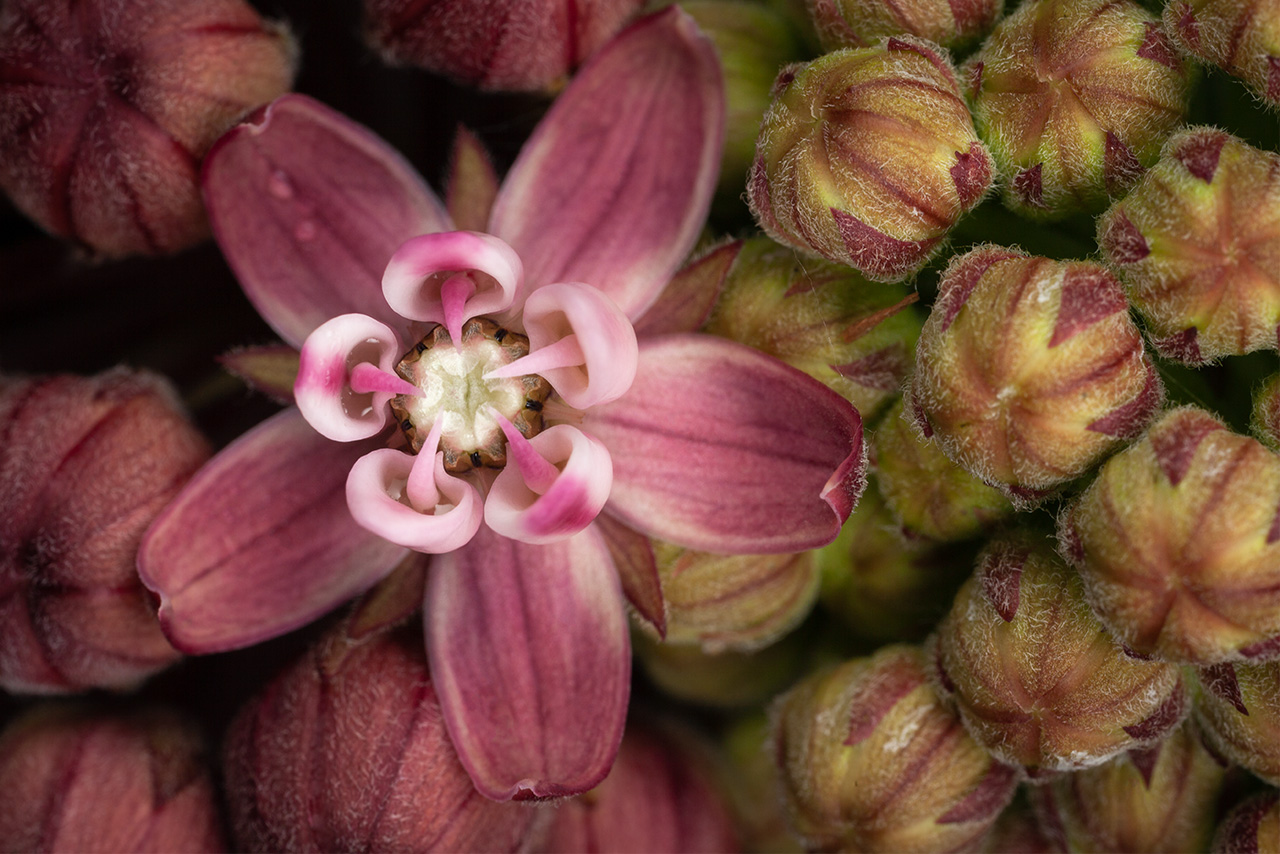
Milepost 241.  Common Milkweed grows alonside the more vibrant Butterfly Milkweed within the highland meadows of Doughton Park.  Though less showy in color, the Common Milkweed is actually the exclusive host plant of the Monarch Butterfly.  It’s sap, when ingested by Monarchs, makes the butterfly toxic to predators.  If you are close enough to photograph, take a deep inhale of the beautiful scent of Common Milkweed.
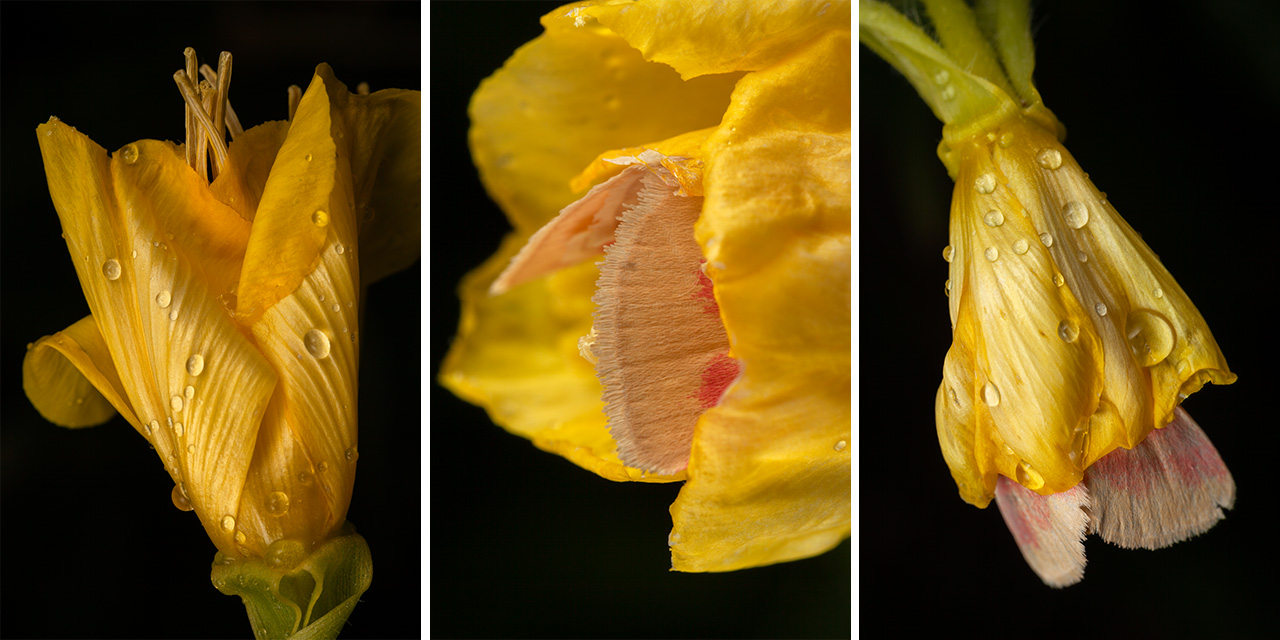
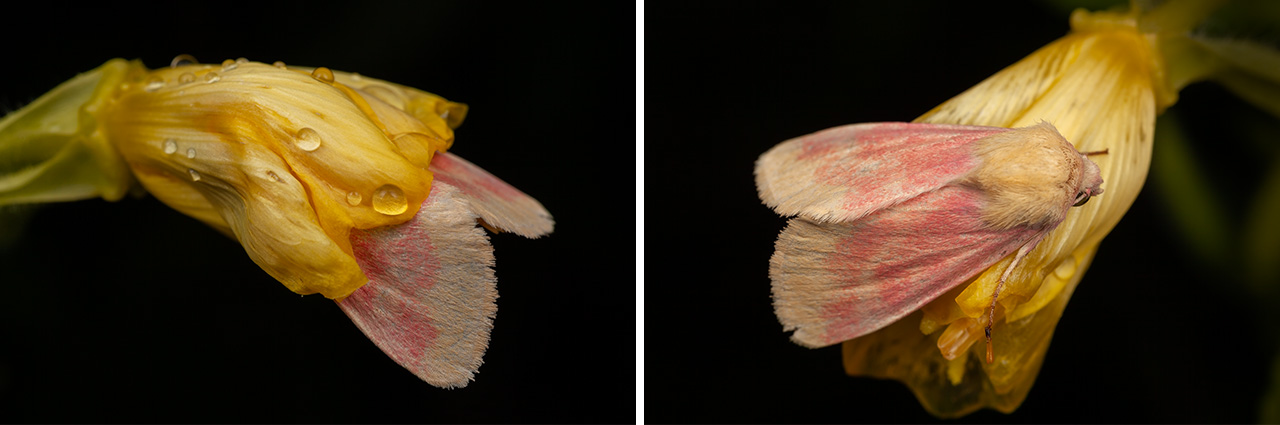
Milepost 242.  The Evening Primrose Moth has a lifecycle intimately tied to the host plant, the Evening Primrose.  The moth is noctural, tucking itself head-first into the flower of an Evening Primrose during the day.  When the flower closes its petals each afternoon, the moth is largely hidden and camouflaged from the eye (and predators).  Finding a number of these within Doughton Park along the Blue Ridge Parkway was a real treat!
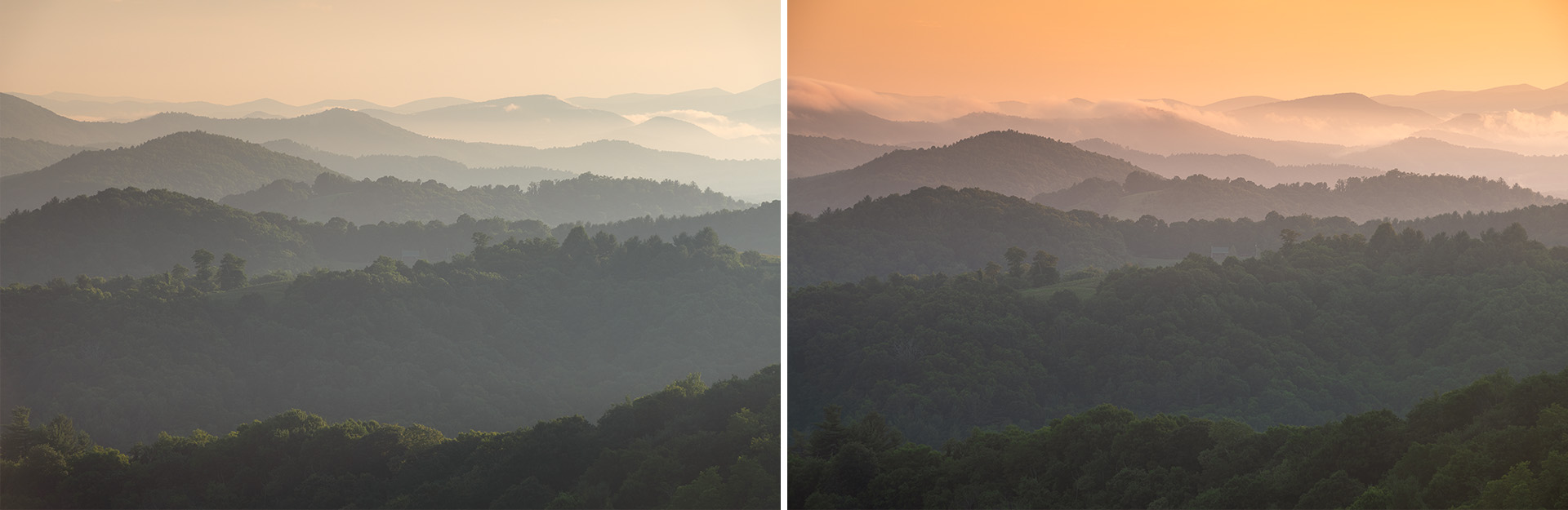
Milepost 241.  Doughton Park is the beginning of The Highlands geographical region along the Blue Ridge Parkway.  Here, the Parkway rises above Christmas Tree Farms and agricultural land and begins to provide the types of layered views that the Blue Ridge Parkway is famous for.  Elevation brings increasingly dynamic weather as well–the landscape trends toward something wilder and less tamed.  Doughton Park is known for both great sunrise and sunset vantages along the Blue Ridge Parkway.
Milepost 241.  Lance-leaved coreopsis (Coreopsis lanceolata) is a yellow wildflower that grows in abundance during the summer within Doughton Park along the Blue Ridge Parkway.  Together with the bright purple of nearby Blazing Star wildflowers, these yellow wildflowers signal peak summer conditions within the highlands meadows along the Blue Ridge Parkway.
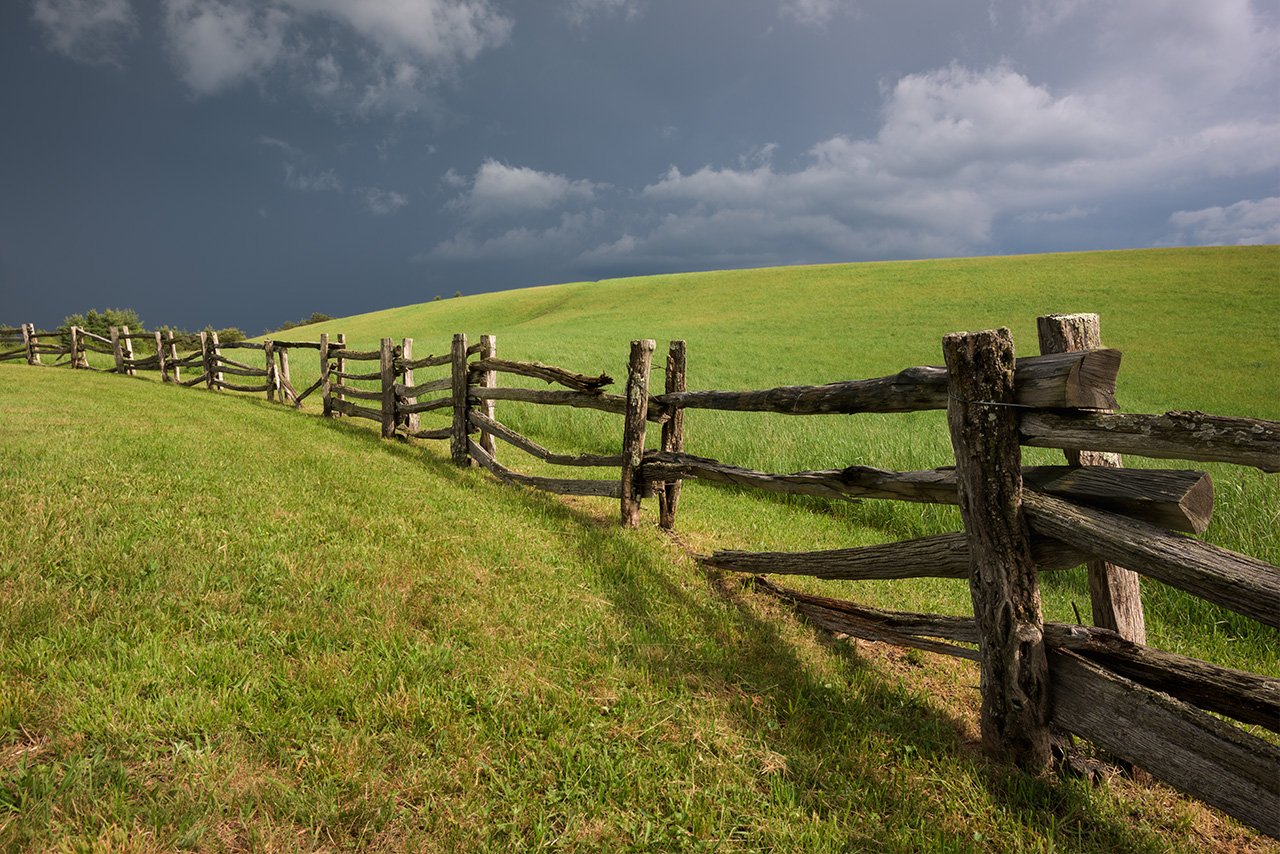
Milepost 264.  The Lump Overlook.  A dark, ominous thunderstorm moves toward the Blue Ridge Parkway from Yadkin Valley below “the lump.”  Sunlight hits the Chestnut post-and-rail fencing and the late spring grasses at the overlook.
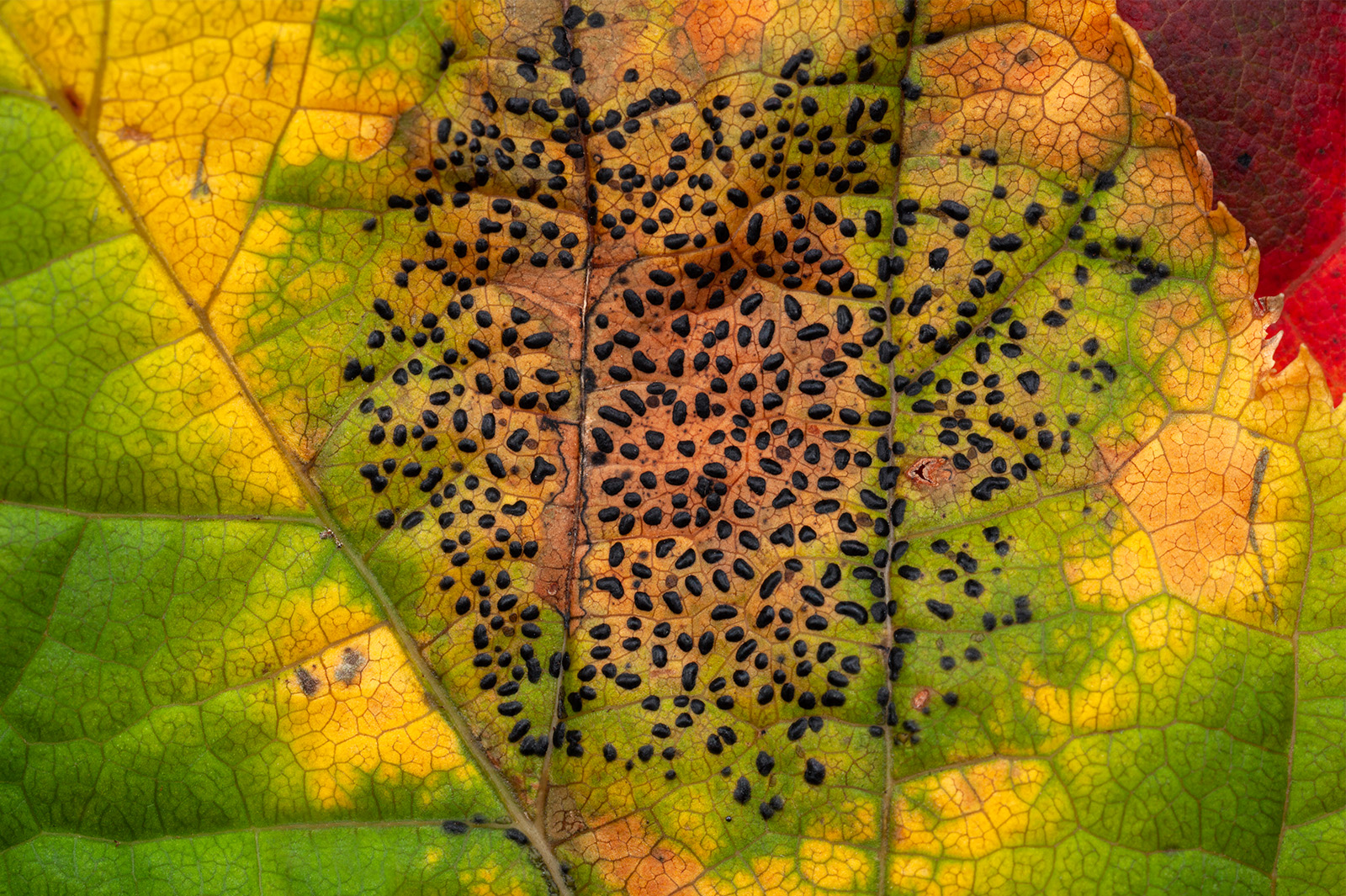
Milepost 284.  Punctate Maple Tar Spot (Rhytisma puntatum) is a fungal disease that shows as tiny black, raised spots on maple leaves.  The fungal disease overwinters on fallen leaves and releases spores during spring to affect newly greened leaves.  The affected leaves remain largely asymptomatic until late summer and early autumn.  Punctate Maple Tar Spot disease is largely cosmetic and does not affect the health of the tree overall.  I found this and many other leaves with the “tar spots” while hiking the Mountains to Sea Trail north of Boone, North Carolina.
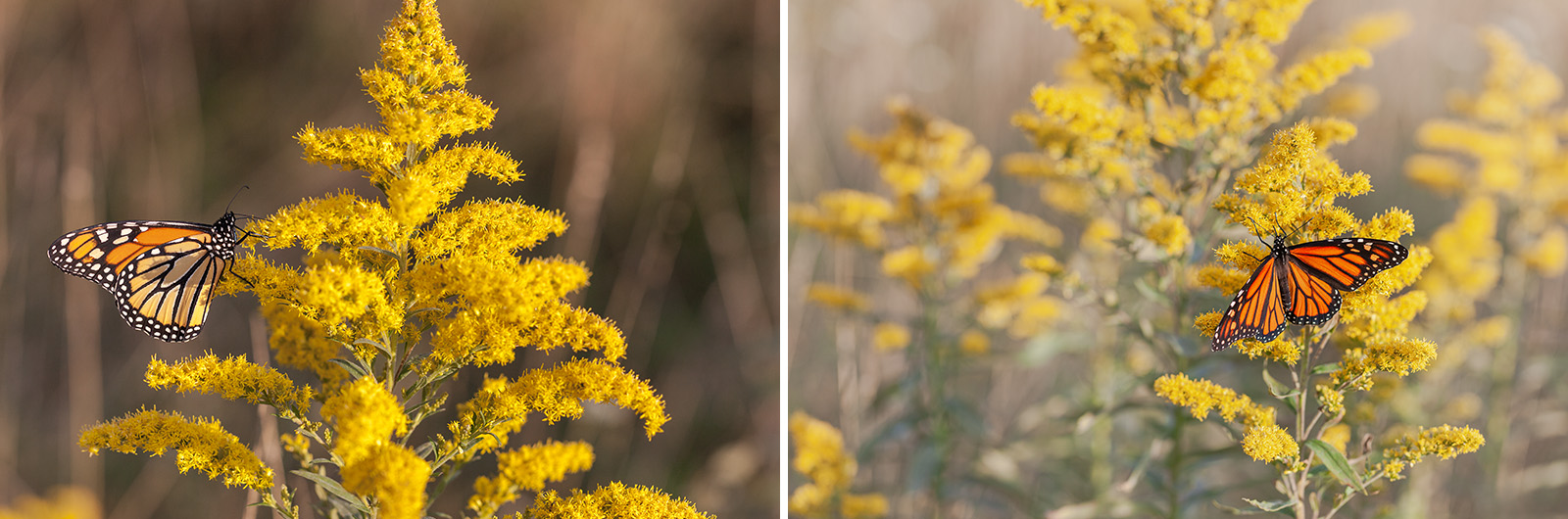
Milepost 292.  Moses Cone Manor.  Migrating Monarch Butterflies along the Blue Ridge Parkway stop to feed on flowering Goldenrod along the carriage trails within Moses Cone Memorial Park.  During peak migration season–around early October–Monarchs can fly between fifty to one-hundred miles per day as they head south to Mexico to overwinter.
Milepost 292.  Moses Cone Memorial Park.  Twenty-five miles of carriage trails weave through open meadows on the property of Moses Cone Memorial Park along the Blue Ridge Parkway.  Moses H. Cone was a textile entrepreneur, producing cotton and denim fabrics.  Moses Cone Memorial Park–known by locals as Cone Park–is managed by the National Park Service.
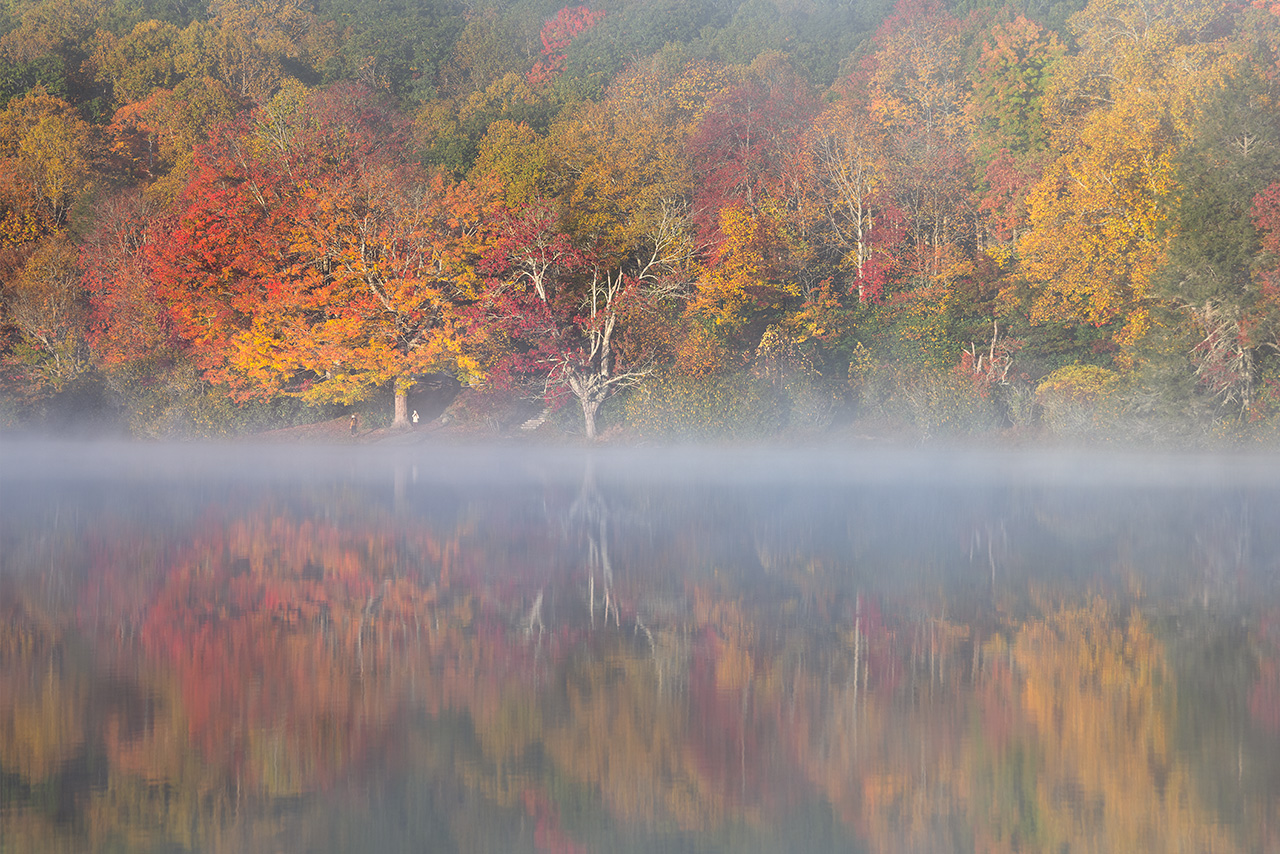
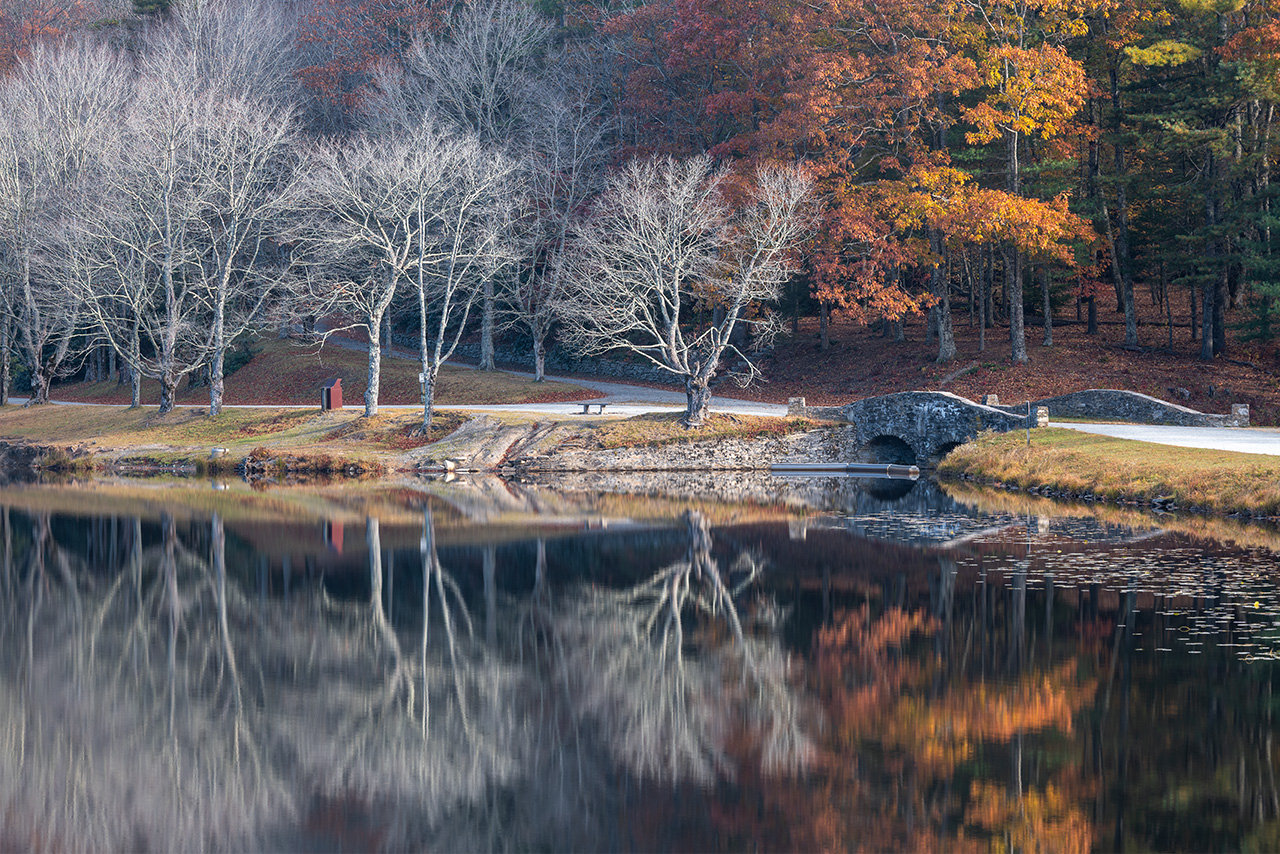
Milepost 292.  Moses Cone Memorial Park.  Bass Lake–commonly known as Cone Lake–is a twenty-two acre reservoir within Moses Cone Park.  A one-mile gravel track runs along the shore of the lake, making this an extremely popular location for walkers and runners near Blowing Rock, North Carolina.  On this morning, I found the stark contrast between the bare trees on the shore against the full, colored autumn trees behind, very striking.
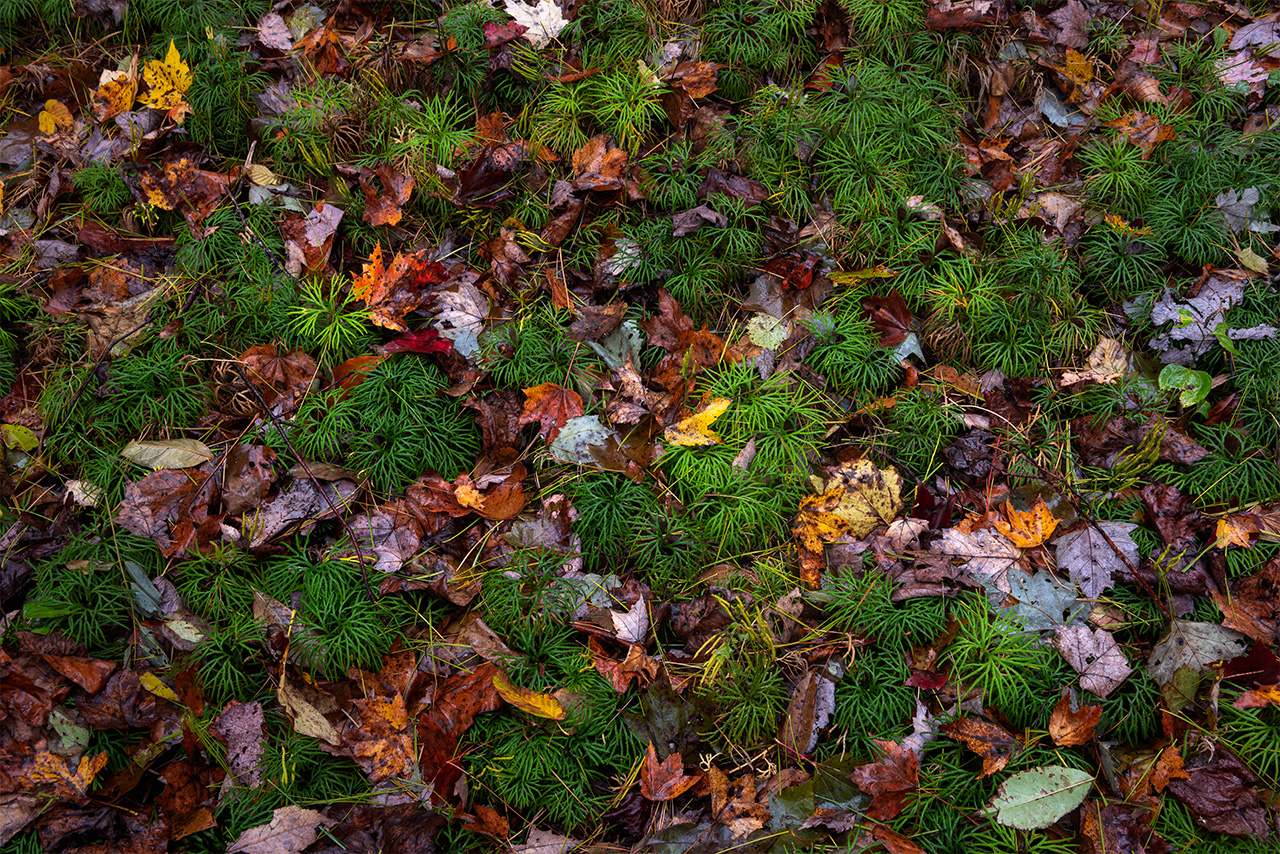
Milepost 296.  Green Knob Trail / Sim’s Pond hike.  A carpet of Club Moss (Lycopodiopsida) blankets the forest floor trailside.  Club Moss is an ancient vascular plant–the oldest surviving group of vasuclar plants.  They are also known as Running Pine, perhaps because of their resemblance to tiny pine trees.
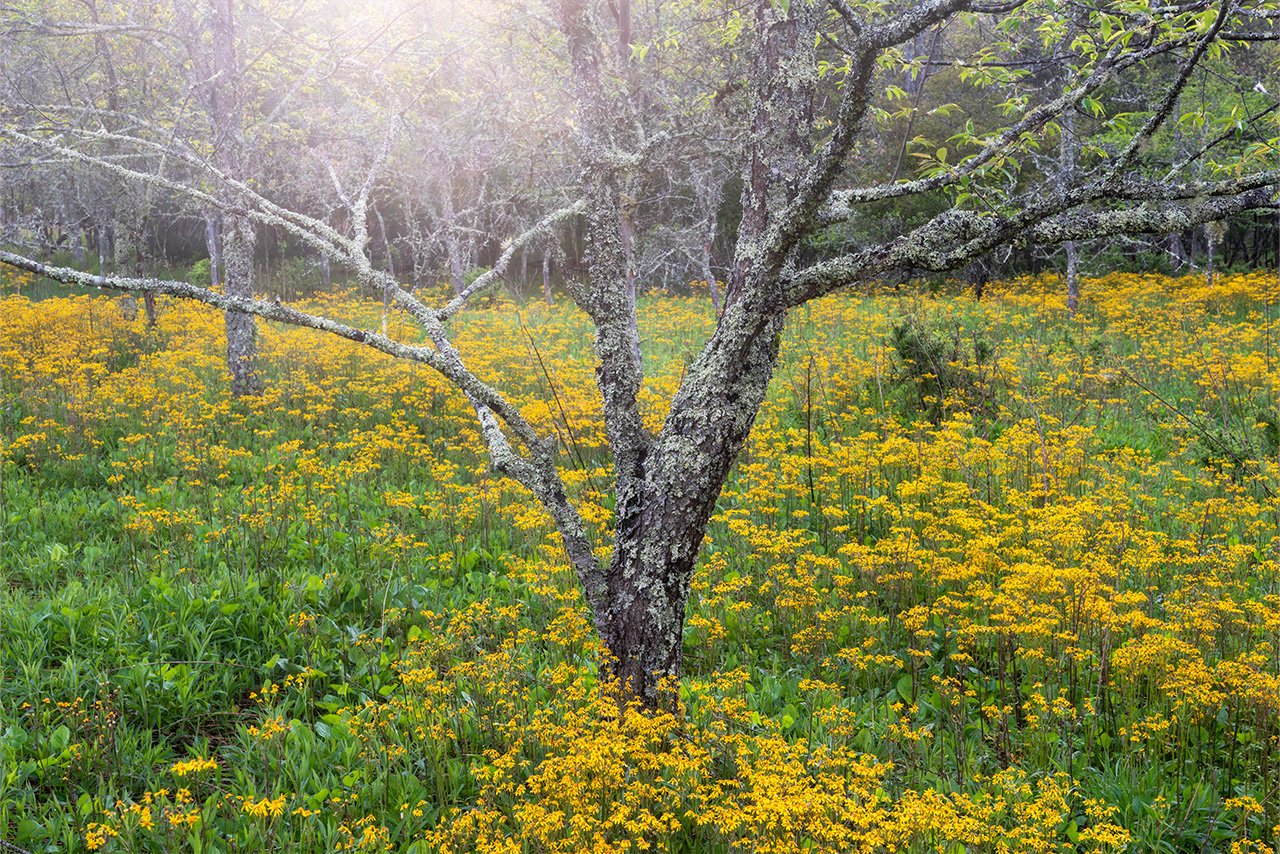
Milepost 296.  Boone Fork Trail (BFT).  The Boone Fork Trail starts near Price Lake Picnic Area on the Blue Ridge Parkway.  The trail immediately passes through a meadow / old orchard with many wildflowers and fruit trees before entering the forest.  The Boone Fork Trail is roughly five-miles in length and moderate in difficulty.  It’s one of my favorite hiking trails along the Blue Ridge Parkway.
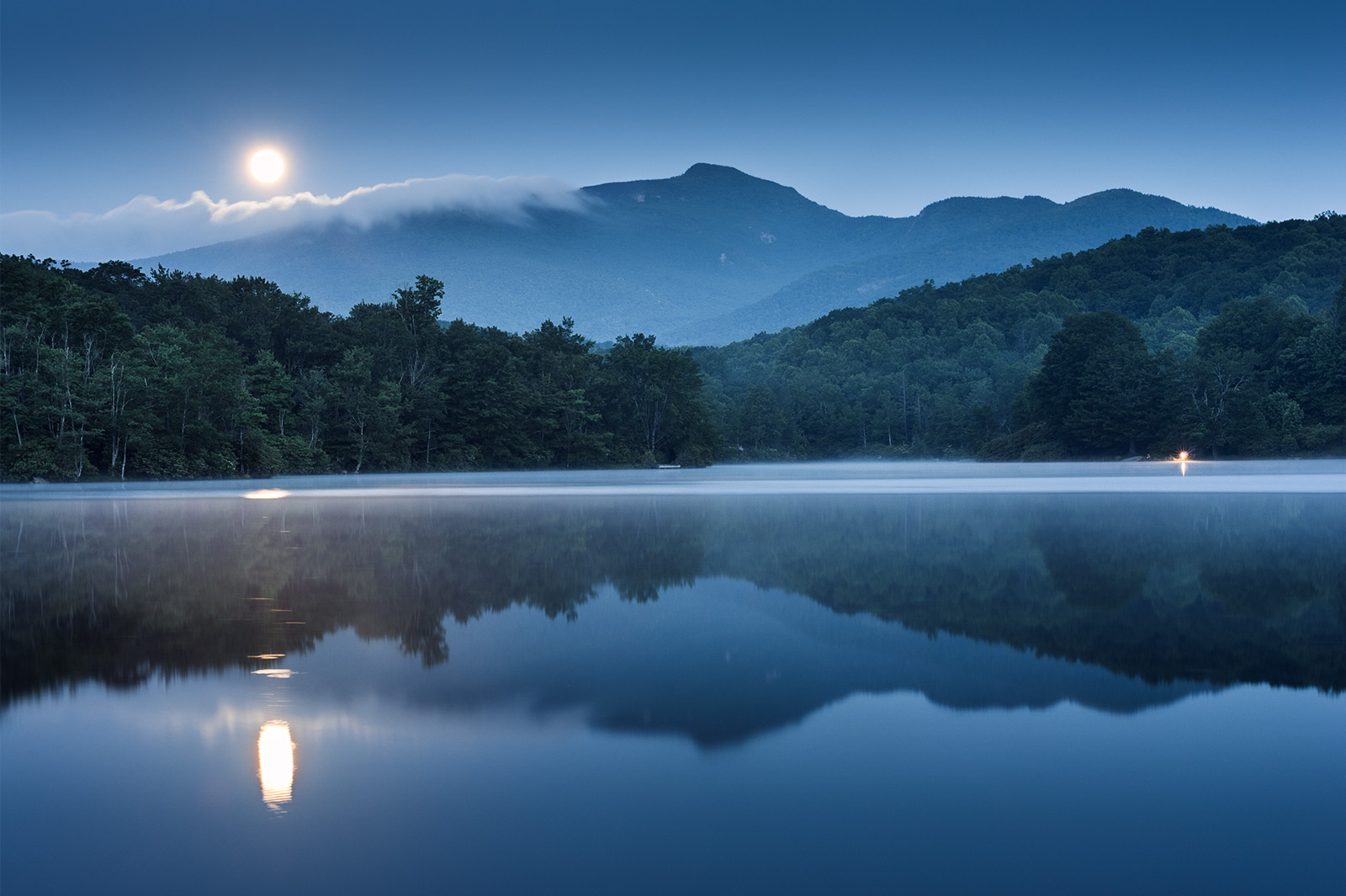
Milepost 297.  Price Lake.  Arriving before sunrise, the falling super moon of June 2013 sat beautifully in a calm blue hour sky above Grandfather Mountain.  I didn’t plan on this shot; the conditions were a beautiful surprise.  I hustled down the dark trail and into a position where I could get all of the elements aligned.  I wasn’t advanced enough in shooting technique at the time to bracket exposures and composite a moon without blown highlights.  However, this has still been one of my most popular photographs with print media and art buyers.
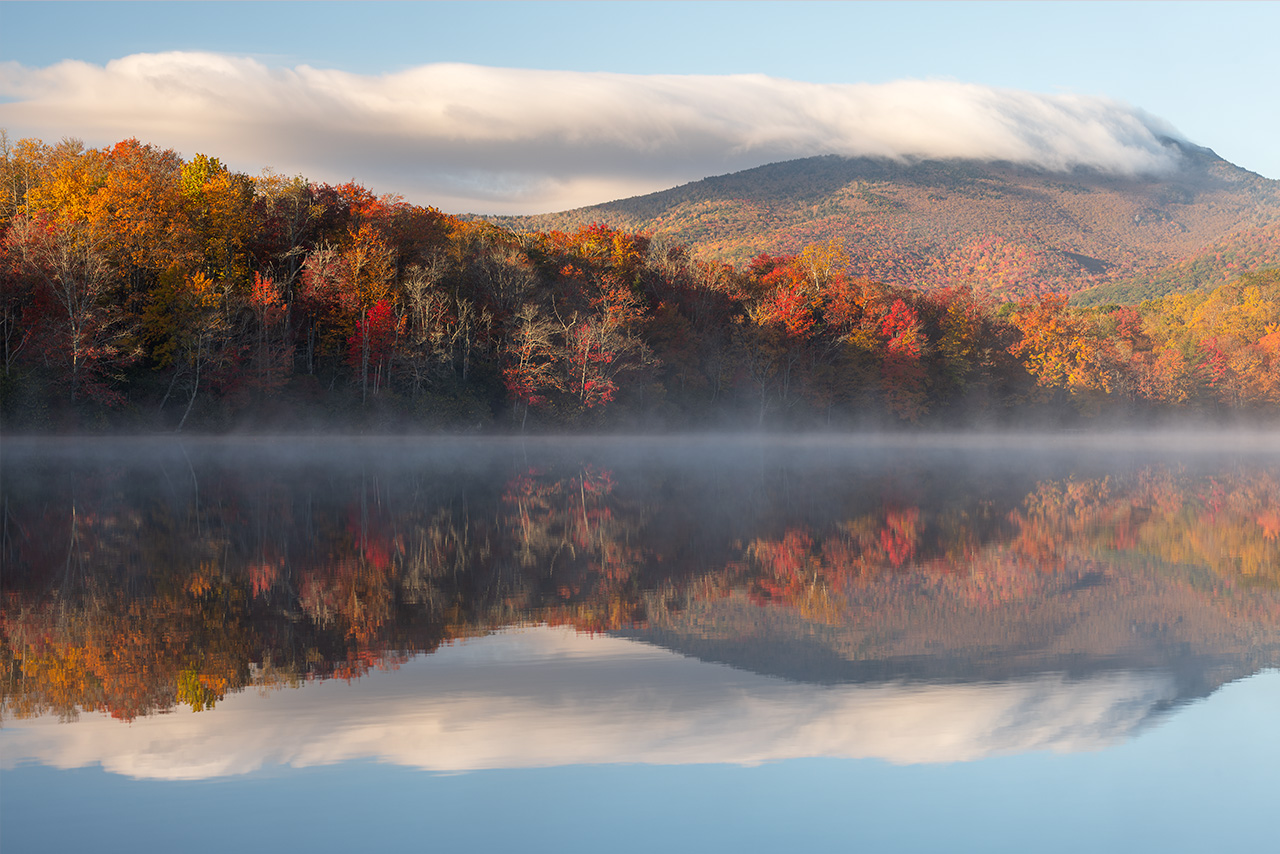
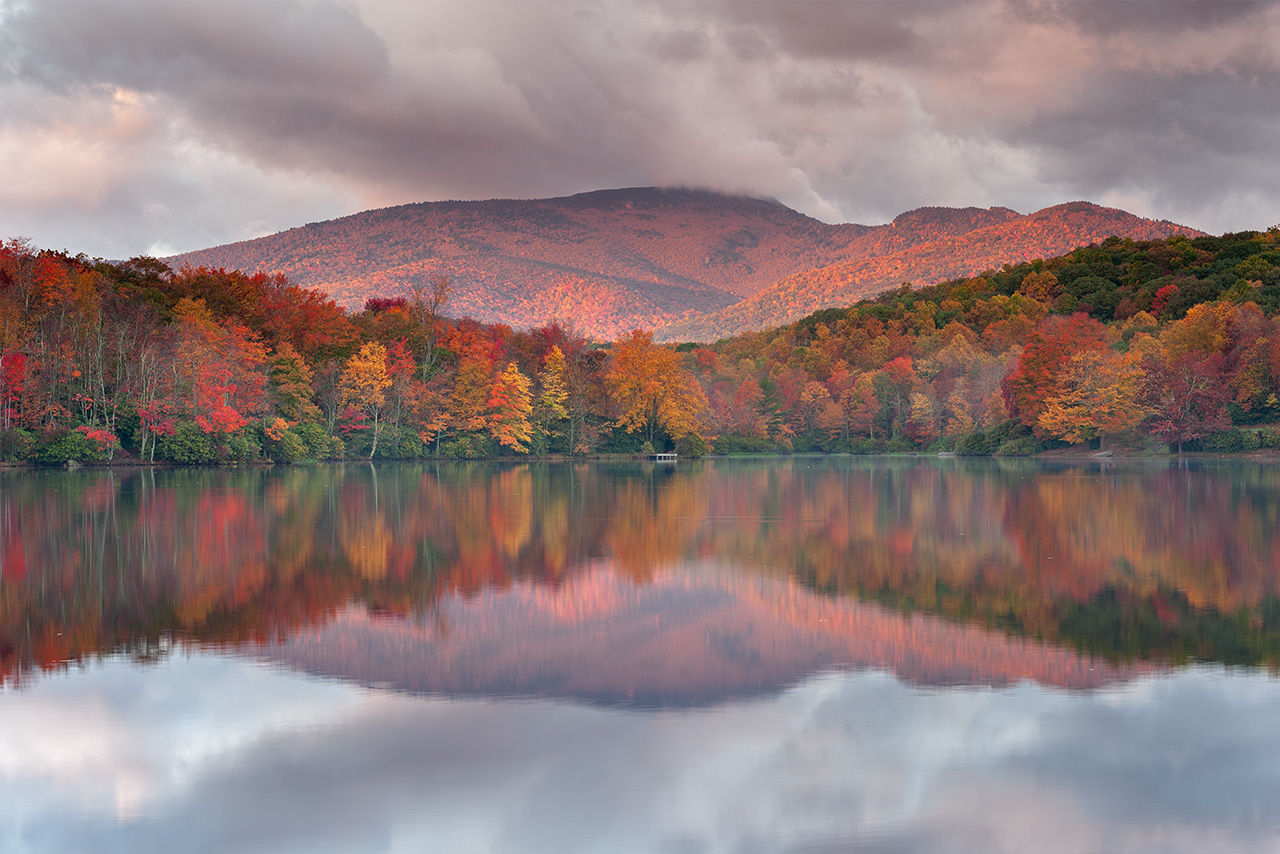
Milepost 297.  Second only to the Carolina Blue Moon image above, this has been my most popular Price Lake image.  Peak autumn color catches the first warm light of morning around a calm reflecting Price Lake with Grandfather Mountain in the background.  The only downside of this image was that the camera I was using at the time (2014) only had ten megapixels of resolution.  I’ve been trying to re-create this shot with better gear for years!
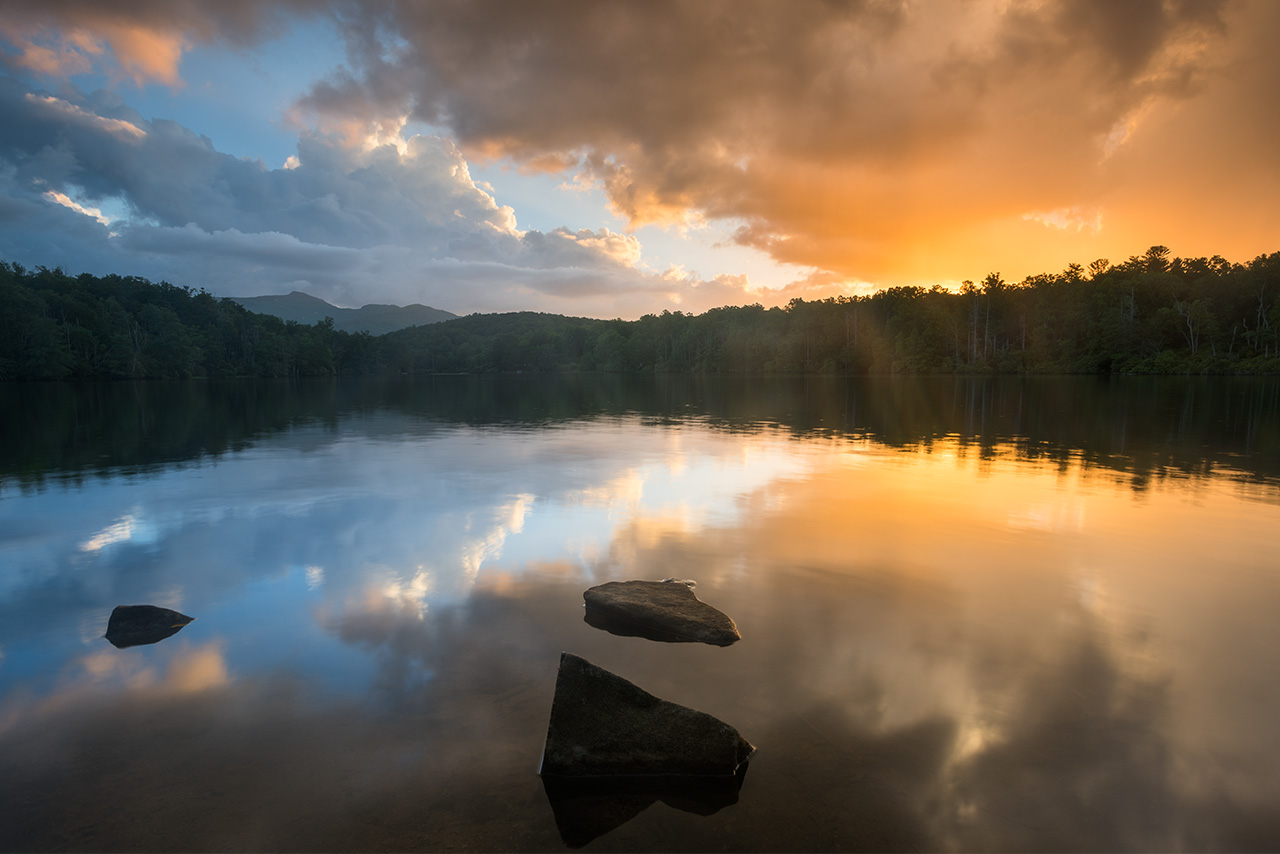
Milepost 297.  Price Lake.  A clearing thunderstorm at sunset left us wet from rain drops but happy with the dynamic conditions and color at Price Lake along the Blue Ridge Parkway.  To capture the vibrant color and reflections, this image is wider than I typically shoot at this location.
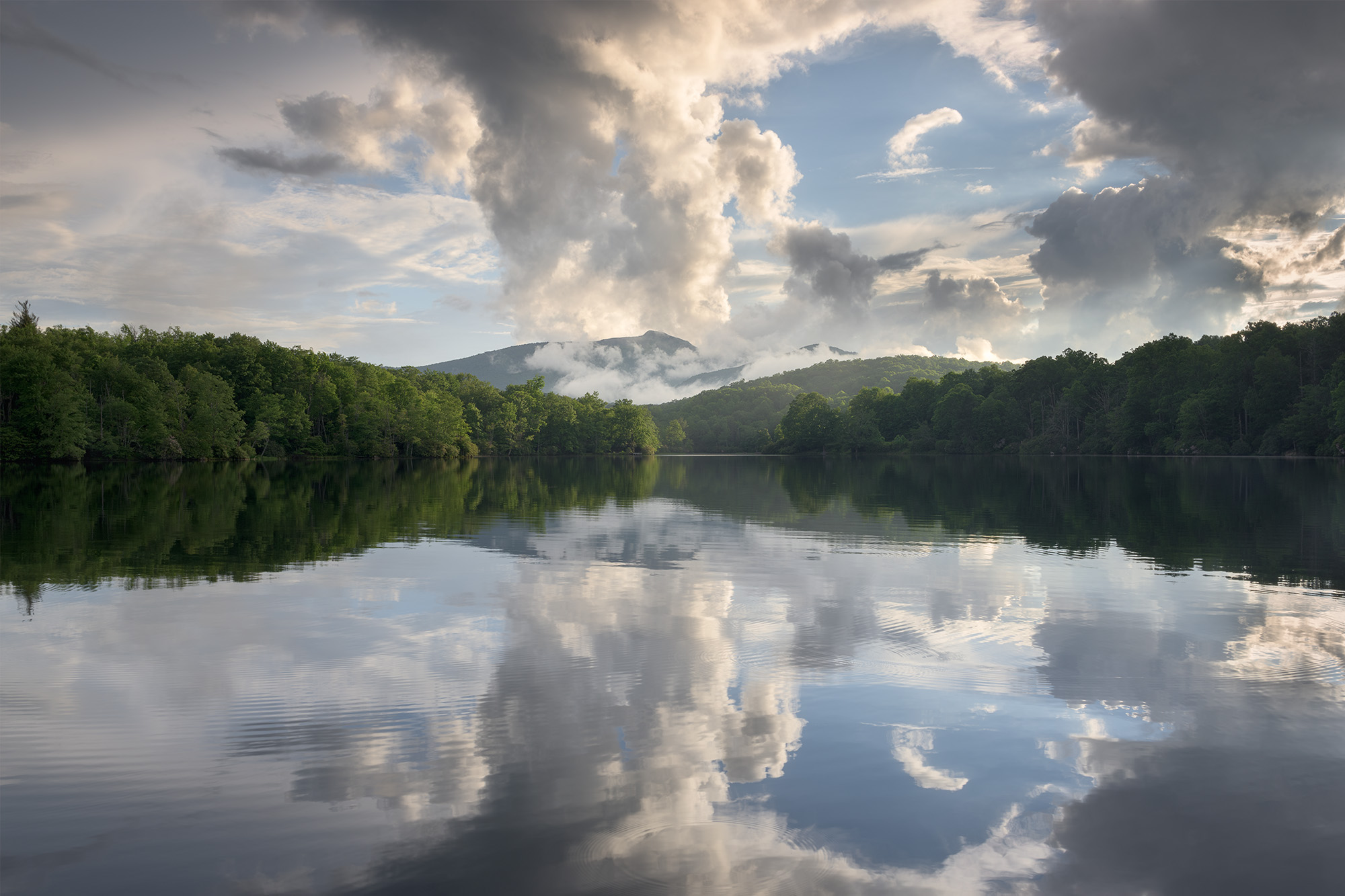
Milepost 297.  While my family was visiting, I went out to pick up a pizza from Mellow Mushroom in Blowing Rock, North Carolina.  A clearing thunderstorm drew me towards Price Lake on the way back and I couldn’t pass by such a beautifully lush and dynamic scene on the Blue Ridge Parkway.  The lake was nearly calm and the clouds were just pulling off Grandfather Mountain.
Milepost 297.  Price Lake Campground is located directly on the shores of Price Lake.  I often stay at this campground.  Sunset and sunrise at the lake are no-brainers at this location.  A two-mile hiking trail runs directly through the campground and circles the lake.  It’s one of my most visited walks along the Blue Ridge Parkway.
Milepost 297.  Price Lake.  Autumn at Price Lake along the Blue Ridge Parkway is spectacular.  Color often comes early to these waterfront trees that receive the first light of morning.  The elevation of Grandfather Mountain in the background (around 6k) almost always provides interesting microclimates and drama in the surrounding skies.
Milepost 297.  Price Lake.  While walking across the bridge that carries the Blue Ridge Parkway over the dam that forms Price Lake, I noticed a spiderweb thick with morning dew droplets within the aluminum rails.  Using a twin-head flash unit, I managed to isolate the web and the water droplets from the background.  The result was striking, I thought.
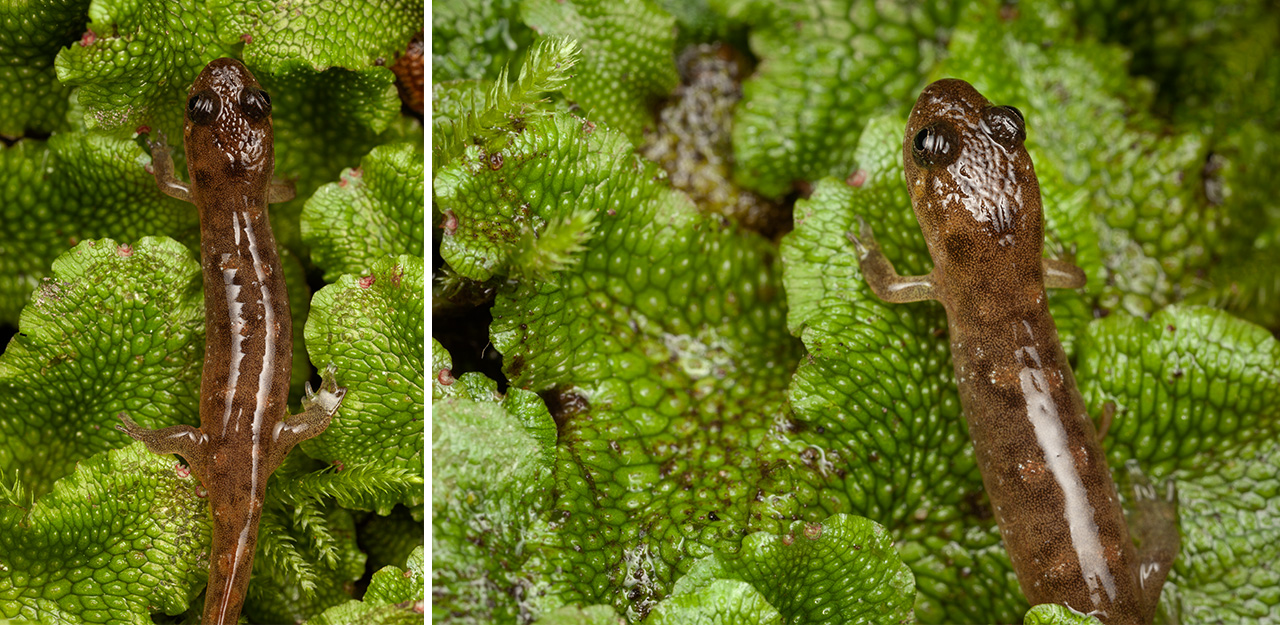
Milepost 297.  Boone Fork Trail.  Along the backside of the Boone Fork Trail–a five mile hike alongside Boone Fork and through Price Lake Campground–I found a number of neat salamanders/newts underneath a dripping stone wall.  They were using a bed of Cat’s Tongue Liverwort to hide within.
Milepost 297.  Boone Fork Trail.  While hiking along the Boone Fork Trail near Blowing Rock, North Carolina, I found a beautiful moth resting in some foliage.  Moth’s are nocturnal.  Using my macro rig, I really wanted to punch in on the textures and color of the scales that made up the wings.  These are the chance encounters that add richness to my experiences along the Blue Ridge Parkway.
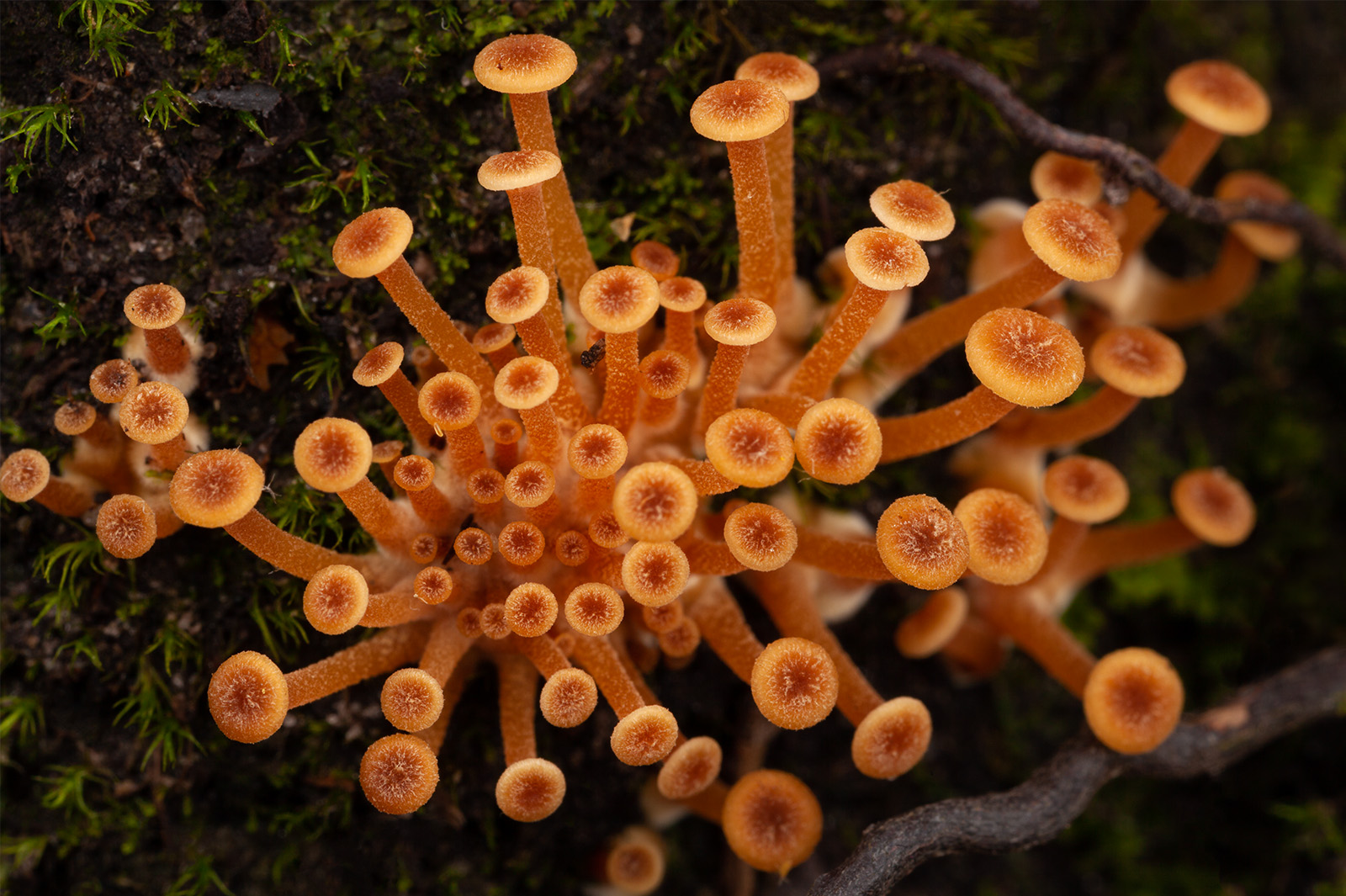
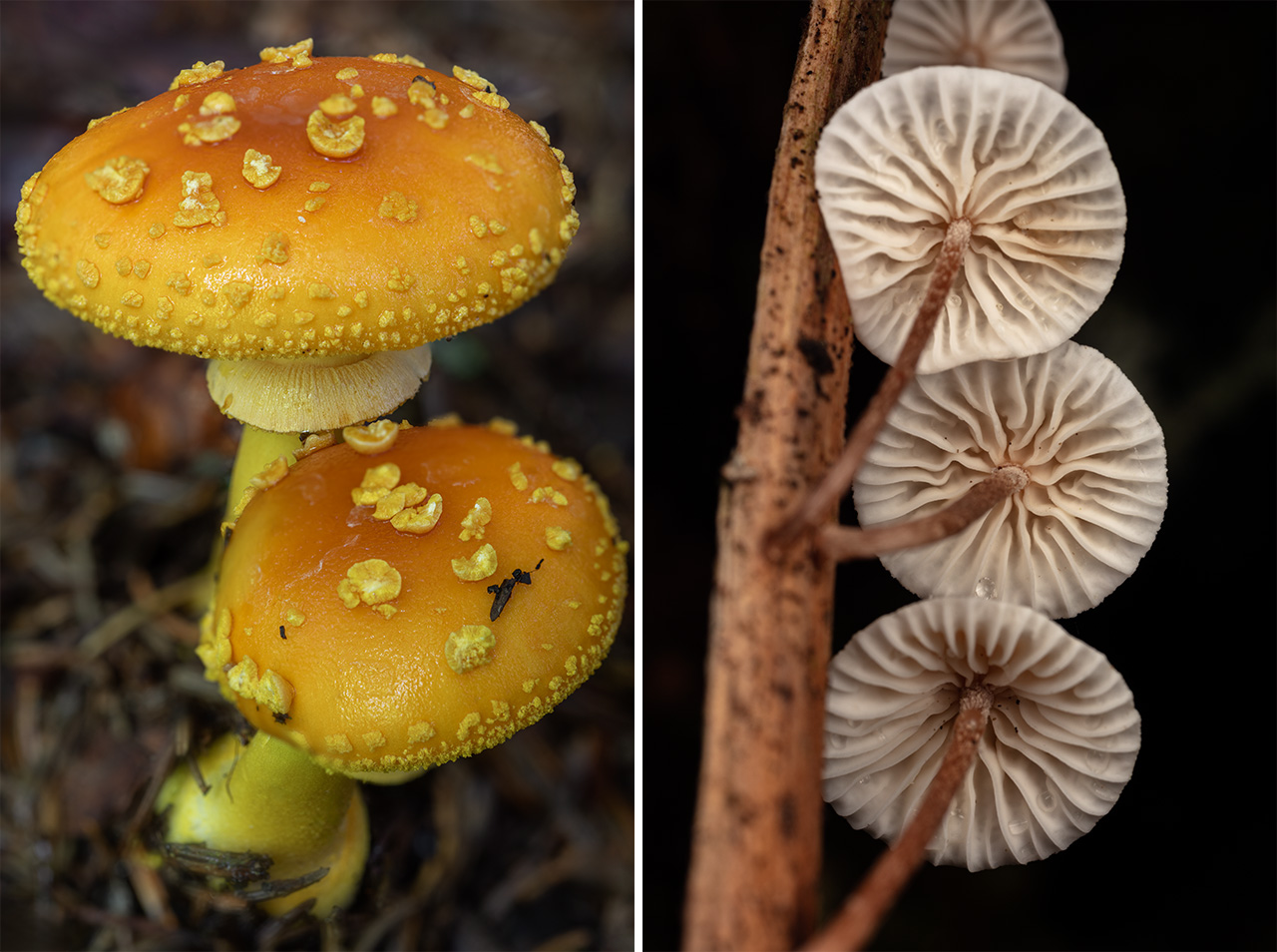
Milepost 299.  The Tanawha Trail.  A cluster of Orange Mycena mushrooms decorated a fallen log near The Tanawha Trail.  The Tanawha Trail is a thirteen-mile hiking trail from Price Lake up to Beacon Heights, running largely parallel to the Blue Ridge Parkway.  I found these beautiful, bright mushrooms along the trail just north of Boone Fork.
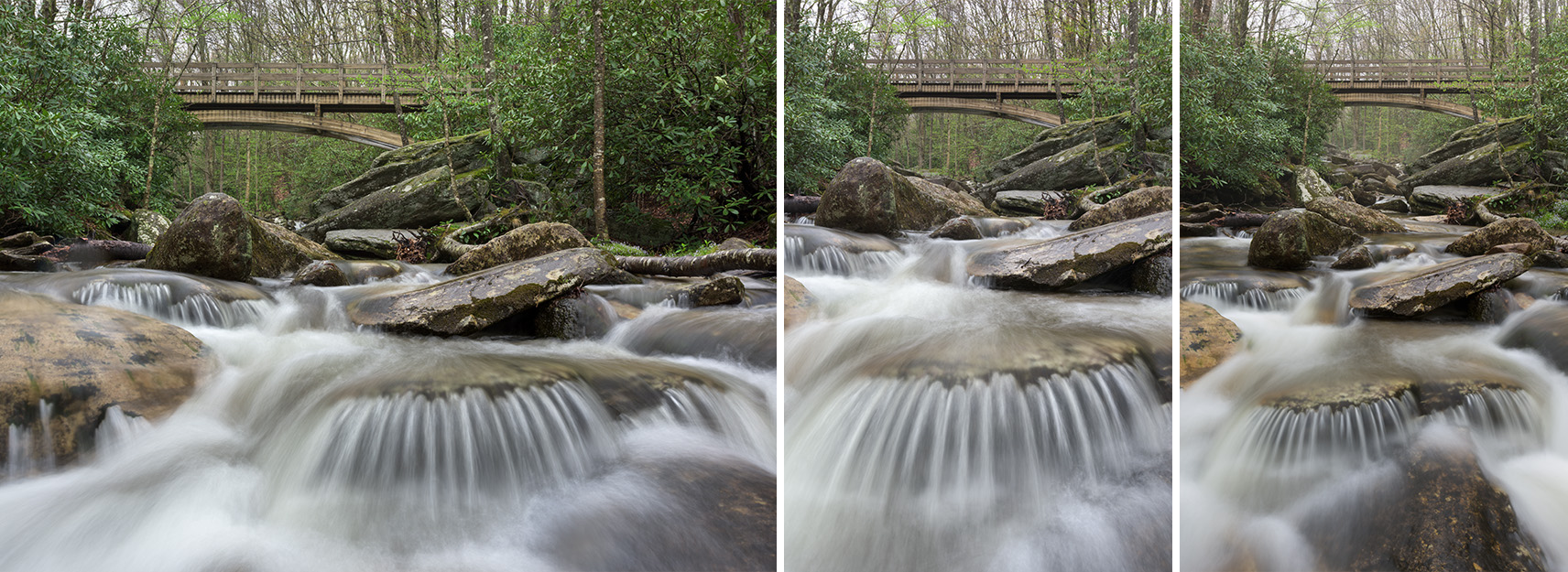
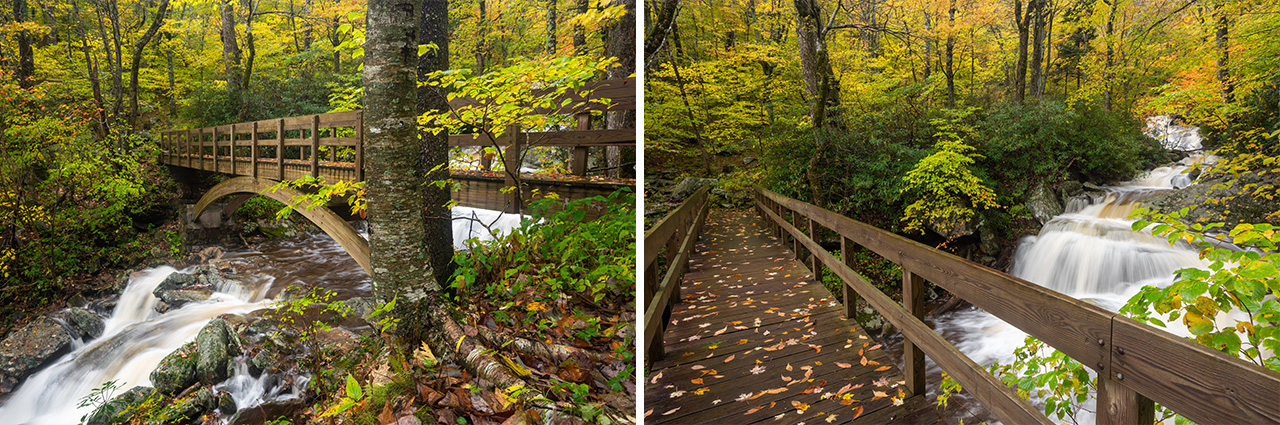
Milepost 300.  The Tanawha Trail.  The Tanawha Trail crosses a number of artful wooden bridges along its thirteen mile length.  This particular bridge is over Boone Fork, a headwater stream originating along the slopes of Grandfather Mountain.  I took these images in May, before the tree canopy had filled in with leaves; water levels were seasonally high.
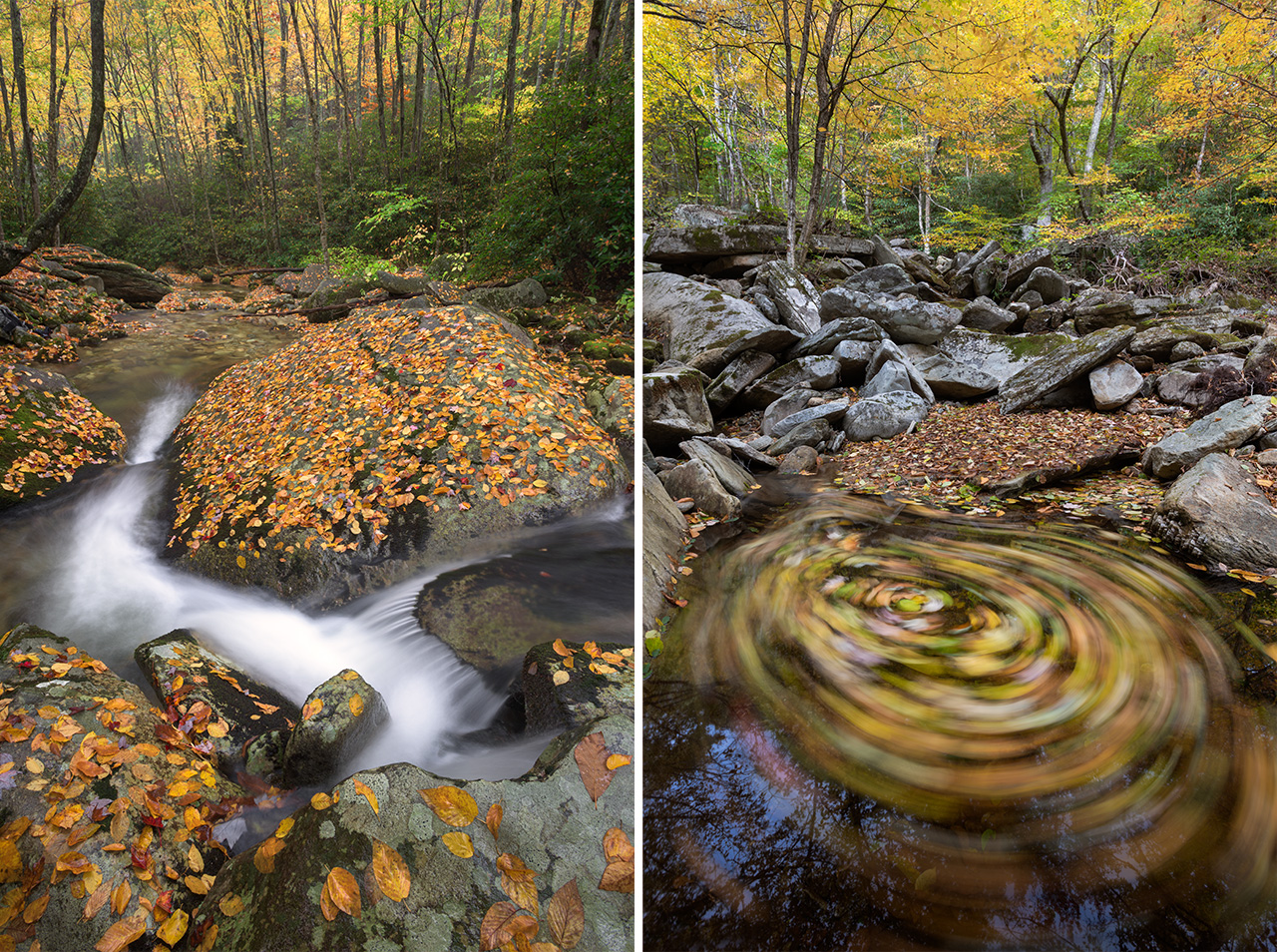
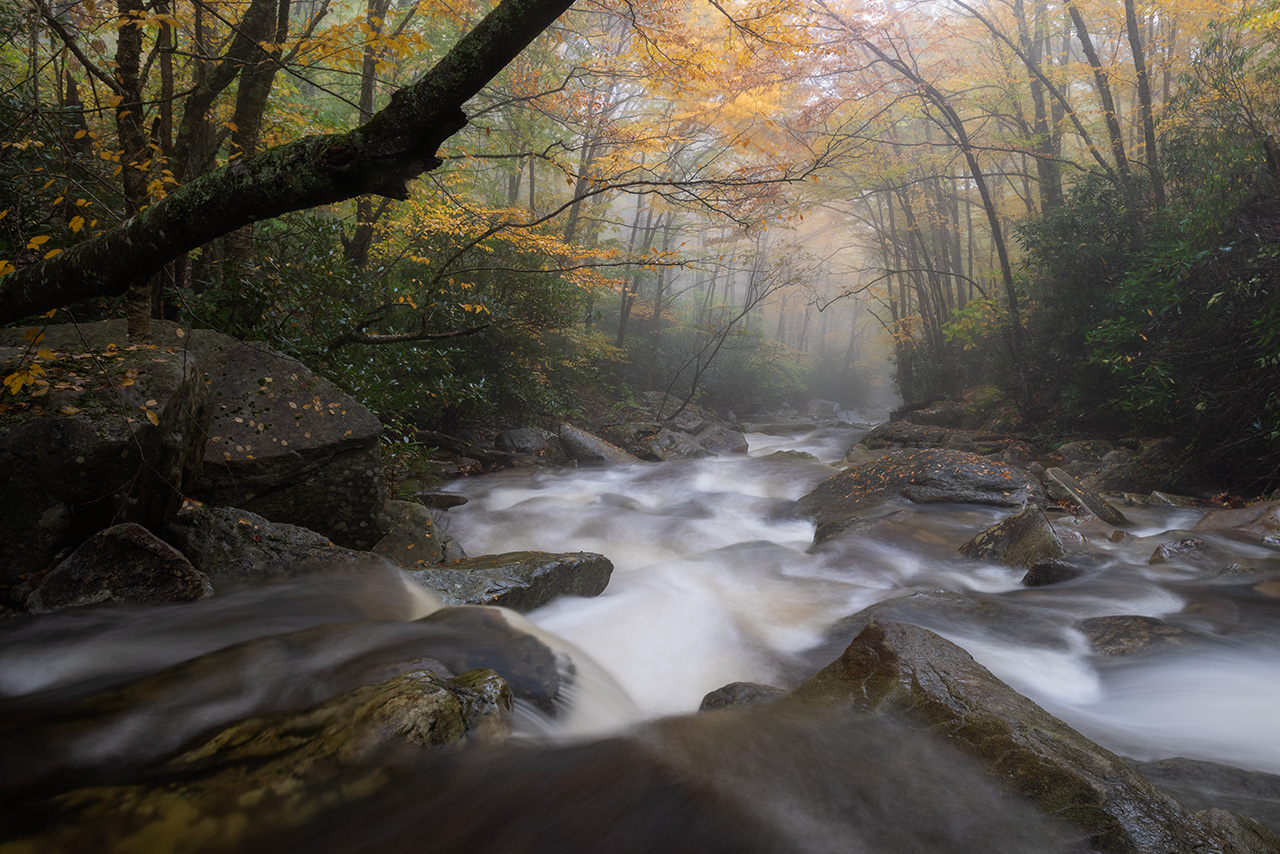
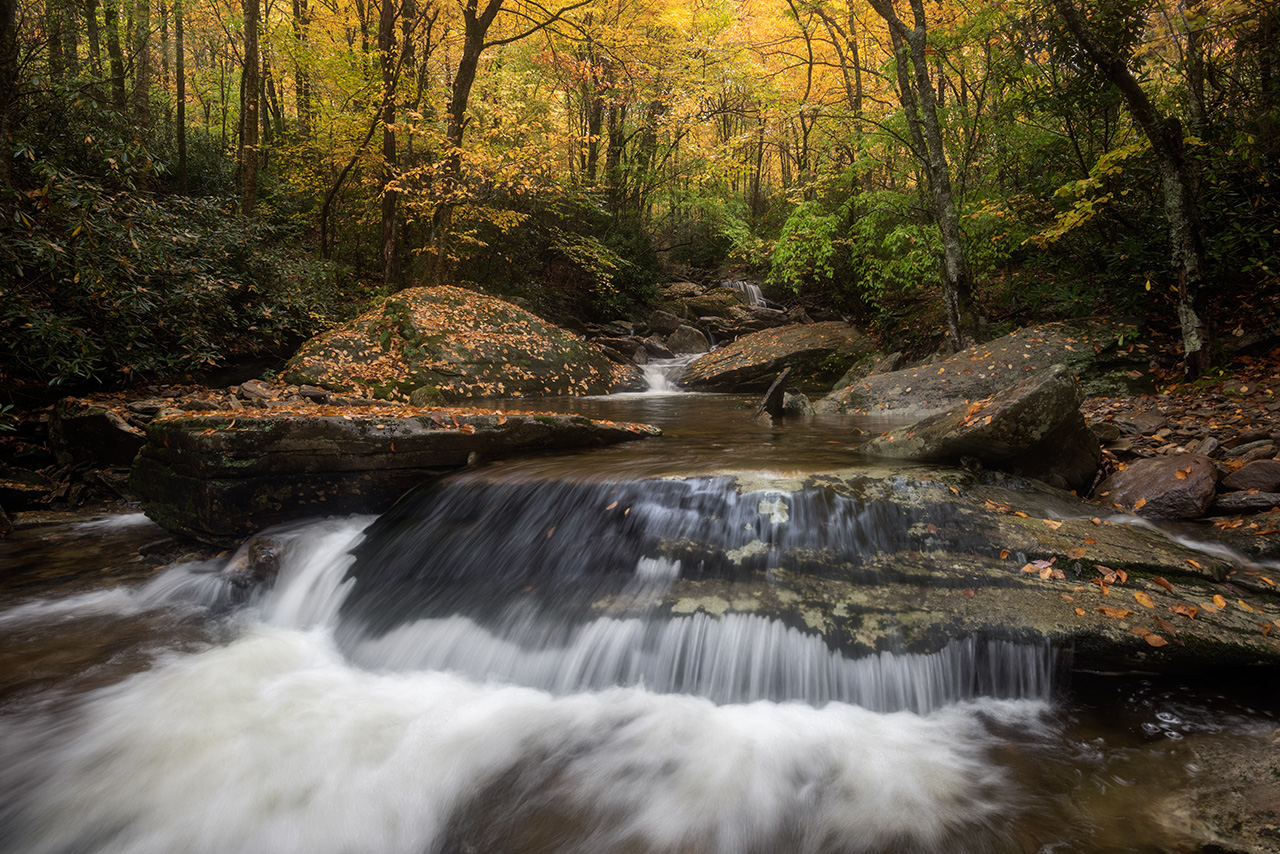
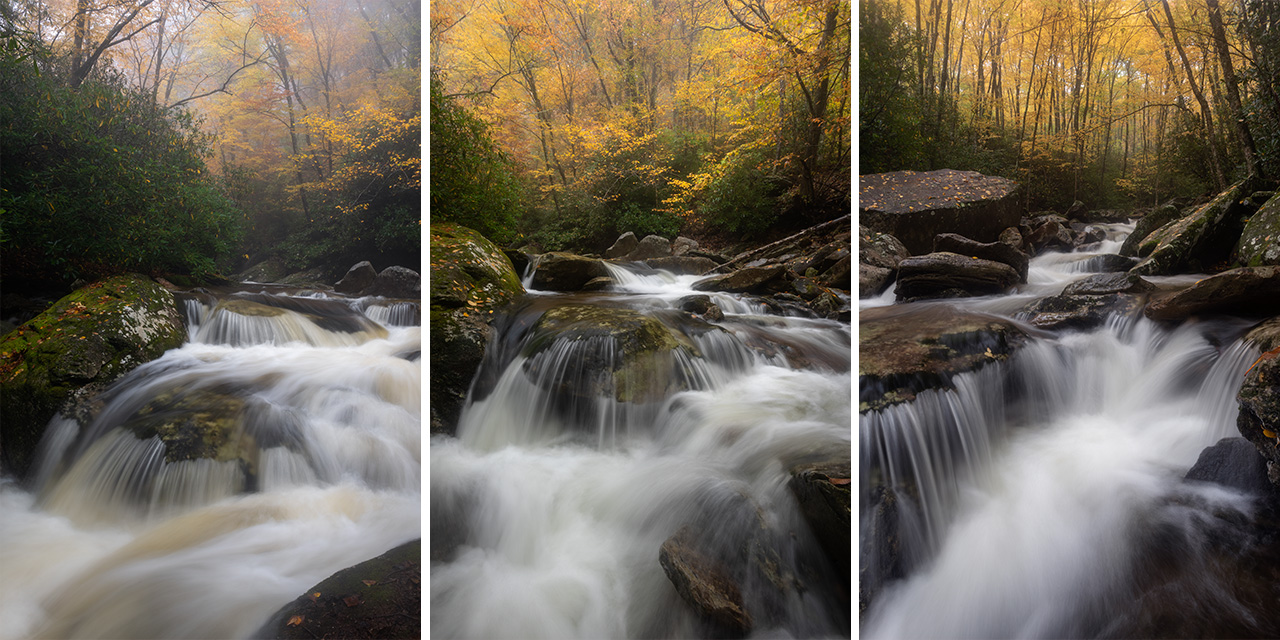
Milepost 300.  Boone Fork Creek.  Perhaps my favorite thing to do during the autumn season is to wade along a headwater stream.  The seasonal color, swirling water and fallen leaves create an endlessly beautiful landscape.  This is Boone Fork Creek, a headwater stream coming off of Grandfather Mountain.
Milepost 300.  Boone Fork Creek.  Travel ground to a halt in 2020 with all of the crazy Covid madness.  I was able to score a campsite at Price Lake and maanged to spend several full days wading the headwaters of Boone Fork with the camera.  It was solitary and therapeutic.
Milepost 302.  The Tanawha Trail.  There are sections of the Tanawha Trail along the flanks of Grandfather Mountain that are incredibly productive and diverse for wildflowers.  In fact, this particular section has increased signage forbidding off-trail adventure because of rare wildflower habitats.  I was lucky enough to find both this Gray’s Lily and Fire Pink right along the trailside.
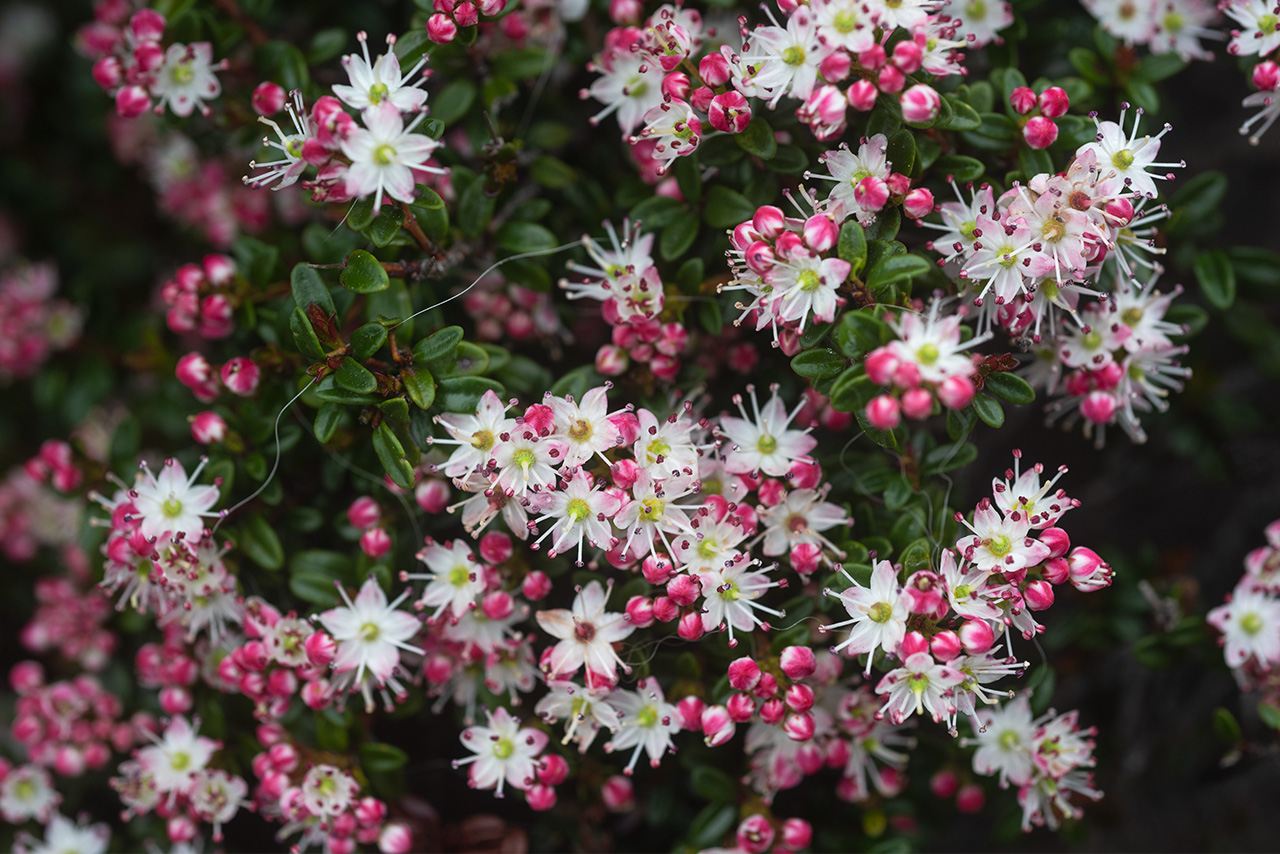
Milepost 303.  The Tanawha Trail.  Sand Myrtle is a regionally rare, disjunct plant that occurs in some abundance along the flanks of Grandfather Mountain.  I first found this plant along the trail up to Rough Ridge off the Blue Ridge Parkway.  I’ve since found it to be in several locations in this section of the Blue Ridge Parkway, as well as directly along the Parkway’s shoulders north of Linn Cove Viaduct.
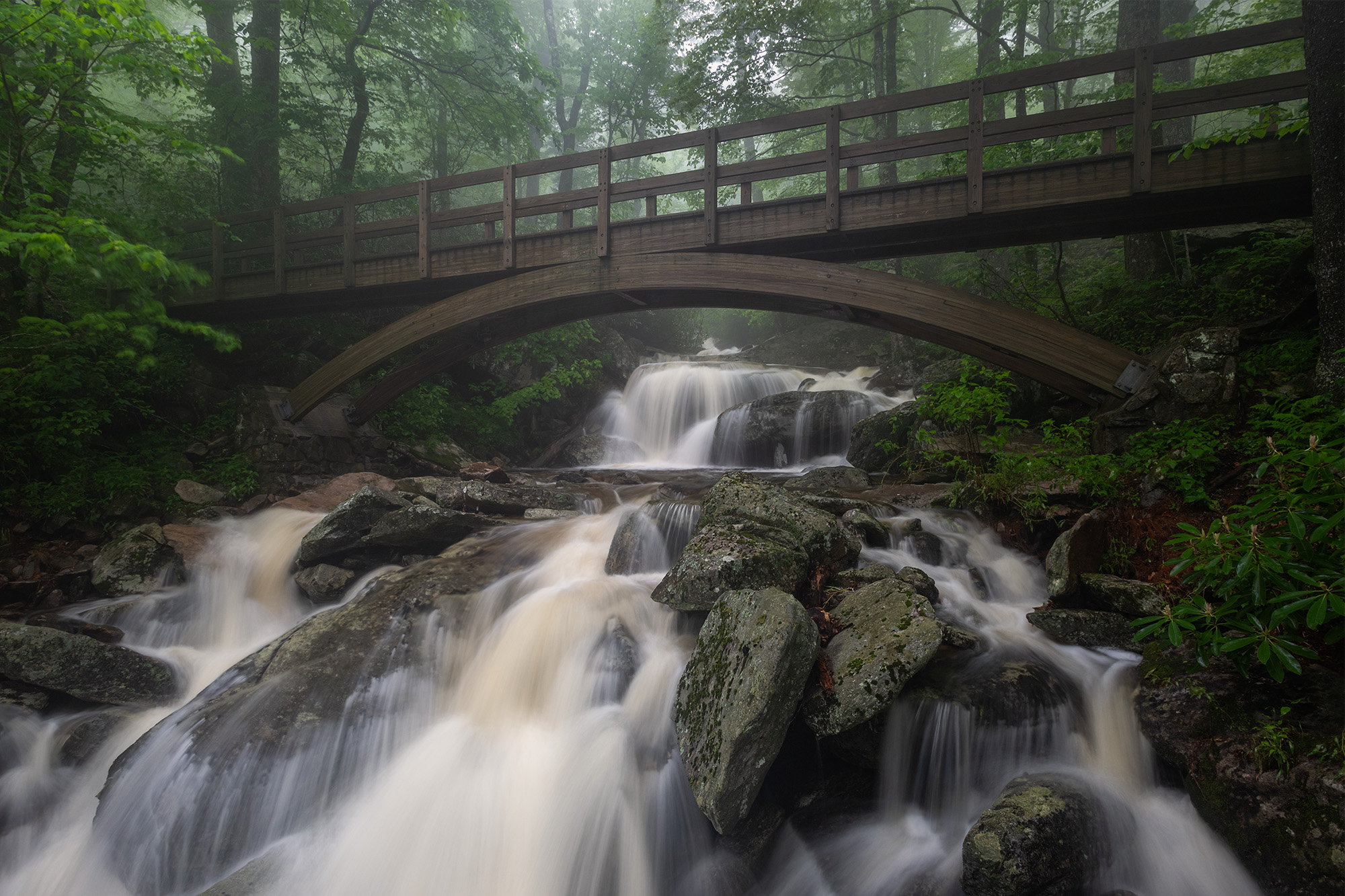
Milepost 303.  The Tanawha Trail.  Another artful wooden bridge carries the Tanawha Hiking Trail over Wilson Creek just off the Blue Ridge Parkway.  Wilson Creek is a true headwater stream at this location; only directly after a considerable rain does the stream fill and crash with beautiful cascades.  I camped at nearby Price Lake and visited this location after days of steady rain.
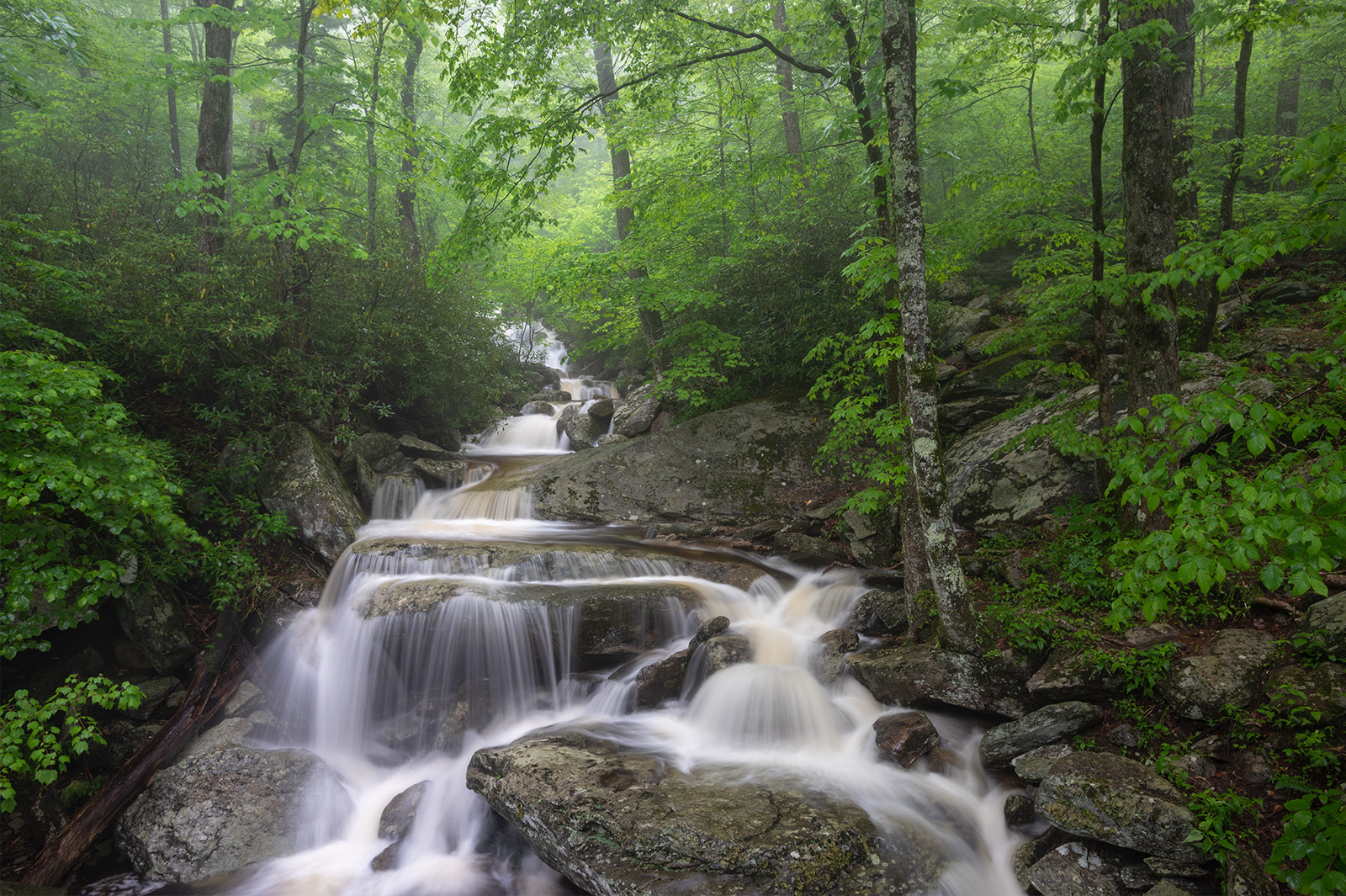
Milepost 303.  Wilson Creek.  True headwater streams come to life after considerable rain, and dry quickly afterwards.  Wilson Creek along the Tanawha Trail is near the top of Grandfather Mountain.  Visiting this beautiful headwater stream is an exercise in timing.  Come too early or late before or following a rain and it will only be large boulders.
Milepost 303.  The Tanawha Trail.  Following hot summers, autumn is often a dry period within the landscape–even in Southern Appalachia.  This is especially true along high-elevation headwater streams like Wilson Creek.  I was excited for both the vibrant color and the chattering stream during this wet stretch of weather.
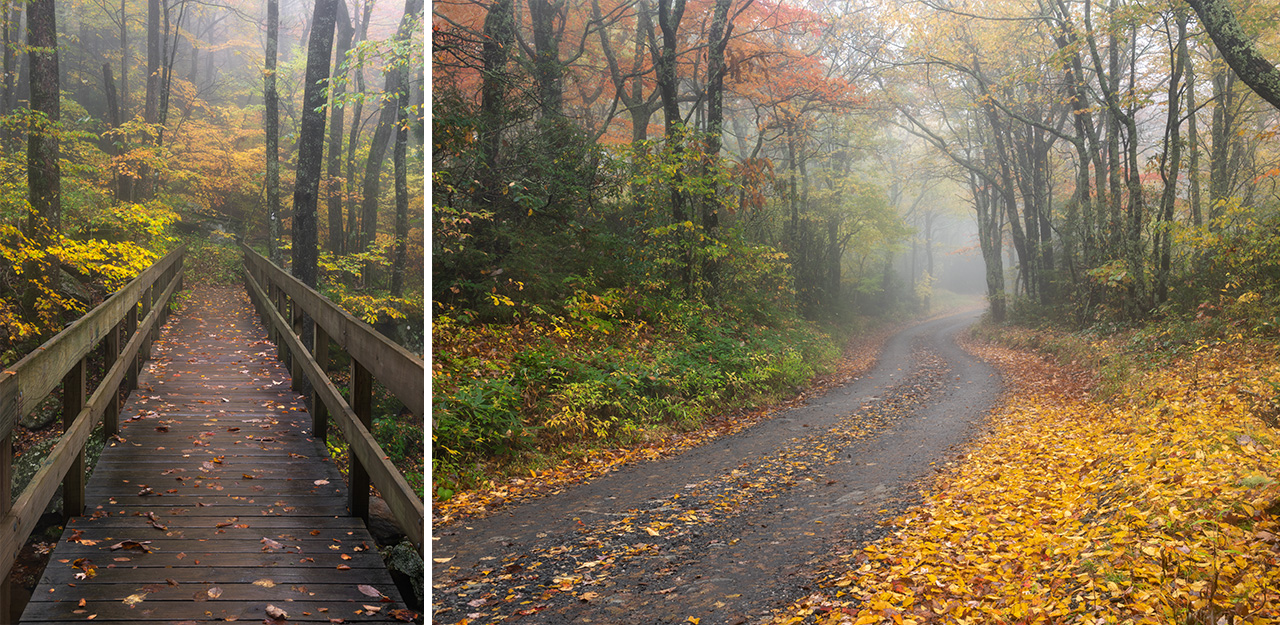
(Left) Milepost 303.  The Tanawha Trail.  A beautiful wooden bridge over Wilson Creek along the Tanawha Trail during the autumn color change.  (Right) Milepost 305.  Carroll Gragg Road.  Autumn trees drop beautiful colored leaves along a dirt road on Grandmother Mountain.
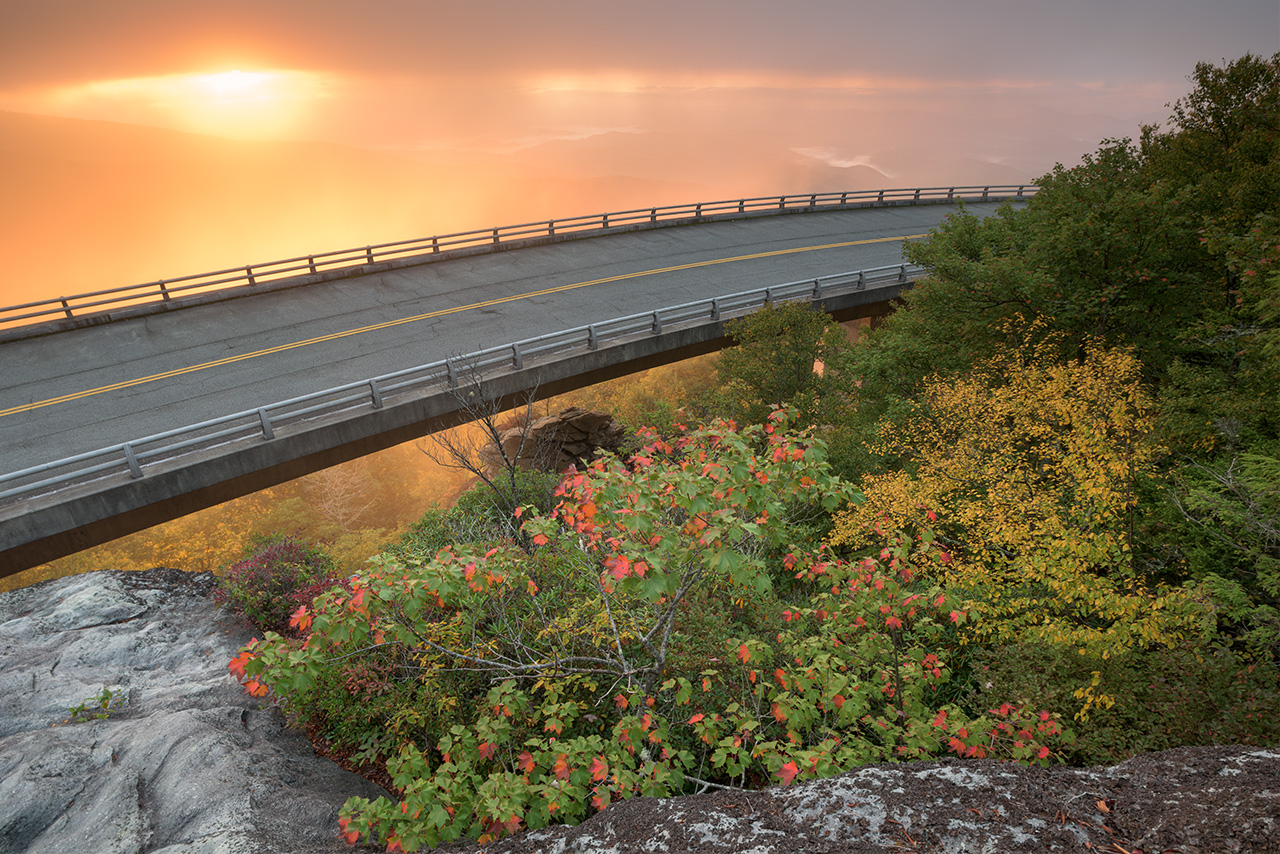
Milepost 304.  The Linn Cove Viaduct.  Sunrise cuts through thick fog/cloud along the Linn Cove Viaduct and Blue Ridge Parkway.  The Linn Cove Viaduct was the last section of the Blue Ridge Parkway to be completed.  It’s precast, top-down construction was innovative and protected the geologically unique and valuable Grandfather Mountain.
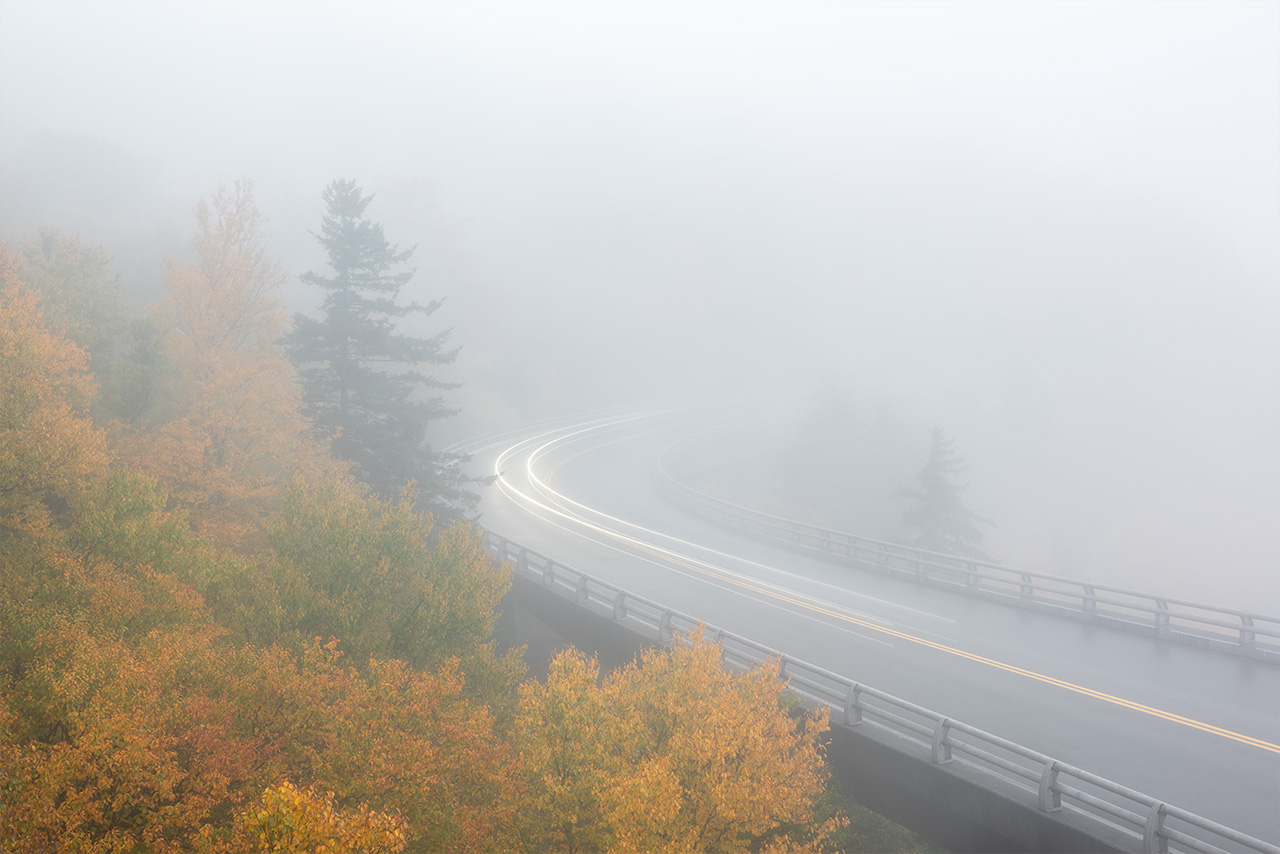
Milepost 304.  Linn Cove Viaduct.  The headlights of a southbound vehicle crossing the Linn Cove Viaduct in thick autumn fog.  The Linn Cove Viaduct is a 1243-foot, precast, segmental bridge that carries traffic around and off the sensitive flanks of Grandfather Mountain in Western North Carolina.
Milepost 304.  The Linn Cove Viaduct.  The Blue Ridge Parkway swings out and off the flanks of Grandfather Mountain at the Linn Cove Viaduct to protect the most geologically ancient mountain in North America.  The feeling is similar to flying, with views out and down into deep valleys often filled with fog and inverted cloud.
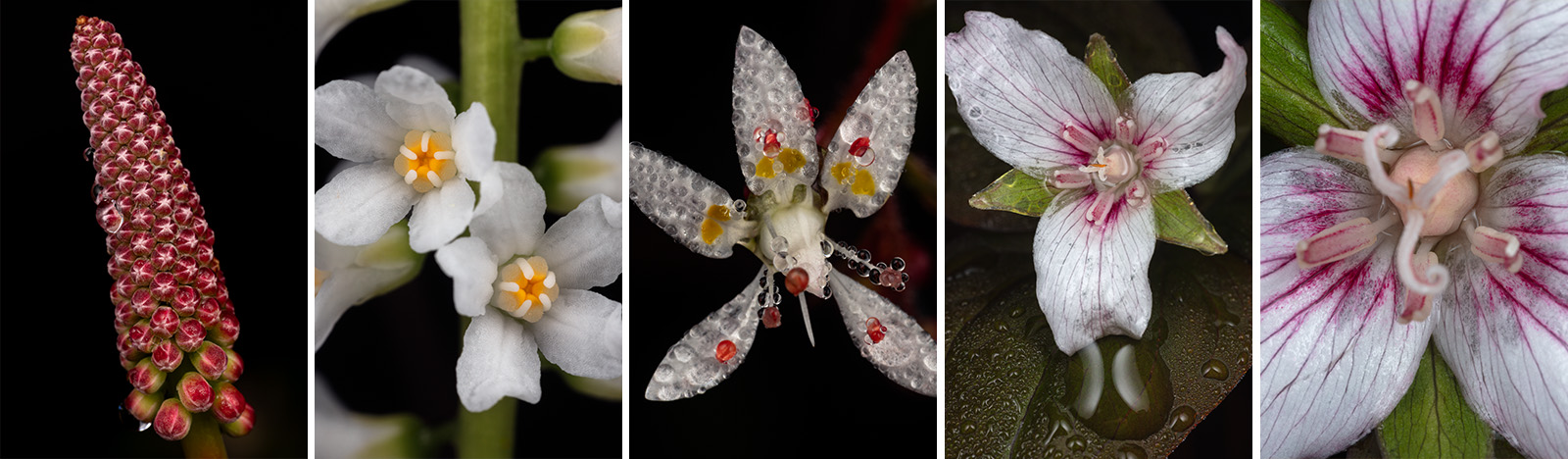
Milepost 304.  The tiny white flowers of Galax, a native wildflower in the Southern Appalachians.  Growing within moist, shaded woodlands, Galax is often identified by their leathery, green, heart-shaped leaves.  Many recognize them by smell:  on hot days in areas with dense populations, they have been said to smell a bit like skunky marijuana (I’ll let you be the judge).
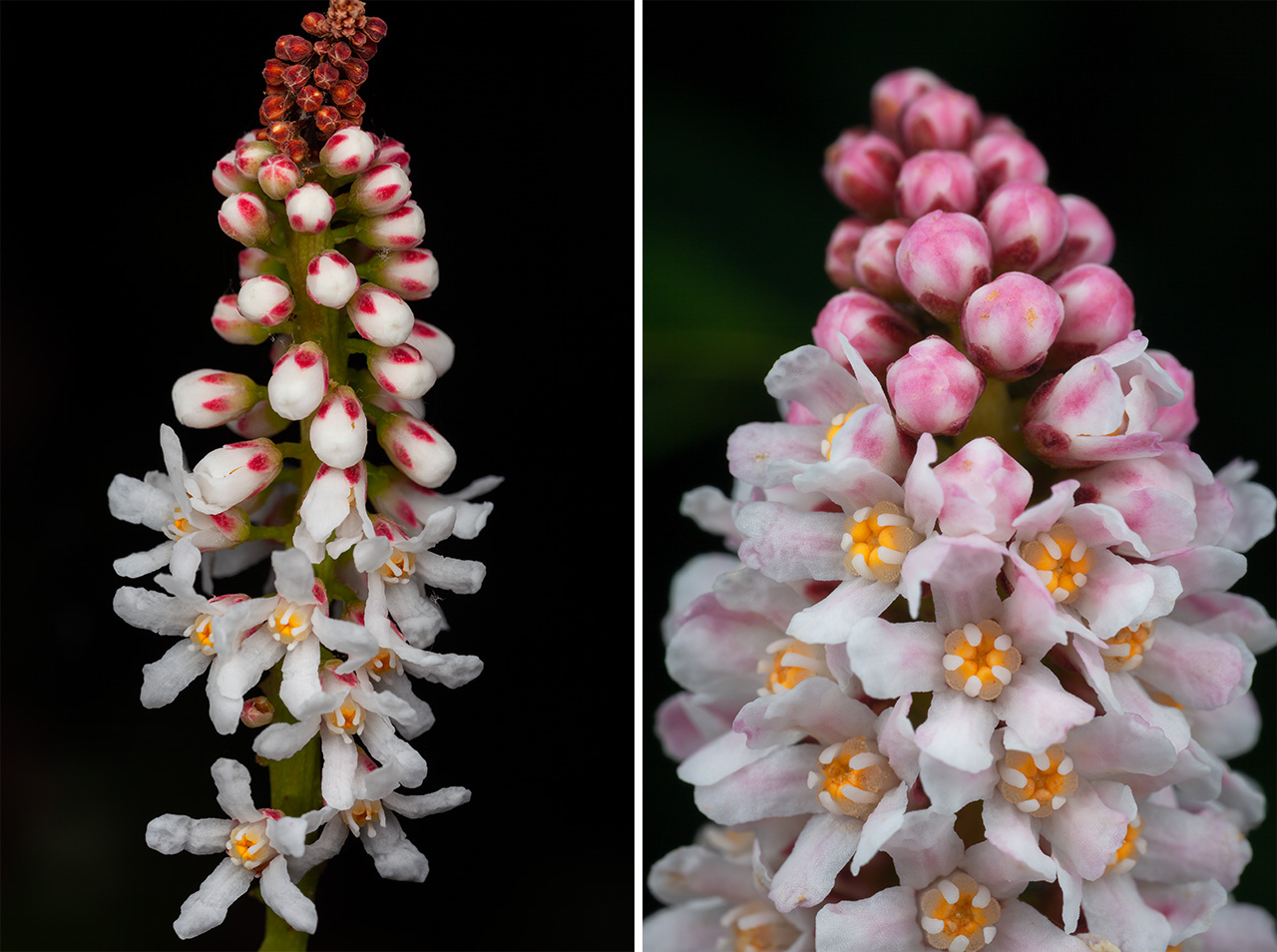
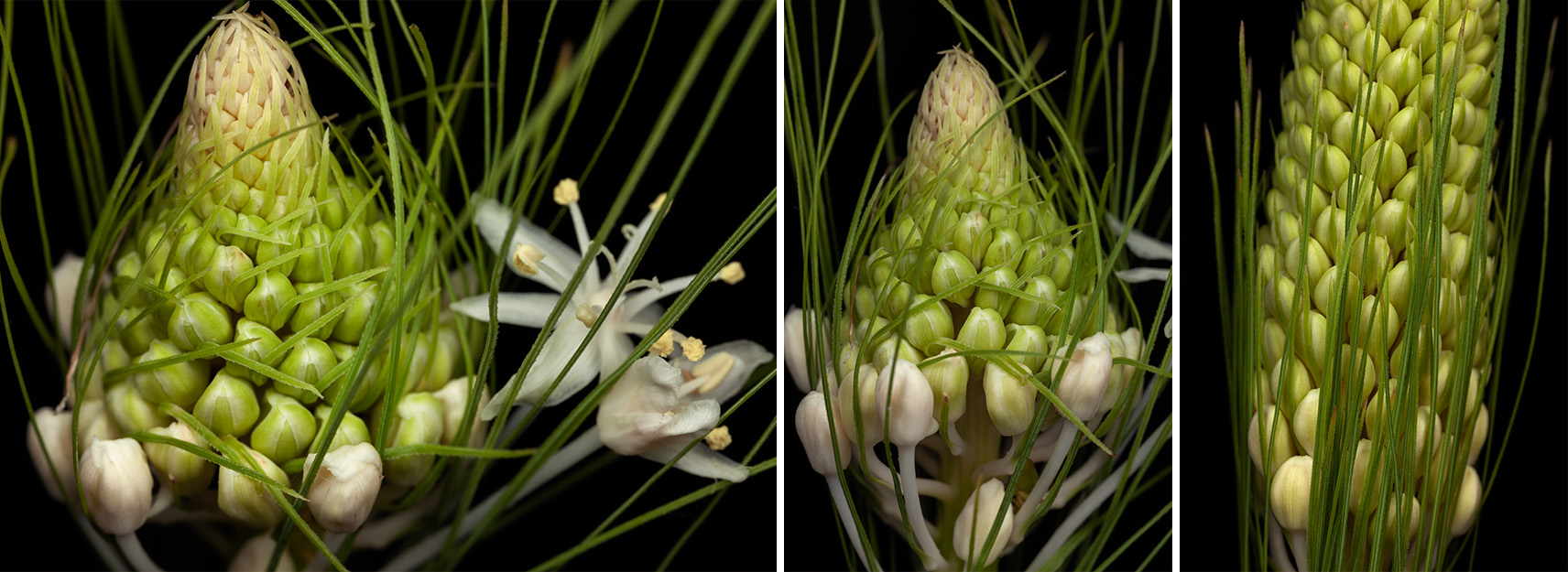
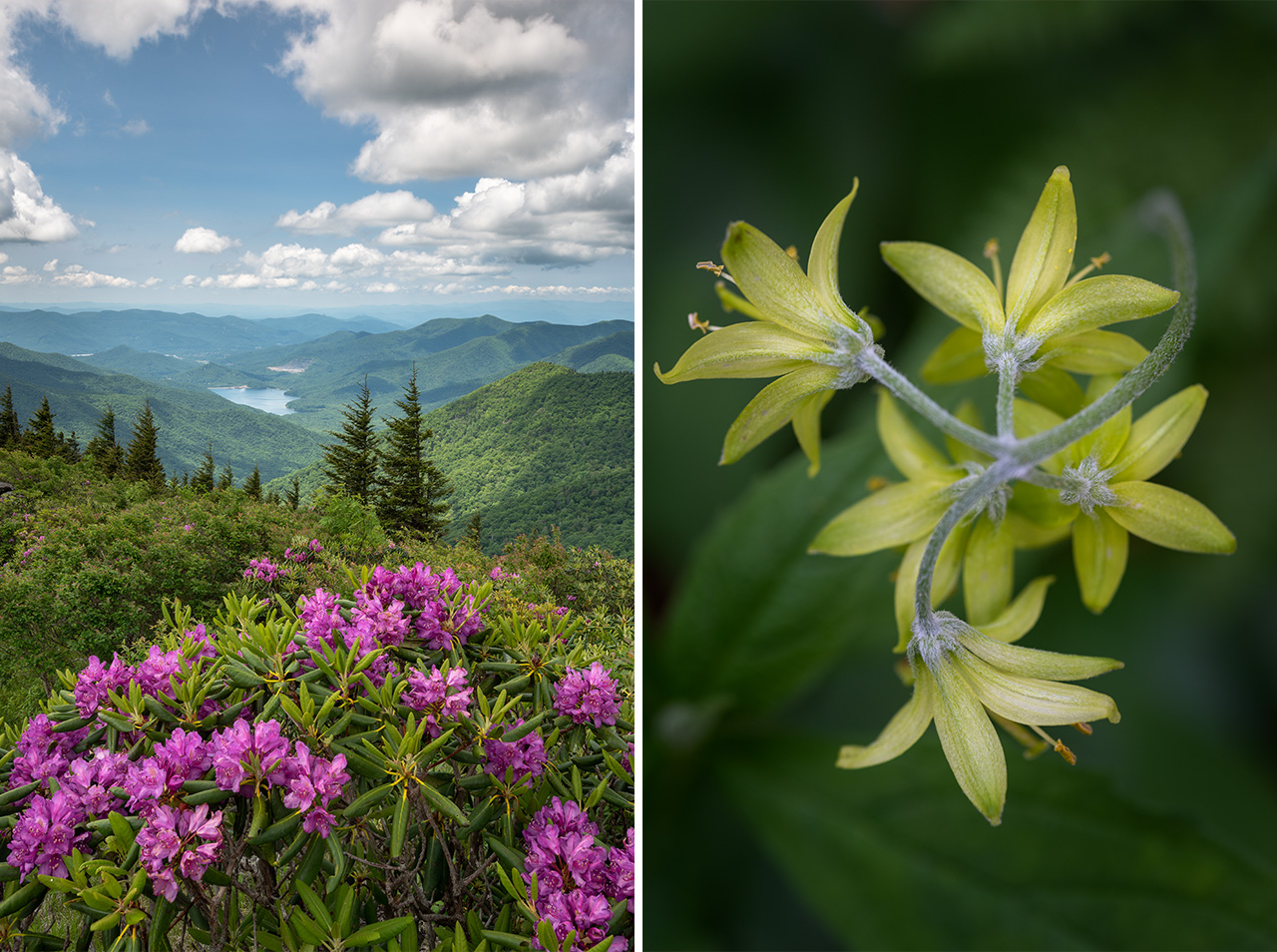
Milepost 304.  Turkeybeard Wildflowers.  Turkeybeard (Xerophyllum asphodeloides) is a really neat and beautiful wildflower that grows along the flanks of Grandfather Mountain.  The most popular place you can visit to see Turkeybeard is along the Rough Ridge hiking trail.  It grows tall–nearly six feet at times.  And it’s relatively rare, noted as S3 Vulnerable by NatureServe.
Milepost 304.  Orange Mycena.  These vibrant little fungi are decomposers, working to break down woody debris into nutrients and soil.  I found this little clump of Orange Mycena (Mycena leaiana) right in the middle of the Mountains to Sea Trail just south of the Stack Rock Overlook along the Blue Ridge Parkway.
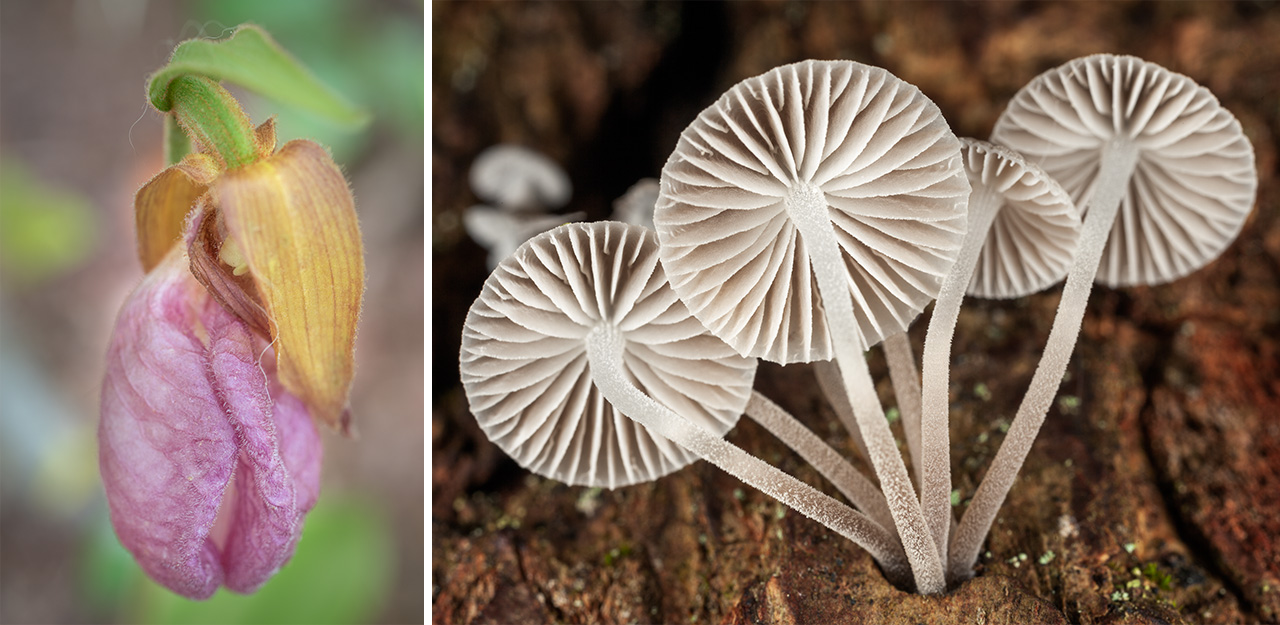
(Left) Milepost 305.  Pink Lady Slipper orchids are a favorite amongst wildflower hunters and visitors.  These natives are actually relatively abundant along the Blue Ridge Parkway.  However, they need very specific underground fungi to germinate and the time from seed to bloom is often ten-plus years.  So, when folks have favorite spots to witness these beauties, they often keep them close to the vest.  (Right) Milepost 307.  Beautiful white mushrooms growing from a tree stump on the flanks of Grandmother Mountain.
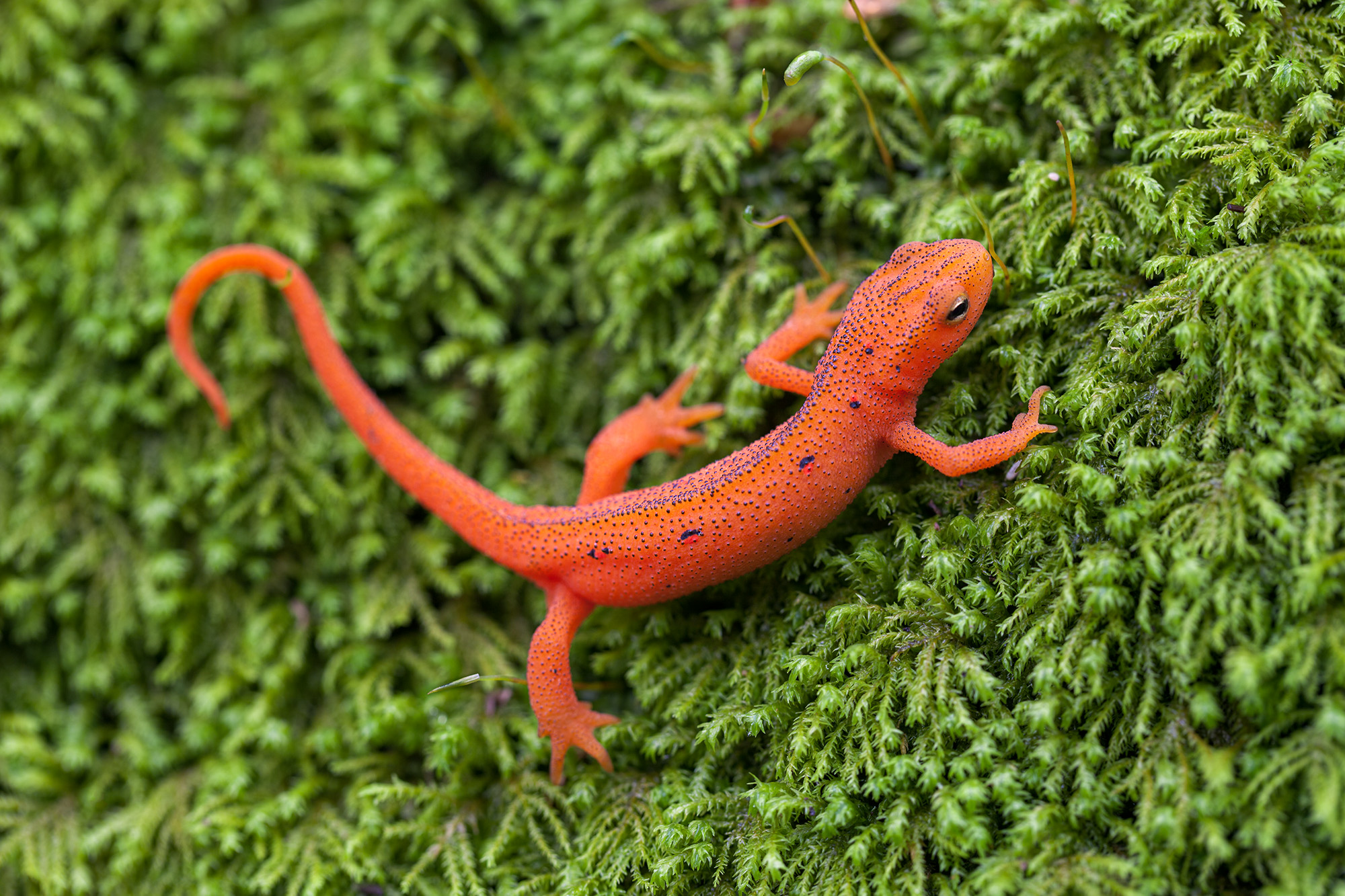
Milepost 308.  Flat Rock Overlook.  The Red-Eft is a juvenile Eastern Newt.  After the larval stage, these newts have a land-going phase where they move over the landscape to new ponds and puddles before becoming primarily water going again.  Their bright orange color is known as aposematism: a warning to predators.  Red Eft Newts can produce tetrodotoxin, a powerful neurotoxin.  They often strut around relatively confidently if you hit the trails following a good rain.
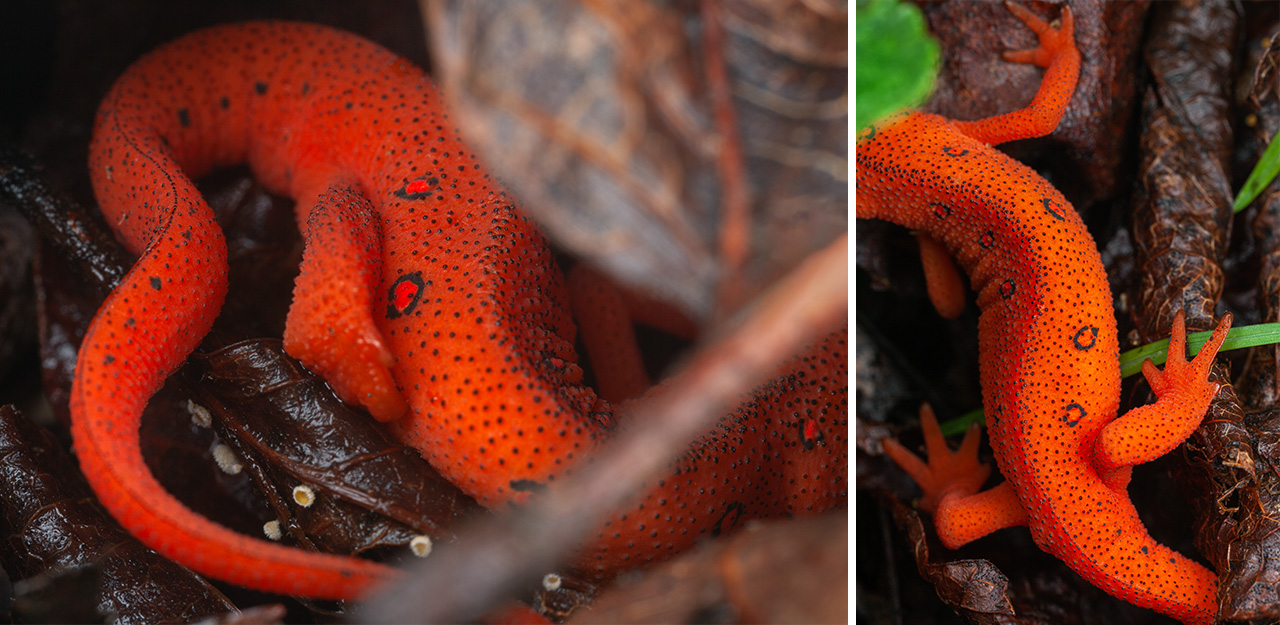
Milepost 308.  Flat Rock Overlook.  Following a good early spring rain, I love to hit this short trail and look for Red-Eft Newts.  They seem to hang out in the same general areas every year and never disappoint me with their amazing colors and cool little feet!
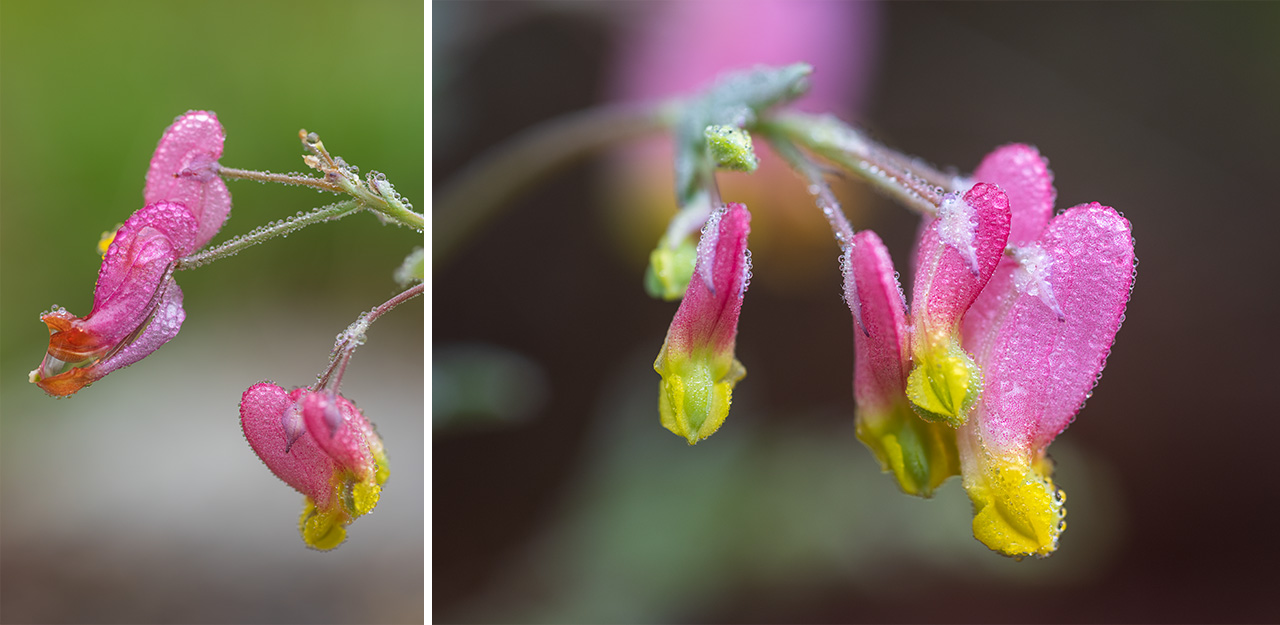
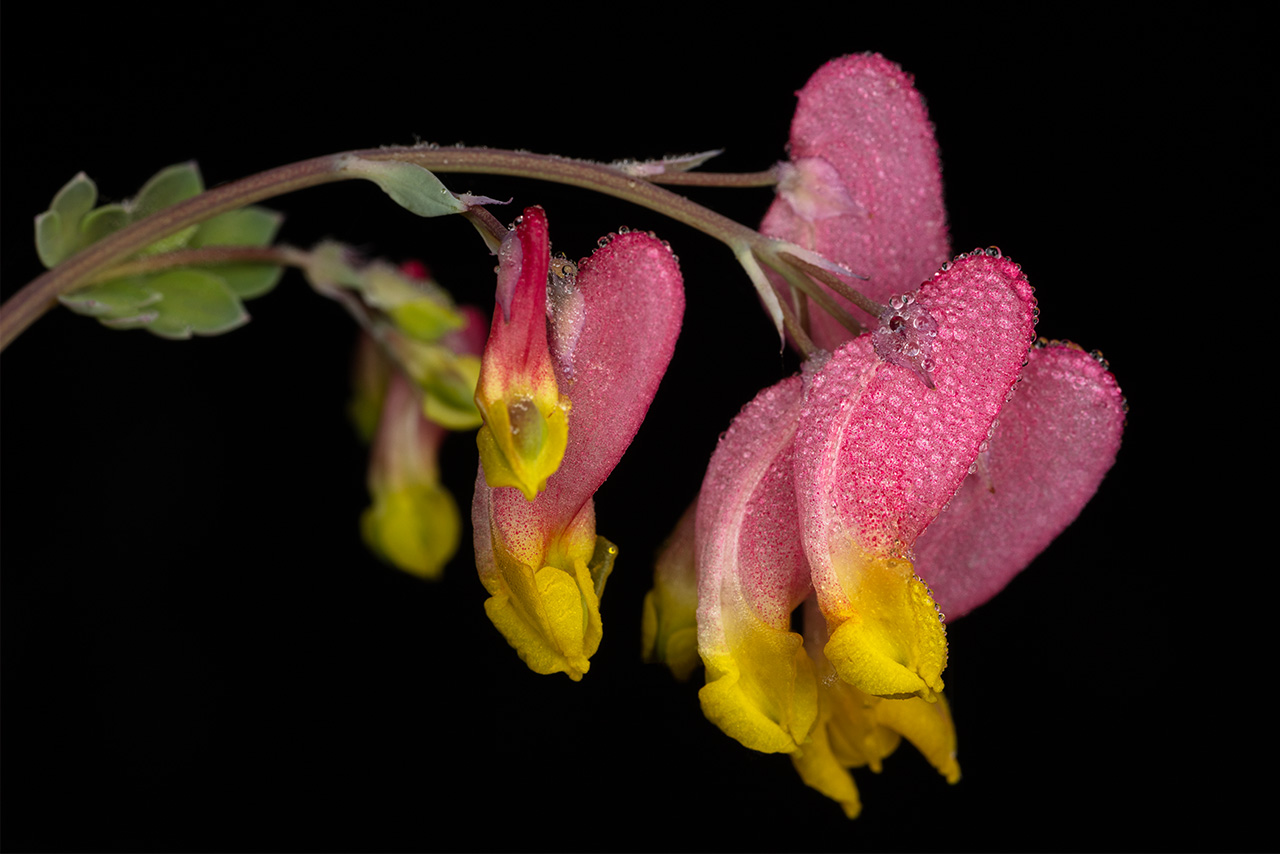
Milepost 308.  Flat Rock Overlook.  The clifftop rocks at this overlook provide excellent habitat for the Rock Corydalis (aka the Rock Harlequin or Pale Corydalis).  This little plant has beautiful pink tubular flowers with yellow shoes.  The leaves are fern-like and lacy.
Milepost 308.  Flat Rock Overlook.  Pink Rock Corydalis (Corydalis sempervirens) is a beautiful wildflower that takes advantage of the dry, sunny, clifftop habitats of this overlook.  I find photographing them to be an addictive challenge.
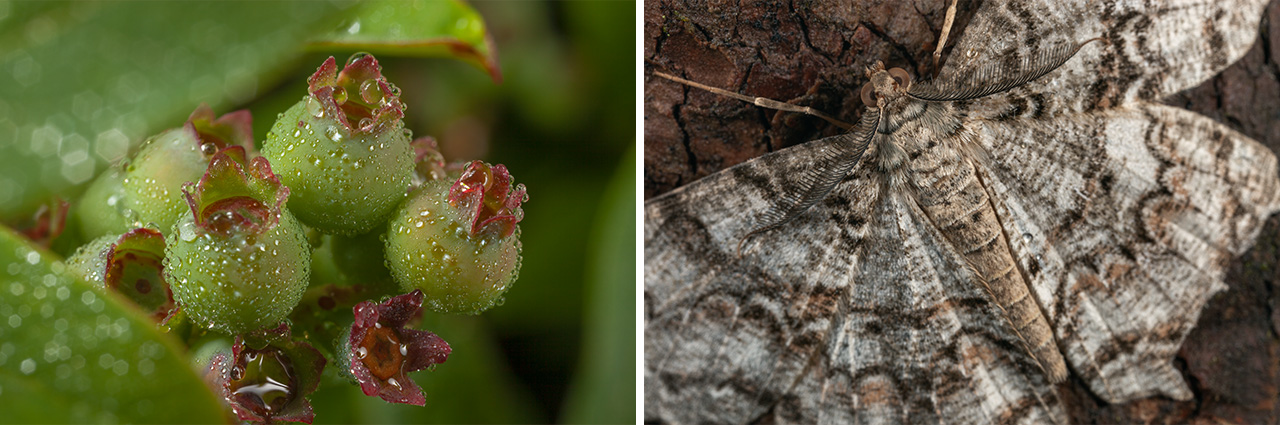
Milepost 308.  Flat Rock Overlook.  (Left) Blueberries progress towards ripening atop the open, sunny clifftops at this overlook.  I absolutely love hiking along the Blue Ridge parkway when the blueberries are ready for snacking!  (Right) A Tulip Tree Beauty Moth uses camouflage patterning to blend with tree bark and hide from predators.
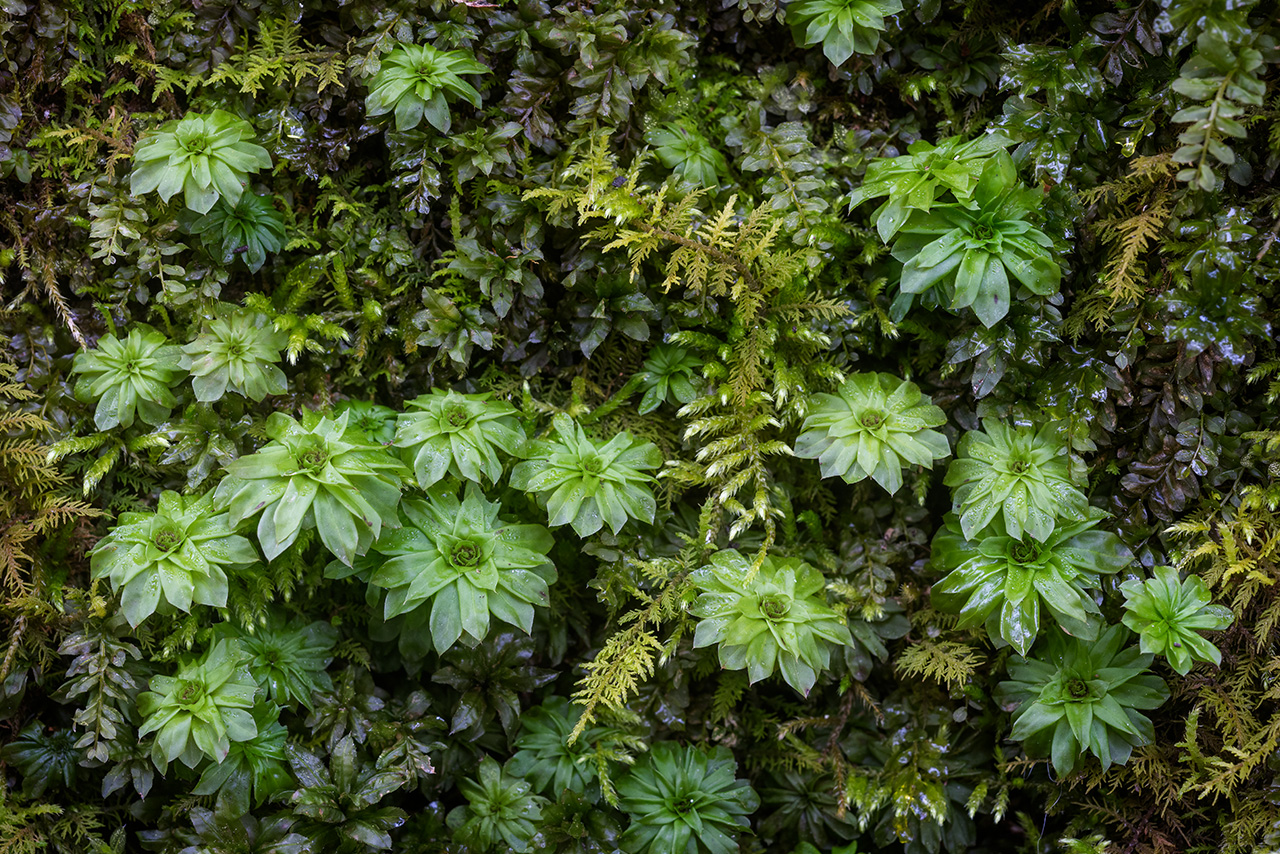
Milepost 308.  Flat Rock Overlook.  One of the prettiest mosses I’ve found is the Rose Moss (Rhodobryum ontariense).  It grows near the base of trees in relatively large patches.  Each “rose” is about the size of a penny and looks just like a green wildflower!
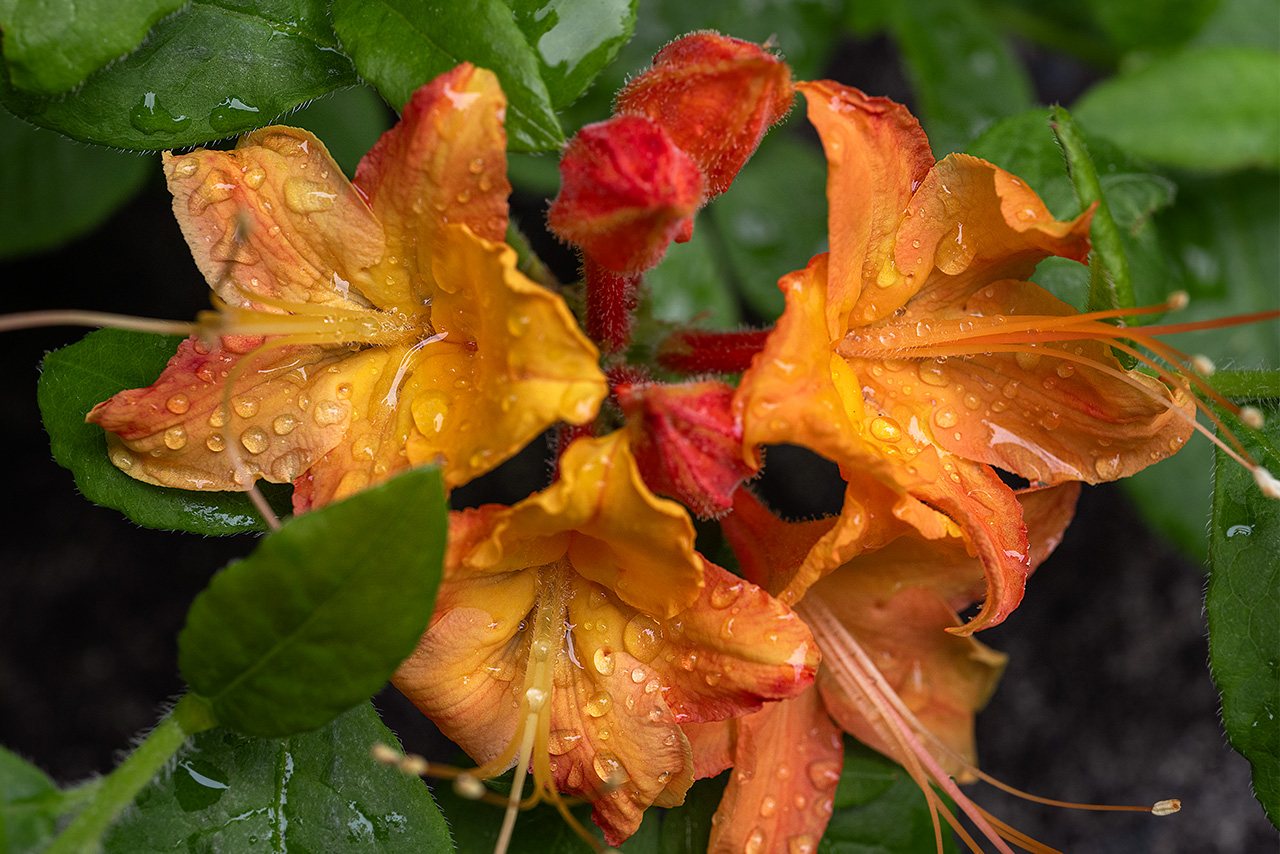
Milepost 308.  Flame Azalea is just amazing in its coloring.  From creamsicle orange to fiery red to buttery yellow, this outgoing plant demands attention.  These blooms were along the Blue Ridge Parkway just south of Flat Rock Overlook.
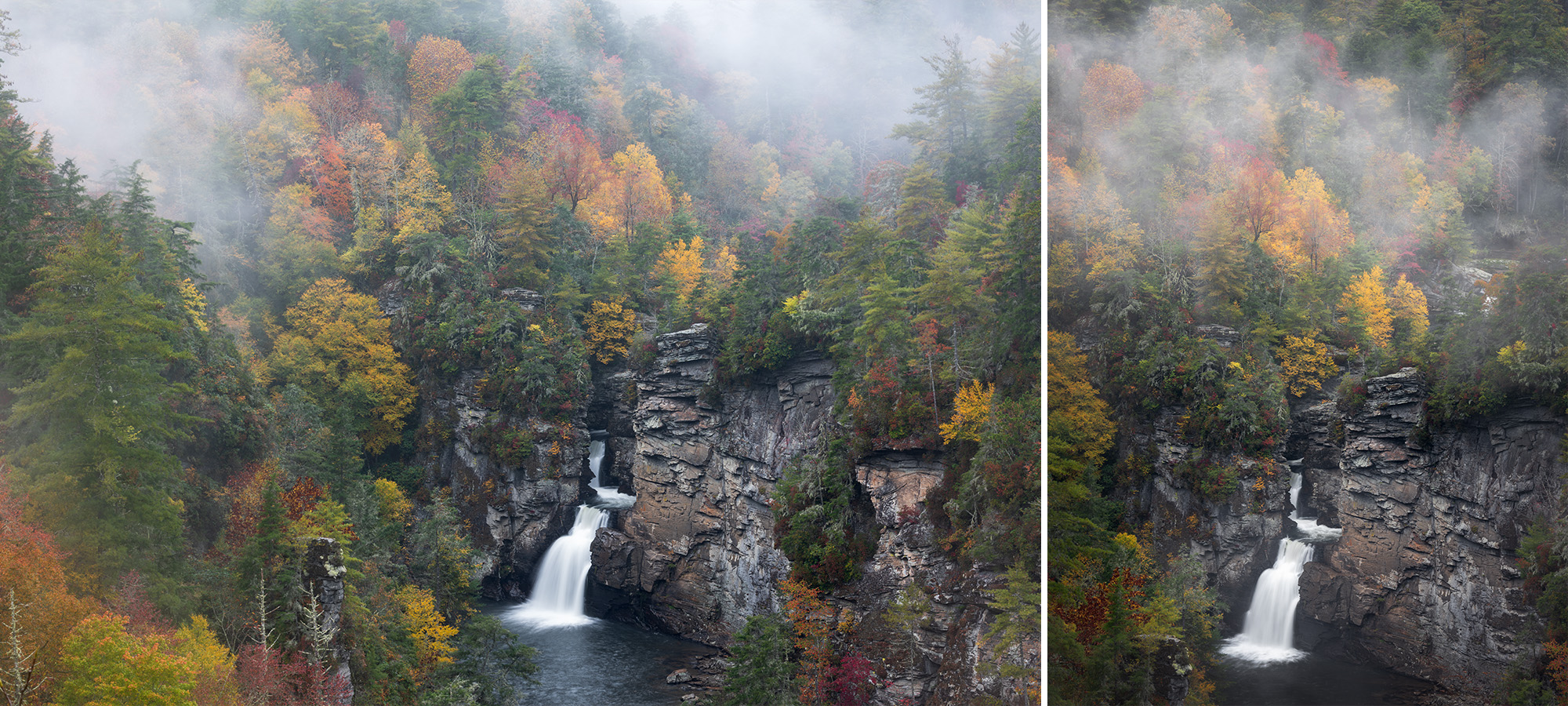
Milepost 316.  Linville Falls.  This beautiful three-tiered waterfall marks the beginning of Linville Gorge, known as the Grand Canyon of the Southern Appalachian Mountains.  Linville Falls offers a number of hikes and viewpoints from both sides of the river.  This was the location in the early 2000’s where I learned to do my first long-exposure waterfall photography!
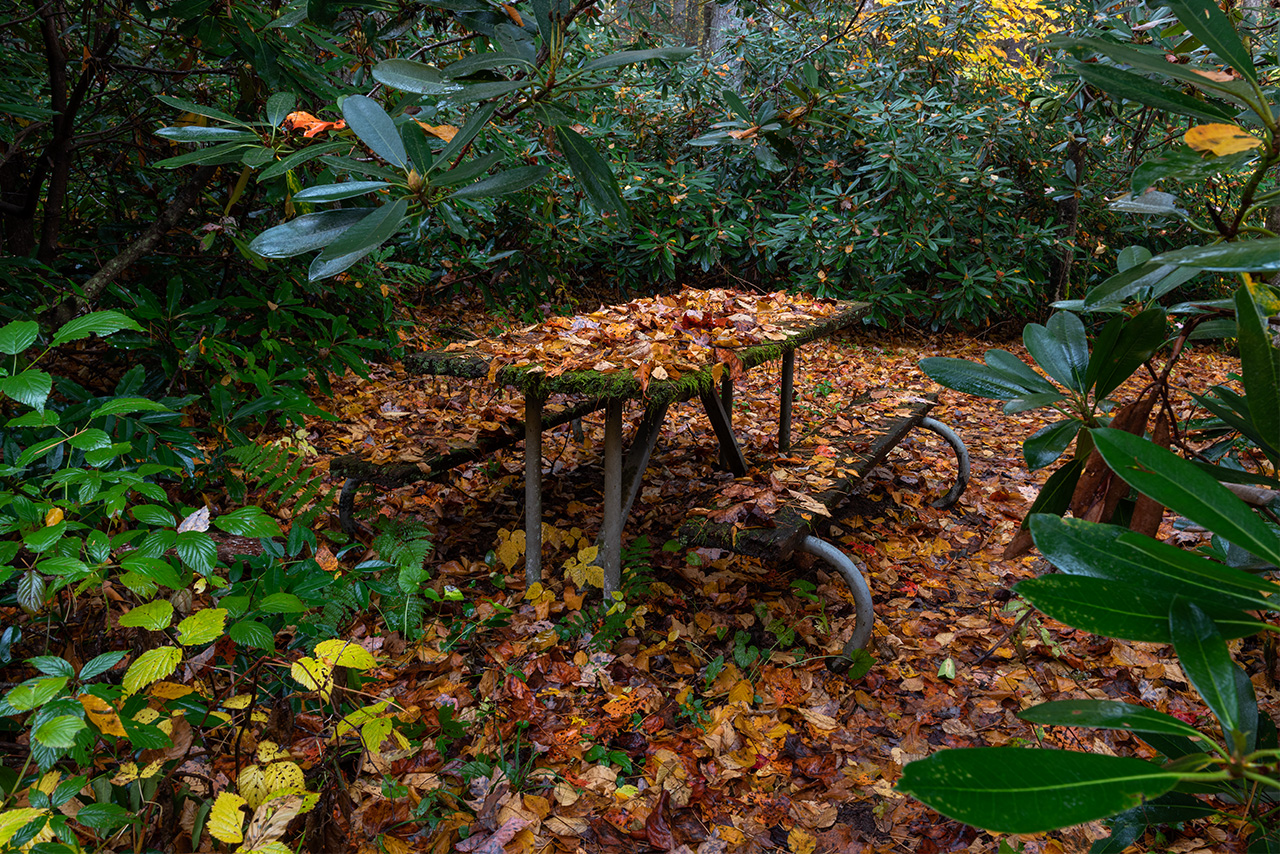
Milepost 316.  Linville Falls Picnic Area.  Only in the Southern Appalachian Mountains can a picnic table be arresting enough to be the subject of my lens!  I was creeping around an autumn forest along the Linville River when I saw this table covered in fallen leaves and actively growing thick green mosses upon its top.  Rhododendron leaves framed the whole area.  It was a beautiful representation of the boundless growth and life I know this area for.
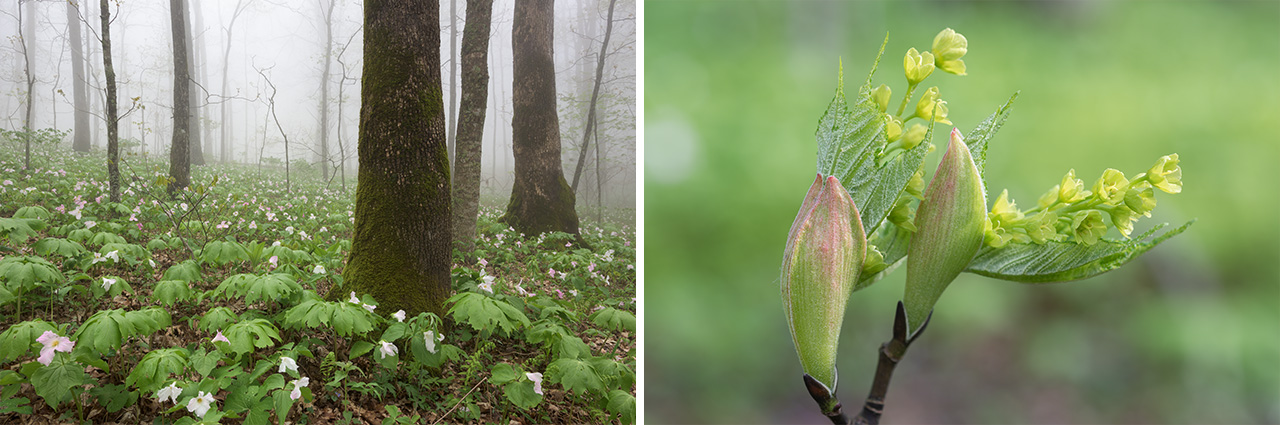
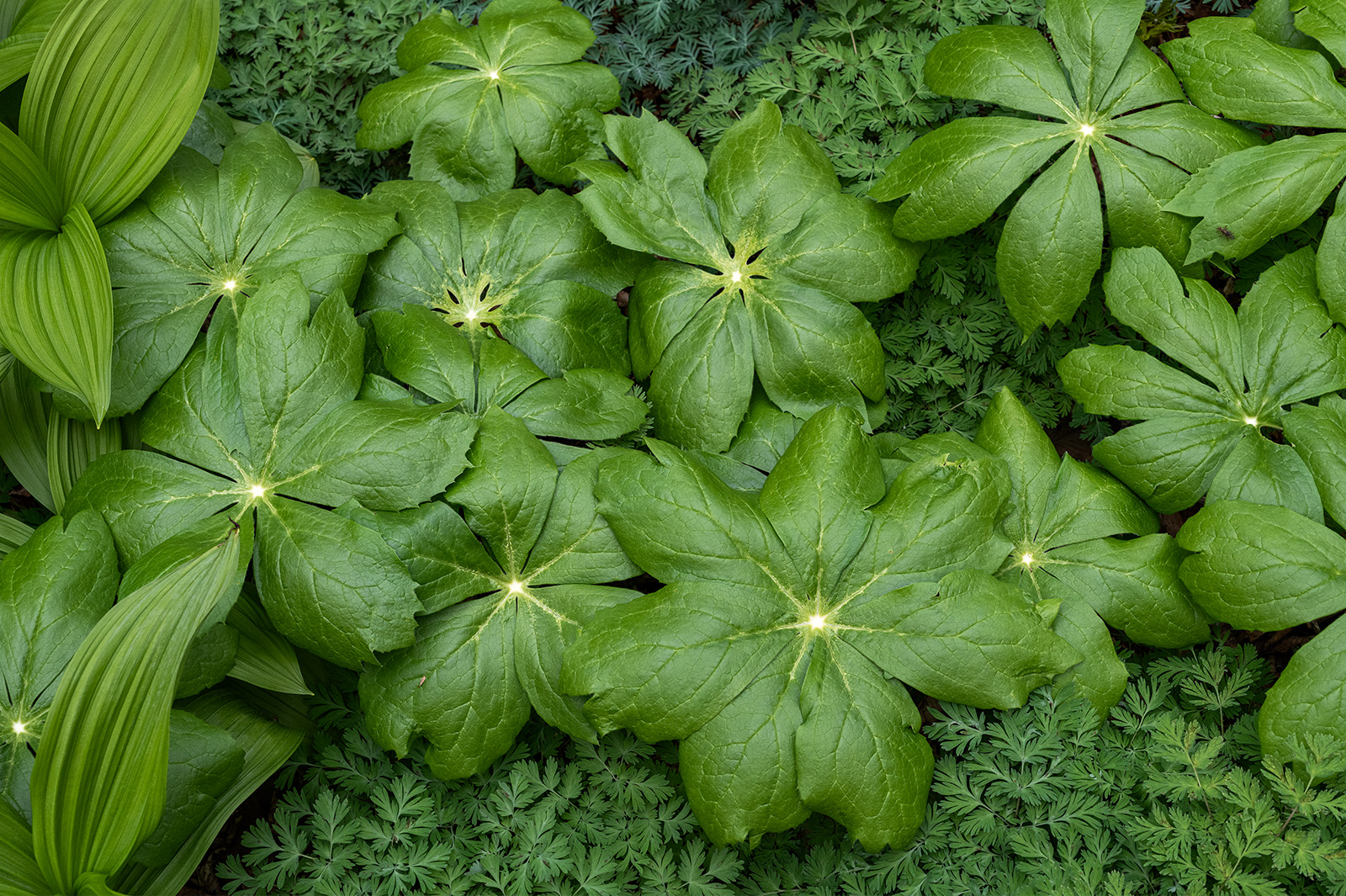
Milepost 320.  Chestoa View Overlook.  Opposite the overlook and across the Blue Ridge Parkway, the forested slopes showcase  one of the grandest wildflower displays each spring.  Thousands of trillium mix in with mayapple and all assortment of spring ephemeral wildflowers.  Creeping through this abundance of life with a macro lens is a perfect example of the richness existing along the Blue Ridge Parkway!
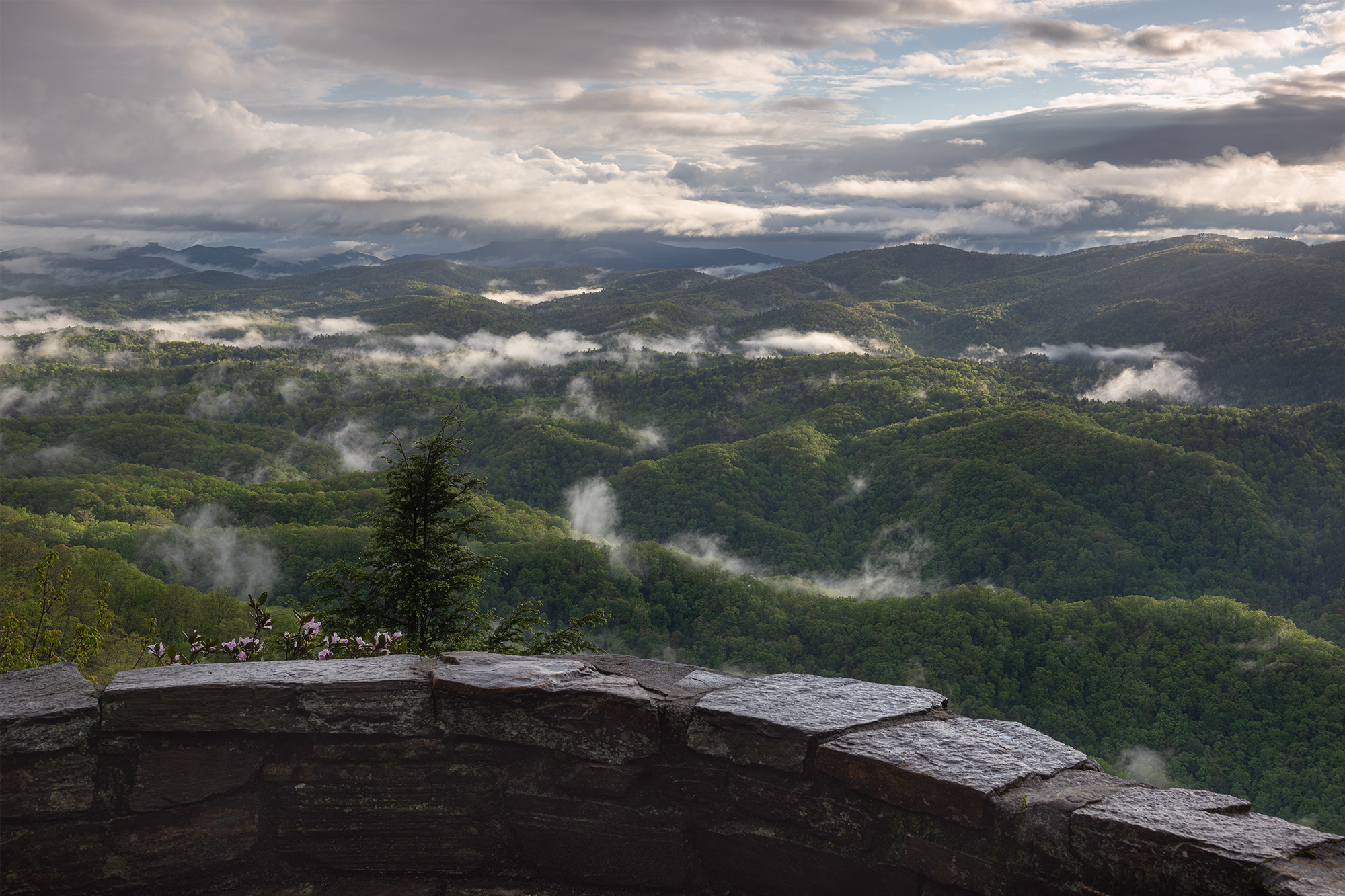
Milepost 320.  Chestoa View Overlook.  A short hike to a small platform opens wide views of The Linville Gorge, Table Rock, and Grandfather Mountain.  Following a rainy period, I was lucky to catch this beautiful overlook in dynamic conditions as I looked back towards Grandfather Mountain.
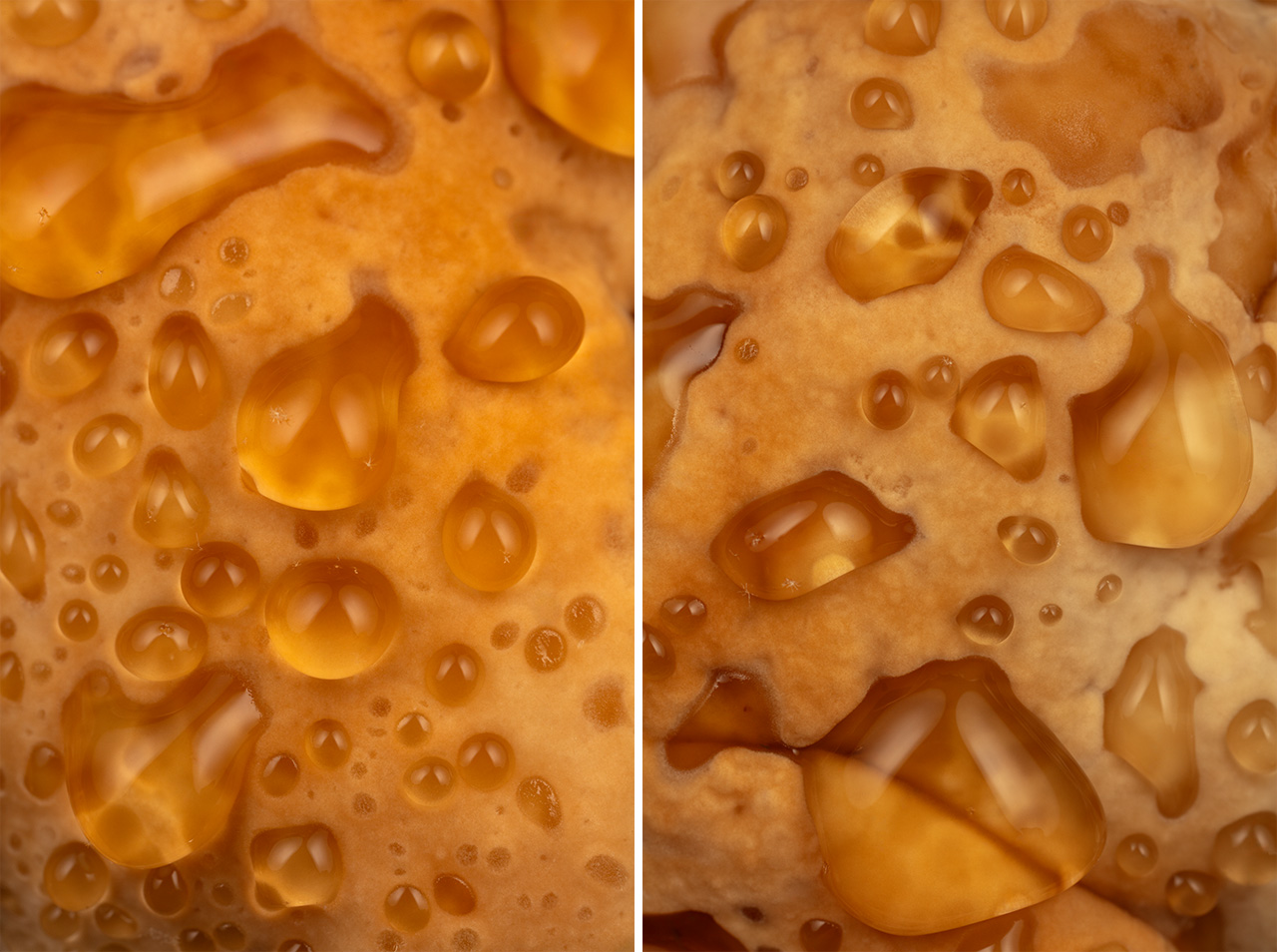
Milepost 320.  Chestoa View Overlook.  Mushroom guttation is a process where the rapid metabolism of a young mushroom and humid conditions combine to create a sort of mushroom sweat.  Excess water is pushed to the surface.  I had been eager to find this phenomena for quite some time and was overly excited to finally come across this while hiking the short loop trail attached to Chestoa View Overlook along the Blue Ridge Parkway.
Milepost 323.  Bear Den Overlook.  One of the sneaky good overlooks along this section of Blue Ridge Parkway.  Bear Den Overlook provides an unobstructed view over a valley to the distant Black Mountains.  Because of high elevation, the Blacks often create their own weather, making this view rather interesting more often than naught.
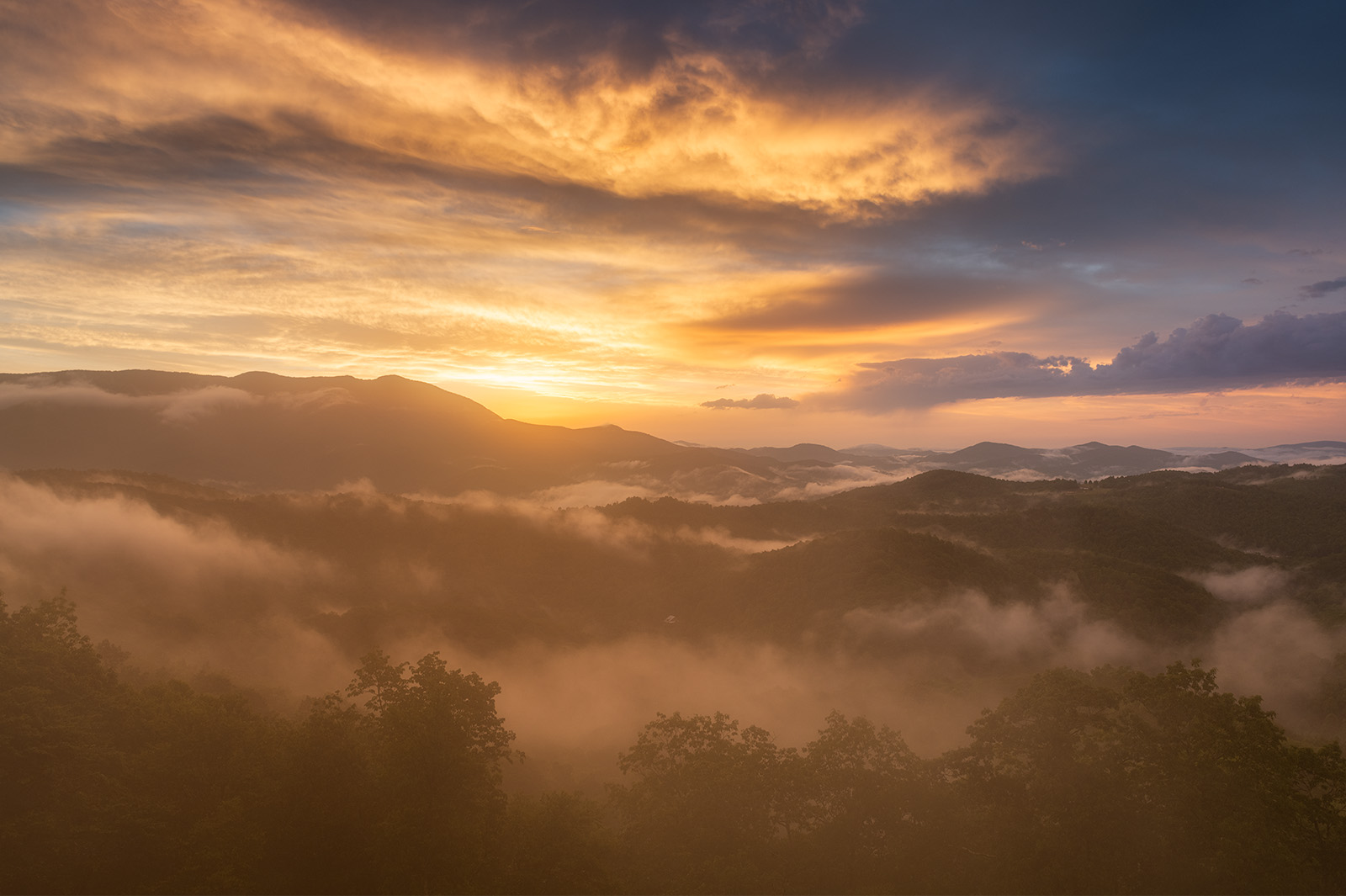
Milepost 339.  Three Knobs Overlook.  While camping at nearby Crabtree Falls, I waited out an evening thunderstorm and quickly got myself to Three Knobs Overlook along the Blue Ridge Parkway as the storm cleared at sunset.  The characteristic fog and inverted cloud hung the forested peaks as the sky put on quite a color show above.  Three Knobs Overlook views out over seven mile ridge and the northern bit of the Black Mountains.
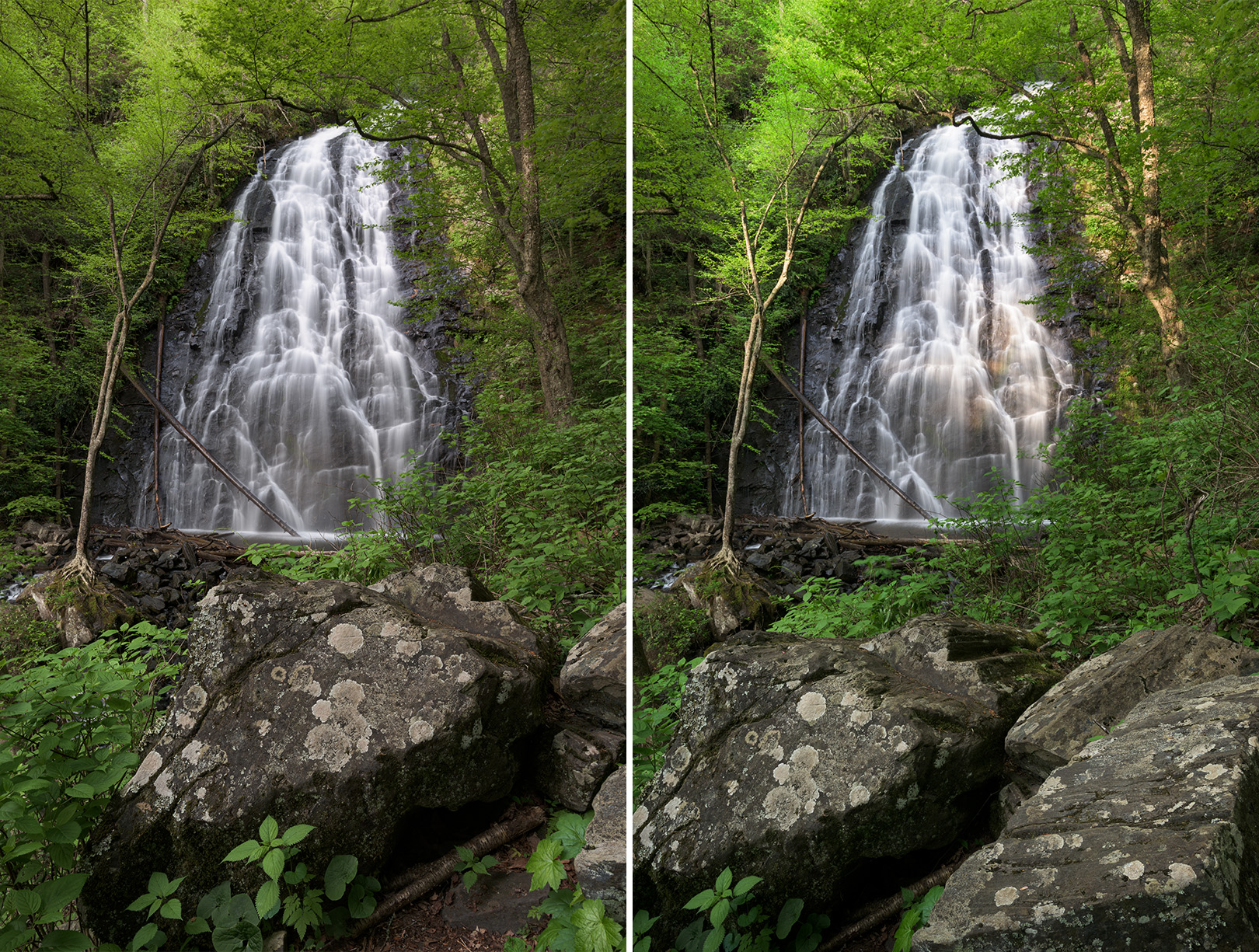
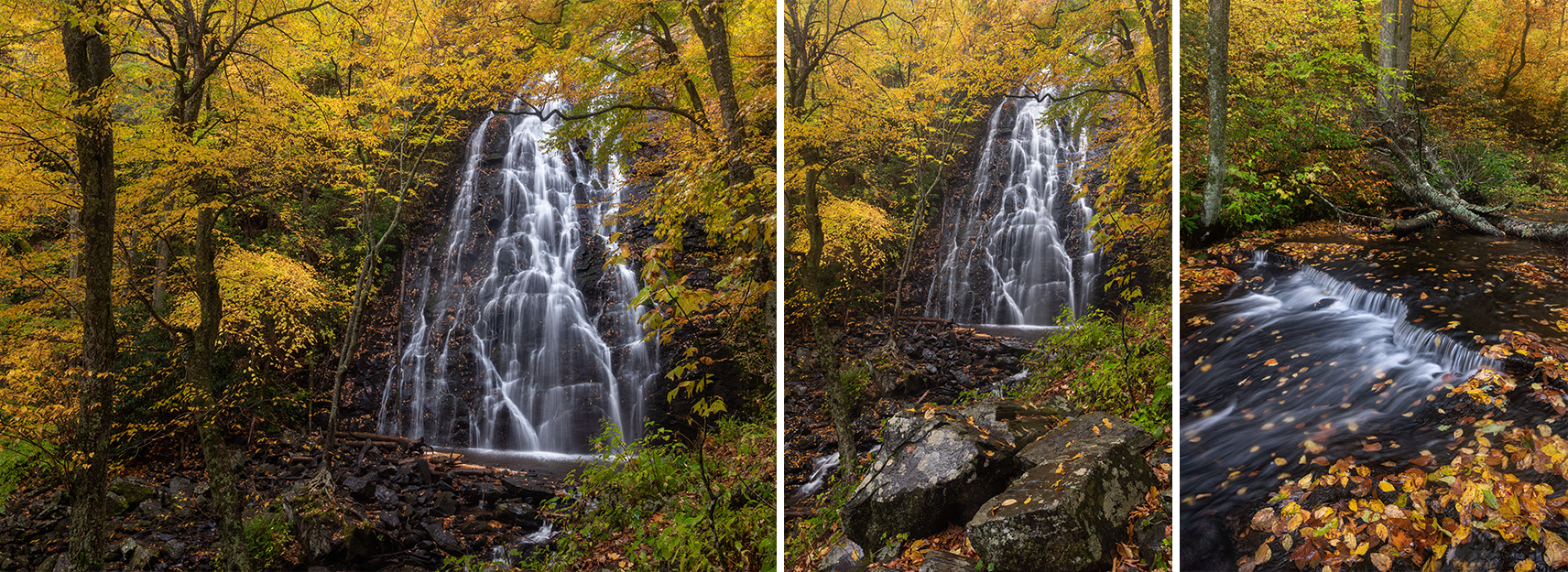
Milepost 340.  Crabtree Falls.  A wonderful 60-foot waterfall with a stair-stepped crashing pattern that almost looks better during periods of low- to medium-flow.  A roughly 2-3-mile hike round trip, Crabtree Falls is right in the sweet spot of difficult but doable for most.  The cove near the waterfall is rich with wildflowers in the spring.
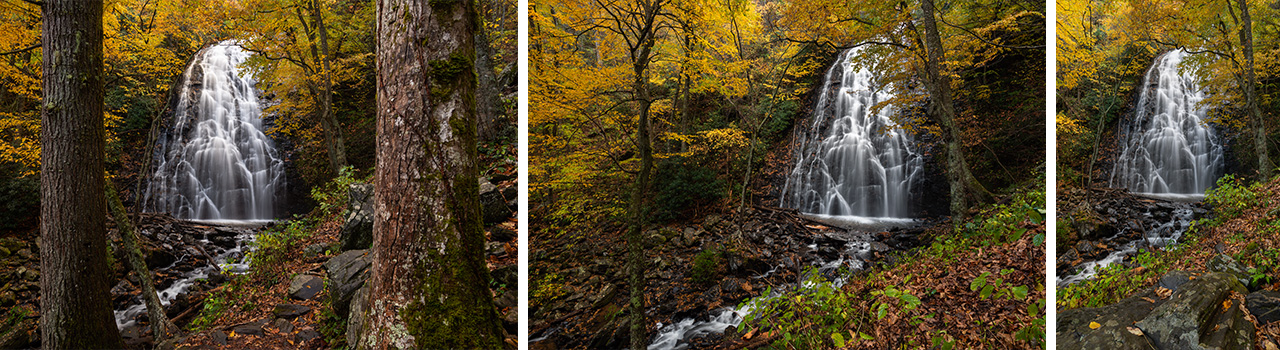
Milepost 340.  Crabtree Falls.  This waterfall is a must-see in the autumn when everything turns bright yellow and fallen leaves decorate the forest floor.  I camp at the attached campground, conveniently waiting for the wet autumn weather that often makes this place so magical.
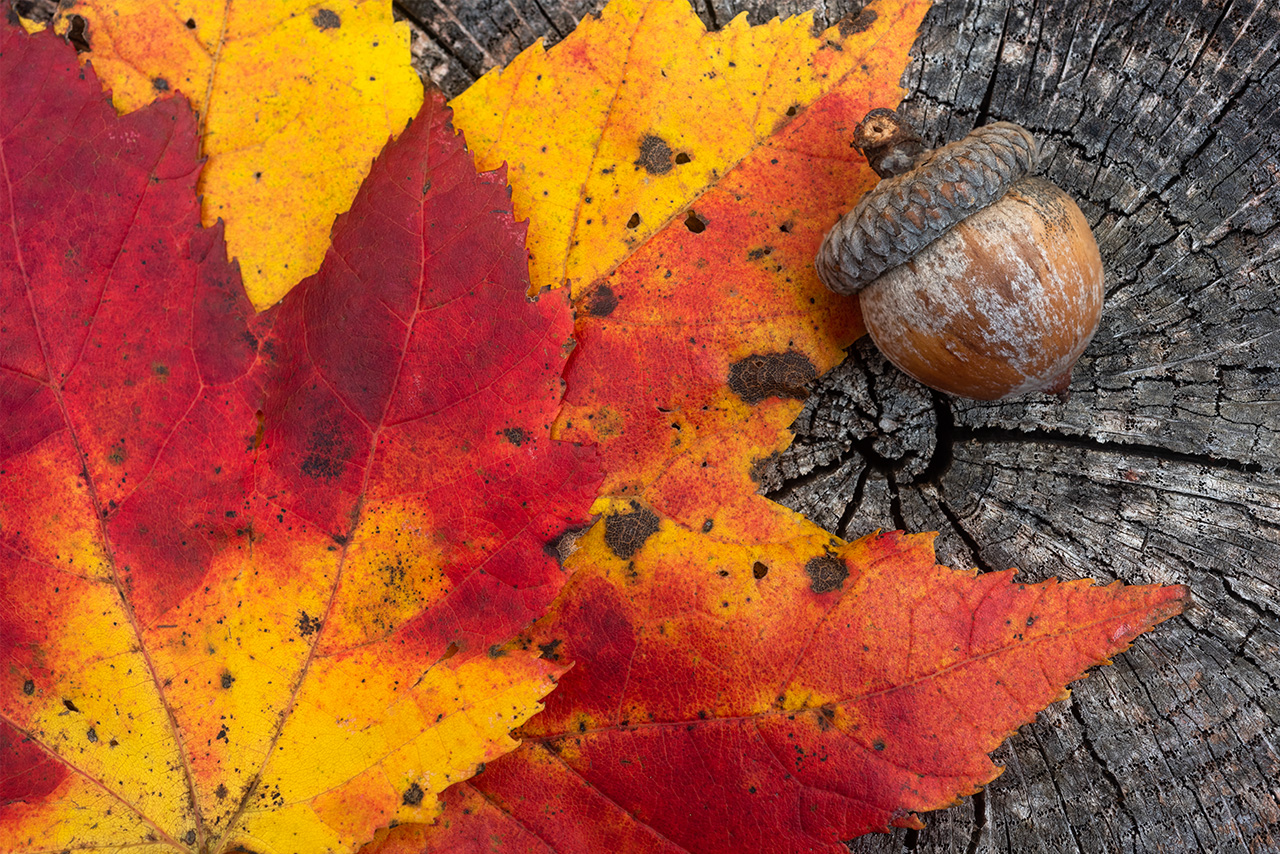
Milepost 340.  Crabtree Falls Campground.  While walking through the middle of the campground, I saw this acorn and pair of autumn leaves atop a tree stump.  I’m not sure if someone staged the scene, but I found it quite beautiful nonetheless!
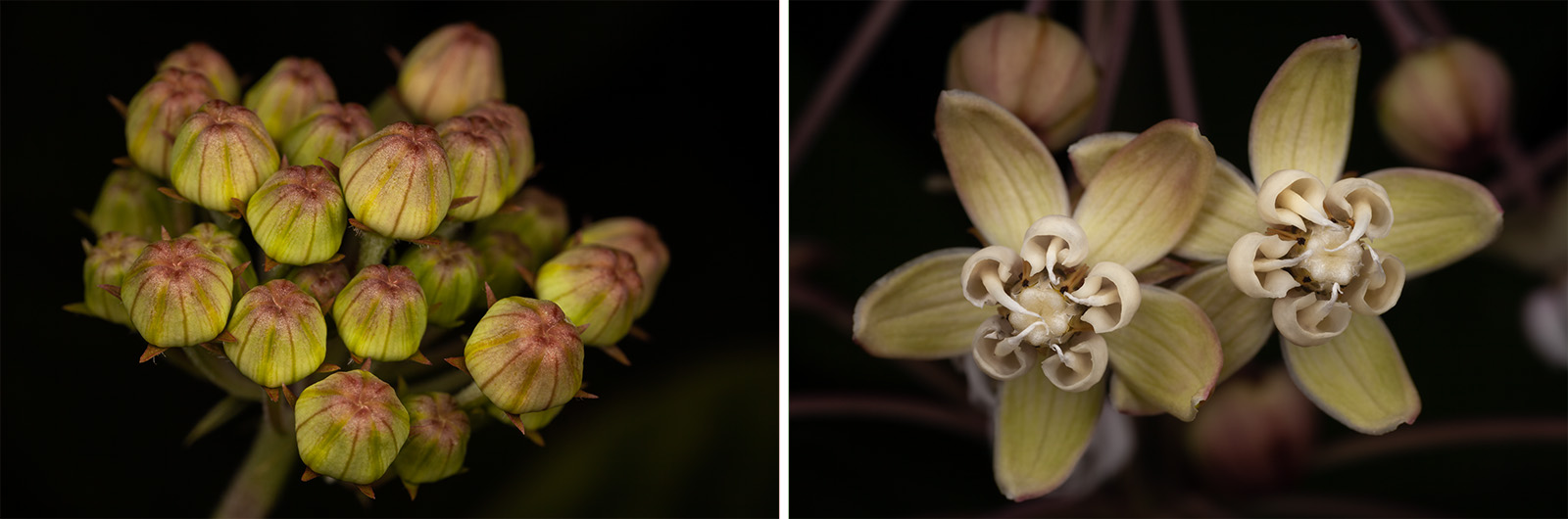
Milepost 340.  Crabtree Falls.  Along the shaded woodlands on the entry drive to Crabtree Falls, many Poke Milkweed grow.  These tall perennial plants feature drooping clusters of white flowers that smell like heaven.  They are named because of their leaves being similar to American Pokeweed.  I often find the tiniest Monarch caterpillars eating the buds of these milkweed while I’m photographing.
Milepost 340.  Crabtree Falls.  There is no finer time to be in the forest at a waterfall than during the autumn color change, in my opinion.  I always spend several days camped above Crabtree Falls on the Blue Ridge Parkway to have easy and quick access to the waterfall and forest when the weather conditions cooperate.
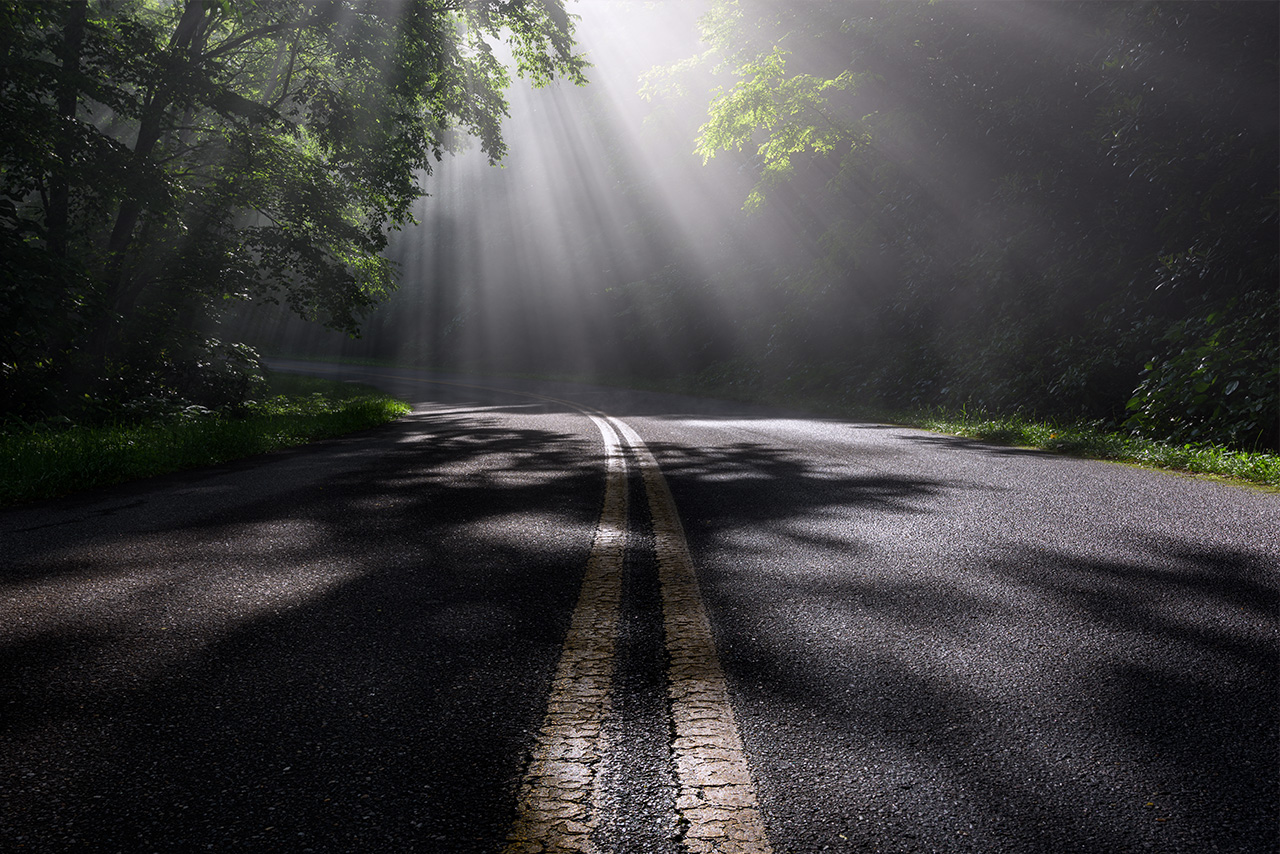
Milepost 343.  Spend enough time driving the Blue Ridge Parkway and you will notice that certain stretches have predictable character.  On this particular stretch, the rising sun during late spring almost always interacted with the trees and humid air to produce beautiful rays of light over the roadway.
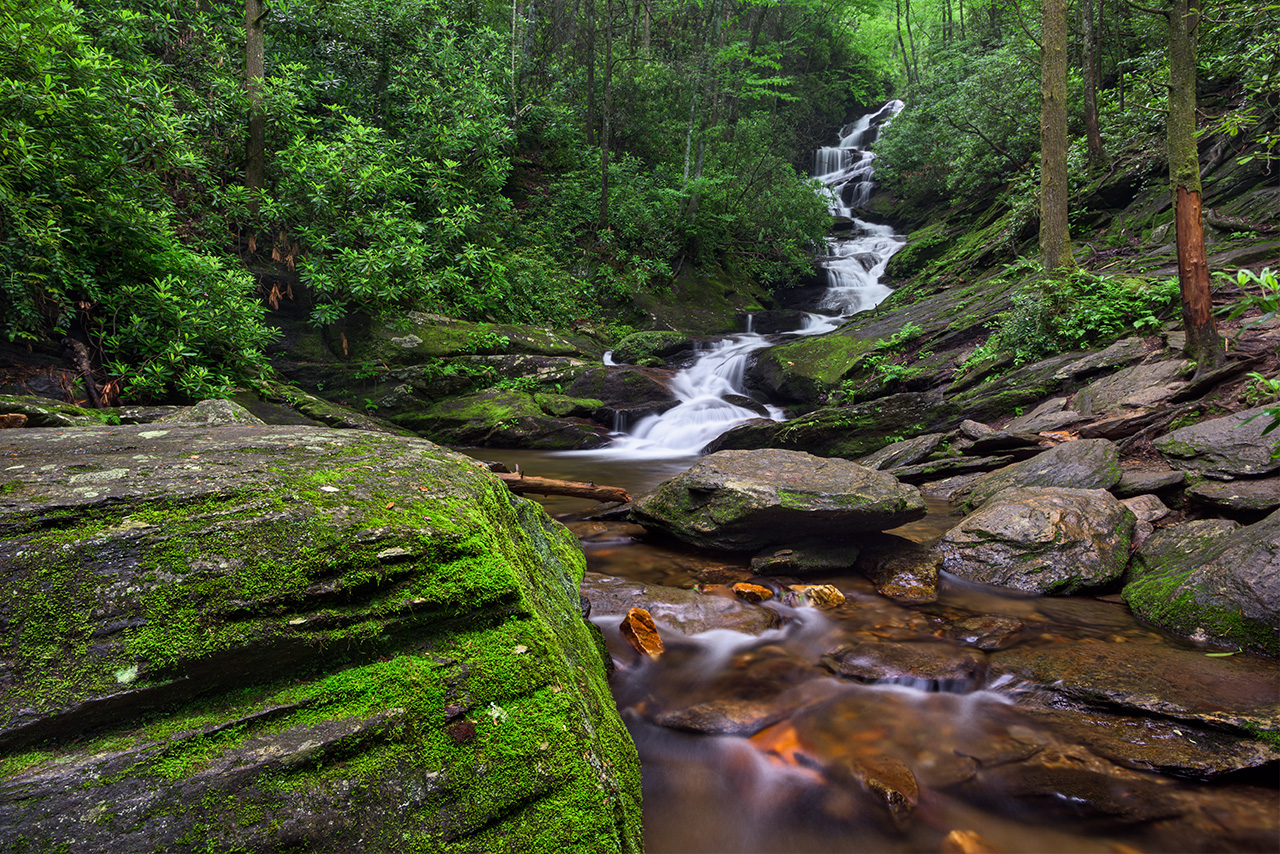
Milepost 344.  Roaring Fork Falls.  A short ways off the Blue Ridge Parkway at the base of Mount Mitchell and the Black Mountains is Roaring Fork Falls.  It’s a roughly fifty-foot drop that slides and cascades down a hundred-foot chute choked with rhododendron and green mosses.  One of the things I love at this location are all of the tiny freshwater snails that cling to the bright orange colored rocks in the plunge pool.
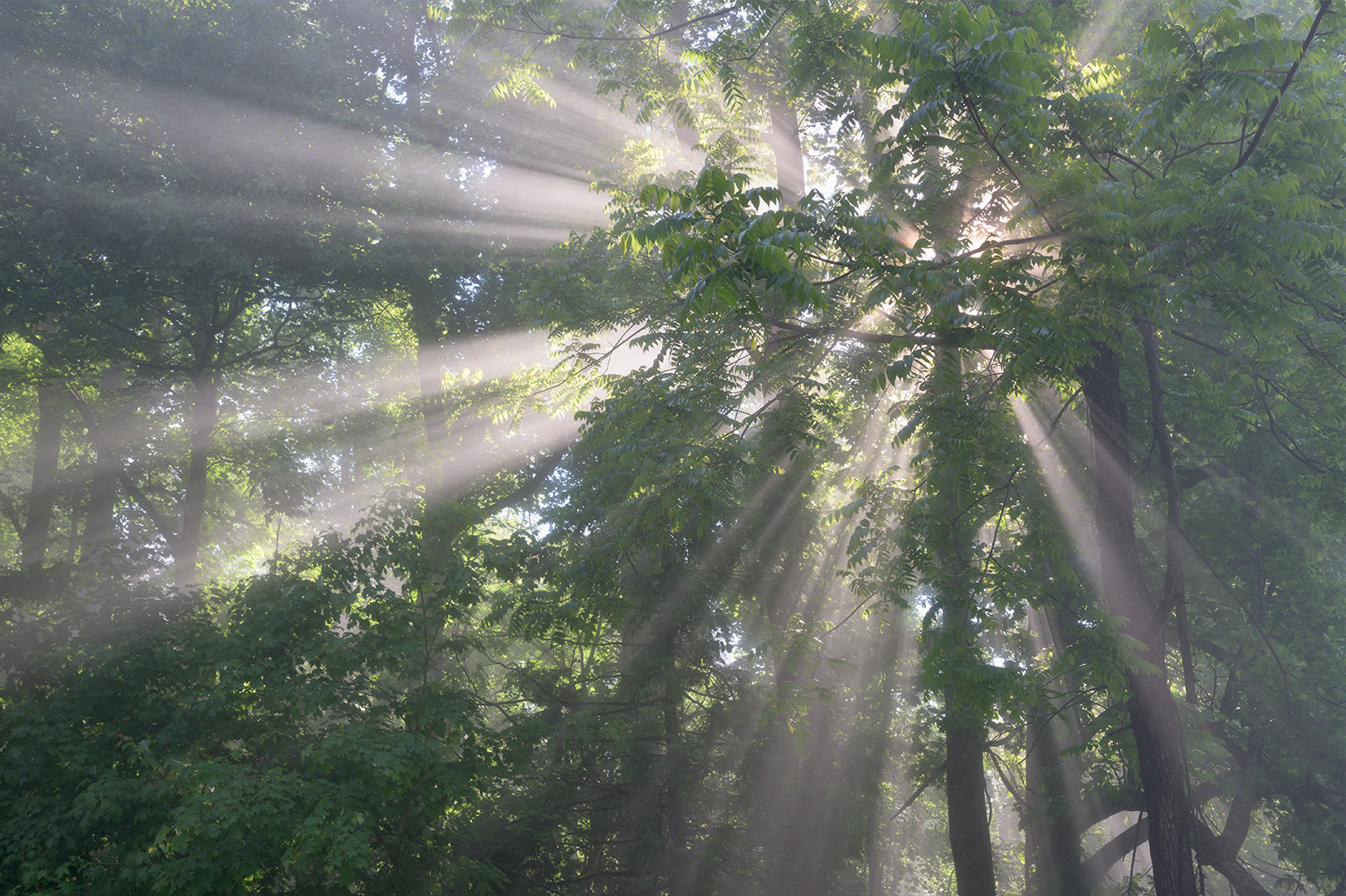
Milepost 345.  Singecat Ridge Overlook.  I came rolling around a sharp corner on the Blue Ridge Parkway to find the morning sun punching through thick, lush greenery.  Instant stop.
Milepost 348.  Big Laurel Gap Overlook.  I had no idea what was coming.  I knew there would be rain.  The mountains have tells.  The clouds sink down onto the forested peaks and begin a game of hide and seek; a dance with the sun to clear and obscure and then repeat.  What I didn’t realize was that the next four days would be the most consistent flooding rains I’ve ever camped through on the Blue Ridge Parkway.
Milepost 354.  Blue Ridge Pinnacle.  This summit, at nearly 5700 feet in elevation, is the second highest peak in the Blue Ridge Front (behind Grandfather Mountain).  It views out towards The Great Craggy Mountains and the southern tip of the Black Mountains.  While a rather intense short hike is required, it is without doubt one of my favorite viewpoints along the Blue Ridge Parkway.
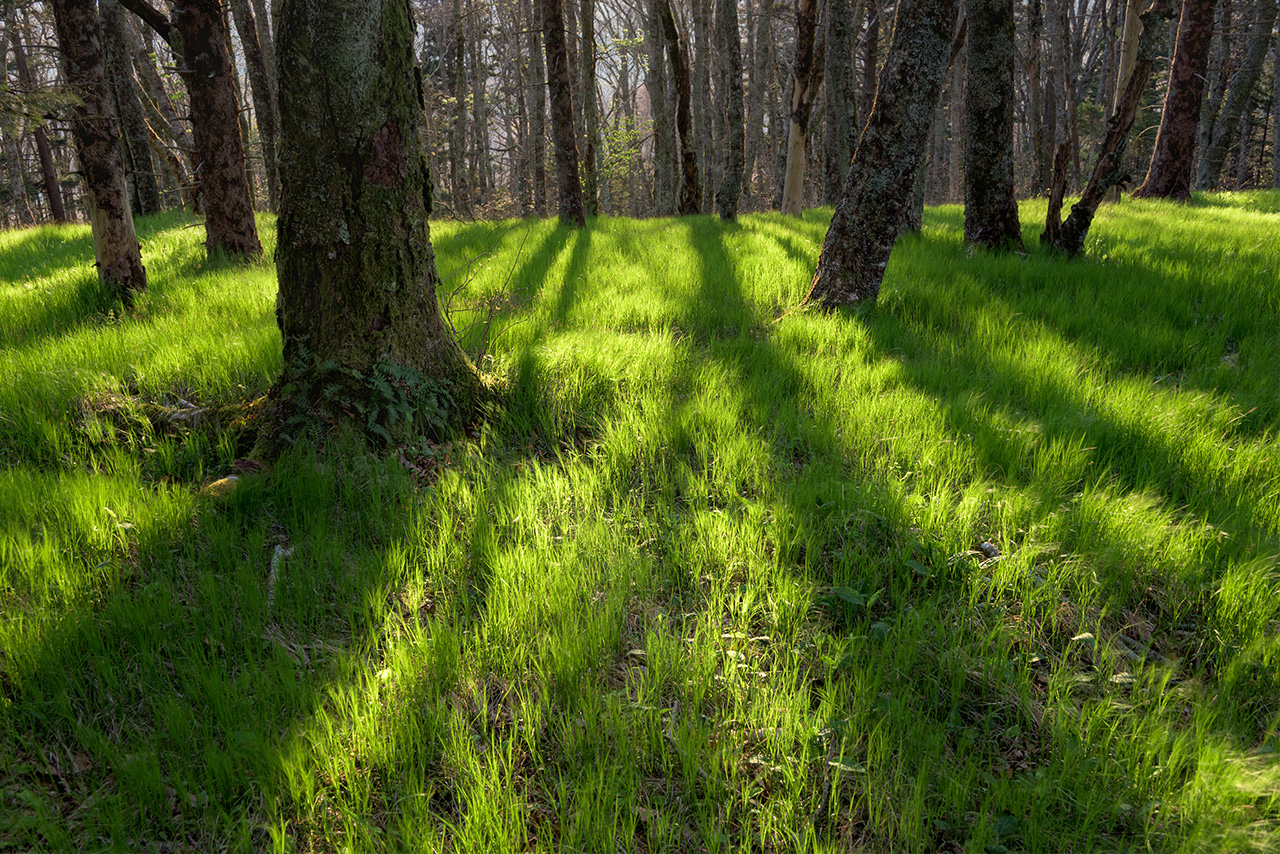
Milepost 354.  Blue Ridge Pinnacle.  The hike up to the Blue Ridge Pinnacle begins down at the Old Mount Mitchell Toll Road.  Shortly after starting the trail, I enter a forest largely clear of understory and herbaceous plants.  Instead, it’s a beautiful blanket of the greenest grasses.  A setting sun casts long shadows onto this striking landscape feature.
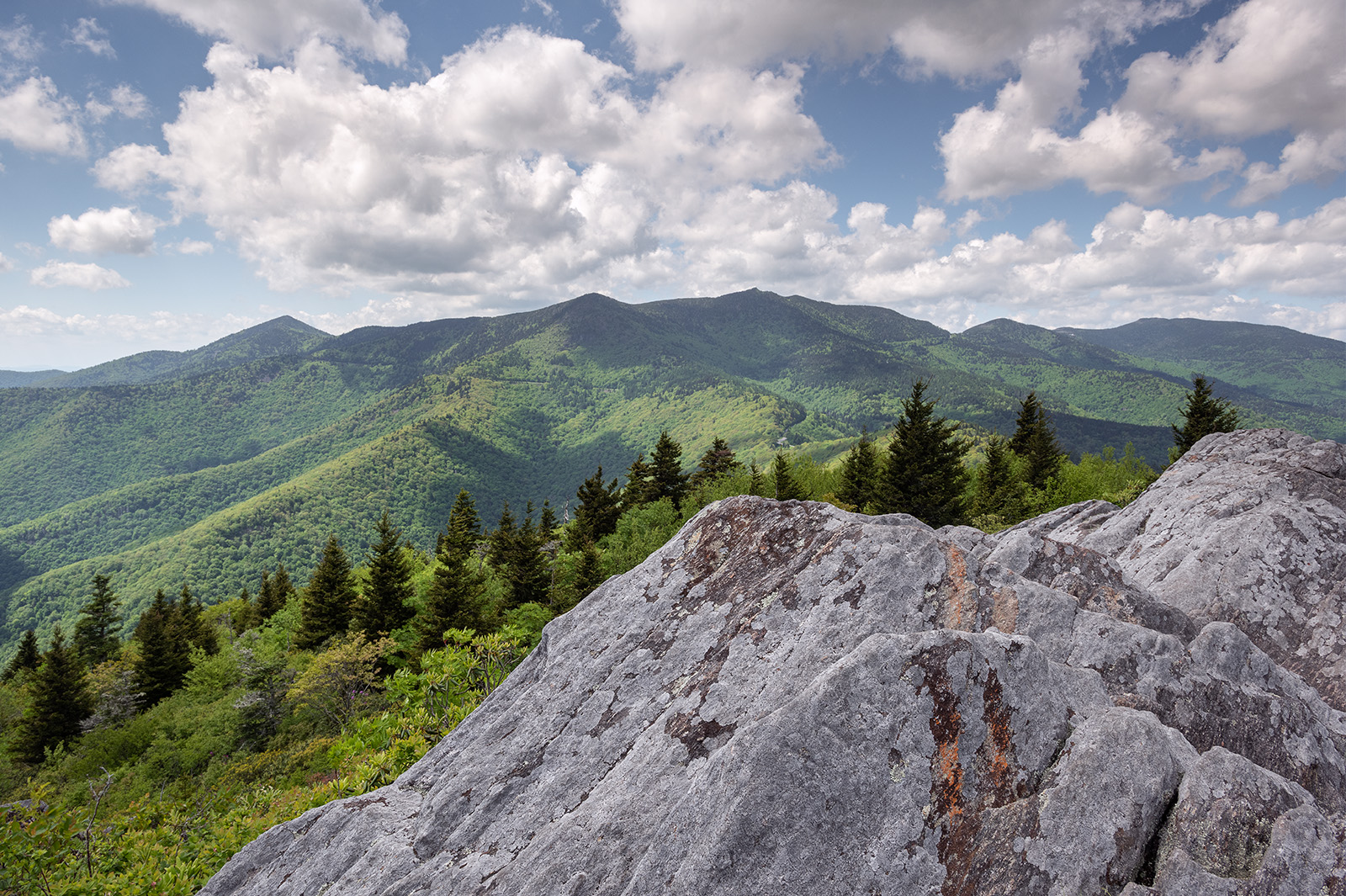
Milepost 354.  Blue Ridge Pinnacle.  Views of the Black Mountains, Mount Mitchell and the Blue Ridge Parkway on a wonderful afternoon of busy skies.  The views from Blue Ridge Pinnacle are unmatched in my opinion.
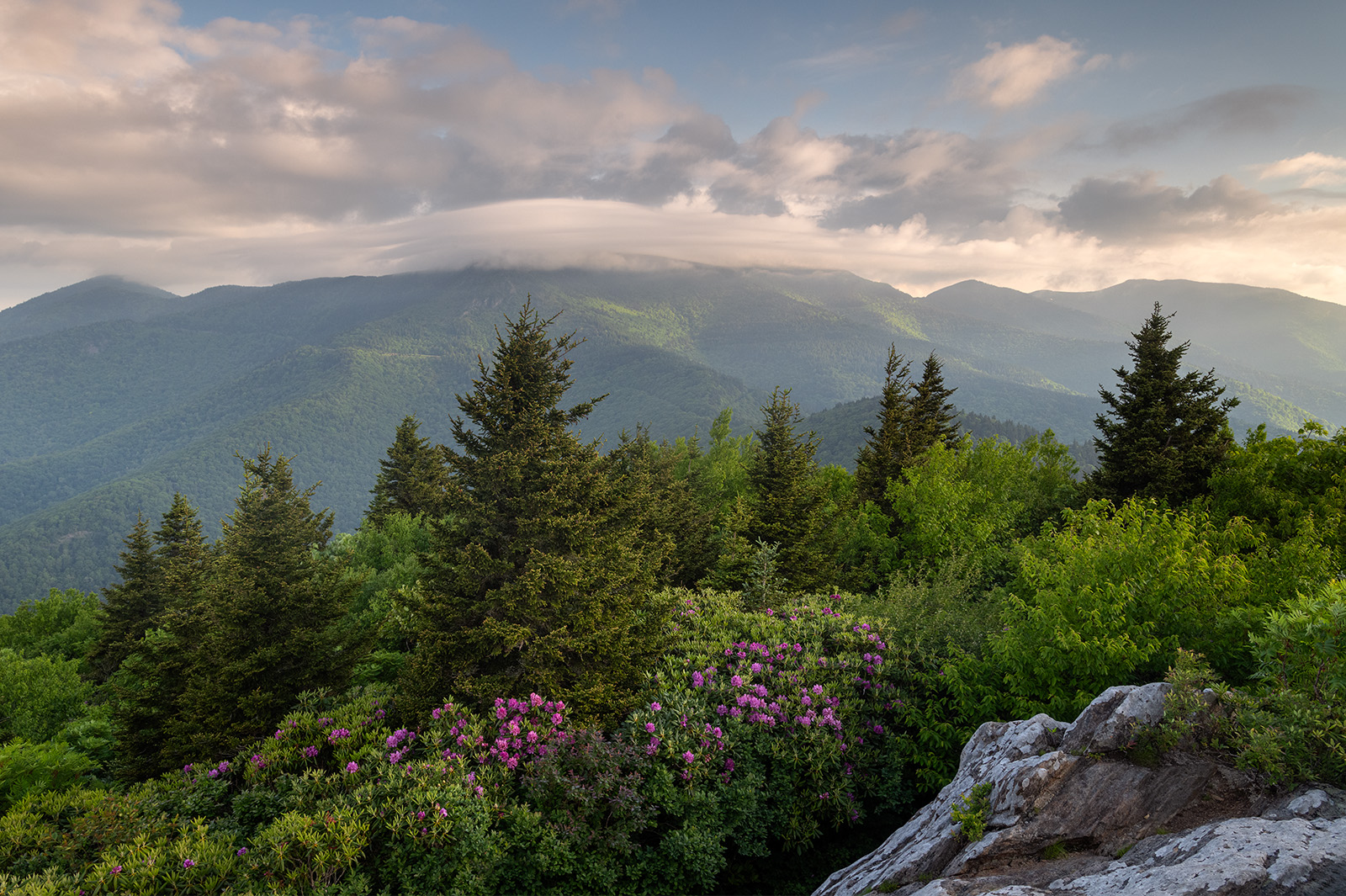
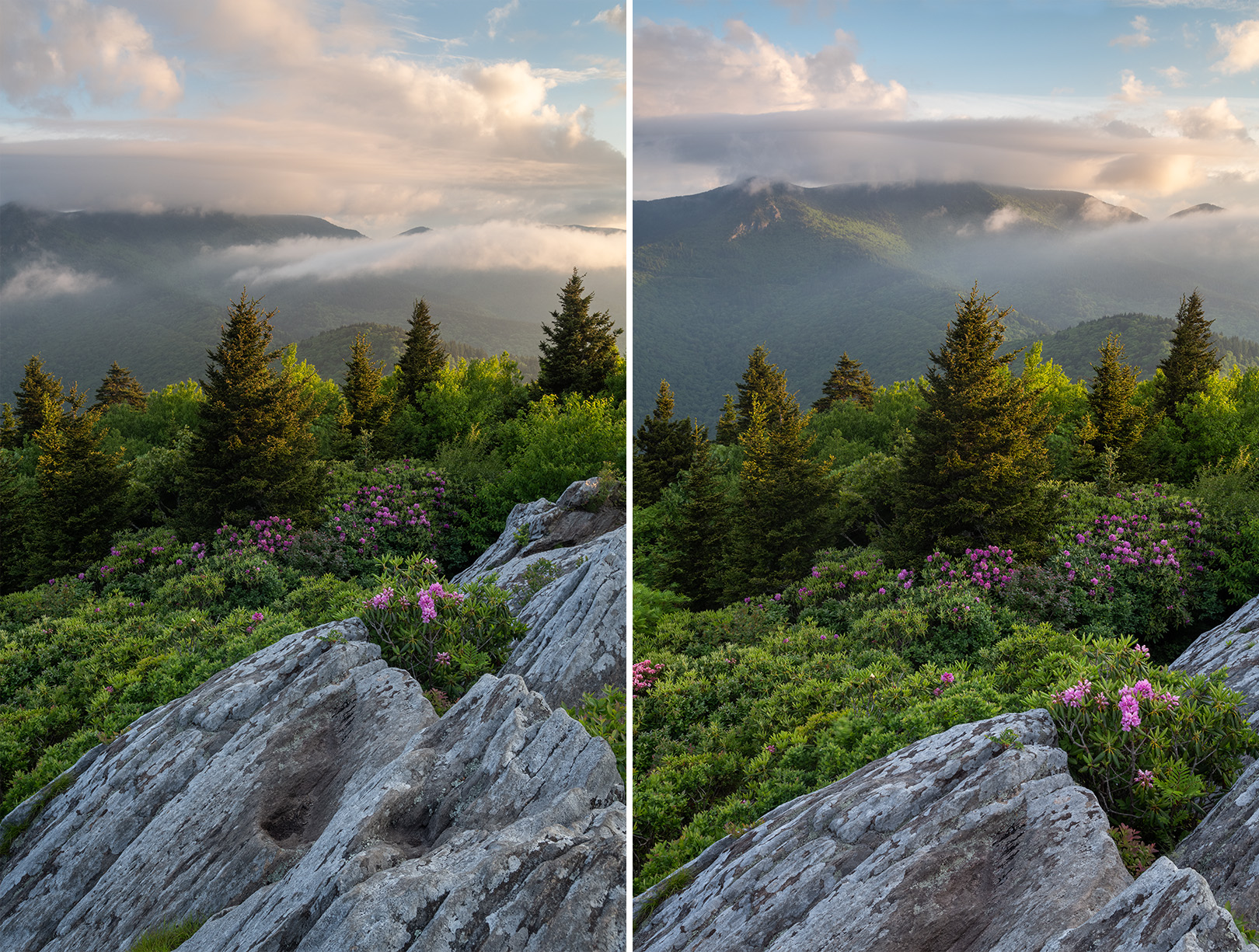
Milepost 354.  Blue Ridge Pinnacle.  Flowering Catawba Rhododendron dot the rocky summit of the Blue Ridge Pinnacle during a very dynamic sunrise.  The Black Mountains and Mount Mitchell interact with the clouds and first light in the background.  The Blue Ridge Parkway can be seen cutting along the mid-ground ridgeline.
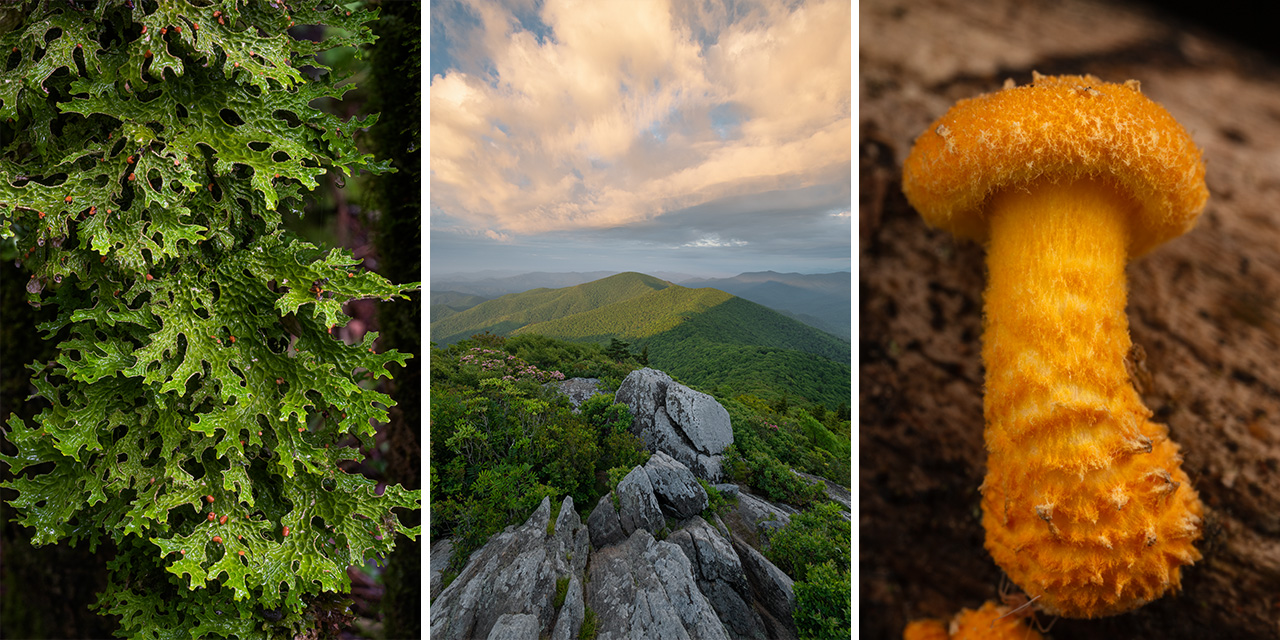
Milepost 354.  (Left) Tree Lungwort.  (Center) Blue Ridge Pinnacle.  (Right) Small mushroom.
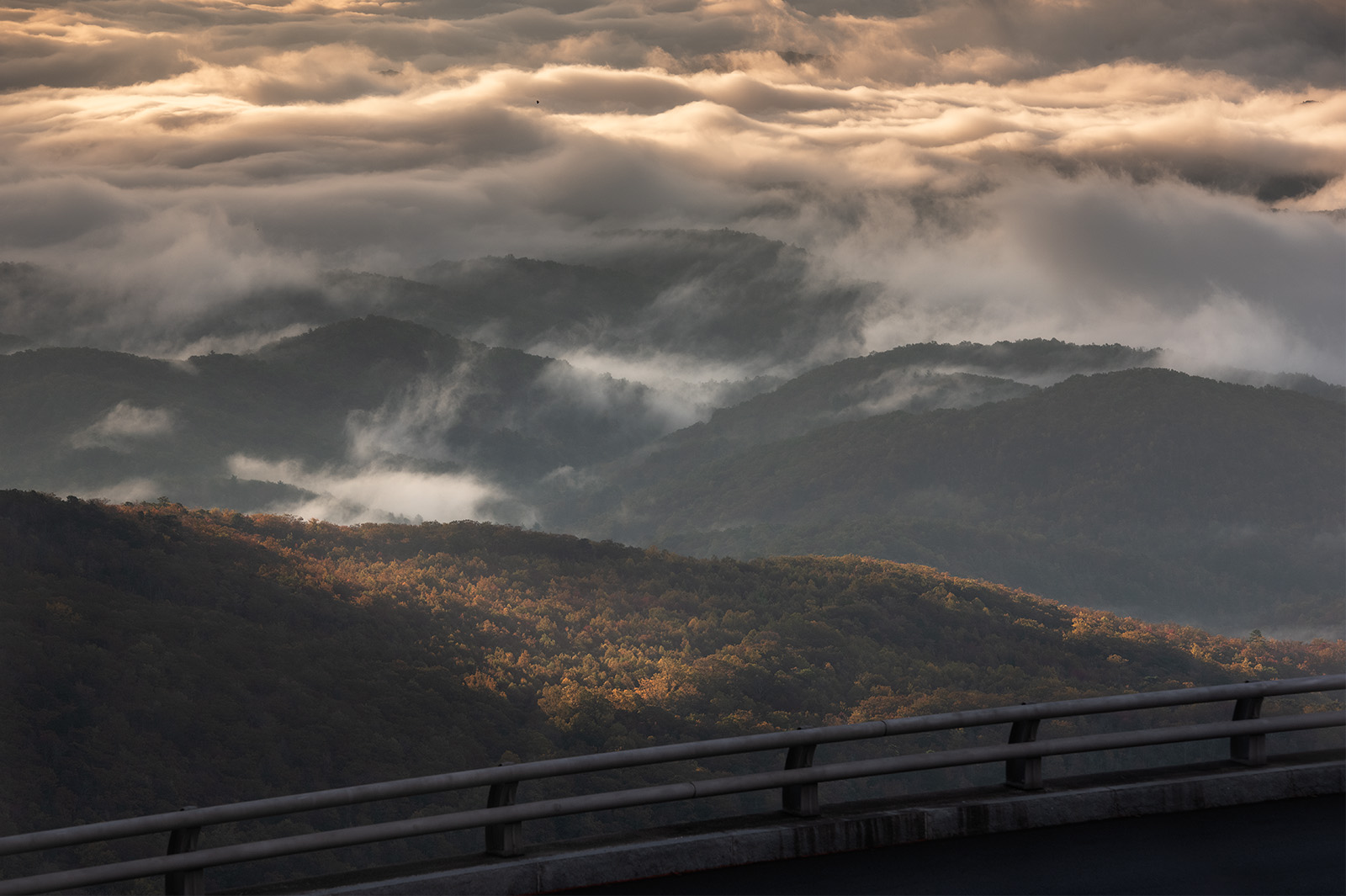
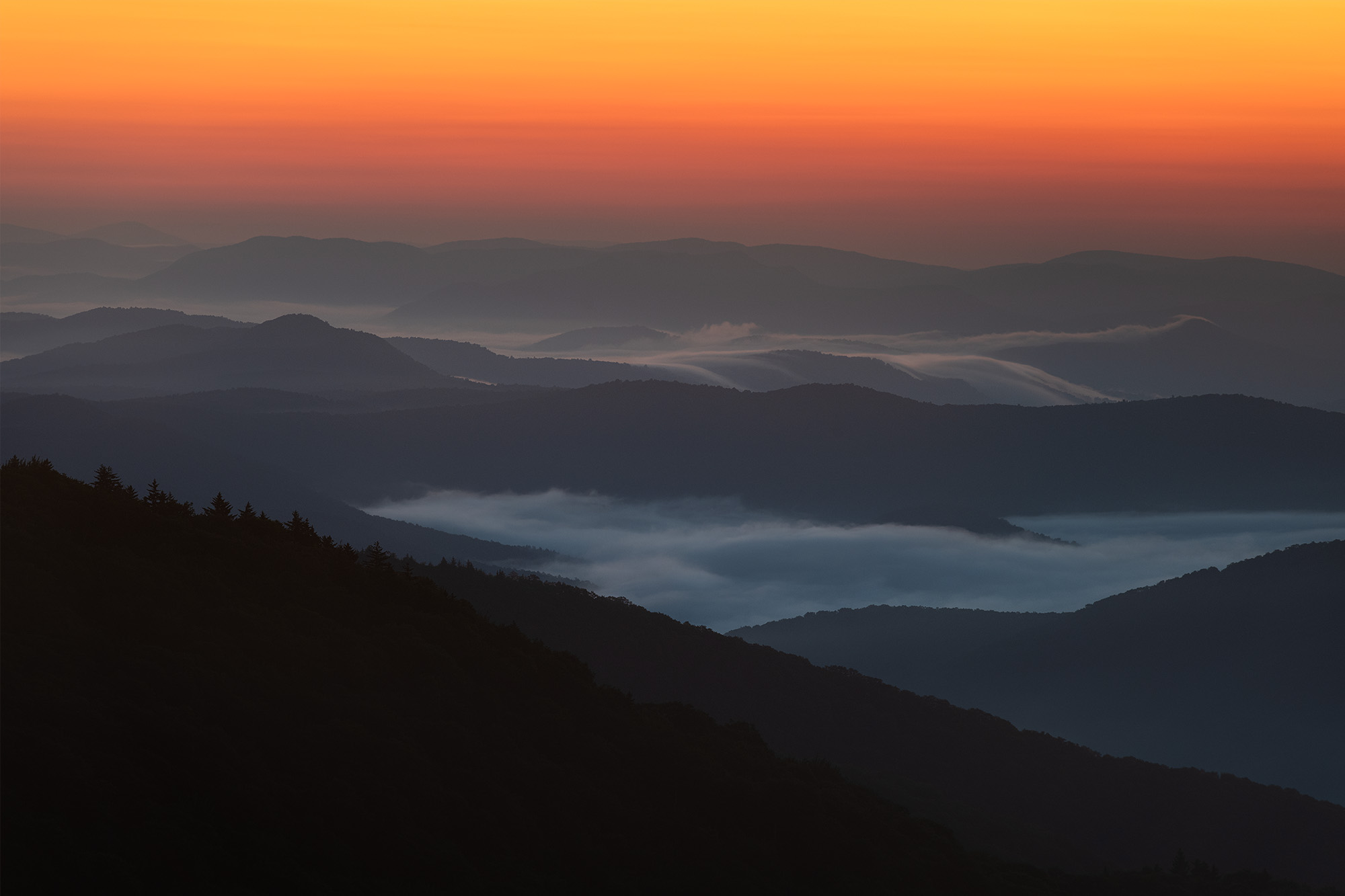
Milepost 355.  Ridge Junction Overlook.  The last overlook along the Blue Ridge Parkway coming from the north before turning right to ascend Mount Mitchell State Park.  The combination of sharp vibrant orange light in the sky and the rolling, inverted clouds pulled me towards this view and my longer lenses.  I find inverted cloud in the morning to be one of the signature landscape features of the Southern Appalachian Mountains.
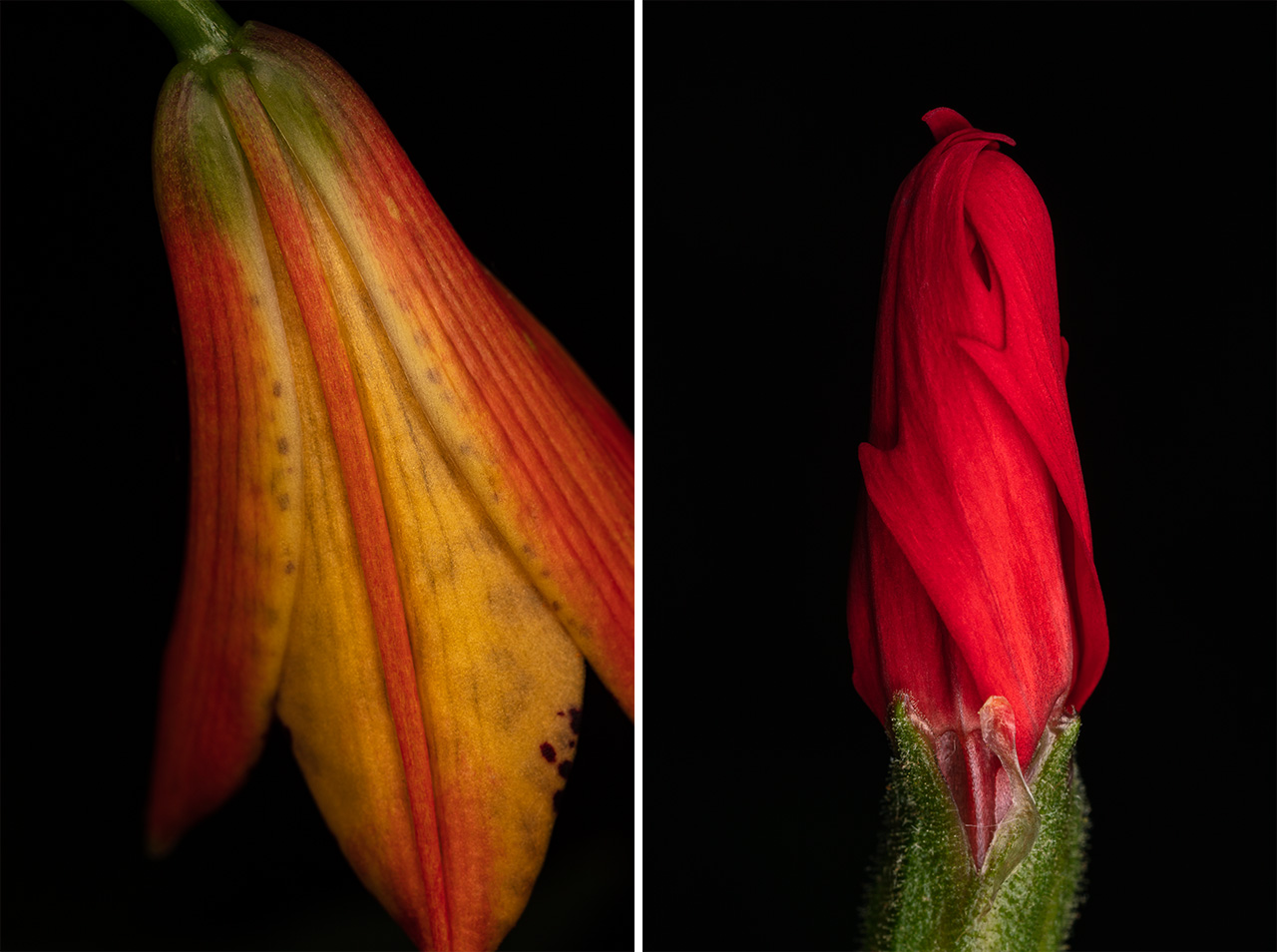
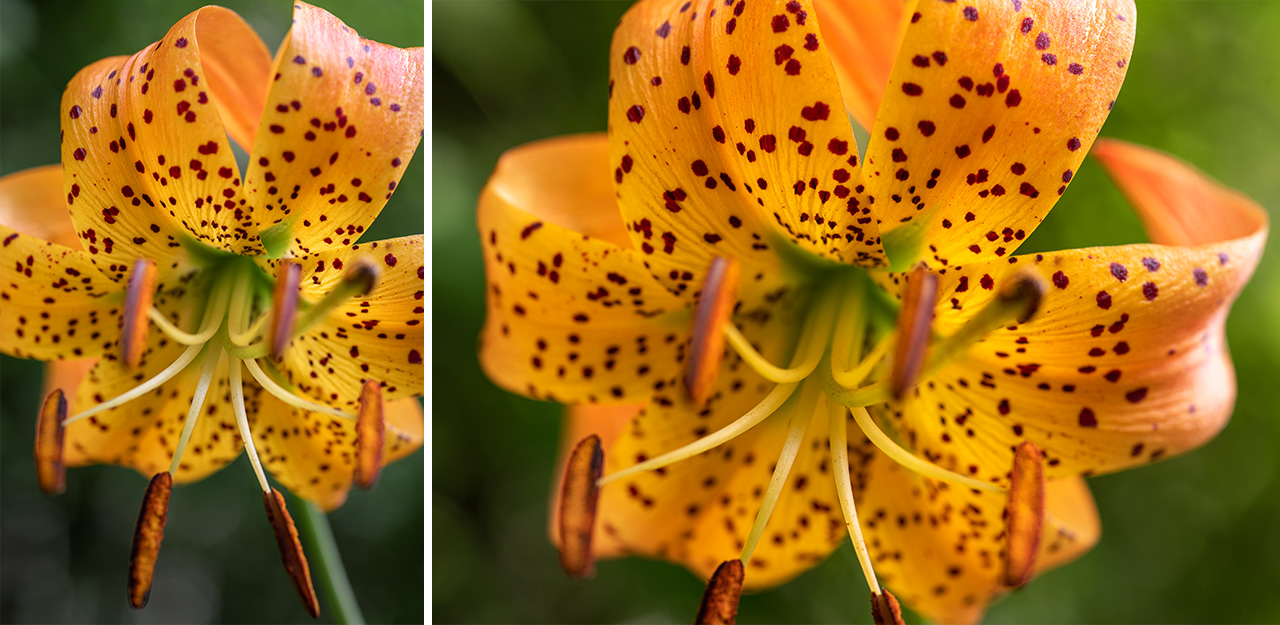
Milepost 355.  Turks Cap Lilies.  One of my favorite wildflowers along the Blue Ridge Parkway are Turk’s Cap Lilies.  Their brilliant orange coloring, recurved petals, abundant freckles and green star centers are absolutely beautiful.  I like to let sunlight filter through their orange petals and photograph from below.
Milepost 355.  The intricate coloring and details of a Mountain Wood Sorrel (Oxalis montana).  These little wildflowers are a climax species, occuring in mature forests and tolerant of shade.  I find them at high elevation in the Southern Appalachians, often underneath Red Spruce and Frasier Fir.  This little guy was found along the southern tip of the Black Mountains.
Milepost 355.  (Left) Potato Knob, a high-elevation summit along the intersection of the Blue Ridge Parkway and The Black Mountains.  (Right) Flowering Blue-Bead Lilies along the Mountains to Sea Trail in the Black Mountains.
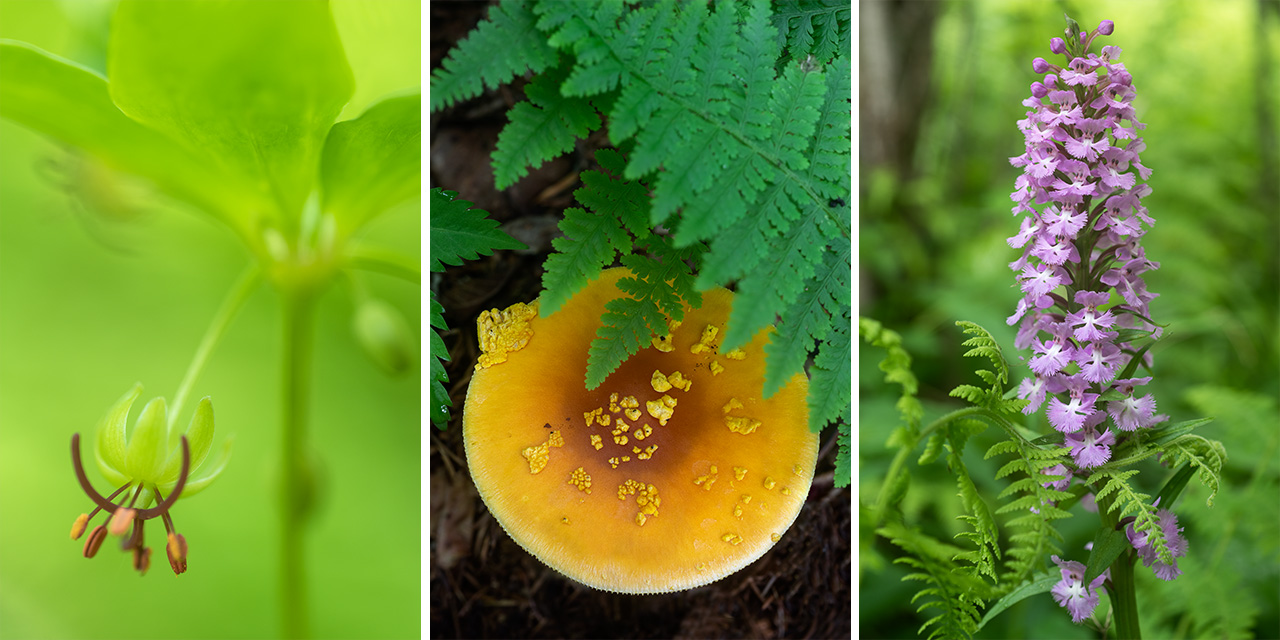
Milepost 355.  (Left) Indian Cucumber wildflower, named for the taste of it’s edible root.  (Center) Mushroom beside the Mountains to Sea Trail.  (Right) A Purple Fringed Orchid.  This area of the Black Mountains is extremely productive for Purple Fringed Orchid.  They smell delicious!
Milepost 355.  Mount Mitchell State Park.  Roughly 4.5 miles off the Blue Ridge Parkway via NC-128, Mount Mitchell stands the tallest mountain in the Appalachians, as well as east of the Mississippi, at 6,684 feet tall.  The new tower (pictured) was built and opened in 2009.  It features a built-in compass and ample signage showing a 360-degree view of the surrounding mountain peaks and valleys.

Milepost 355.  Mount Mitchell.  Inverted clouds–technically temperature inversions–occur when warm air sits atop trapped, heavy, damp cold air.  The ground loses heat very quickly on clear nights.  Cold heavy air sinks down into valleys.  This phenomena is one of my favorite things to witness along the Blue Ridge Parkway.  I caught this one from Mount Mitchell’s observation deck, the highest point east of the Mississippi River.

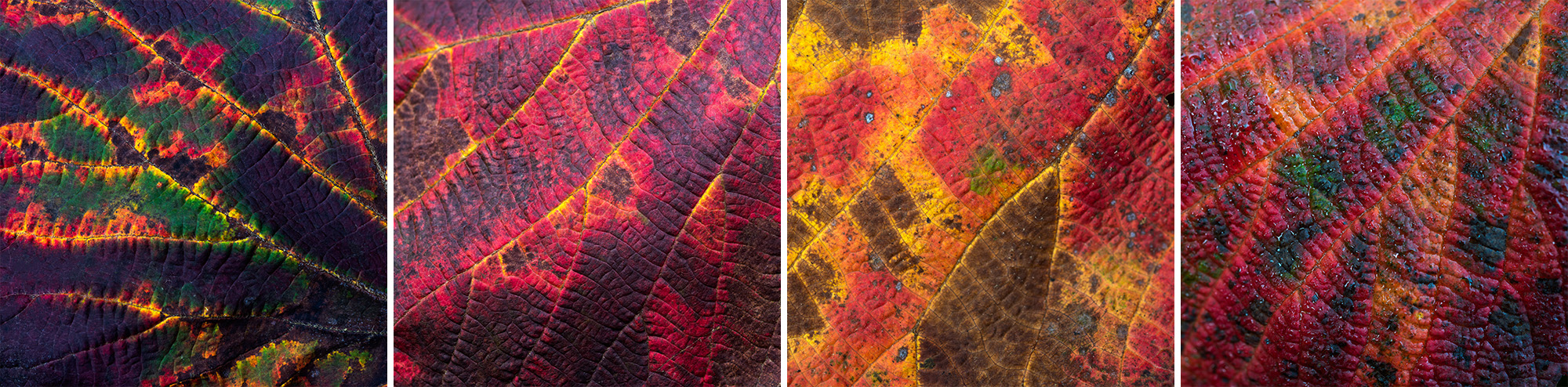
Milepost 363.  Witch Hobble leaves (Hobblebush) are very striking when they turn color in autumn.  Their normally green, heart-shaped, large leaves begin to transition into a rainbow of different colors over their highly textured surfaces.  There wasn’t much tree color change yet during this particular autumn, so I had the opportunity to really focus on and enjoy the vibrant Witch Hobble.
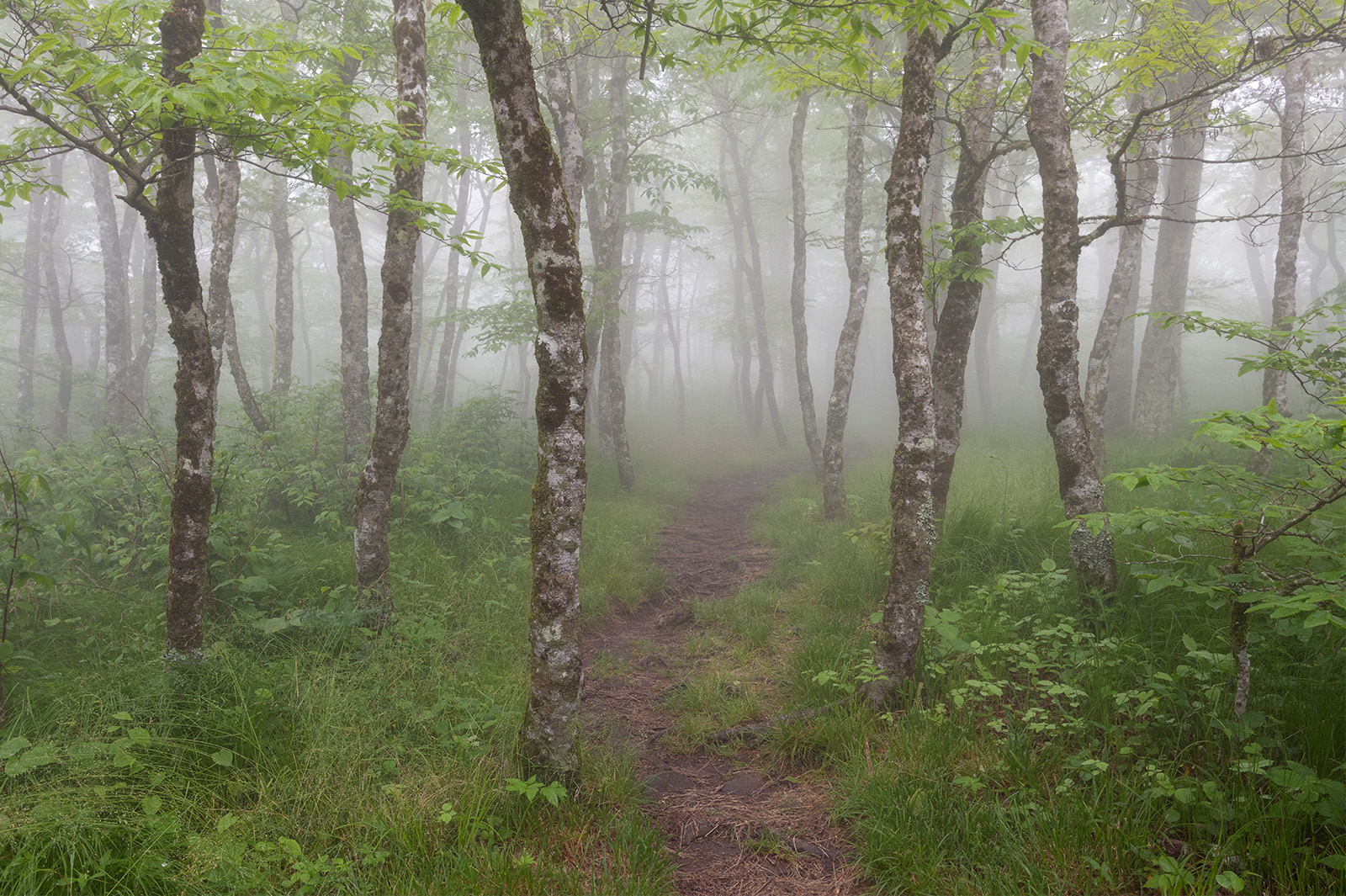
Milepost 363.  The Mountains to Sea Trail traverses a narrow ridge between the Black Mountains and Great Craggy Gardens.  It’s one of my favorite areas of the Blue Ridge Parkway.  Rich with botanical finds and almost always in some degree of fog and cloud, this area is pure magic.
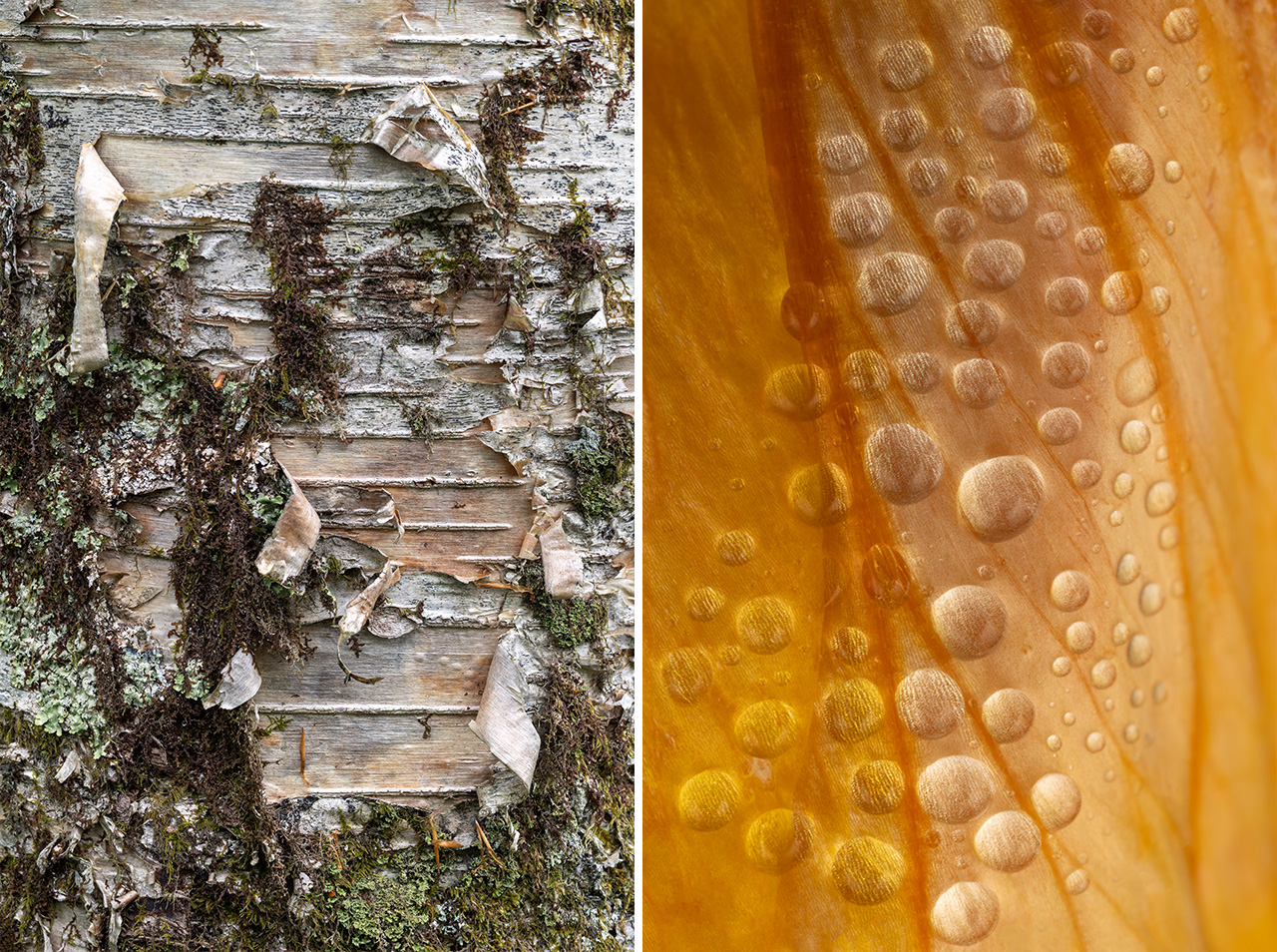
Milepost 363.  (Left) Birch Bark is easily recognizable by it’s paper-thin layers that seemingly peel.  High in natural chemicals like Betulin, Birch Bark is waterproof, as well as highly flammable (even when damp).  (Right) Morning dew sits beautifully atop the delicate petal of a yellow wildflower along the Mountains to Sea Trail.
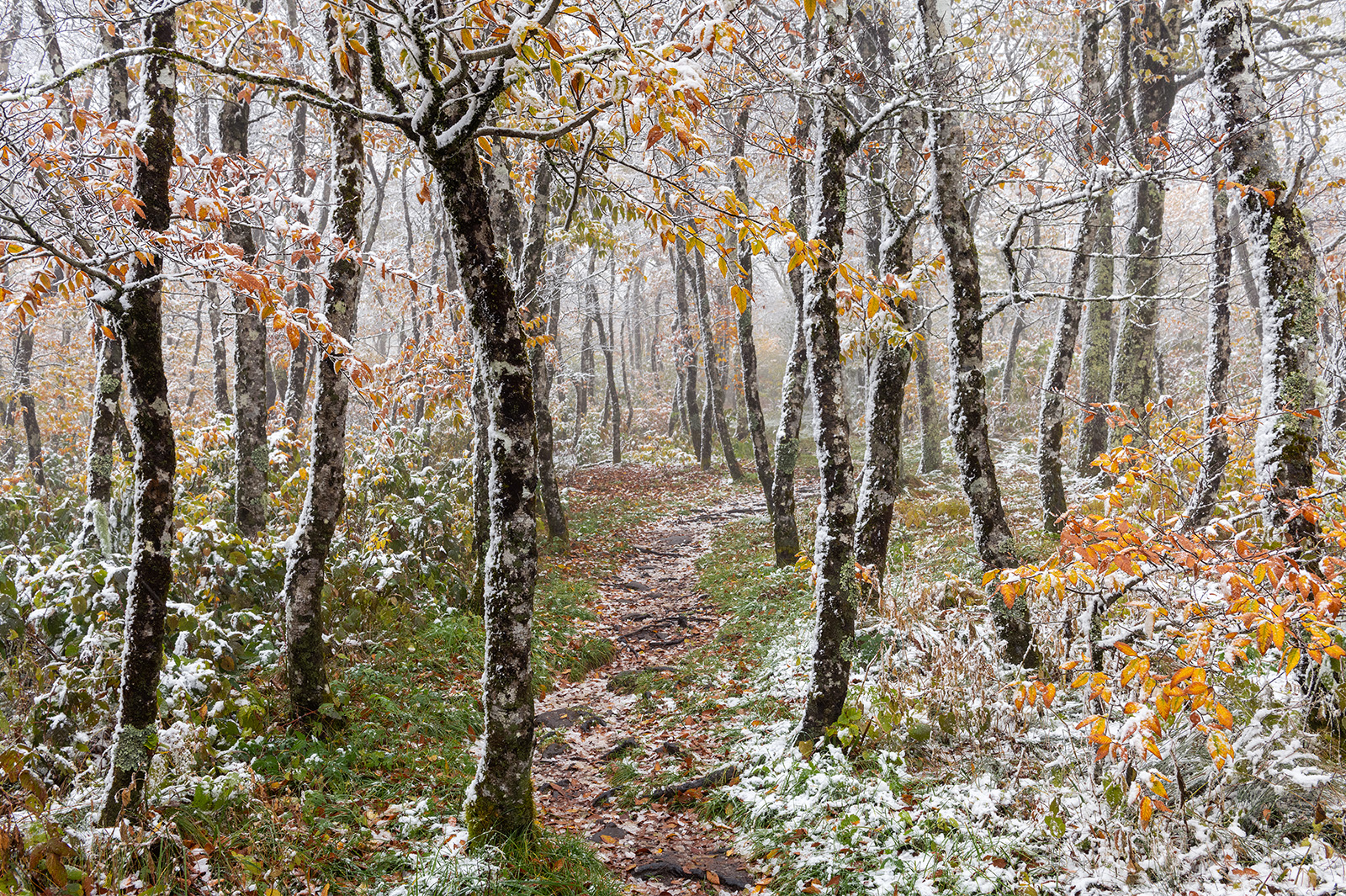
Milepost 363.   An autumn snow along the Mountains to Sea Trail shows two seasons elbowing for space.  I was camped at Mount Pisgah Campground further south when I awoke to unexpected snow at elevation along the Blue Ridge Parkway.  It was a very long day of driving and taking advantage of the unique conditions.  This was the last section of Parkway that I found ample snow for photos.
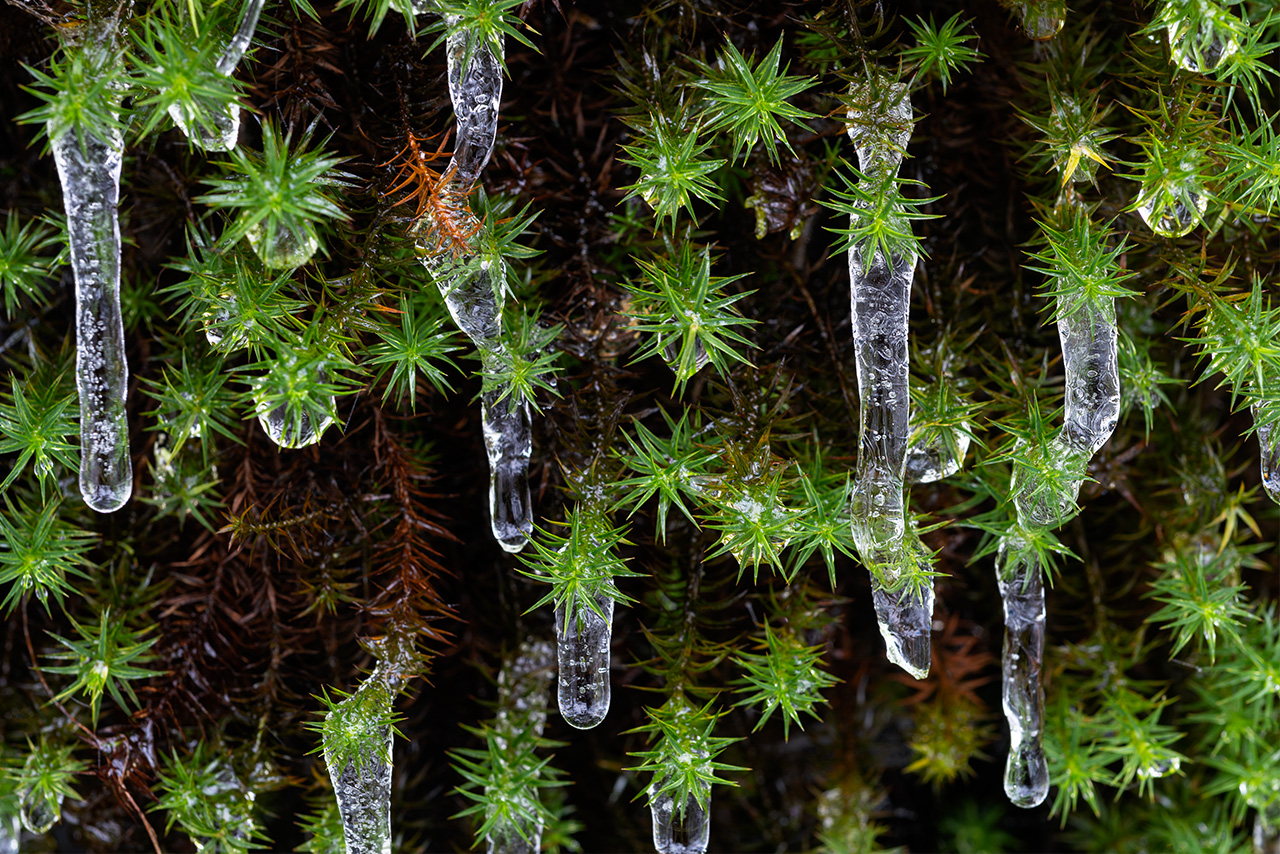
Milepost 363.  During a freak autumn snow, I found these icicles clinging to a wall of green moss along the Mountains to Sea Trail.  I thought it was striking!
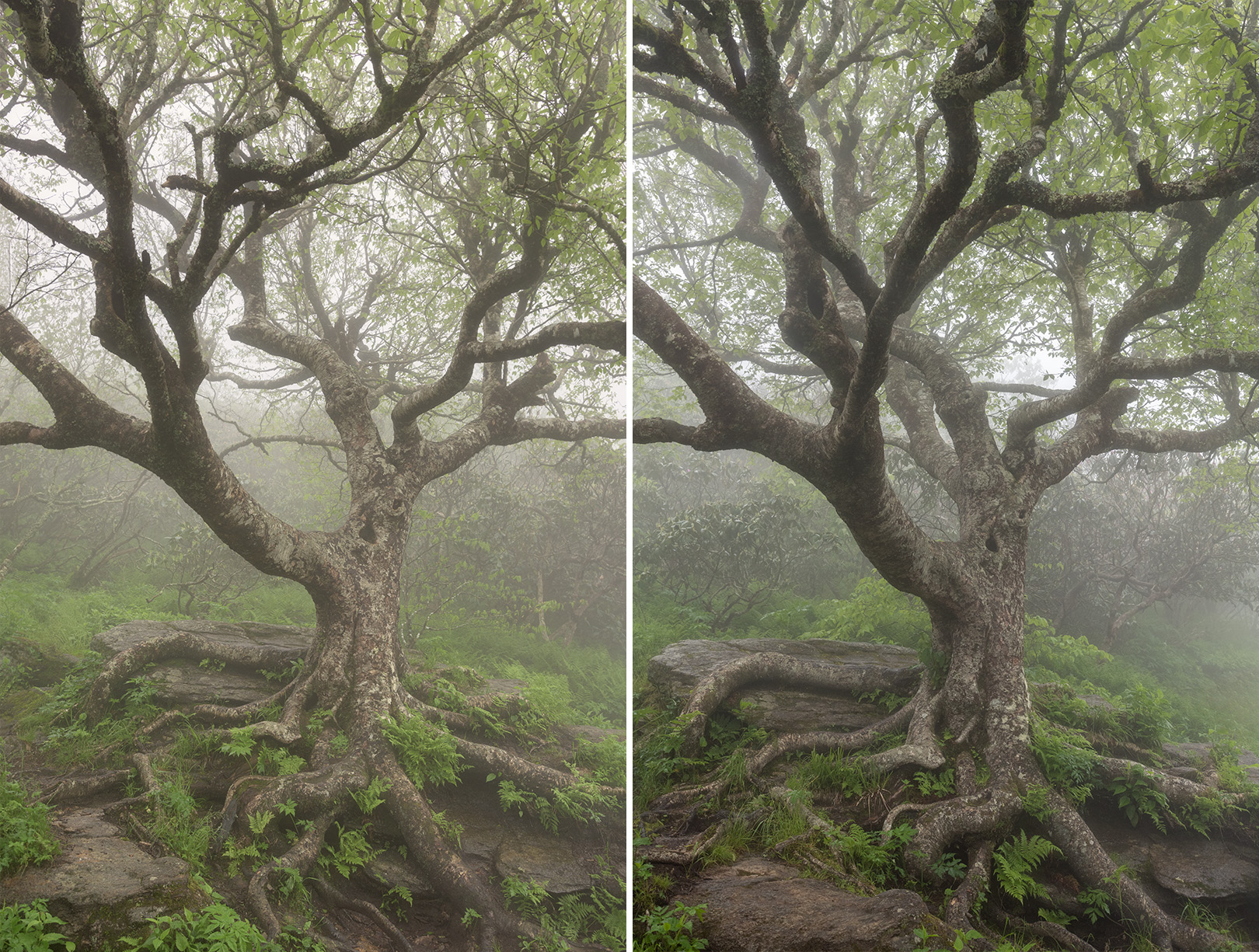
Milepost 364.  Craggy Pinnacle Trail.  Intense, high-elevation weather and short growing seasons produce a beautifully gnarled Sweet Birch Tree (I think) along the Craggy Pinnacle Trail.  The popularity of this trail and the proximity to the parking area make this tree very accessible.  It has become an icon of the Blue Ridge Parkway and Craggy Gardens.
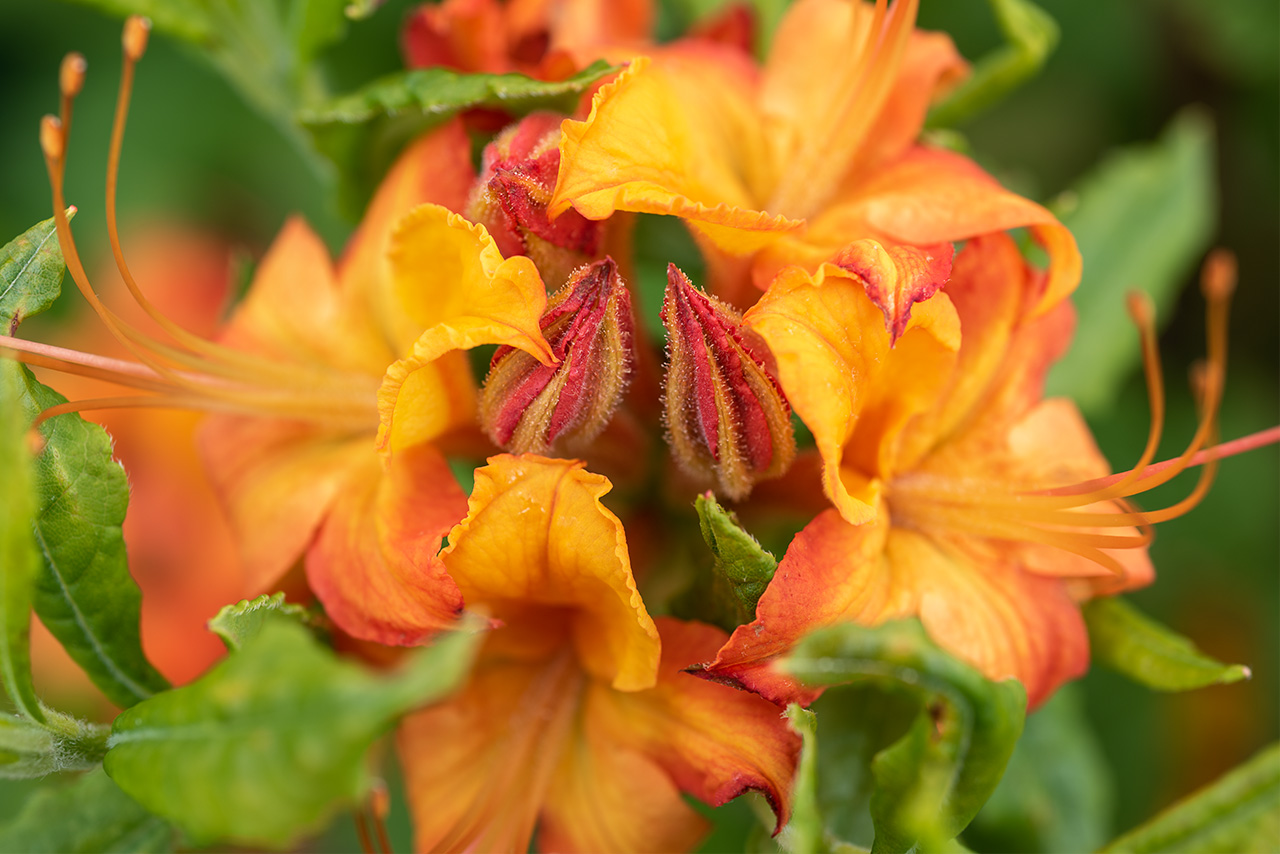
Milepost 365.  Craggy Flats.  The buds of Flame Azalea (Rhododendron calendulaceum) represent their namesake with beautiful scarlett reds and rich oranges.  These flames were flowering within the grassy balds area of Craggy Flats, accessed via the trail at the Craggy Gardens Visitors Center along the Blue Ridge Parkway.
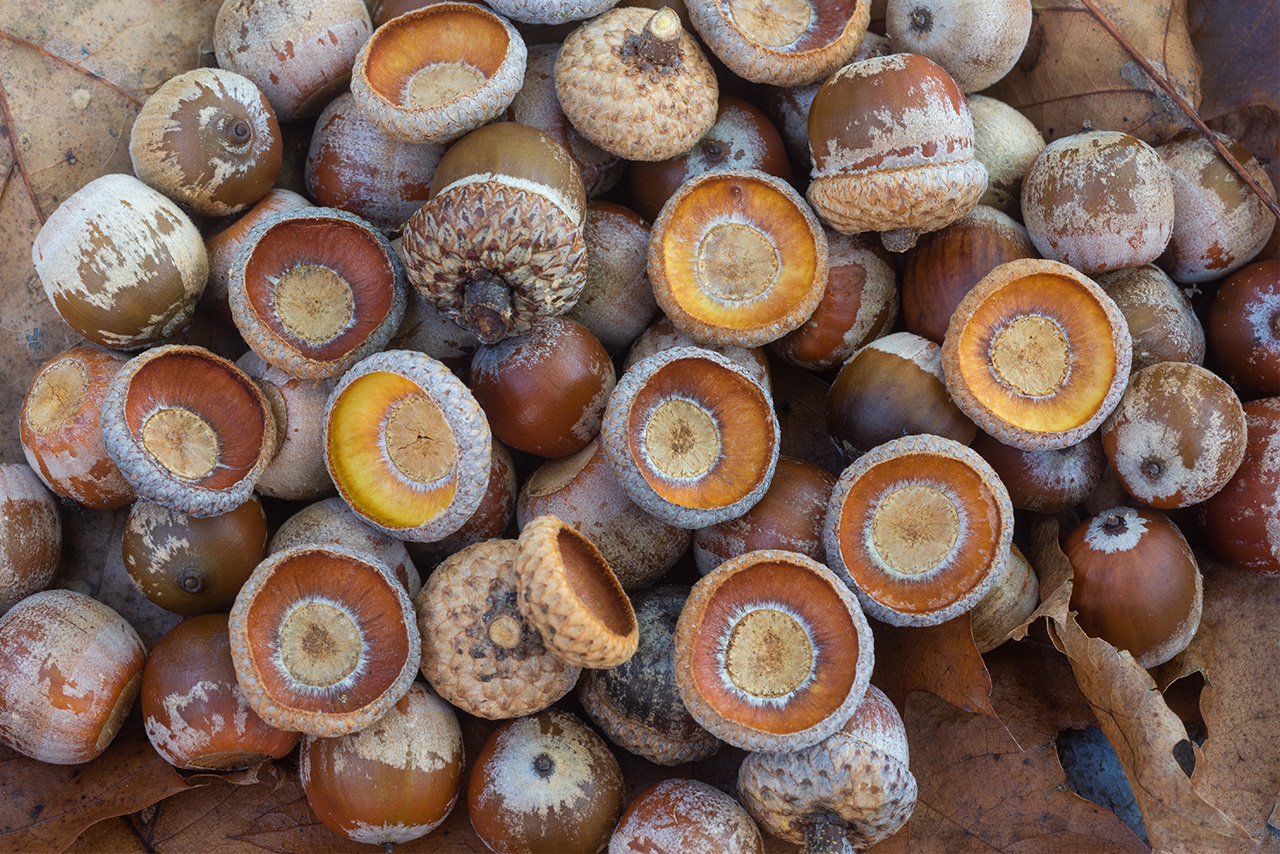
Milepost 408.  Mount Pisgah Campground.  At my campsite, acorns dive-bombed the roof of my vehicle all night long.  The deep silence of night would only be interrupted by the clang of acorn to steel, repeated over and over throughout the campground.  In the morning, I decided to make something with the harvest and arranged a pile of acorns on the picnic table for a portrait!
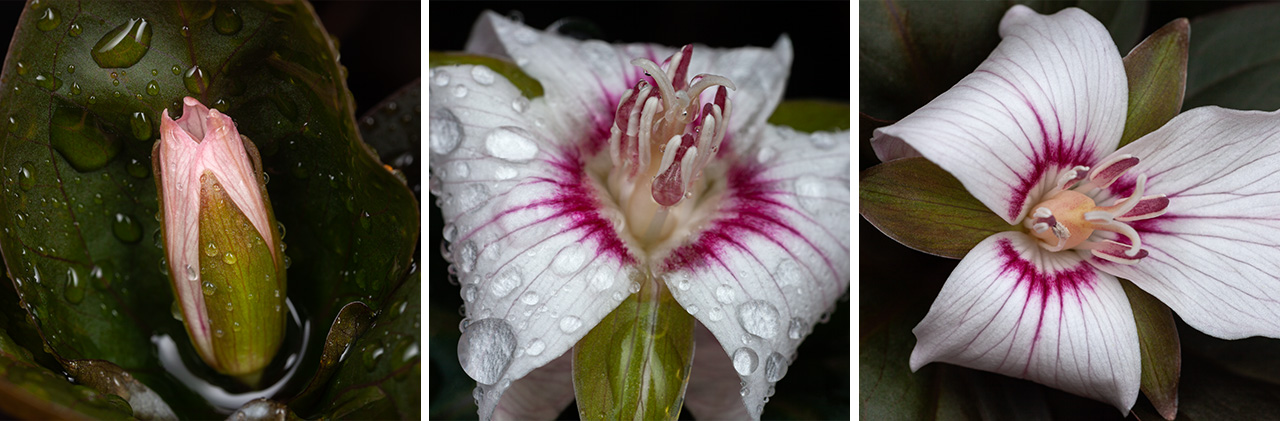
Milepost 408.  Mount Pisgah Campground.  Even before the campground opens to the public, this area is wonderful for early-season, high-elevation Painted Trillium (Trillium undulatum) blooms.  These little wildflowers feature the characteristic three leaf, three petal structure of trillium, as well as vibrant magenta veining and paint towards the center.
Milepost 408.  Mount Pisgah Campground.  The Mount Pisgah Trail runs between the campground and the Blue Ridge Parkway.  I hike it frequently while staying at the campground and often find interesting fungi and lichen along its length.
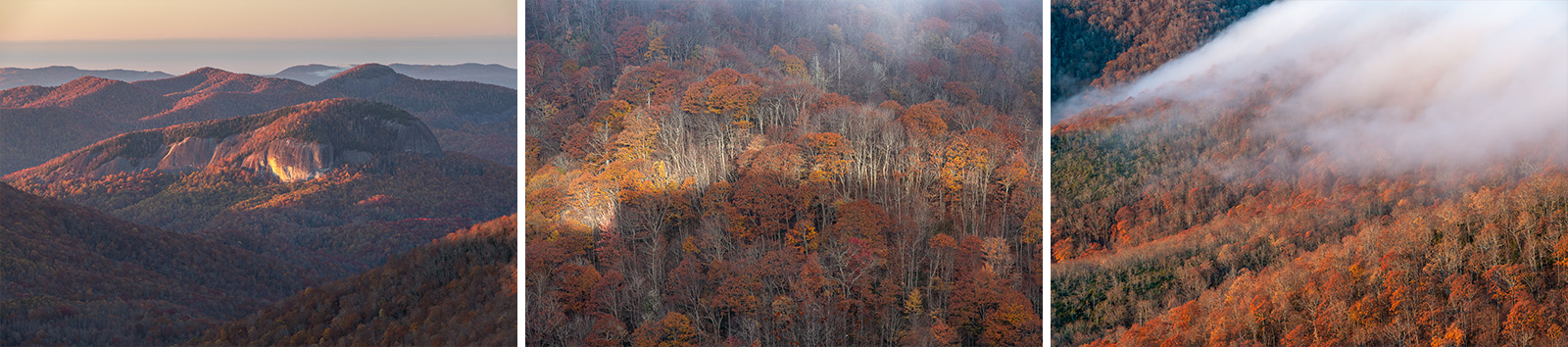
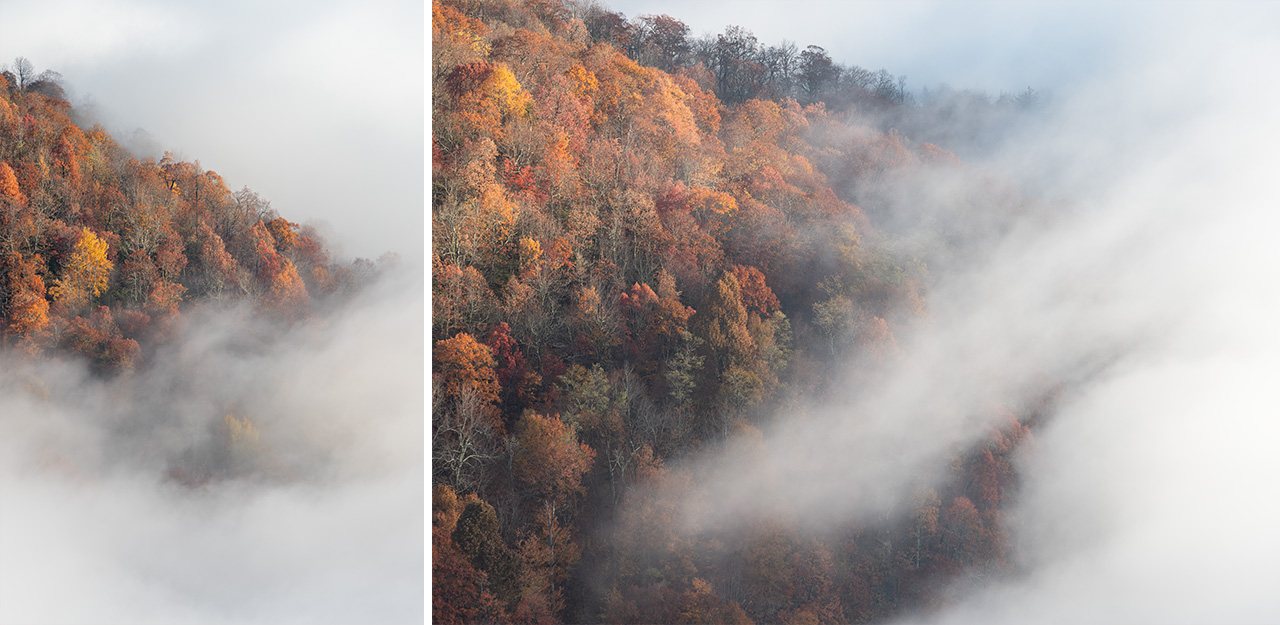
(Left + Right) Milepost 411.  Cradle of Forestry Overlook.  Late autumn bronzes decorate Looking Glass Rock and the mountain hillsides at elevation.  (Center) Milepost 415.  View Cherry Cove Overlook.  Sun breaks through thick cloud cover to illuminate the last breath of autumn color along a high-elevation autumn hillside.
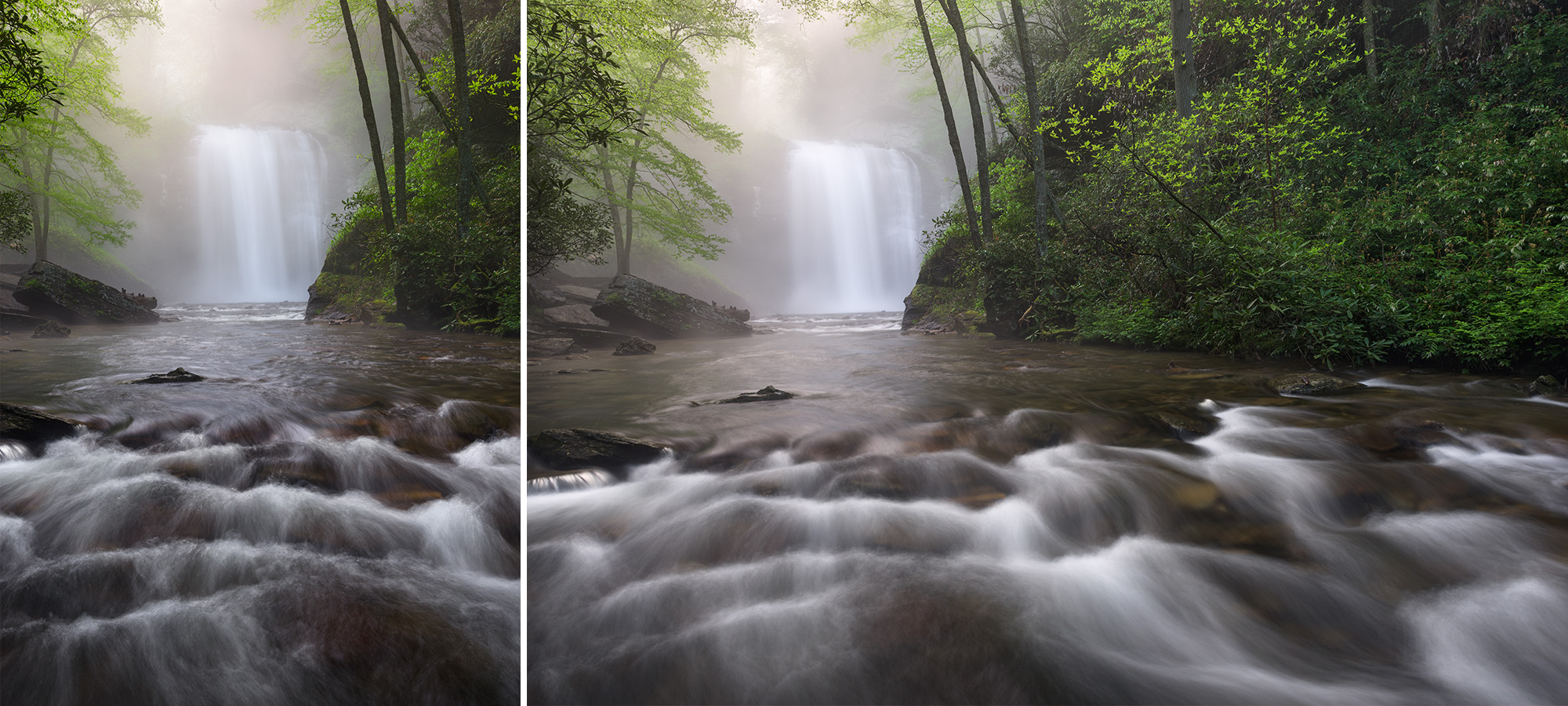
Milepost 412.  Looking Glass Falls.  This sixty-foot waterfall is located near Brevard, North Carolina via US-276 (Forest Heritage Scenic Byway) off the Blue Ridge Parkway.  It’s roadside location and accessibility make it one of the most visited waterfalls in the area.  Arrive early in the morning to have a few moments before the crowds!
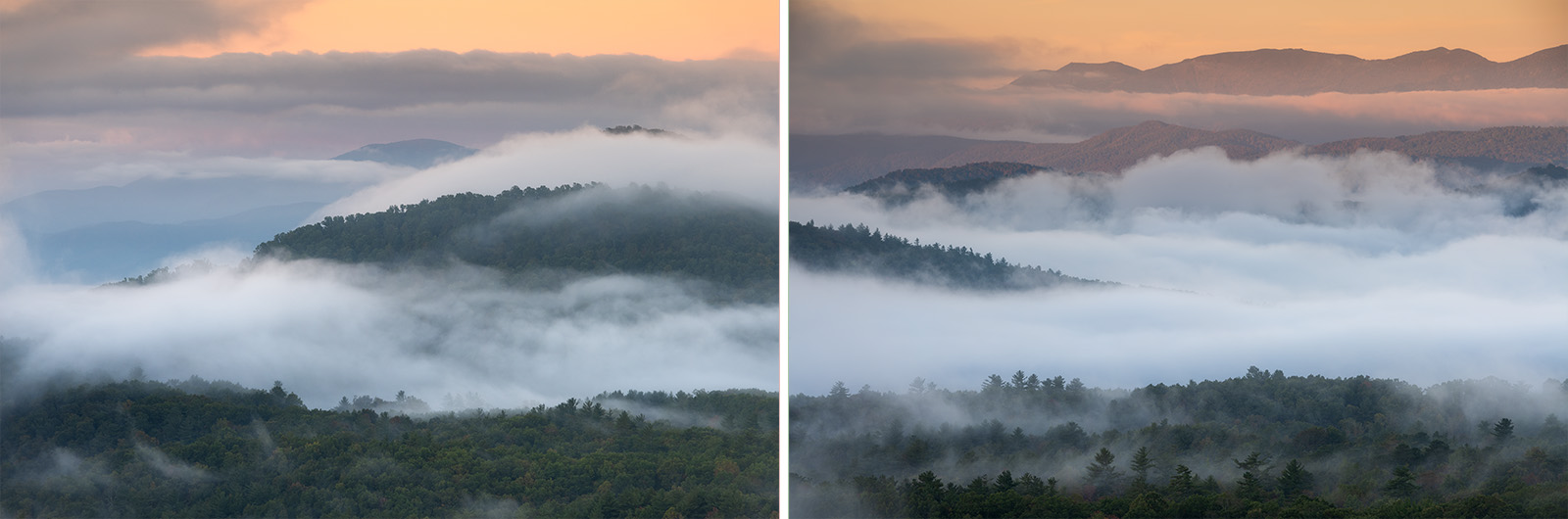
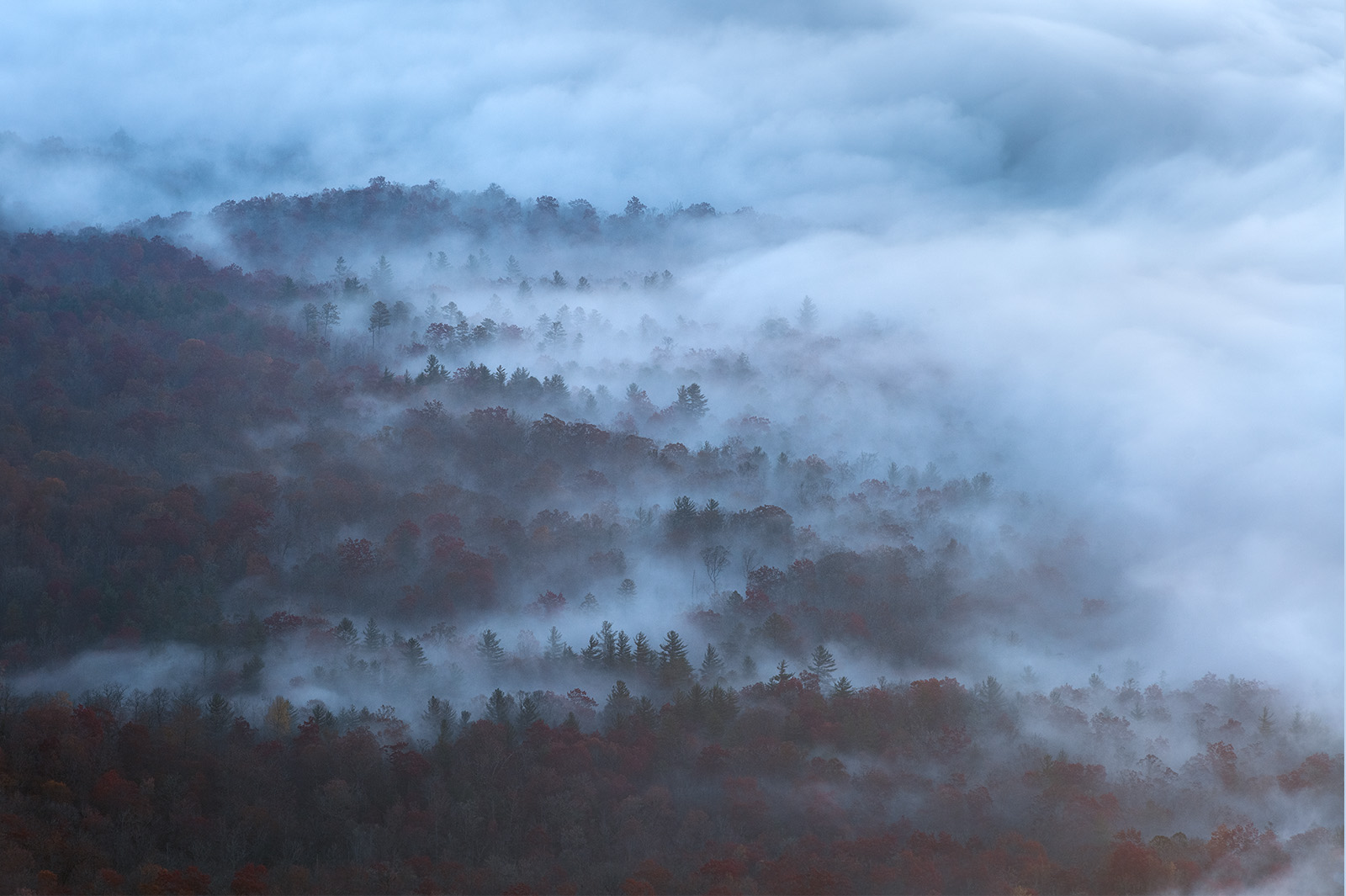
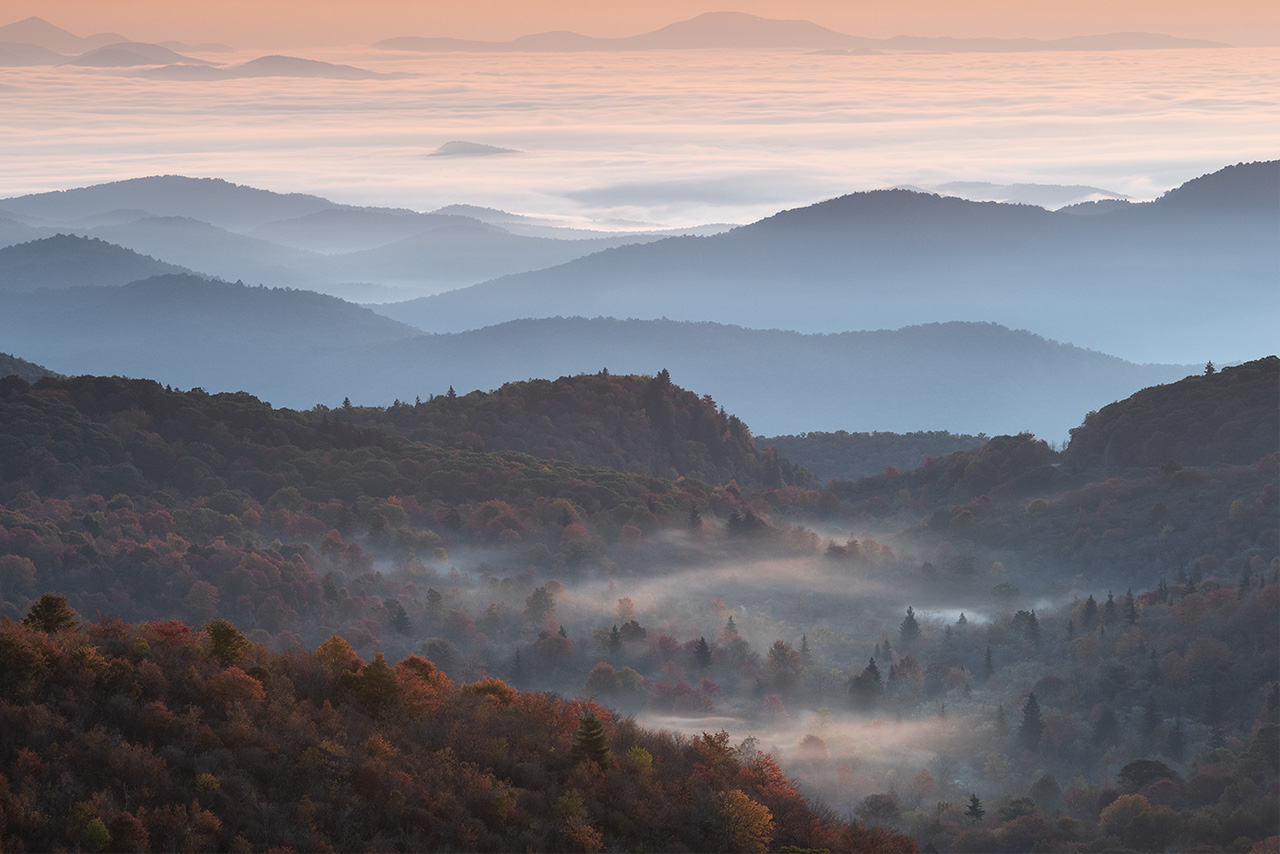
Milepost 412.  Pounding Mill Overlook.  The blue hour of an autumn morning finds inverted cloud mingling with late season forest.  Before the sun comes up, I find inverted cloud to be very peaceful, like a blanket over the landscape.  This overlook is known for inverted cloud.
Milepost 412.  Pounding Mill Overlook.  Autumn hillside moves in and out of inverted clouds like a magic show from Pounding Mill Overlook along the Blue Ridge Parkway.  Inverted cloud is the characteristic magic trick of the Southern Appalachian Mountains.
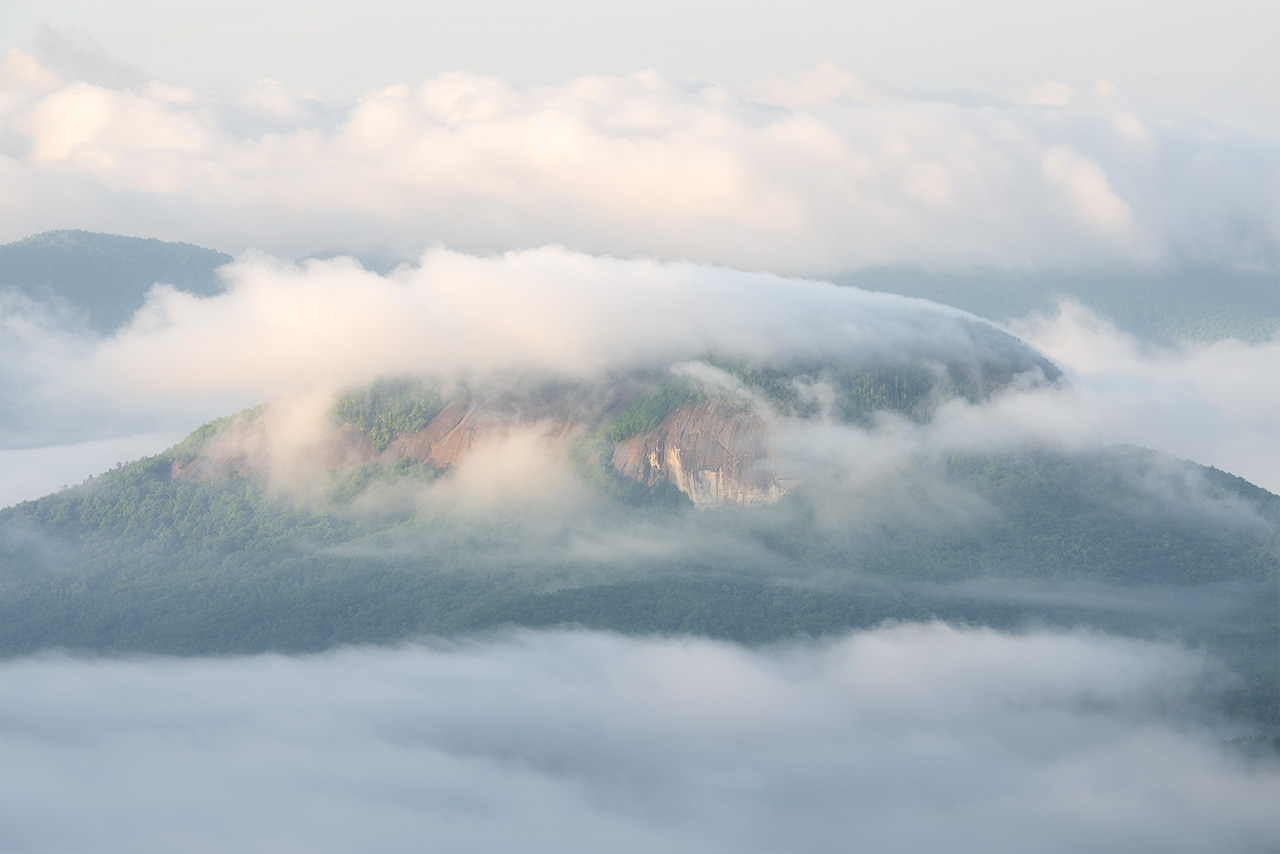
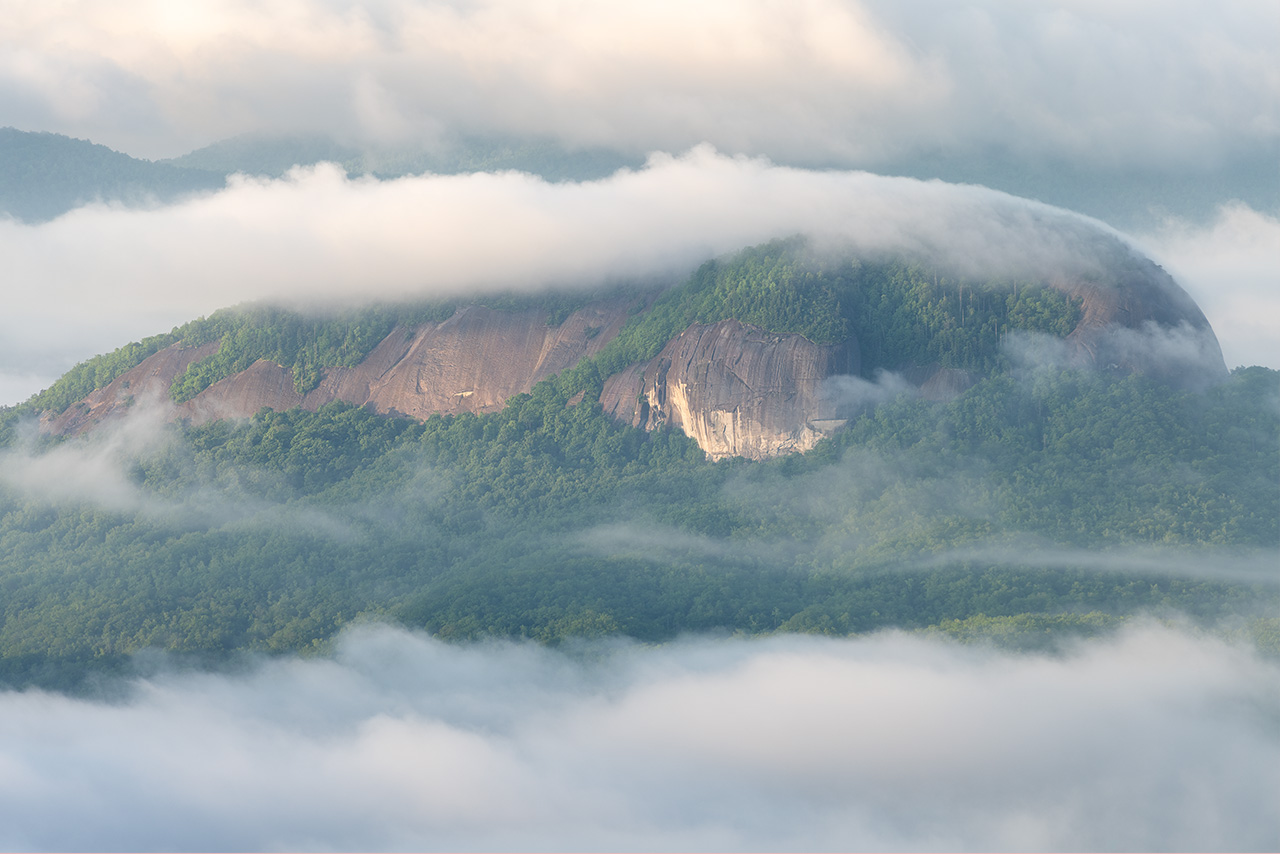
Milepost 412.  Pounding Mill Overlook.  Clouds break away from Looking Glass Rock at first light as seen from the Blue Ridge Parkway.  Looking Glass Rock is a 4000ft granite pluton named for the winter sun hitting frozon rock faces and reflecting light.  I eagerly waited at Pounding Mill Overlook on this morning, wondering if the sky would clear just enough for a touch of sunlight to hit the bare rock.
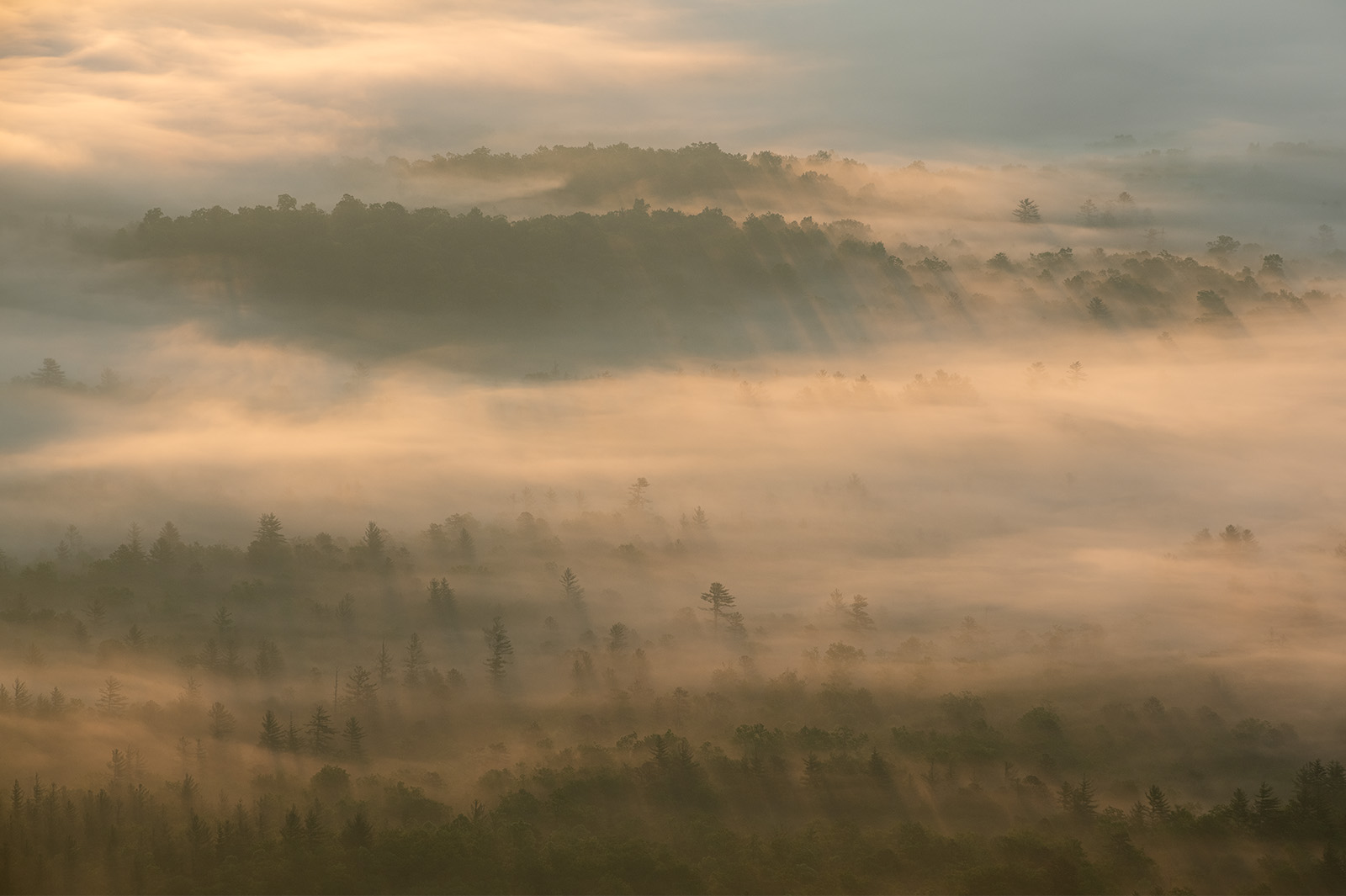
Milepost 412.  Pounding Mill Overlook.  These are the conditions that most photographers know Pounding Mill Overlook for.  Inverted cloud filters through thick forest while the rising sun streams through the scene and provides dramatic backlighting.  It doesn’t happen every morning, but when you catch it right…
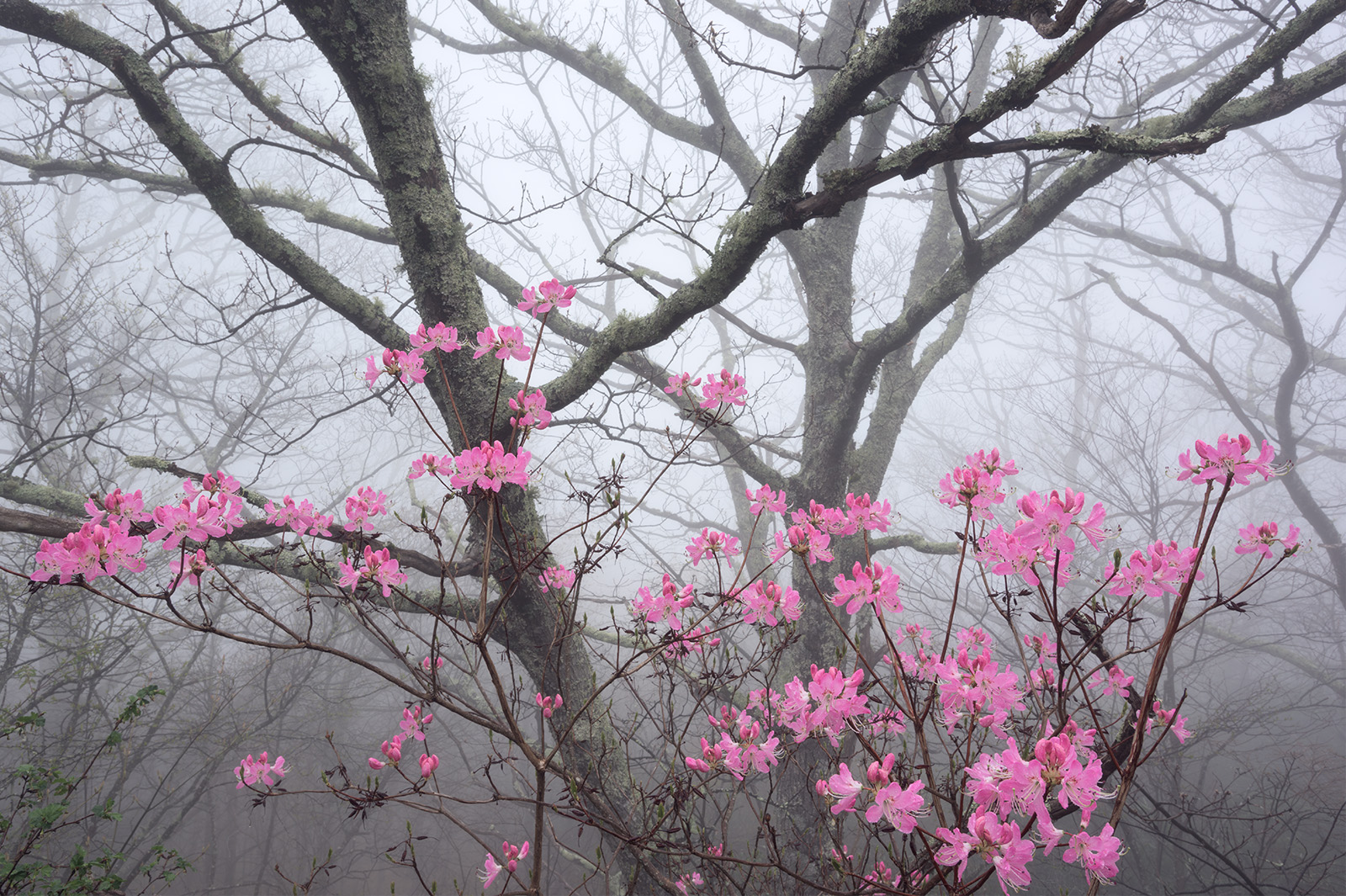
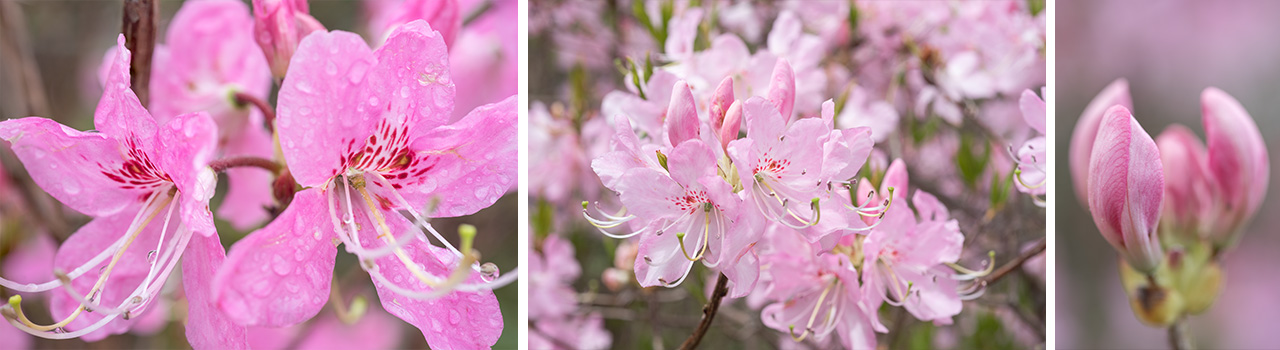
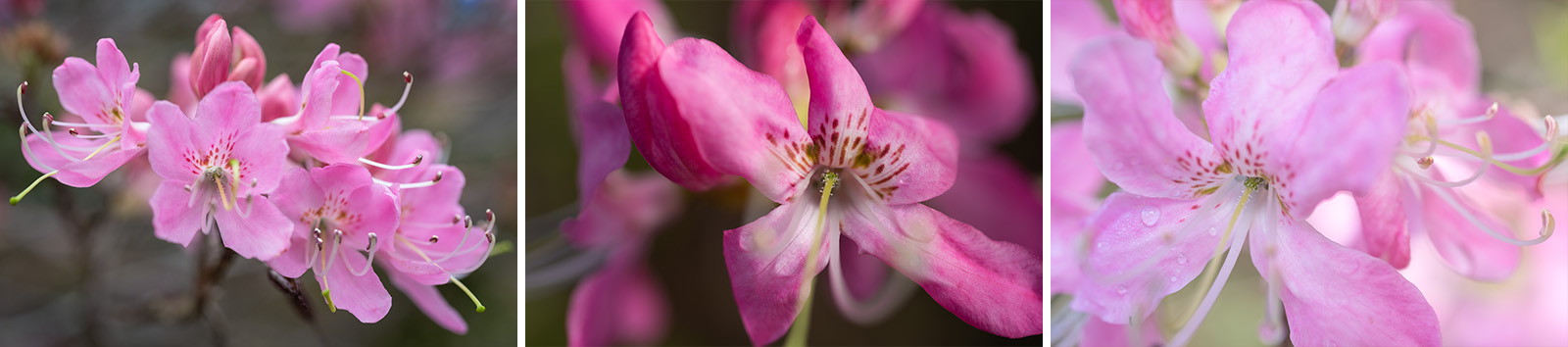
Milepost 419.  Graveyard Fields.  Pinkshell Azalea (Rhododednron vaseyi) are rare, endemic shrubs found only in Western North Carolina.  A large concentration of Pinkshell Azalea are found along the Blue Ridge Parkway around Graveyard Fields.  They are ranked G3 vulnerable globally and S3 vulnerable in North Carolina by NatureServe.
Milepost 419.  Graveyard Fields.  Flowering Pinkshell Azalea along the Blue Ridge Parkway near Graveyard Fields.  The Pinkshell flowers before it leafs.  This results in a very striking cluster of pink flowers against a largely bare forest in early spring at elevation.
Milepost 419.  Graveyard Fields.  Graveyard Fields is a unique 5000ft valley surrounded by high peaks.  It is often the first area along the length of the Blue Ridge Parkway to change colors during the autumn season.  It’s not uncommon to lose ten degrees from the parking area along the Blue Ridge Parkway down onto the trails through the valley near the Yellowstone Prong.
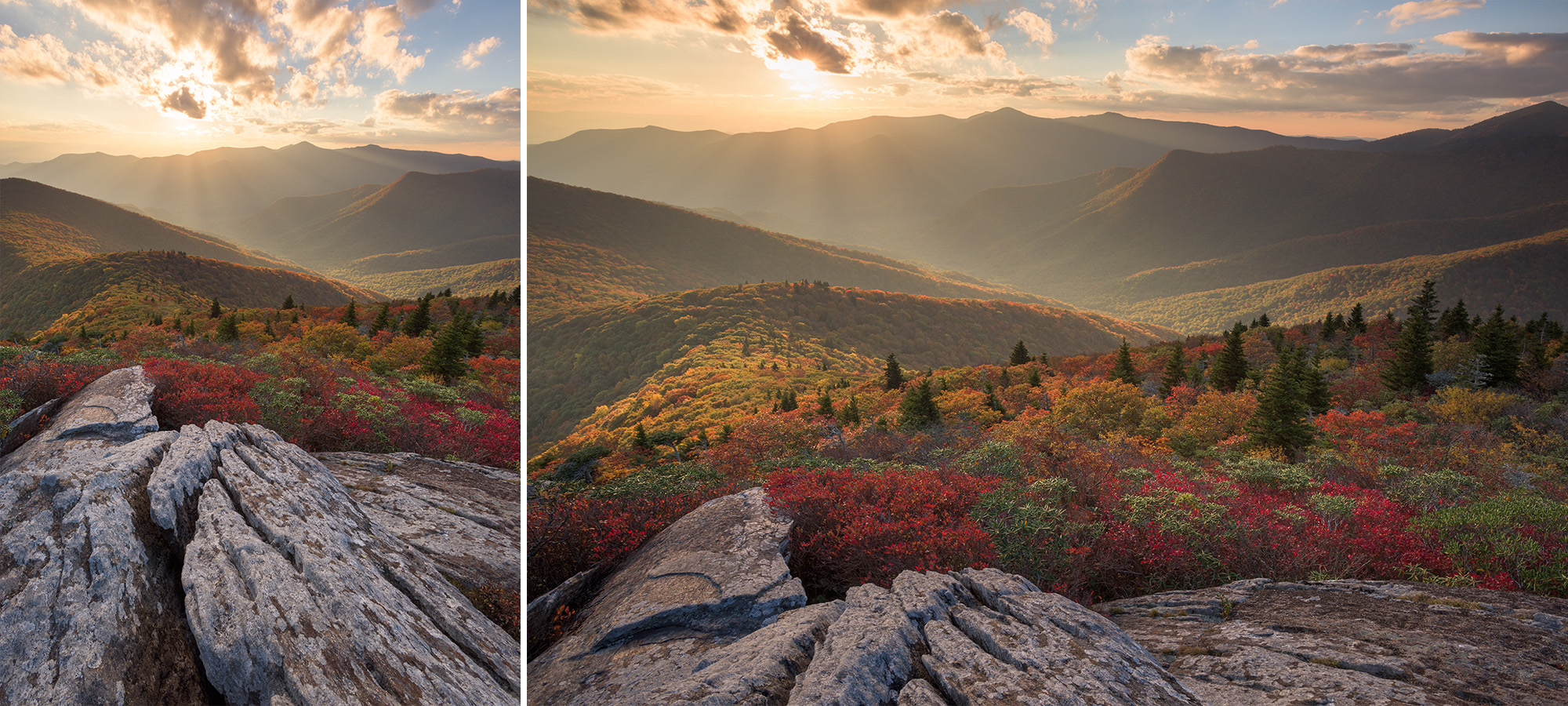
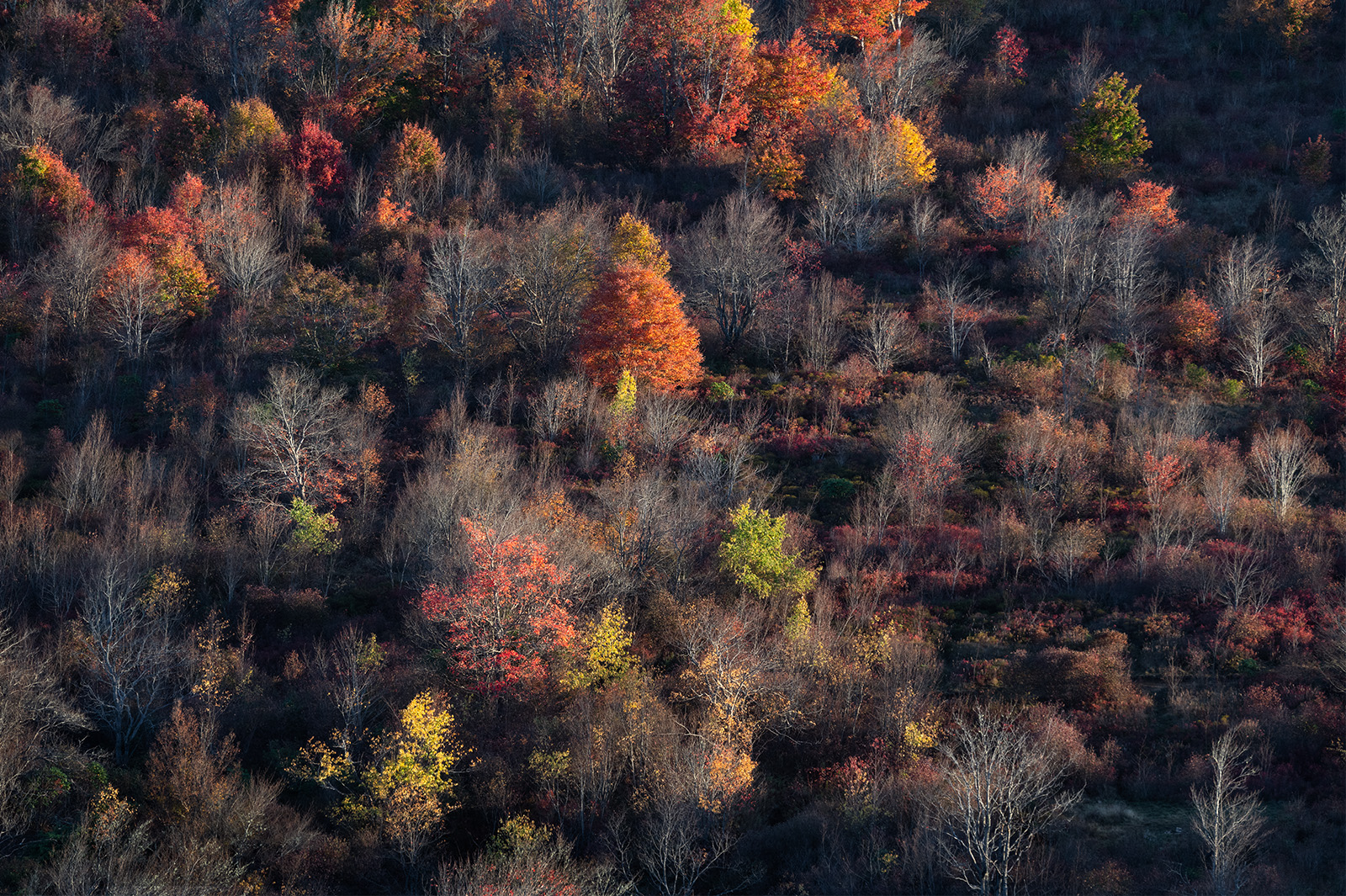
Milepost 419.  Graveyard Fields.  I love to photograph the late autumn hillsides of Graveyard Fields.  Blueberry bushes cover the hillside in crimson red and many different species of tree display their climatic colors.  Sidelight streams shadows and gives depth during the early morning hours.
Milepost 420.  Black Balsam Knob Rd.  Just beyond Graveyard Fields is a service road (Black Balsam Knob Rd.) that has three overlooks providing sweeping eastward views back over Graveyard Fields and the distant mountains beyond.  They are wonderful places to catch a sunrise along this stretch of Blue Ridge Parkway.
Milepost 420.  Graveyard Fields.  Autumn is a wonderful time to catch Graveyard Fields behind the lens.  High elevations usher in early and intense colors, and many vantages give plenty of space for photographers and hikers to share the space without interference.
Milepost 419.  Graveyard Fields.  On a clear, calm autumn morning, I turned my lens towards the Yellowstone Prong for some reflection photography.  The Yellowstone Prong flows right through Graveyard Field, supplying the water for Upper and Lower Falls, as well as several waterfalls downstream.
Milepost 420.  Graveyard Fields.  Autumn hillsides drop their colorful leaves and slide towards winter at elevation at Graveyard Fields along the Blue Ridge Parkway.
Milepost 419.  Graveyard Fields.  There are hillsides around Graveyard Fields that absolutely light up with Trout Lily flowers during the spring ephemeral wildflower bloom.  Due to high elevations, this initial wave of wildflowers is often in early May.
Milepost 419.  Graveyard Fields.  Many wildflowers grow in and around the high elevations of Graveyard Fields.  Shown here are Galax (left two), Cliff Saxifrage (center), and Painted Trillium (right two).
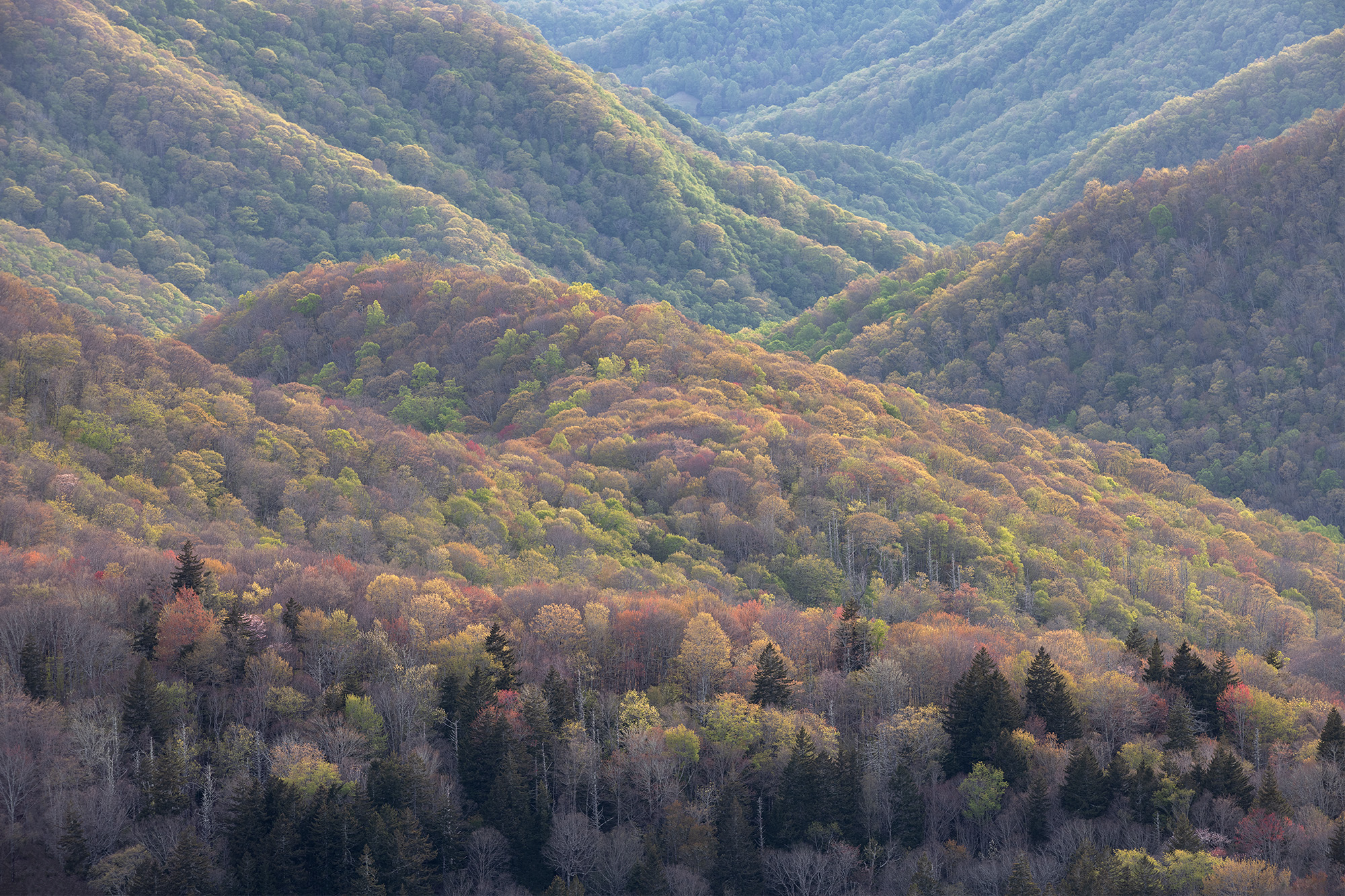
Milepost 420.  View John Rock Overlook.  A spring hillside resembles autumn with its variety and color variation.  Greens can be seen in the lower and deeper valley, as the lighter colors of budding and flowering spring trees move up the mountainside toward the 5000ft peak where I’m standing.
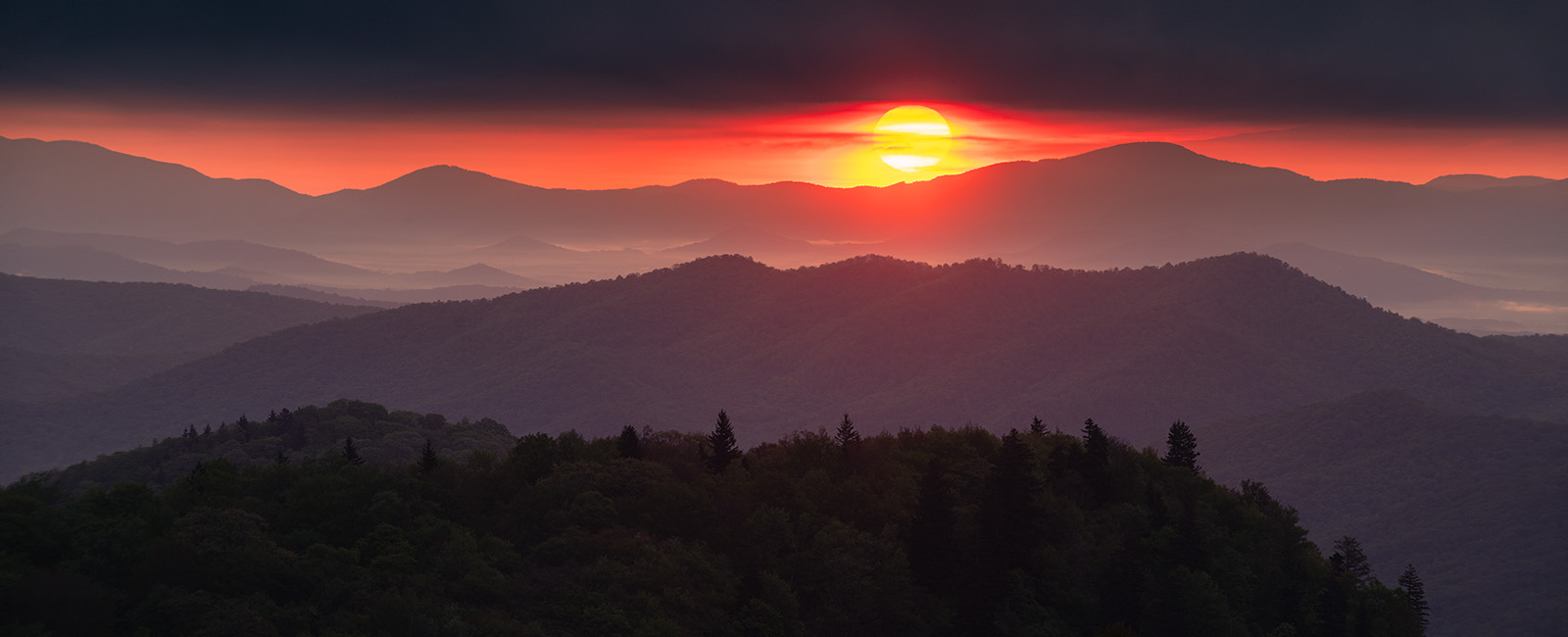
Milepost 420.  Graveyard Fields.  Standing alongside the Blue Ridge Parkway near Graveyard Fields, I photographed this beautiful sunrise over the lush mountains of Western North Carolina.
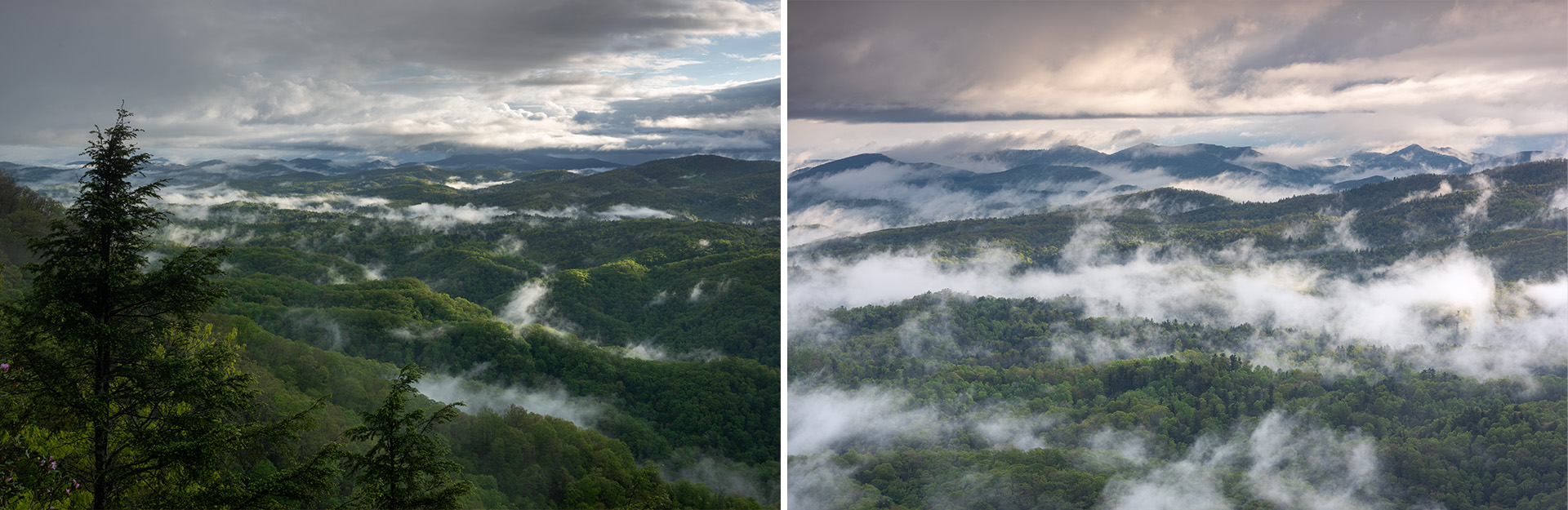
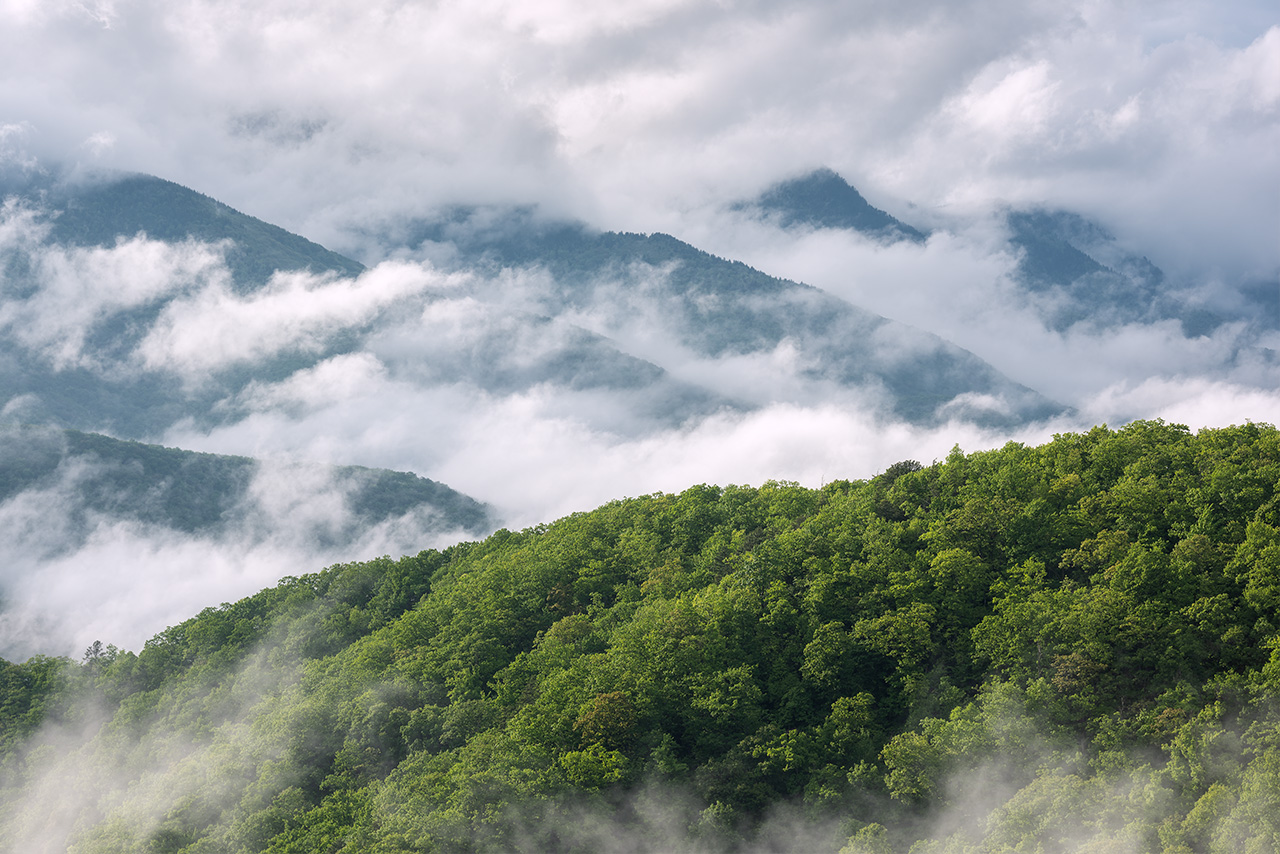
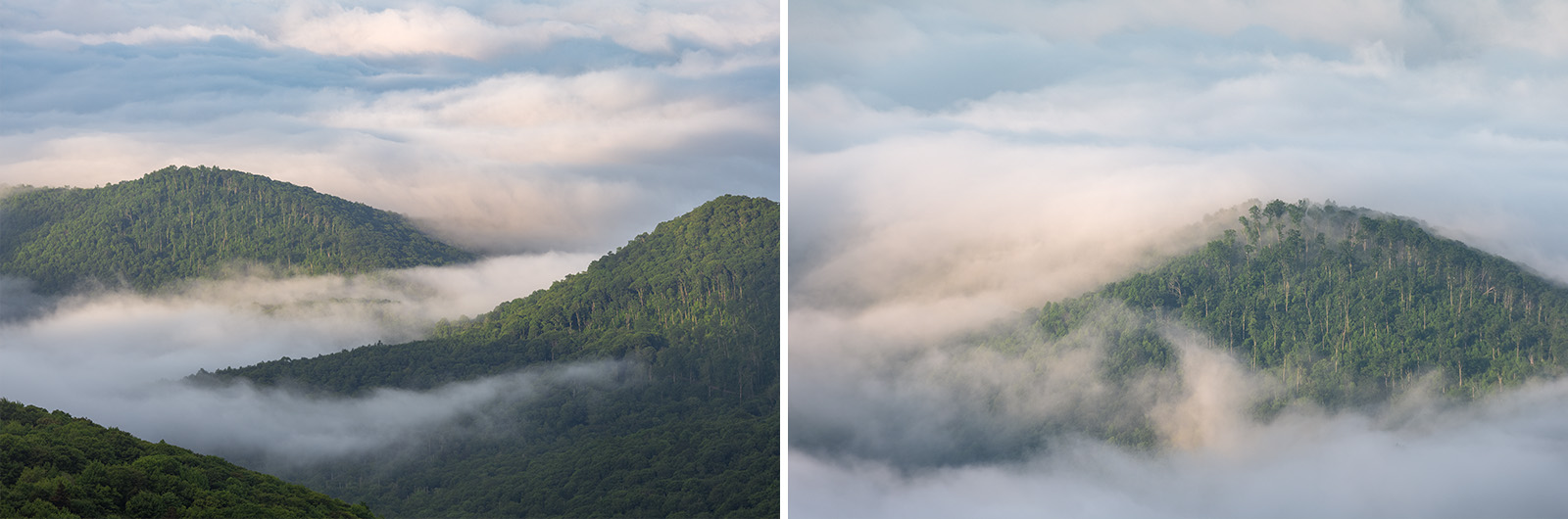
Milepost 421.  There are no official overlooks between Black Balsam Knob Rd. and Fetterbush Overlook to the south.  However, the views off this short stretch of Blue Ridge Parkway are very dramatic.  On this morning, inverted clouds danced wtihin the lush, green mountaintops as the rising sun began to burn off the blanket covering the landscape.
Milepost 426.  Haywood Gap.  Just off the Blue Ridge Parkway, the Mountains to Sea Trail (MST) heads down into a rich cove that is absolutely alive with spring ephemeral wildflowers.  Shown here are Mayapples amongst Dutchman’s Breeches, Squirrel Corn and Flase Hellebore.  You will not be able to walk through this area without witnessing thousands of wildflowers!
Milepost 424.  Wolf Mountain Overlook.  Pinkshell Azalea, a rare, endemic shrub that grows only in the Blue Ridge Mountains, comes back into abundance around Wolf Mountain Overlook.  The vibrant pink blooms dance alongside the Blue Ridge Parkway during the early spring ephemeral bloom.
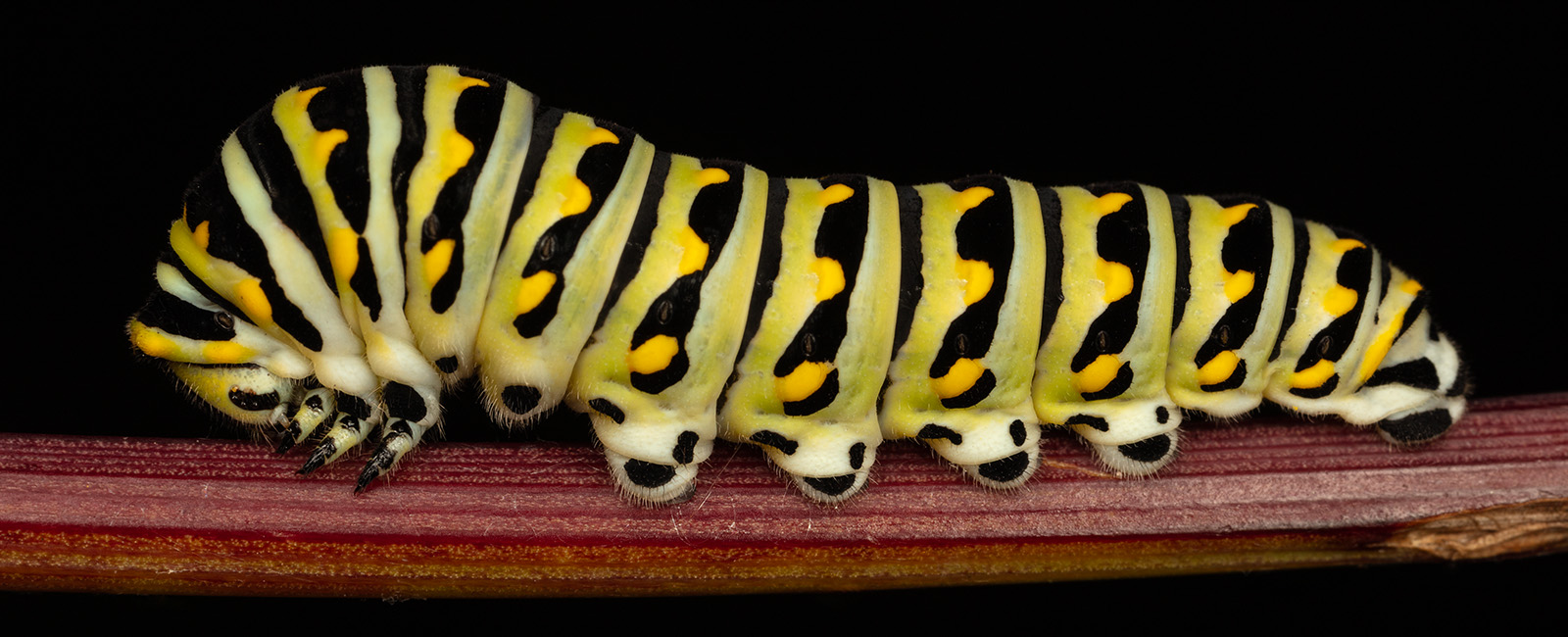
Milepost 424.  Wolf Mountain Overlook.  Black Swallowtail caterpillar found near the roadside at Wolf Mountain Overlook along the Southern Blue Ridge Parkway.
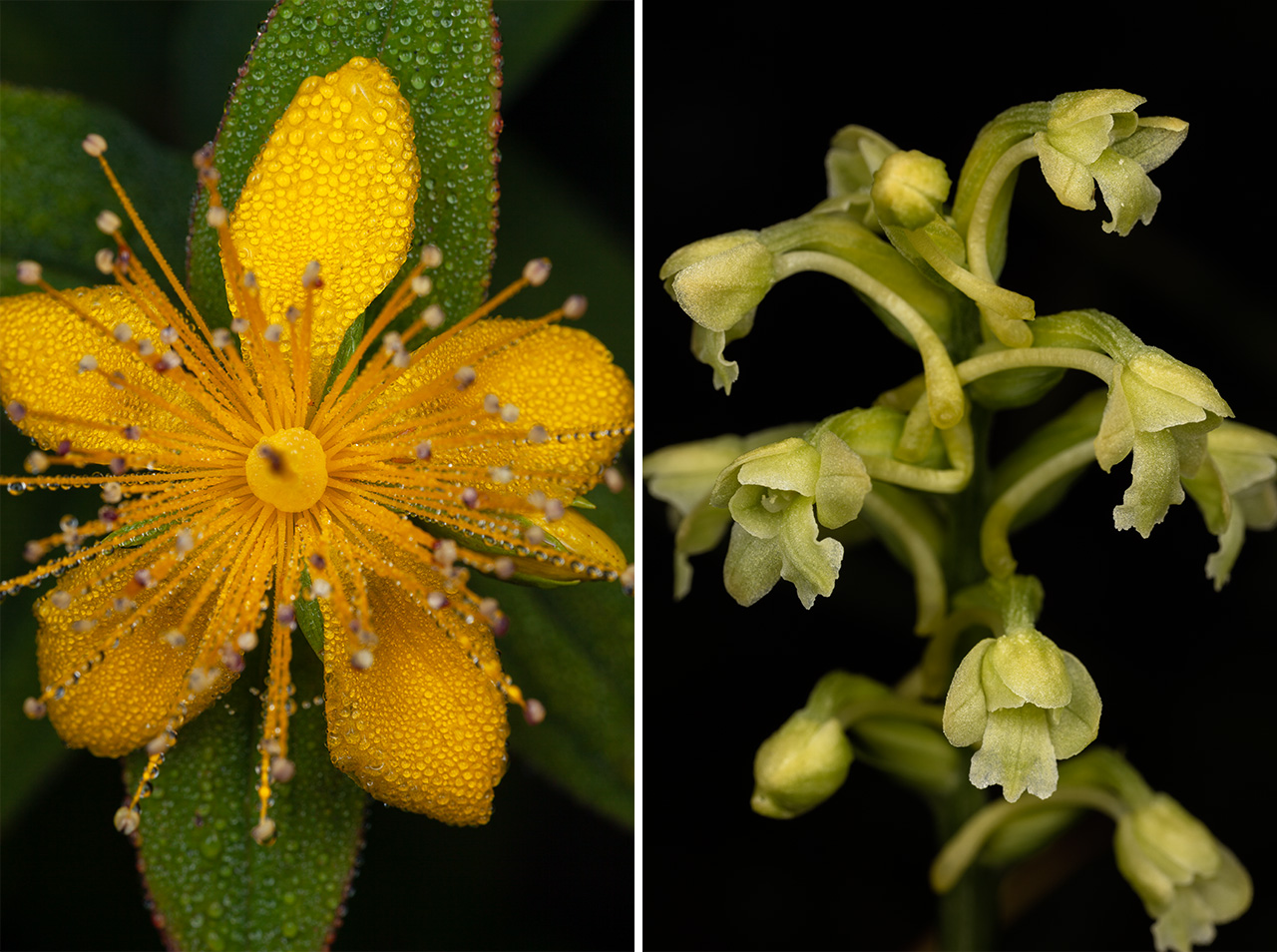
Milepost 424.  Wolf Mountain Overlook.  (Left) Four to five distinct species of St. Johns Wort flower at this botanical hotspot along the Blue Ridge Parkway.  (Right) Hiding in the grasses along the roadside I found this little Club-Spur Bog Orchid at Wolf Mountain Overlook.
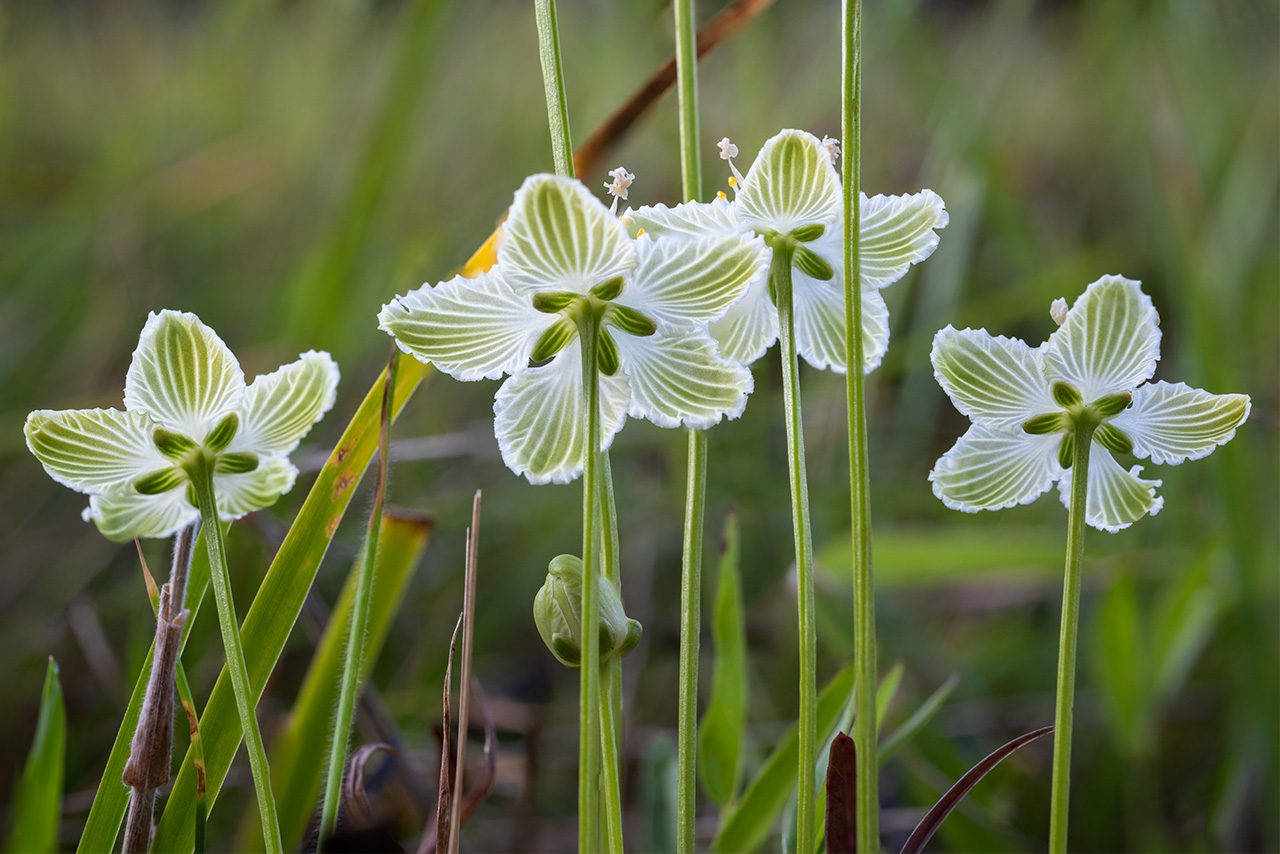
Milepost 424.  Wolf Mountain Overlook.  This overlook is a botanical treasure.  One of the rarest and showiest species to flower here is the kidney-leaved Grass of Parnassus.  They grow along the vertical bog walls, as well as the grassy median along the Blue Ridge Parkway.
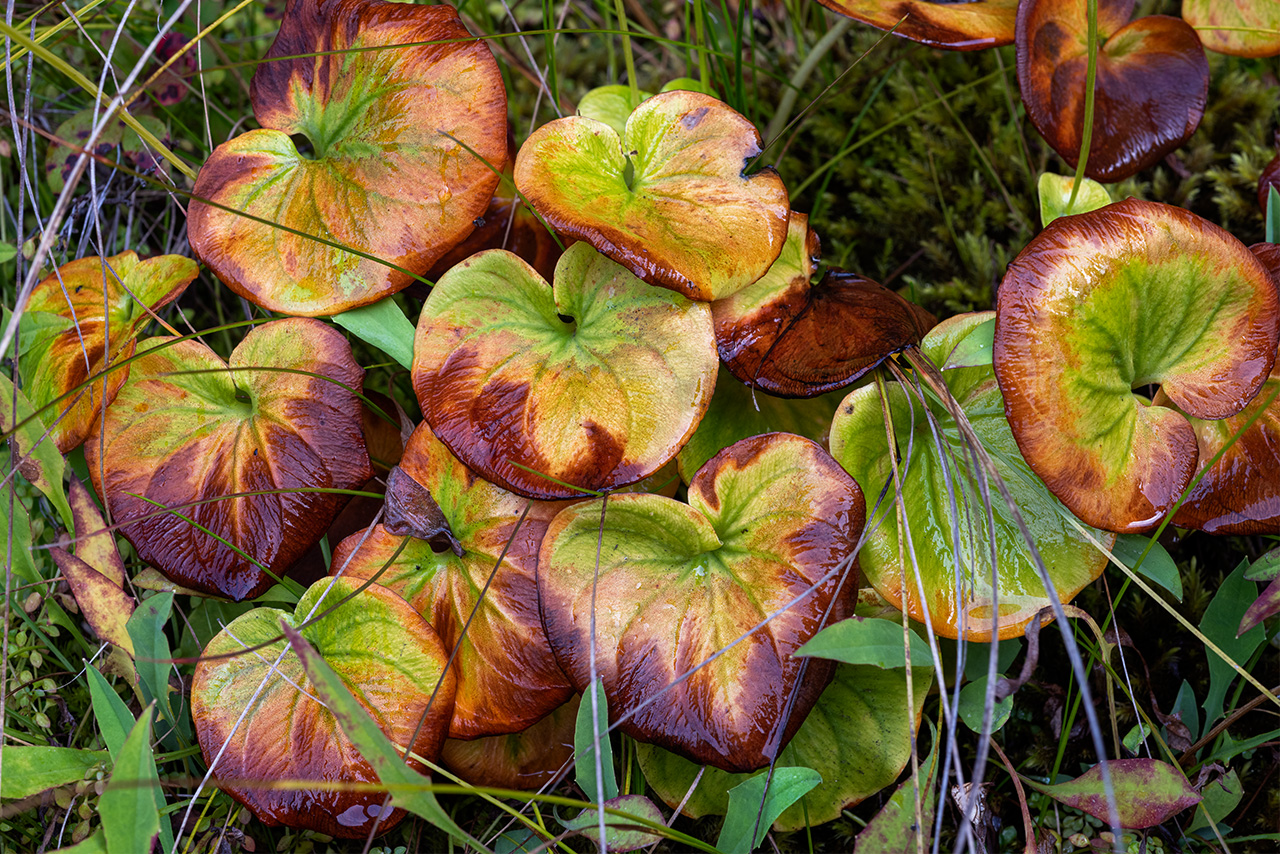
Milepost 424.  Wolf Mountain Overlook.  Though the flowers are the primary draw, even the leaves of the Kidney-Leaved Grass of Parnassus put on a show during the autumn color change!

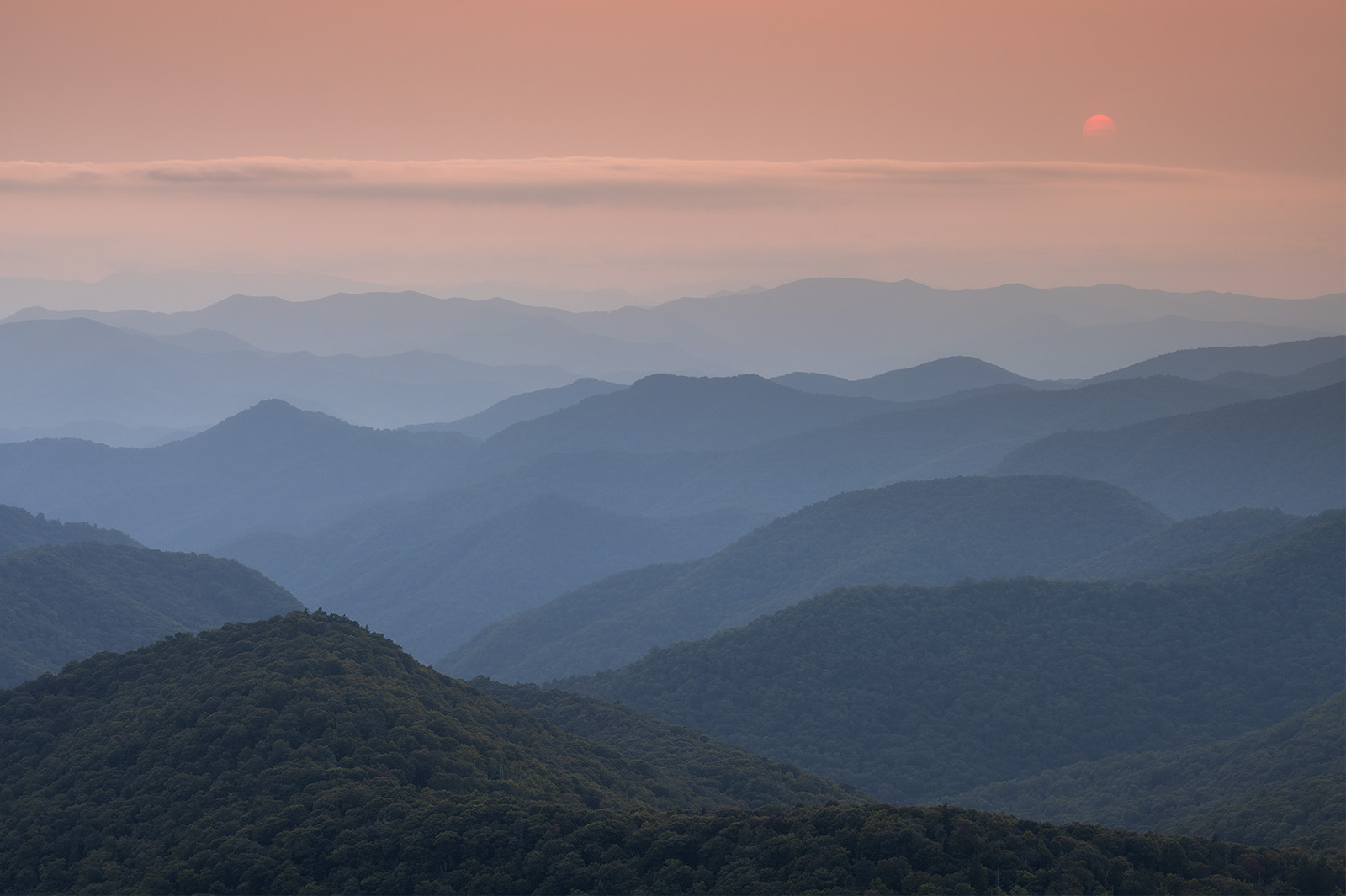
Milepost 429.  Hazy mountain sunset during late summer along the Blue Ridge Parkway.  September is a wonderful time to enjoy summer-like landscapes while also exploring early autumn wildflowers.
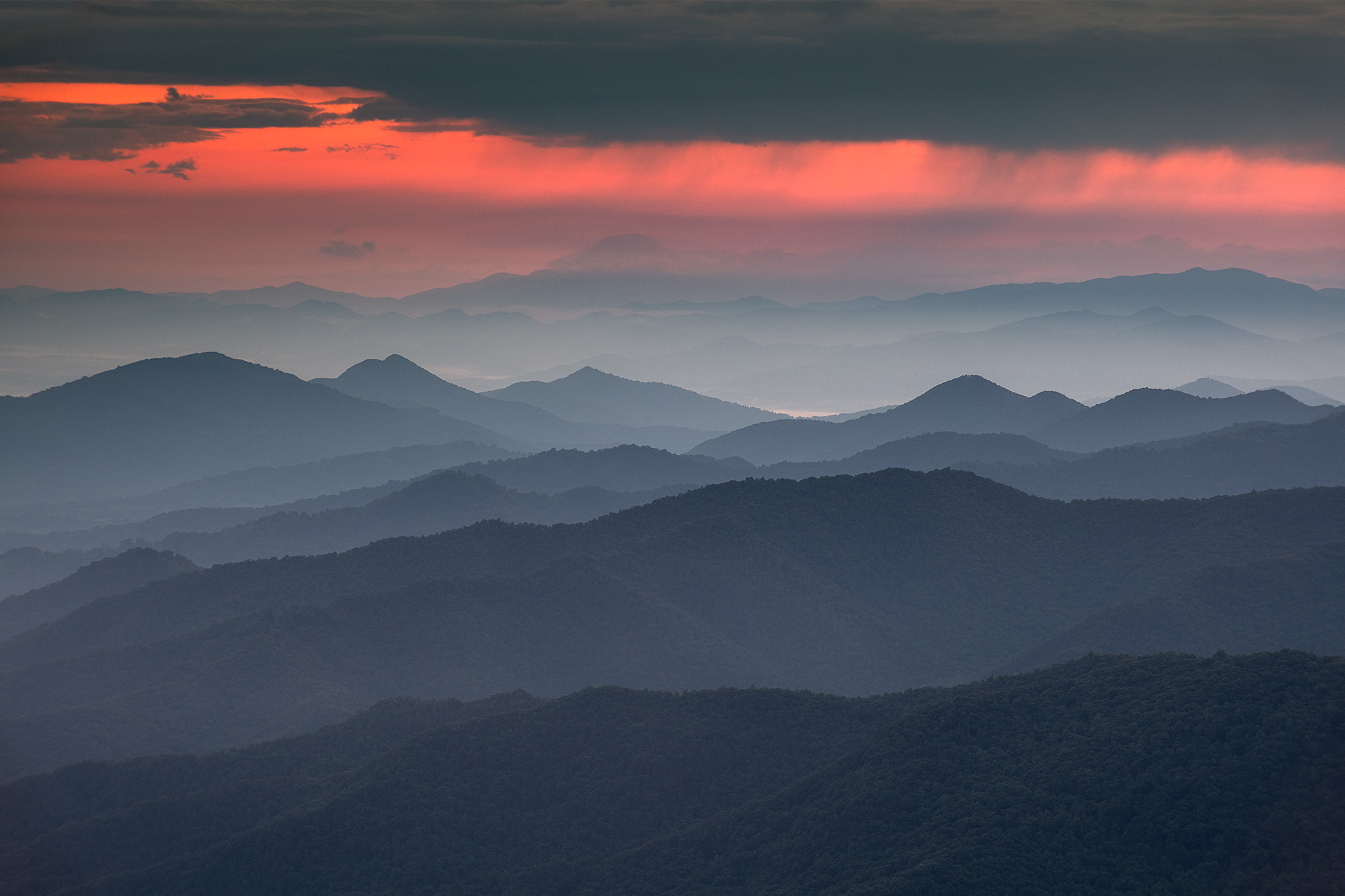
Milepost 429.  Beartrail Ridge Overlook.  Red skies at dawn…  A dramatic sunrise shows rain in the distance over layers of forested mountain peaks as seen from the Blue Ridge Parkway.
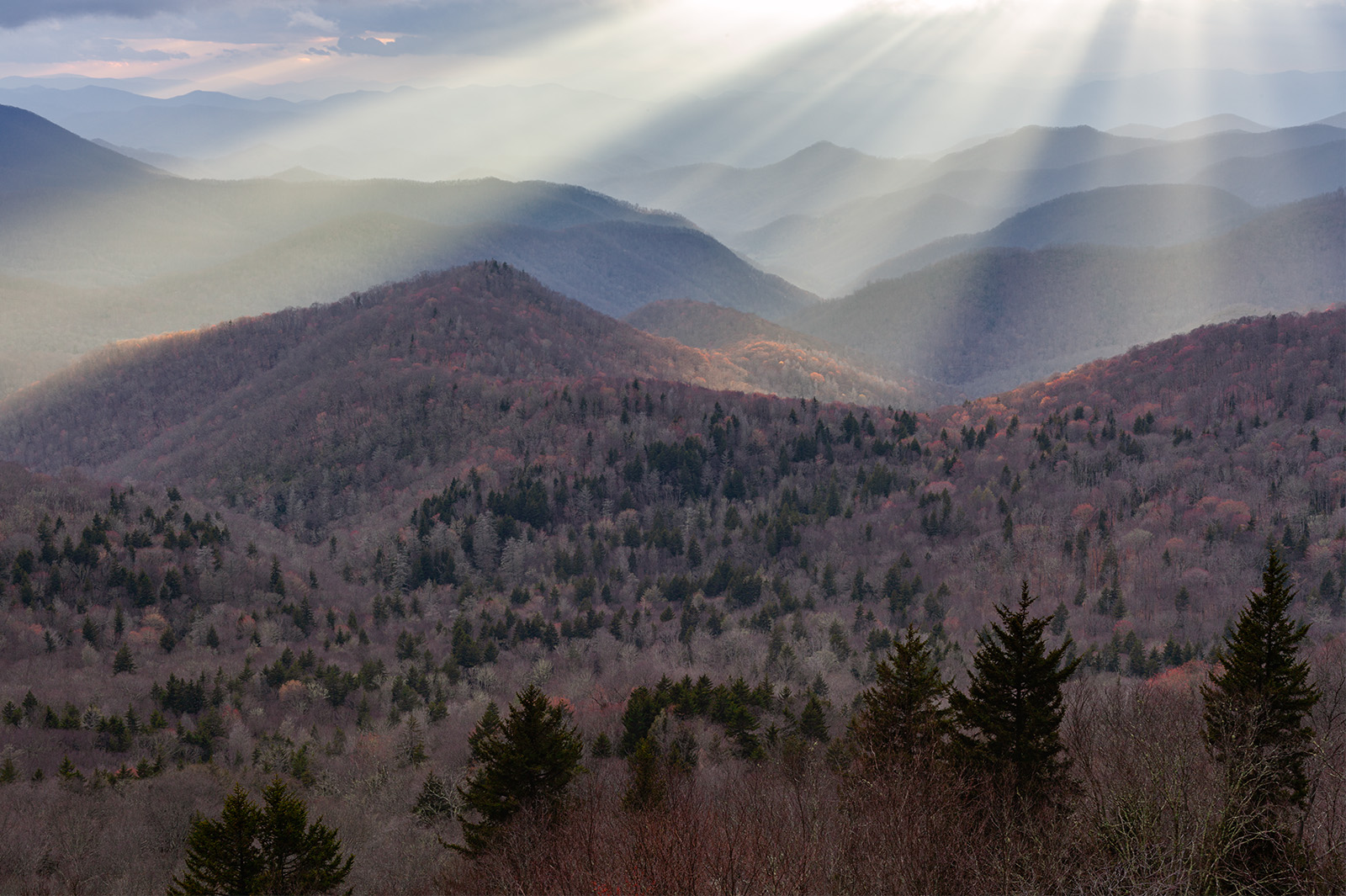
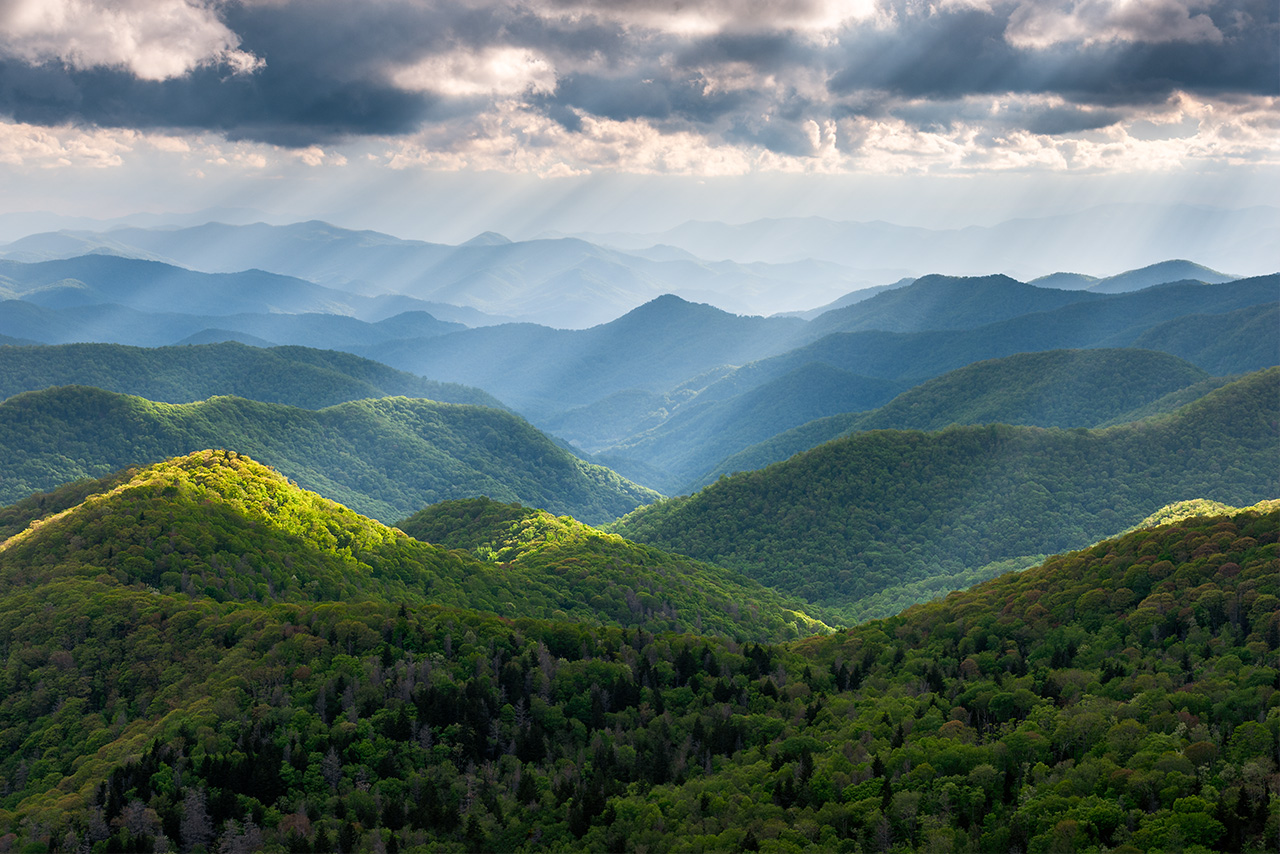
Milepost 429.  Reinhart Gap.  Second only to inverted clouds, I think light rays (or crepescular rays) are a visual character cue of the Blue Ridge Parkway.  While inverted clouds typically happen first thing in the morning, light rays are more often associated with late afternoon and early evening skies, for me.  On this evening, a late March spring landscape at elevation is showered with warm sunlight as thick clouds crowded the skies.
Milepost 429.  Reinhart Gap.  This has been my most popular photograph from the Blue Ridge Parkway.  I made it very early in my journey with a camera, while working the mountains with friend and photographer, Dave Allen.  Crowded skies in the late afternoon gave way to light showers over a newly greened set of mountain hillsides at elevation.  My only regret was the low resolution of my camera at the time.
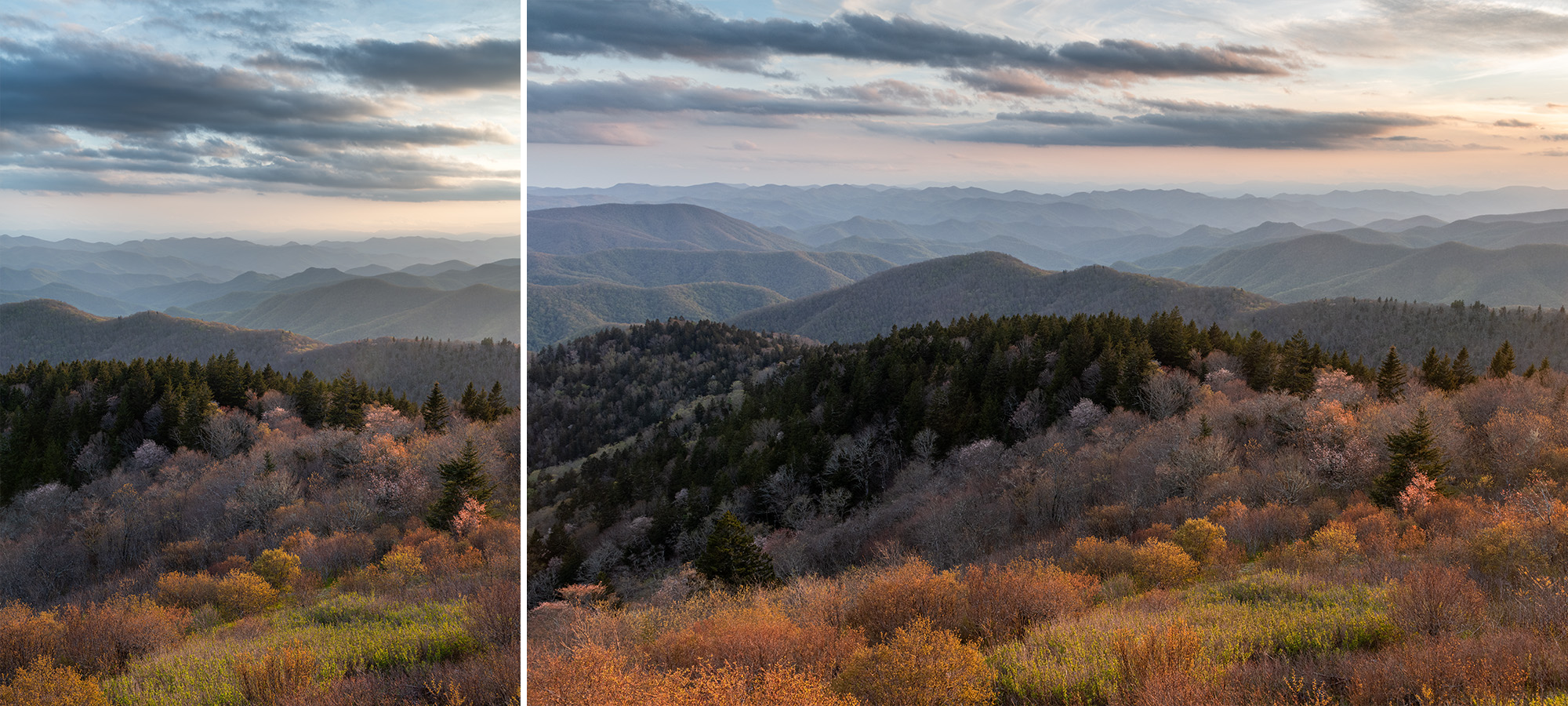
Milepost 430.  Cowee Mountain Overlook.  This is the Blue Ridge Parkway’s premier sunset overlook, I think.  There is an extremely wide unobstructed view of many folded mountain layers, as well as some good foreground at high elevation.  Development is absent, making this expanse feel remote beyond what one might expect along the East Coast.  The setting sun provides directional, soft, side-lighting onto the scene, making many angles easily shootable without looking directly into the west.  And light rays are common here, a character feature of the high-elevation Blue Ridge Mountains, I think.

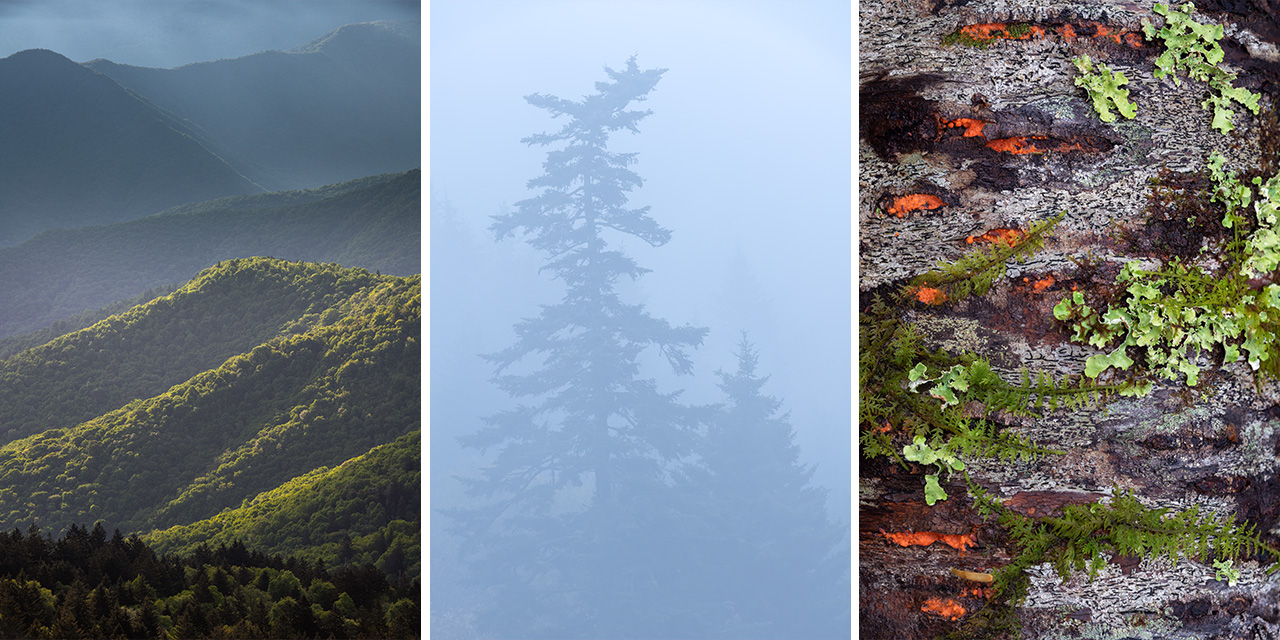
Milepost 431.  (Left) Haywood-Jackson Overlook.  Light and shadow over lush, high-elevation mountains in Western North Carolina.  Milepost 431.  (Center) Just beyond the highest overlook on the Blue Ridge Parkway, a tree bows in thick fog.  This area is often at the extreme of weather.  Milepost 427.  (Right) Bear Pen Gap Overlook.  Hiking off-trail, I found this decaying log on the forest floor with some kind of flourescent orange slime mold.  What was really neat were these tiny insects apparently feeding on the orange stuff; they turned bright orange too!
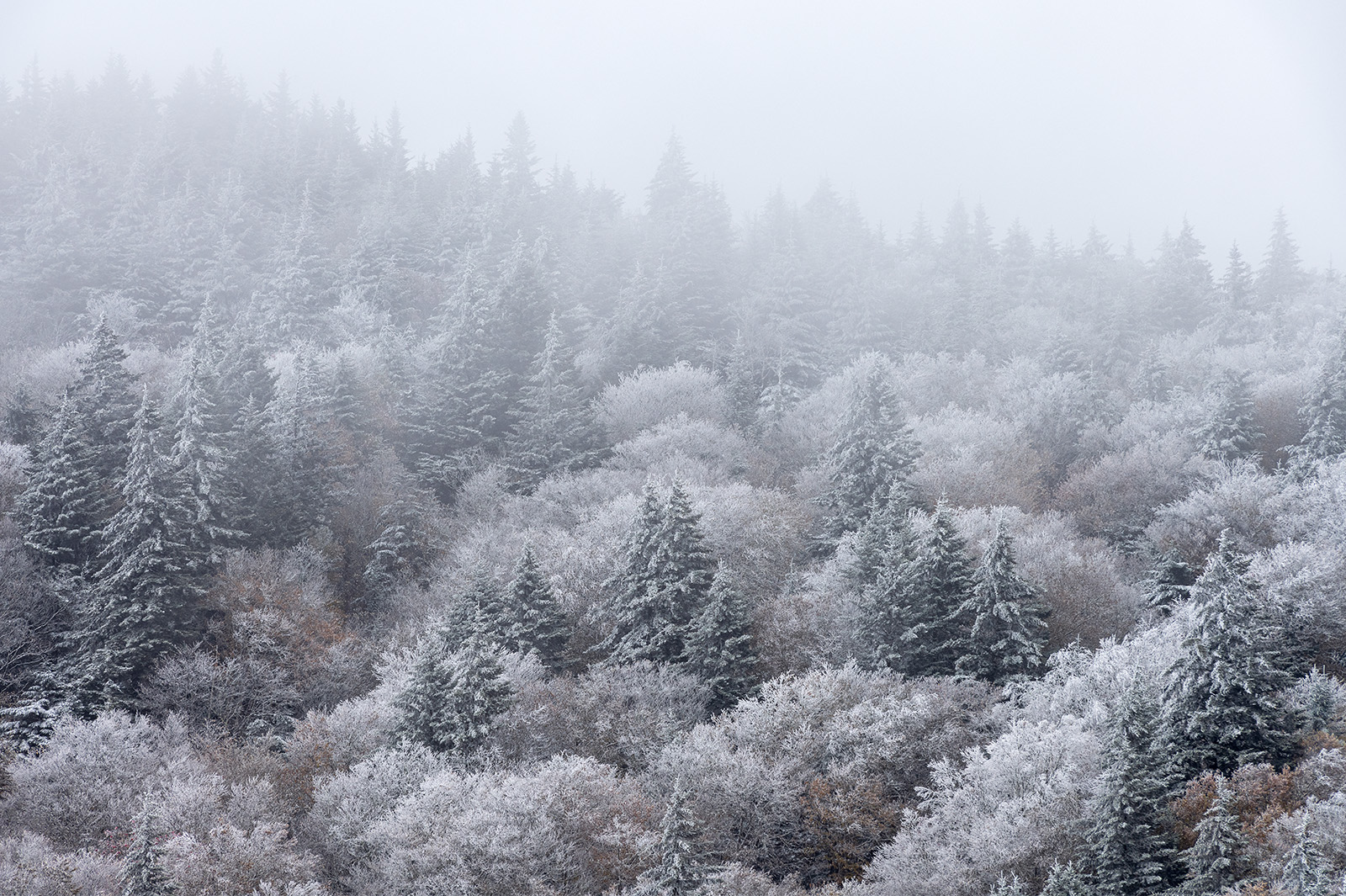
Milepost 432.  Lone Bald Overlook.  A surprise autumn snow visited the high-elevations along the Blue Ridge Parkway mid-October 2023.  The Park Service didn’t have time or anticipation to close the roadways.  That allowed me and a handful of other lucky folks who were in the area to revel in the unique conditions for the morning.  I found this hillside of Spruce/Fir and Rhododendron near Lone Bald Overlook.  Fog rolled over the chilly landscape.
Autumn Snow Blue Ridge Parkway

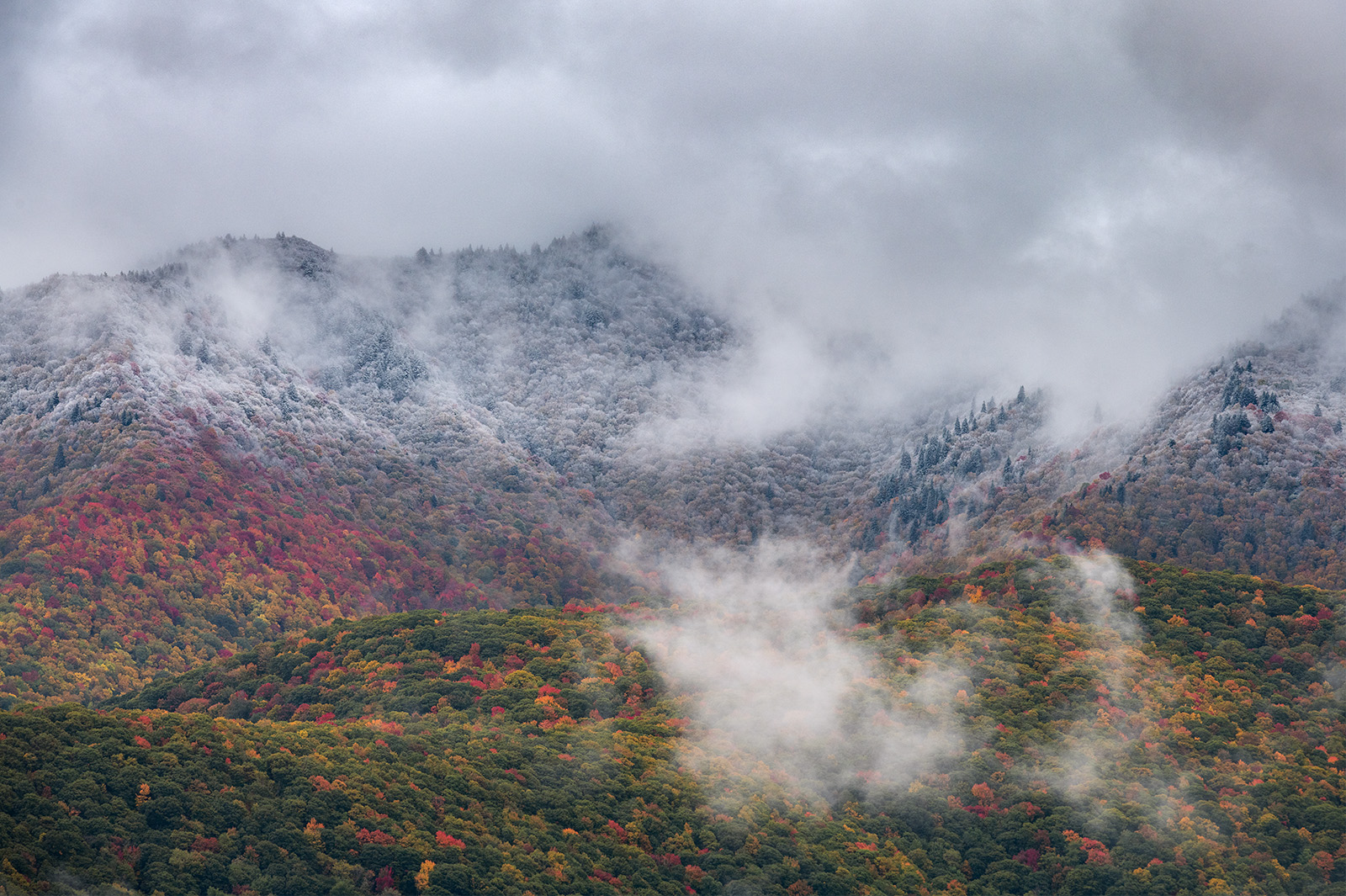
Milepost 439.  Steestachee Overlook.  All morning I sought an overlook that would show the transition of seasons through elevation.  I finally found it at Steestachee Overlook near Waynesville, North Carolina.  Autumn color climbed the mountain before hitting a layer of snow and rime ice at elevation.  Thick cloud swirled the peaks.  It was a beautiful moment along the Blue Ridge Parkway!

Autumn Snow Blue Ridge Parkway

Milepost 435.  View Doubletop Mountain Overlook.  While combing the roadside near this overlook, I found a late-season phlox completely decorated in beads of morning moisture.  I used a macro lens to punch straight into the center of the wildflower.
Autumn Snow Blue Ridge Parkway

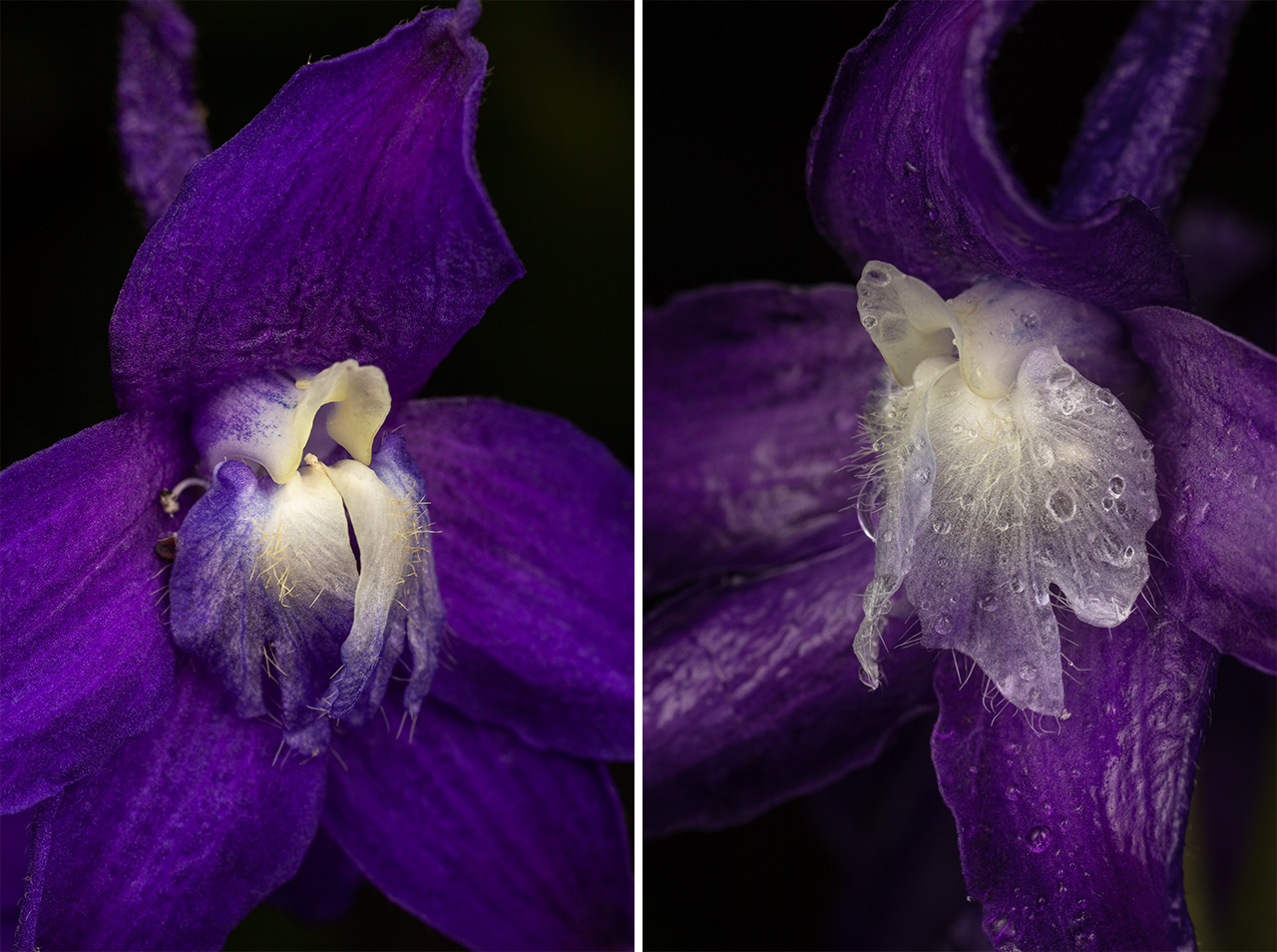
Milepost 441.  Waynesville Overlook.  This is an amazingly productive overlook for spring ephemeral wildflowers, especially the Dwarf Larkspur.  One of my favorite activities is searching the surrounding hillsides for color anomolies, such as the purely white color variety of Dwarf Larkspur.