
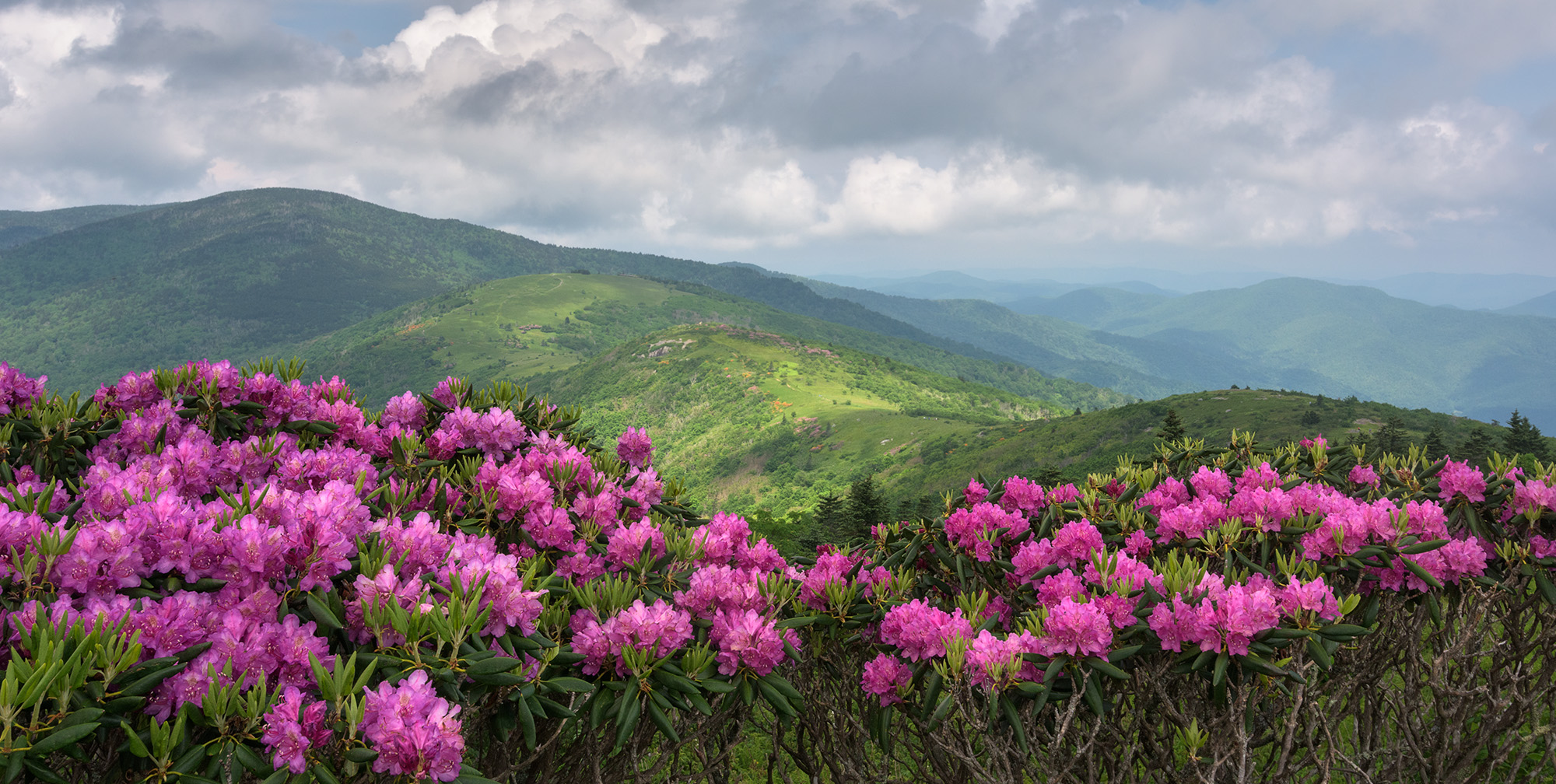
The Roan Highlands
Roan Mountain is not a singular peak, but is instead a long, continuous ridge, or summit. To the east of the Carver’s Gap parking area the longest continuous patch of grassy bald habitat in the world stretches out in waves. Grassy Bald habitat is ranked G1 Critically Imperiled. To the west of the Carver’s Gap parking area there’s a beautiful stand of Southern Appalachian Spruce-Fir Forest, as well as the largest naturally occuring Catawba Rhododendron garden in the world at 200+ acres. Southern Appalachian Spruce-Fir Forest is ranked G2 Imperiled and is quoted as the second most endangered ecosystem in all of the United States. Spruce-Fir forest is the highest and coldest in the entire Southern Appalachian Mountains.
Roan is well known for its annual Rhododendron bloom. The shrub balds that intersperse within the grassy balds east of Carver’s Gap parking area turn magenta pink with Catawba Rhododendron blooms, as well as fiery orange with Flame Azalea. This explosion of late spring color draws visitors from near and far. The defining characteristic east of Carver’s Gap, for me, is the openness of the Grassy Balds. West of Carver’s Gap, the defining characteristic of the Southern Appalachian Spruce-Fir Forest, for me, is its mysteriousness. Colder-than-expected temperatures, frequent fog/cloud/mist that keeps these forests dark and damp, and the sweet, Christmas-like smells of the trees are unlike any other forest type in the southeast.
Roan is special. The habitats and ecosystems–from grassy bald to spruce-fir forest–are rare. As you hike the Appalachian Trail through the Roan Highlands, you’ll pass through the highest concentration of rare species along the entire two-thousand plus miles of this famous trail corridor. Roan Mountain stands apart from other mountains. You’ll feel the difference behind the camera.
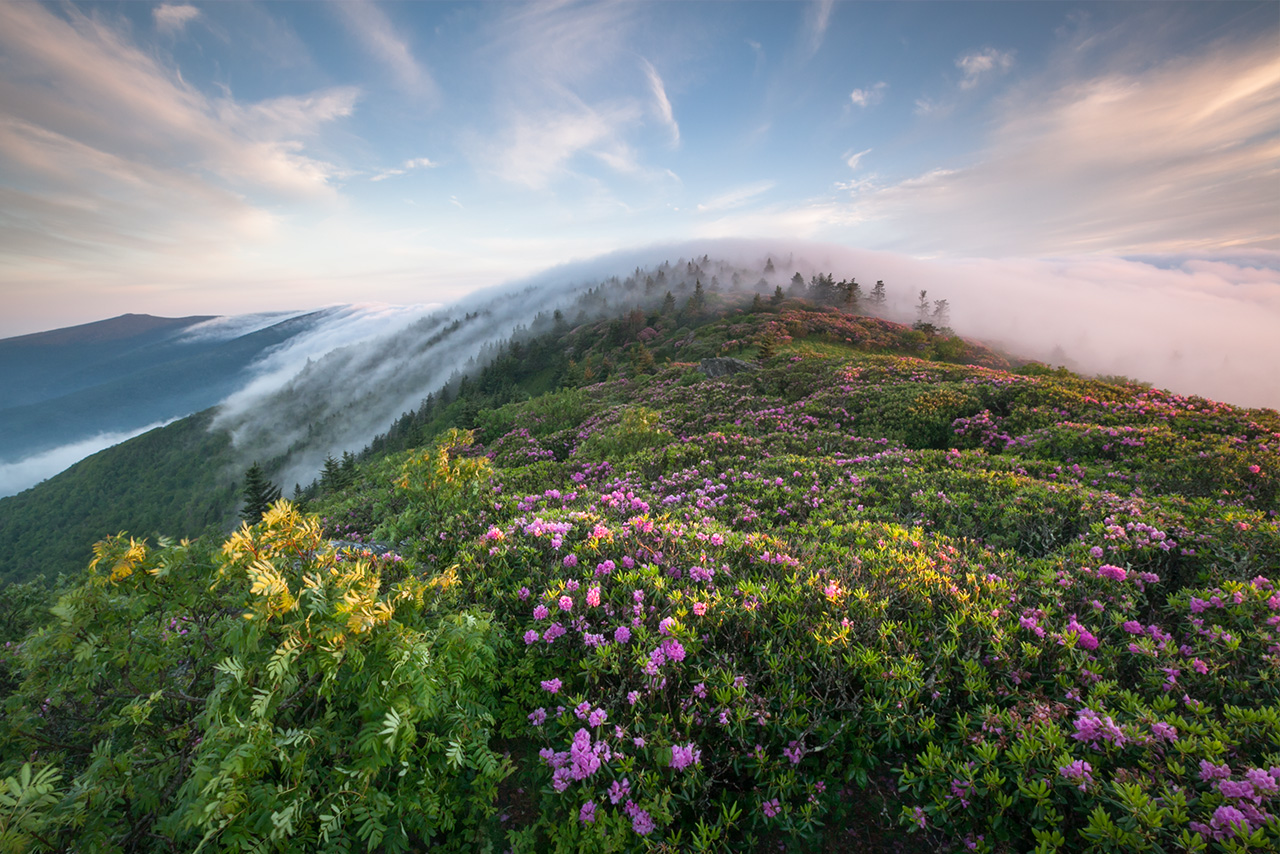
Grassy Ridge Bald. When I think of the Roan Highlands, I picture the wild Catawba Rhododendron gardens of Grassy Ridge. While visiting the annual bloom with my father and his German Shepherd, we were treated to a beautiful cloud inversion that wrapped the peak of the mountain in a silent, soft embrace. I did just about everything I possibly could to screw this photo up on my end; however, the moment was just too good! This remains one of my most popular and well-known photographs, and a testament, for me, to the power of special moments within the landscape.
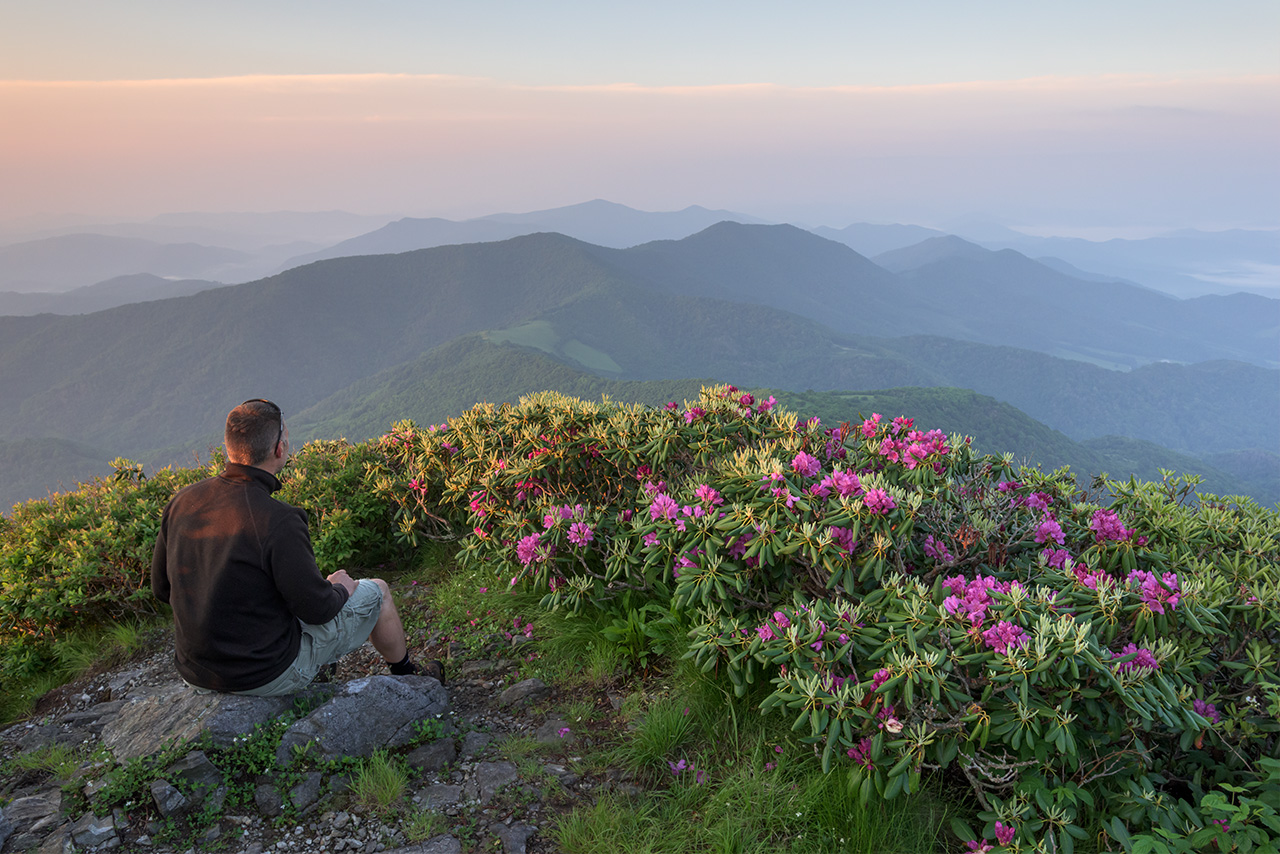
Grassy Ridge Bald. My favorite part of Grassy Ridge is way out on the eastern saddle, viewing out towards Linville Gorge and the North Carolina mountains. It’s the most remote and wildest feeling part of this grassy bald, to me.
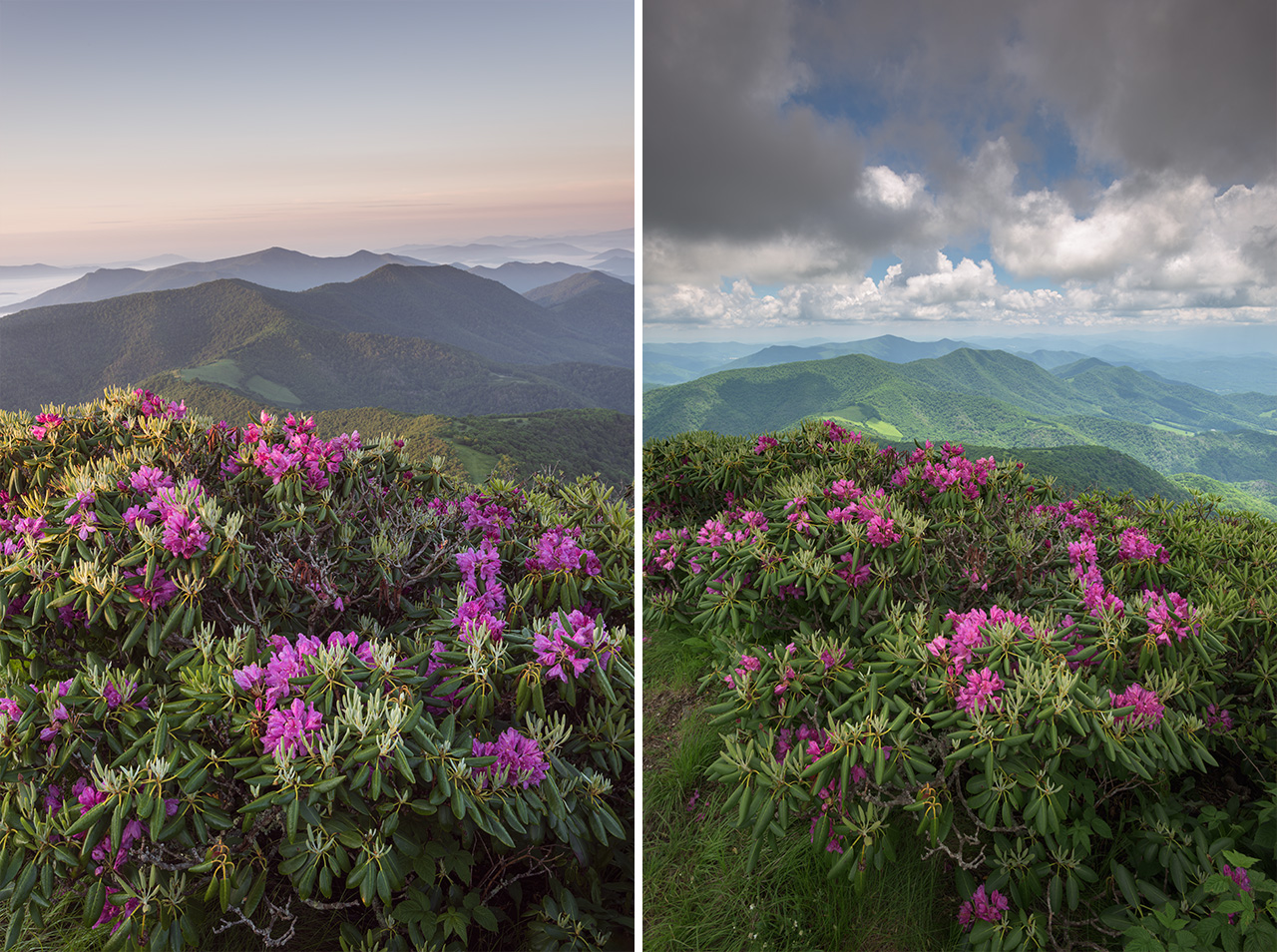
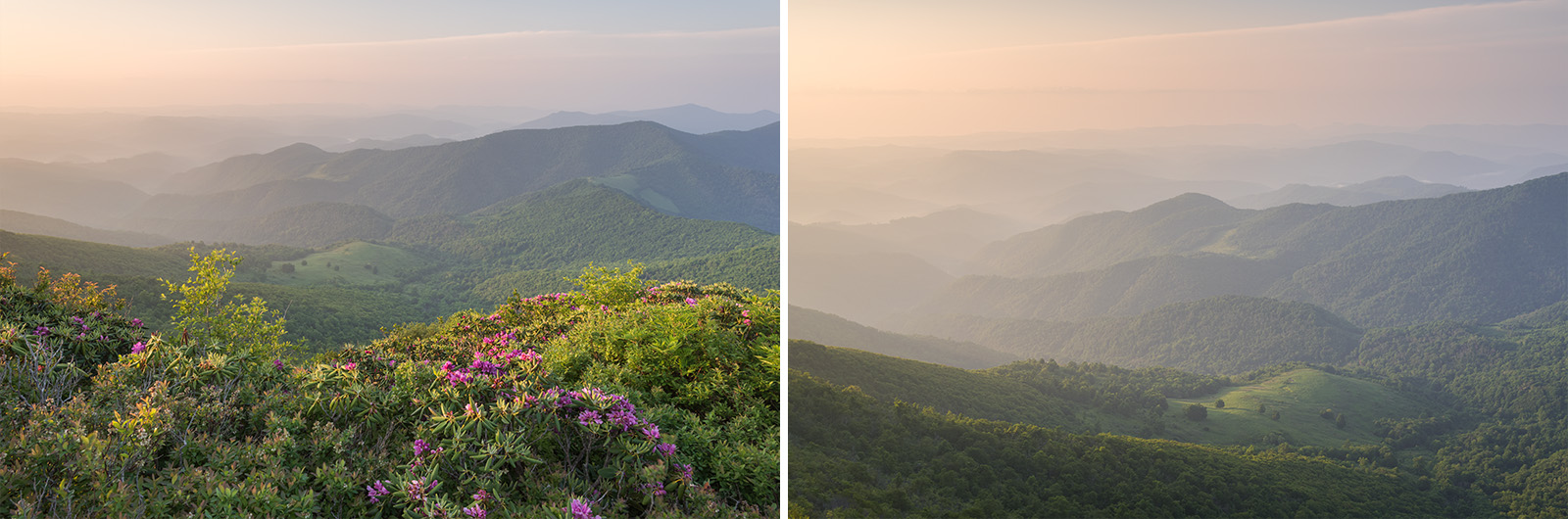
Grassy Ridge Bald. Flowering Catawba Rhododendron frame long-range views of green forested mountains in Western North Carolina.
Grassy Ridge Bald. Sunrise from the saddle of Grassy Ridge bald within the Roan Highlands. The view is east southeast towards the town of Linville, the Blue Ridge Parkway, and the Linville Gorge.
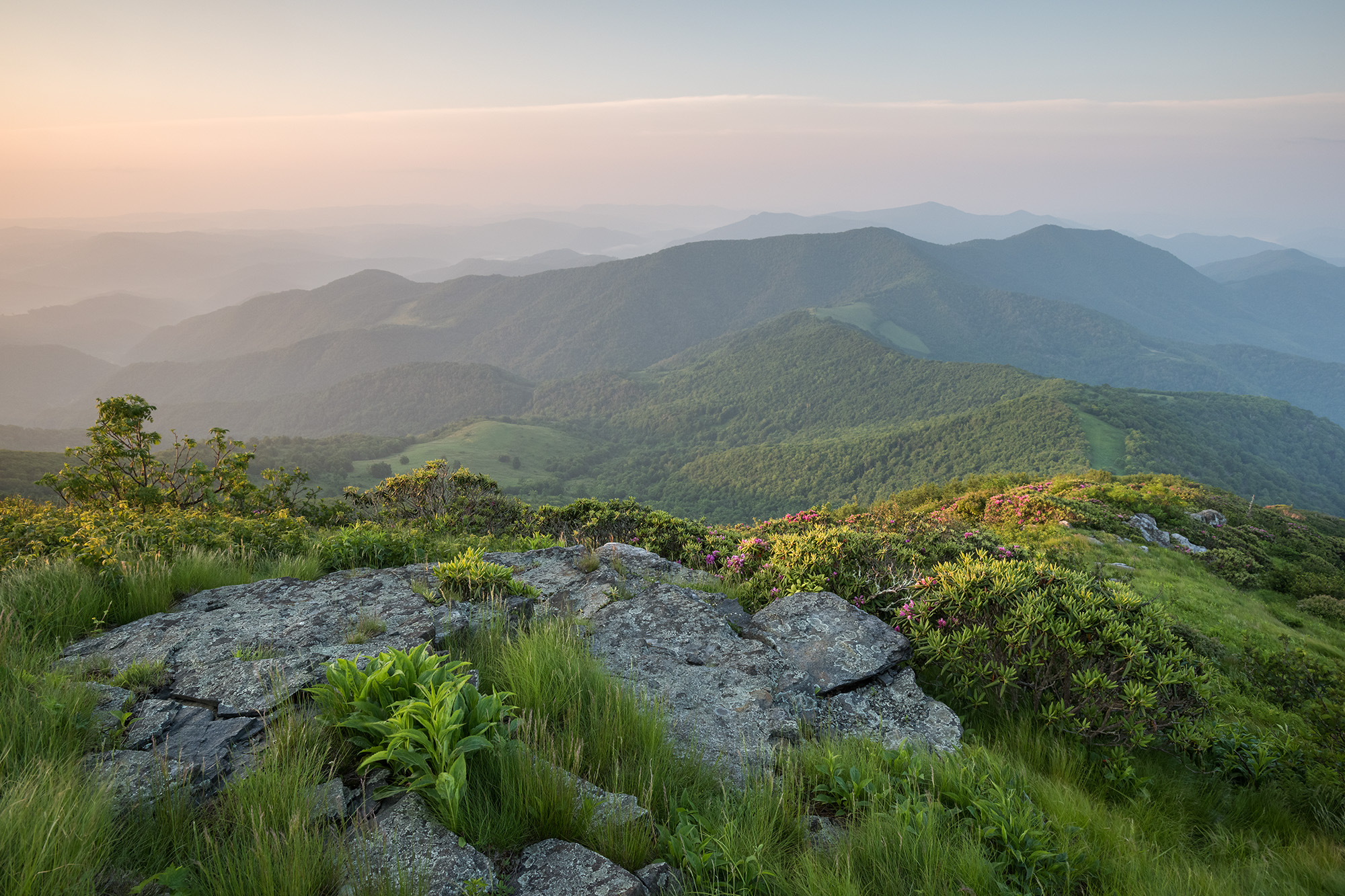
Grassy Ridge Bald. The saddle of Grassy Ridge Bald has all of the elements that I love about the Southern Appalachian Mountains. It is lush and green and full of growth. The humid and temperate climate often produces fog and cloud inversions. Biodiversity in the form of small, colorful plants hide within rock crevices and long, green grasses. Views are endless. And there is a feeling of space and isolation that doesn’t quite fit the crowded reality of east coast natural areas. It’s wonderful.
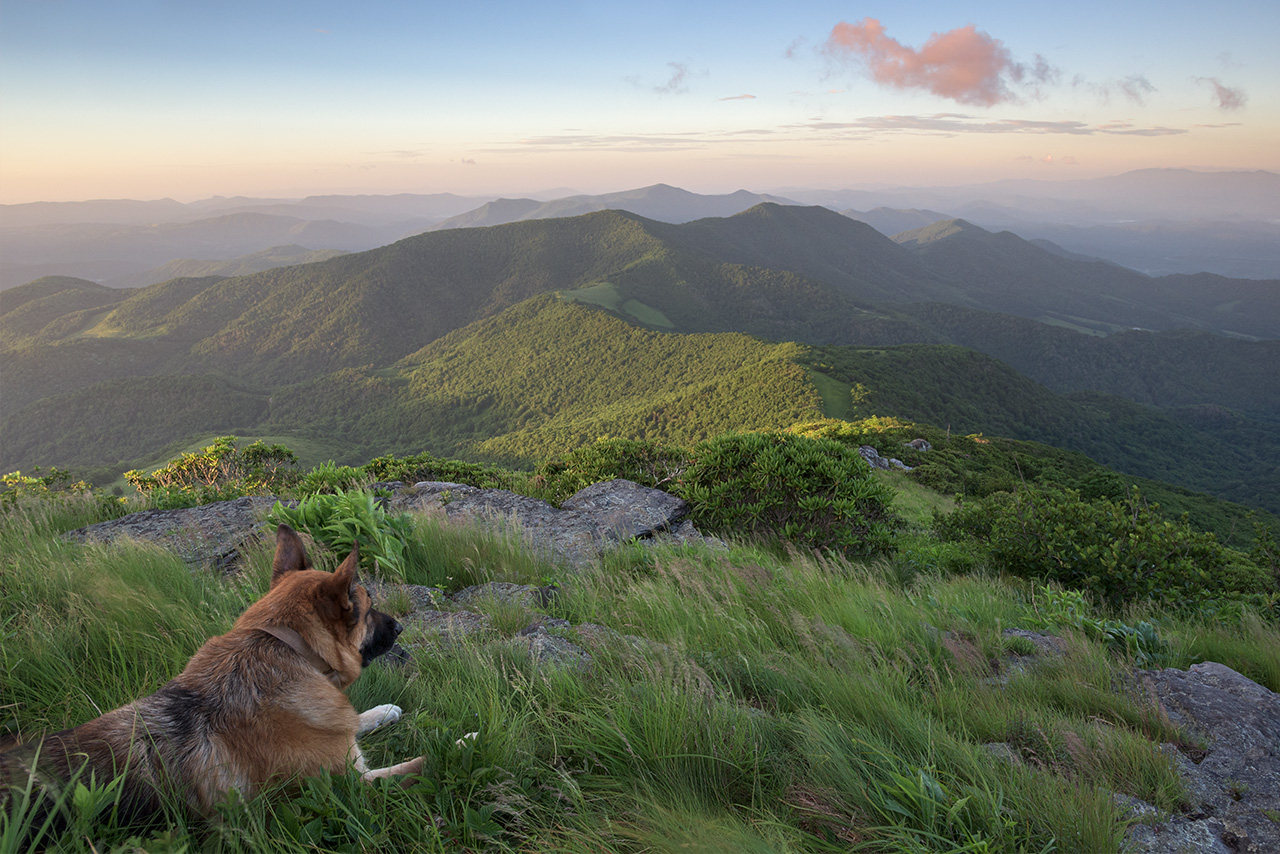
Grassy Ridge Bald. The Roan Highlands are dog friendly. It’s been a pleasure to share this wild landscape with several of our German Shepherds. I can’t help but wonder what she is thinking as she lays within these long grasses and stares out over the mountainous landscape of Western North Carolina.
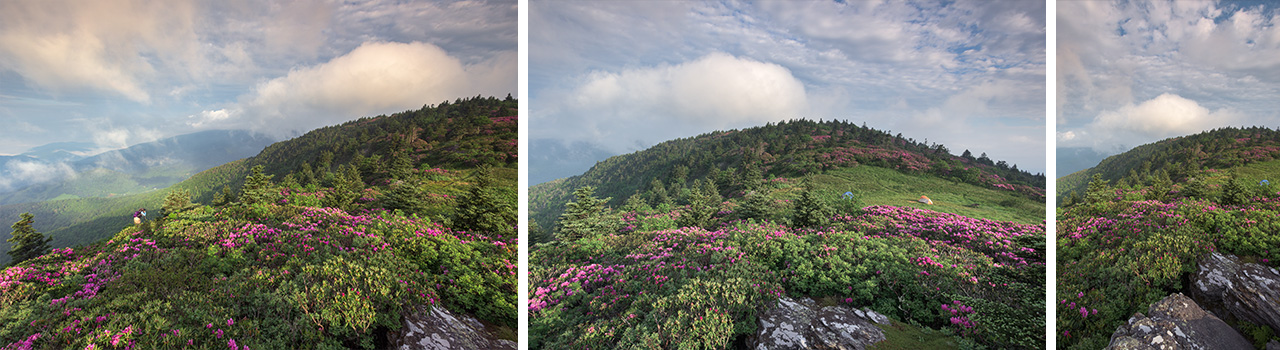
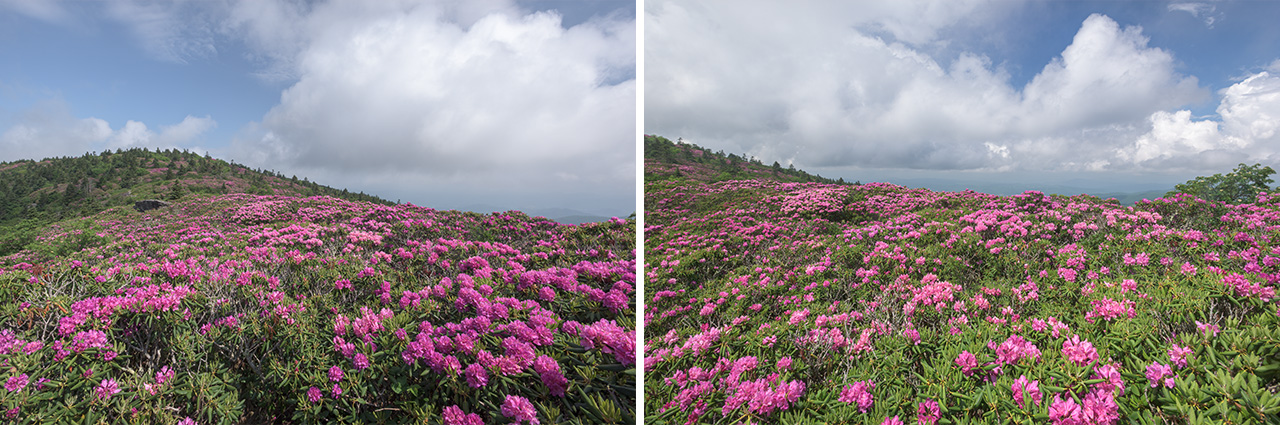
Grassy Ridge Bald. The annual Catawba Rhododendron bloom is what primarily drives visitation to the Roan Highlands. In mid-June, the shrub balds that border and mingle with the grass balds burst with vibrant magenta/pink colors. During a good bloom year, it can seem as if the entire mountainside turned pink!
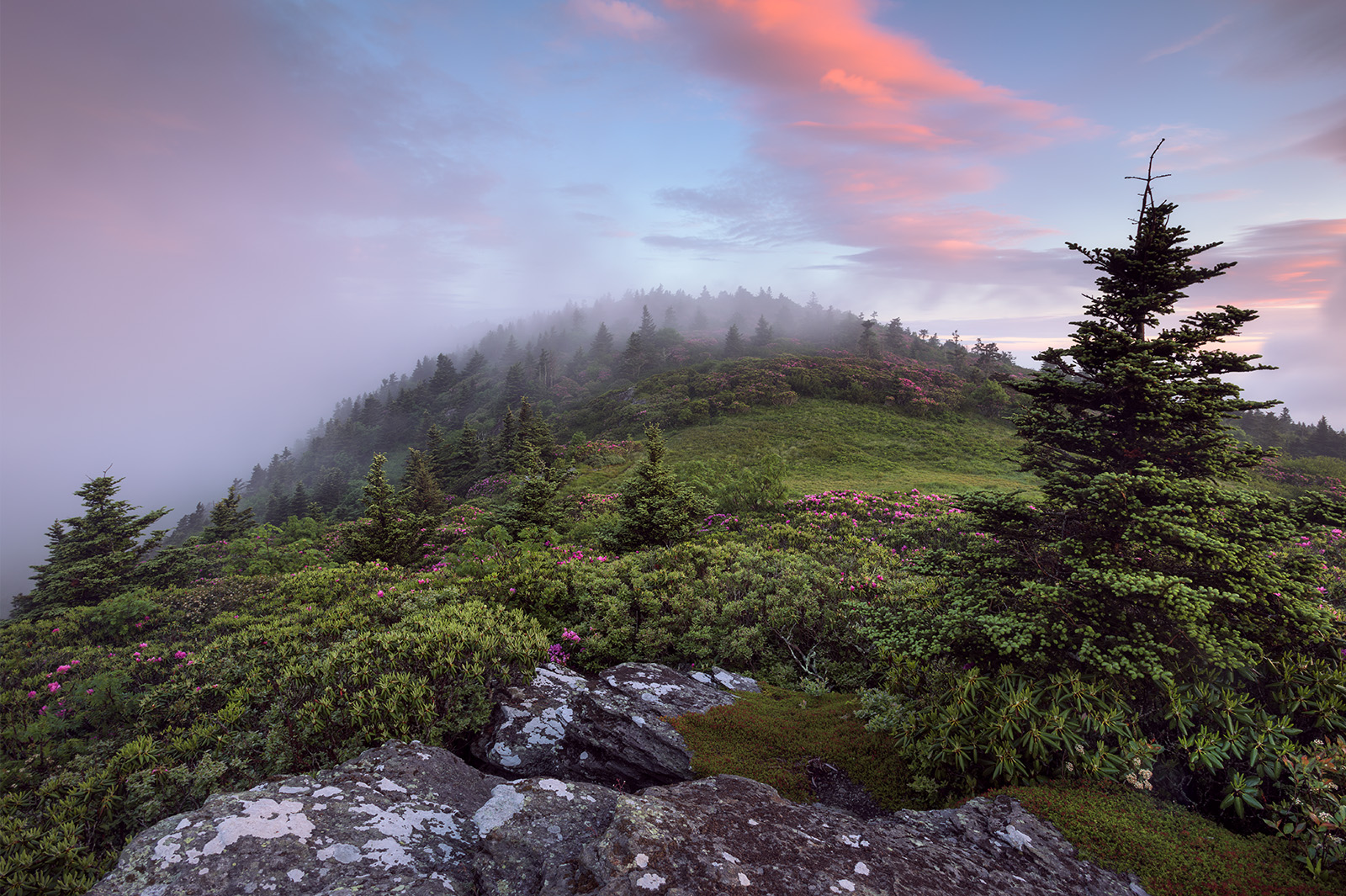
Grassy Ridge Bald. There are a few spots on Grassy Ridge Bald that I have faithfully returned to during the annual Catawba Rhododendron bloom. Compositions that I know have the potential to be stunning. Beginning my hike at 4am in the dark of morning, I’m always filled with excitement that this might be the morning when it all comes together!
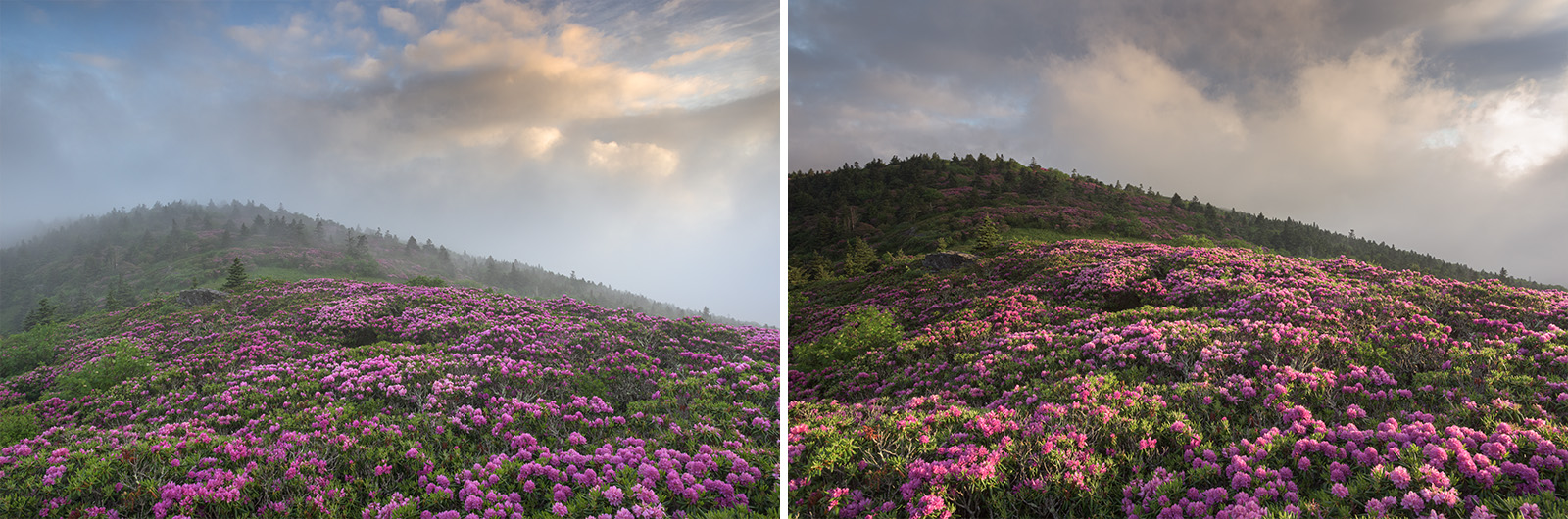
Grassy Ridge Bald. My favorite place to witness the annual Catawba Rhododendron bloom is from the saddle of Grassy Ridge Bald. The concentration of flowering shrubs is heavy and the orientation to the sun provides sidelighting for drama.
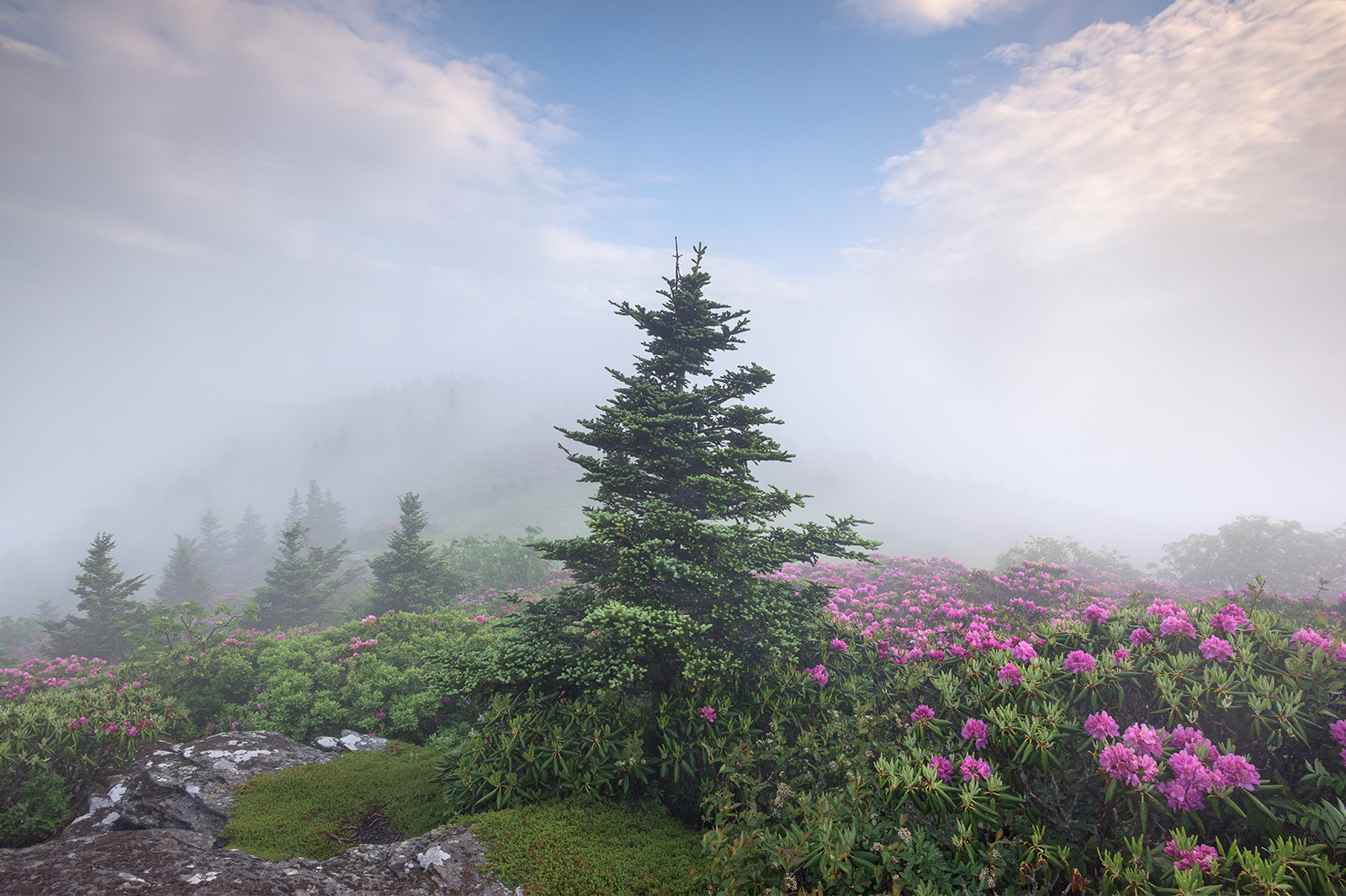
Grassy Ridge Bald. Every year the quality of the annual Catawba Rhododendron bloom varies. The real variable, however, in my opinion, is the weather. At six-thousand feet in elevation, Grassy Ridge Bald is very dynamic. The sky can change quickly. Luck is real when waiting on a sunrise at this location!
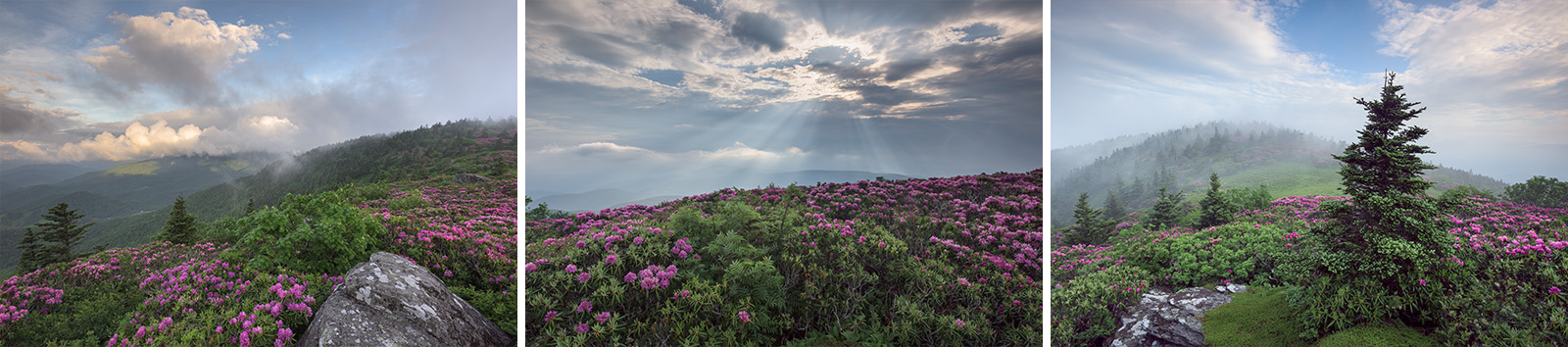
Grassy Ridge Bald. The flowering Catawba Rhododendron are easily damaged by high winds and hard rains, which are frequent at this elevation. Hitting “peak bloom” is always the challenge. Hiking to Grassy Ridge Bald requires some effort. The window for optimal conditions is always short. That makes it special.
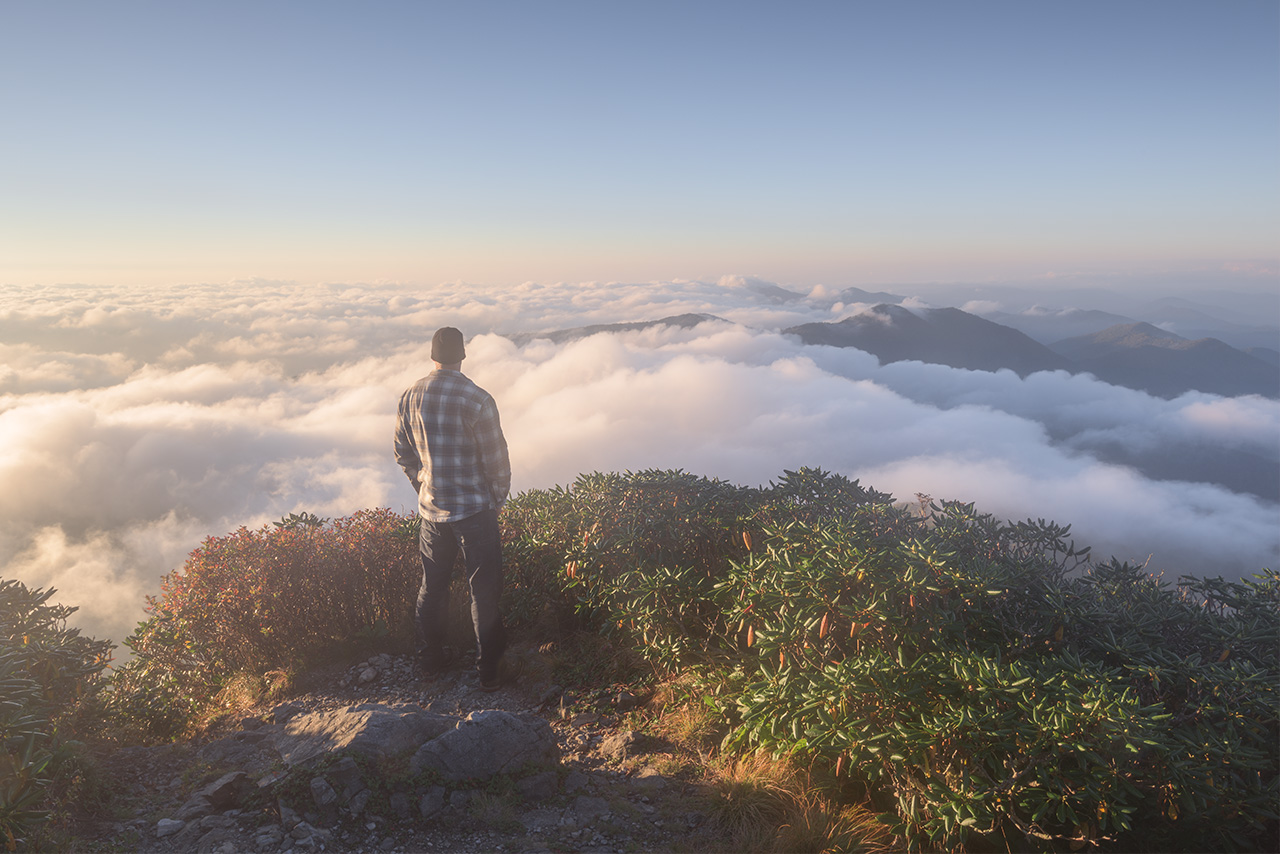
Grassy Ridge Bald. While late spring is when the landscape is most showy, Grassy Ridge Bald is still a wonderful place to experience an autumn sunrise. Here, I got to take in a beautiful and surreal cloud inversion.
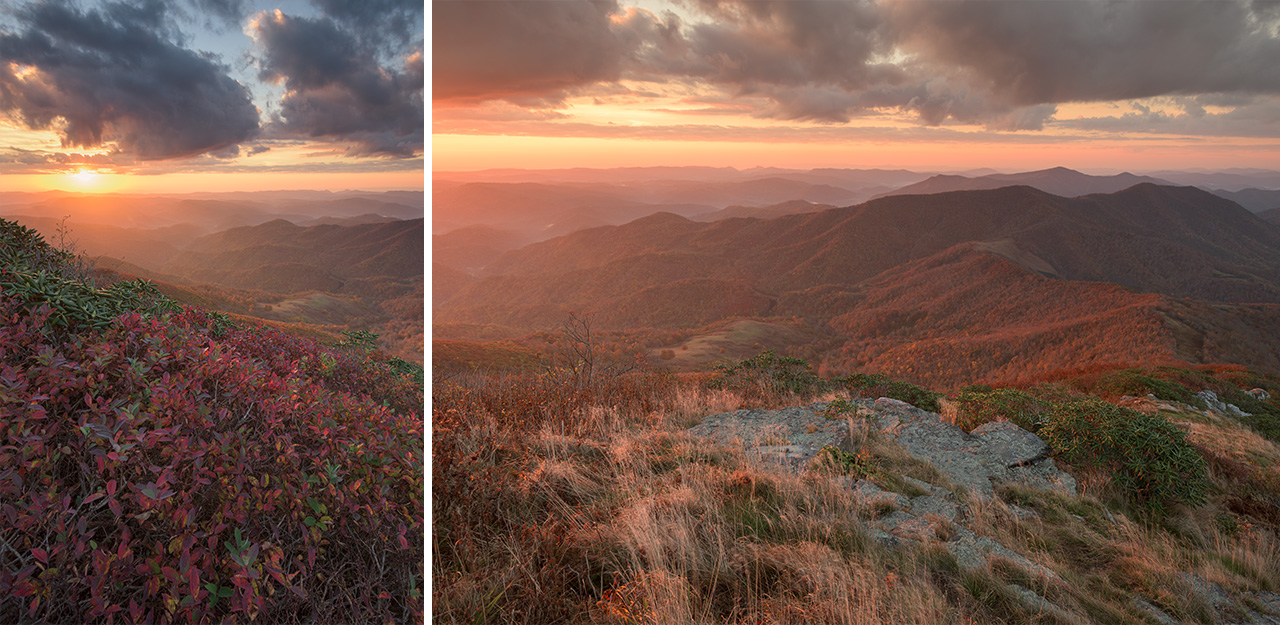
Grassy Ridge Bald. Colorful autumn trees are not abundant on open, grassy balds. However, the heath balds feature extensive blueberry bushes that turn deep red in the autumn. Combined with late autumn long views, Grassy Ridge Bald is still a favorite of mine even during the autumn color change.
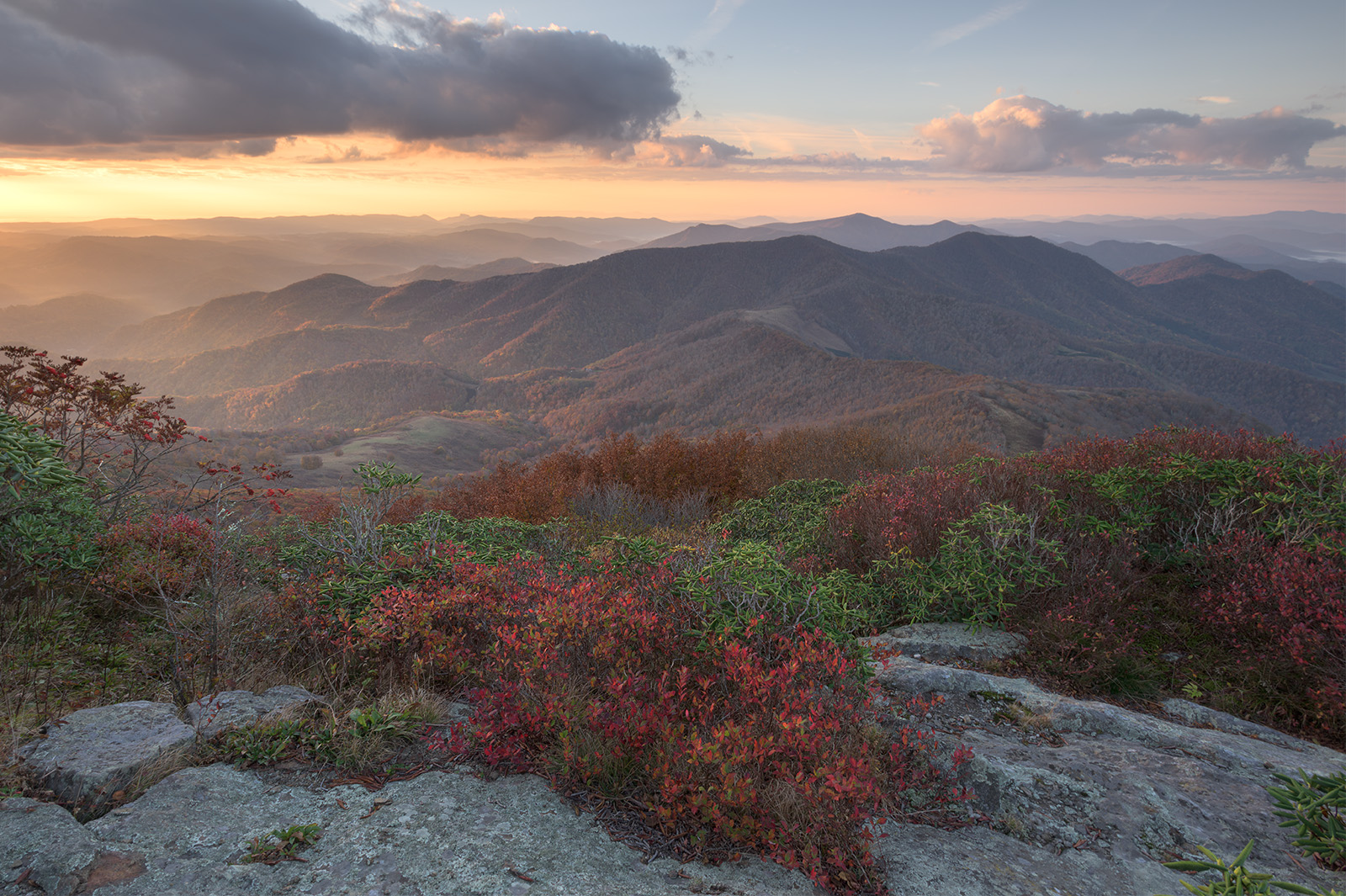
Grassy Ridge Bald. While large, leafy deciduous trees are not present on the high-elevation grassy and heath balds, there is still color change within the blueberry bushes and the bright red berries of Mountain Ash trees. Combined with the browns of the grass balds, these muted, warm colors of autumn create a striking palette unique to Roan Mountain.
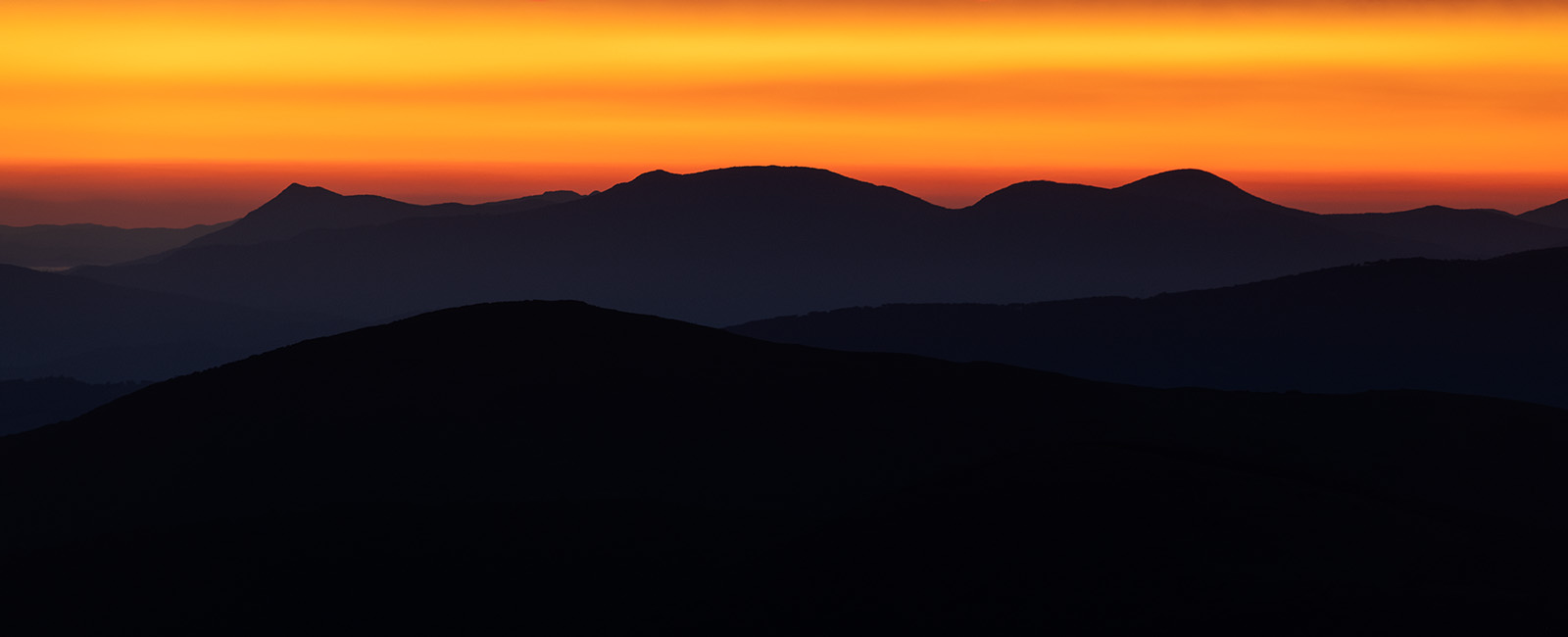
Grassy Ridge Bald. After a three-mile hike in the dark from Carver’s Gap parking area out to Grassy Ridge Bald, watching the first vibrant light of morning over the silhouetted peaks of jagged mountains is the sweet reward. I don’t always carry my longer glass on this hike. When I do, I’m always thankful for the extra reach and opportunities, particularly around first light.
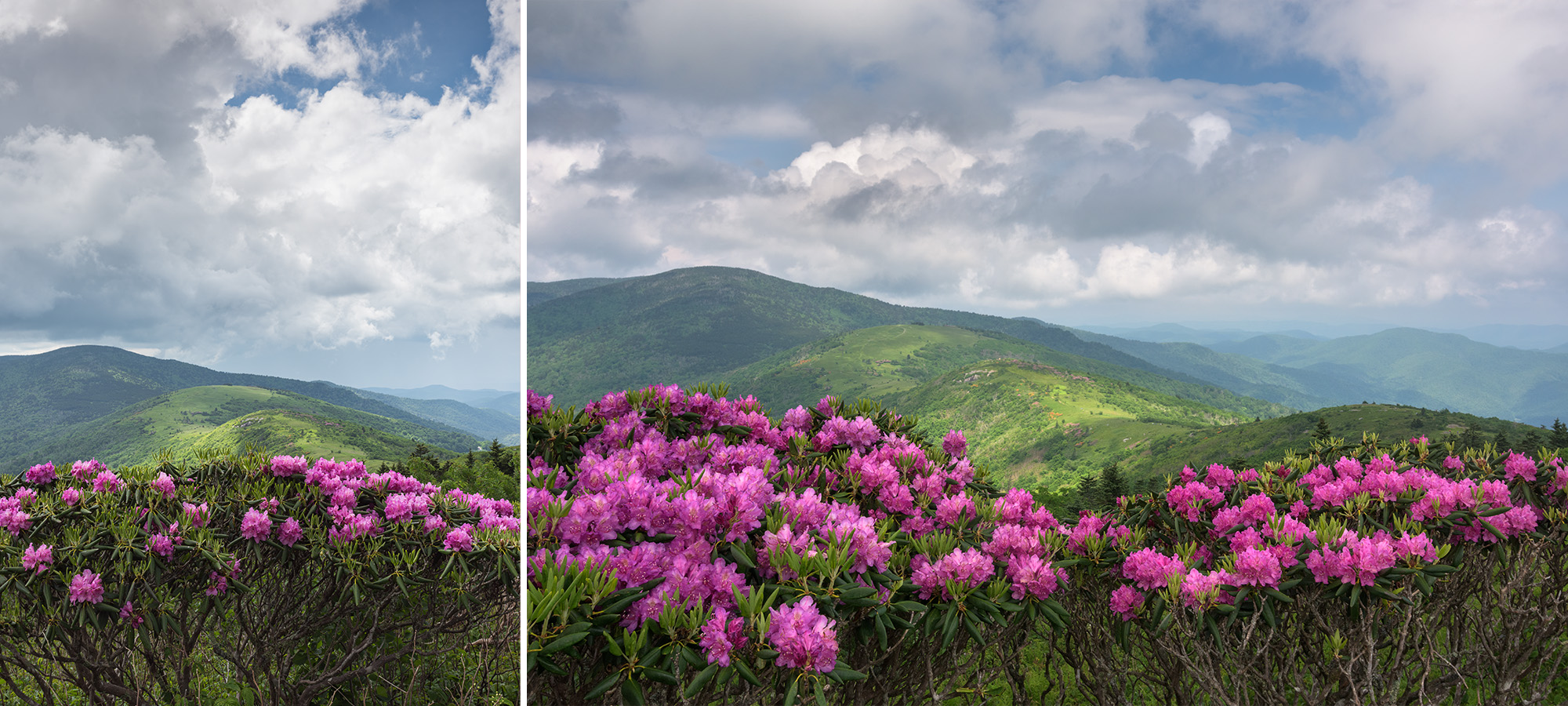
Grassy Ridge Bald. A panoramic view from Grassy Ridge Bald viewing back west to three of the primary summits on Roan Mountain: Roan High Knob, Round Bald, and Jane Bald. The dark color of Spruce-Fir Forest can be seen covering Roan High Knob in the distance, while the Appalachian Trail can be seen traversing the open, green, grassy balds of Round Bald and Jane Bald.
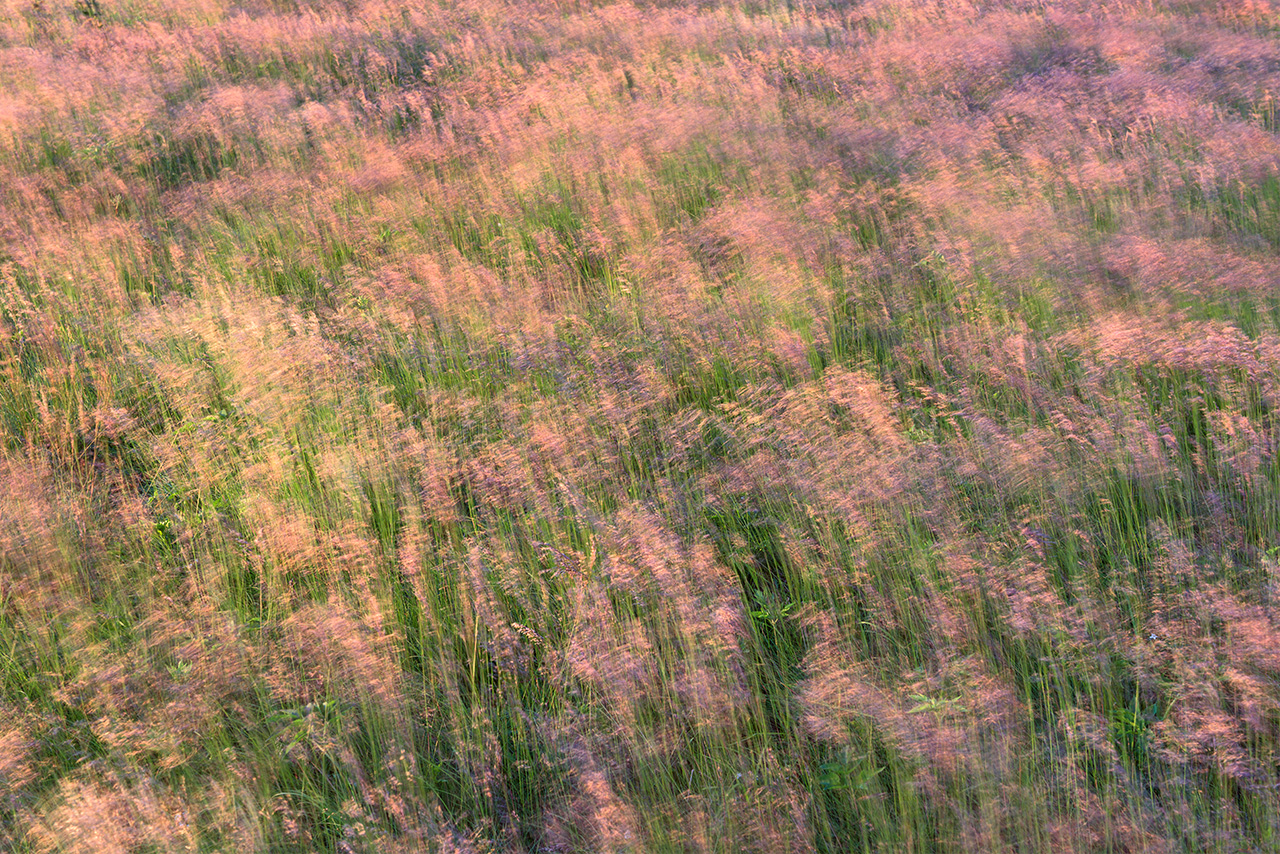
Grassy Ridge Bald. Grassy Bald habitat is what makes this area special. NatureServe ranks Southern Appalachian Grass Bald habitat as G1/G2 Critically Imperiled. The Roan Highlands have the longest continuous stretch of grassy bald habitat in the world at roughly seven miles.
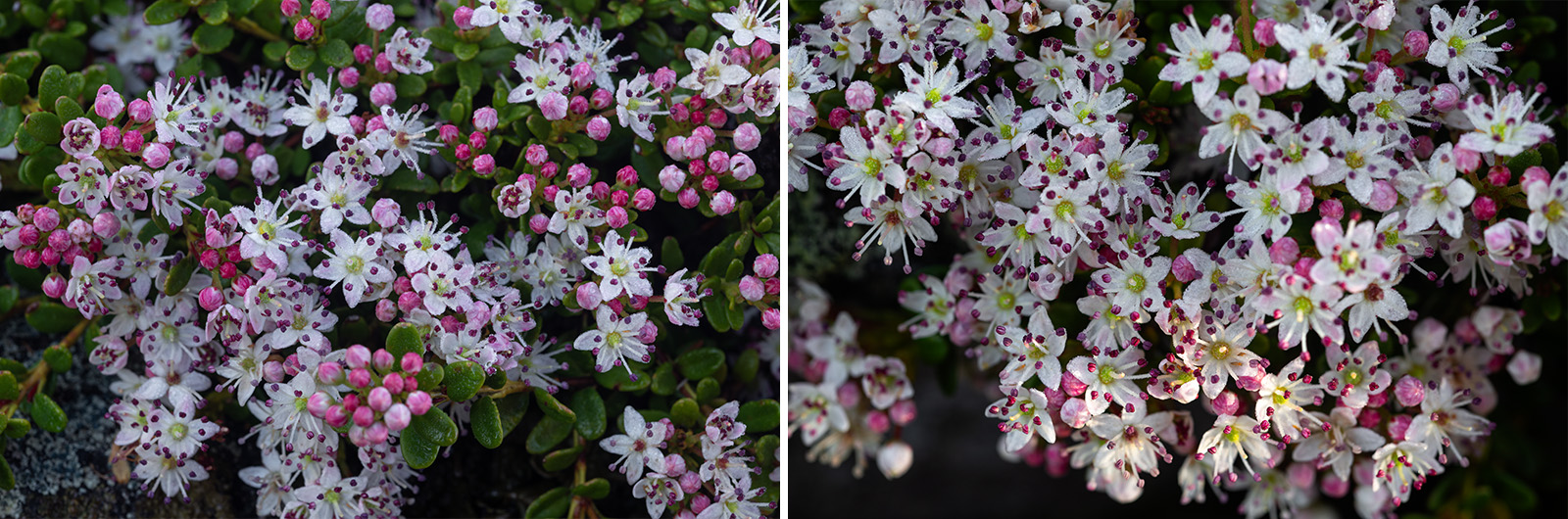
Grassy Ridge Bald. Sand-Myrtle (Kalmia buxifolia) is a somewhat rare plant found in abundance atop the rocky outcrops of Grassy Ridge Bald. This flowering shrub is a native disjunct species, occuring in both the mountains and along the coast. North Carolina ranks Sand-Myrtle S3 Vulnerable.
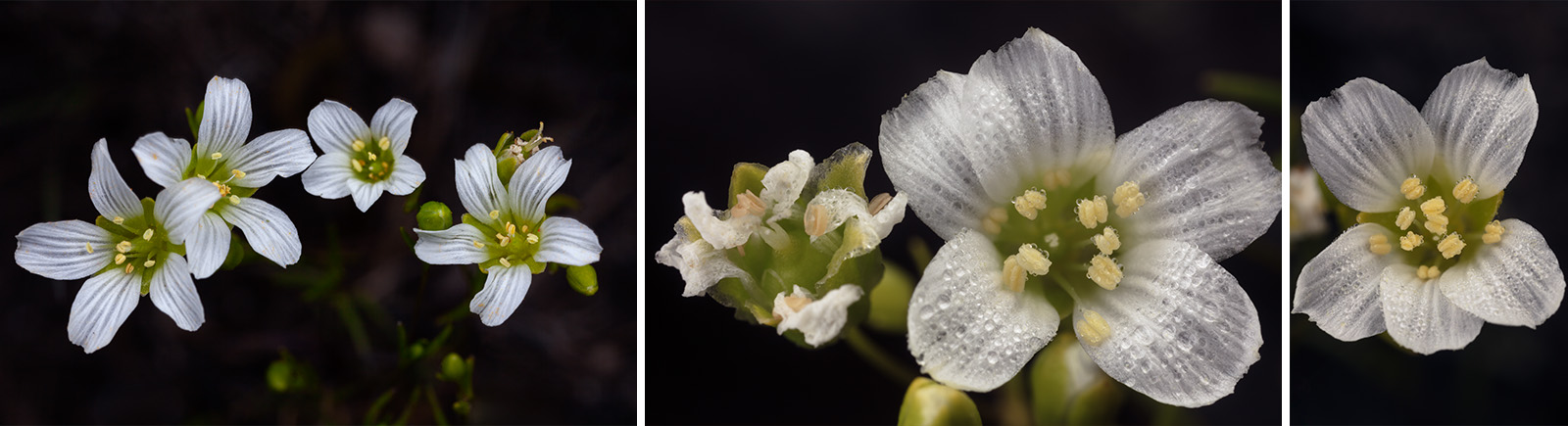
Grassy Ridge Bald. One of the rare plants that shows up on Grassy Ridge Bald is Mountain Sandwort (Geocarpon groenlandicum), also known as Greenland Stitchwort. It grows on rocky outcrops and is adapted to shallow soils. Greenland Sandwort is a disjunct species–a glacial relict–within the Southern Appalachian Mountains, occuring more frequently far north in Greenland and New England. North Carolina ranks Mountain Sandwort as S2 Imperiled and Tennessee as S1 Critically Imperiled.
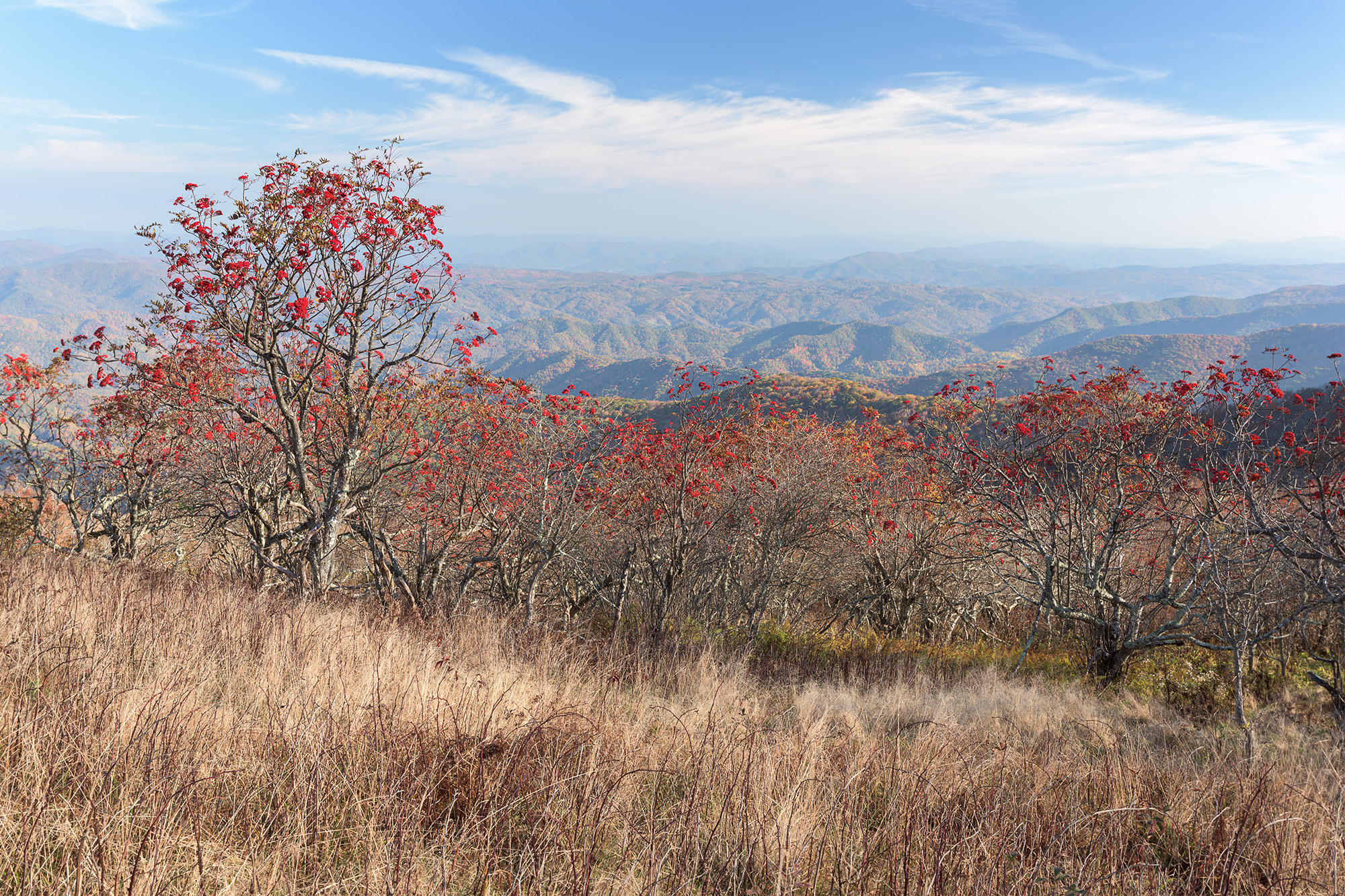
Jane Bald. Mountain Ash trees grow in abundance on the backside of Jane Bald in the Roan Highlands. Mountain Ash trees were also known as Rowan trees, Rowan being the german root word for red, referring to the bright berries these trees show during autumn. Perhaps the abundance of Mountain Ash–or Rowan–trees influenced the name Roan Mountain?
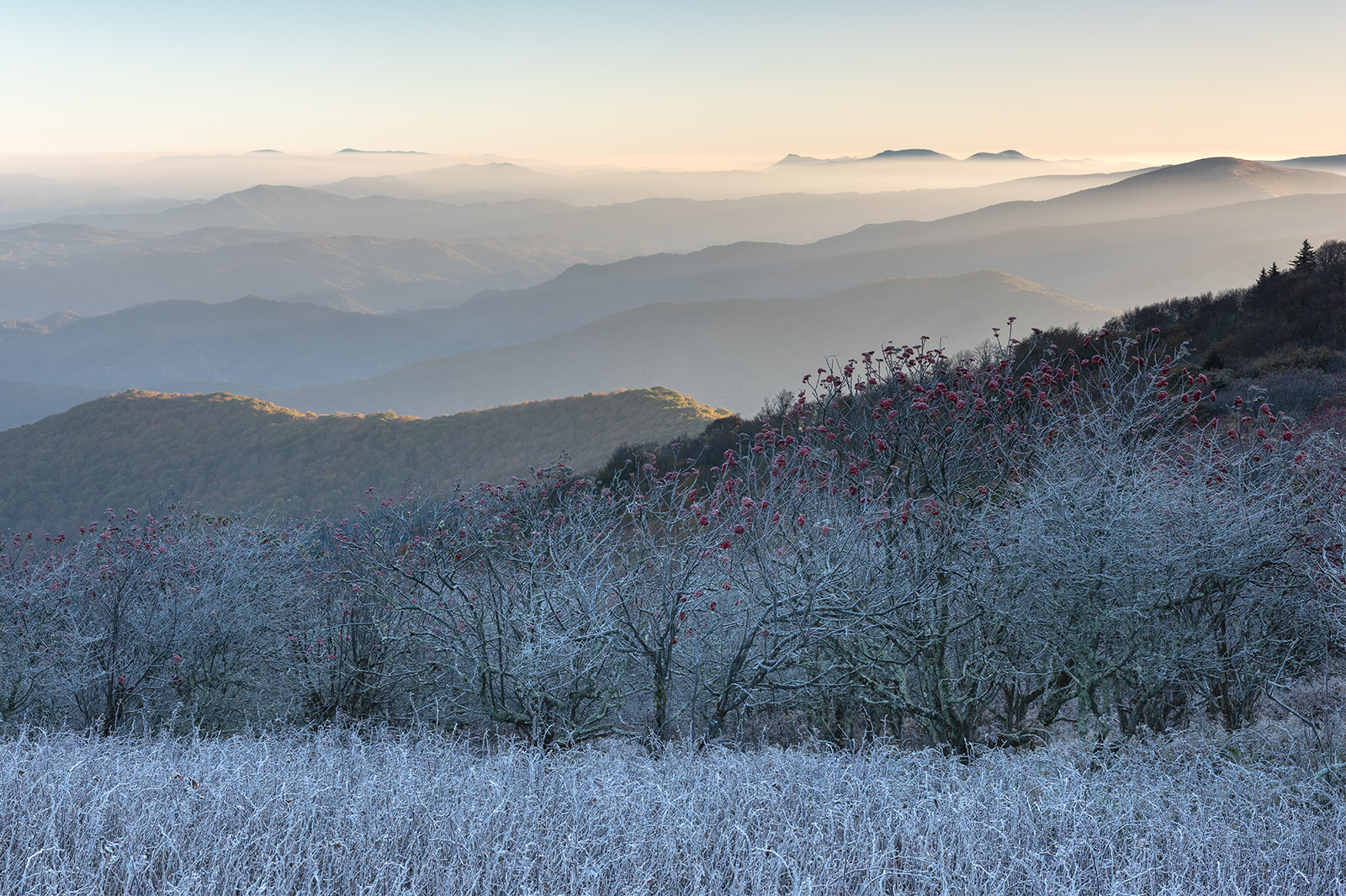
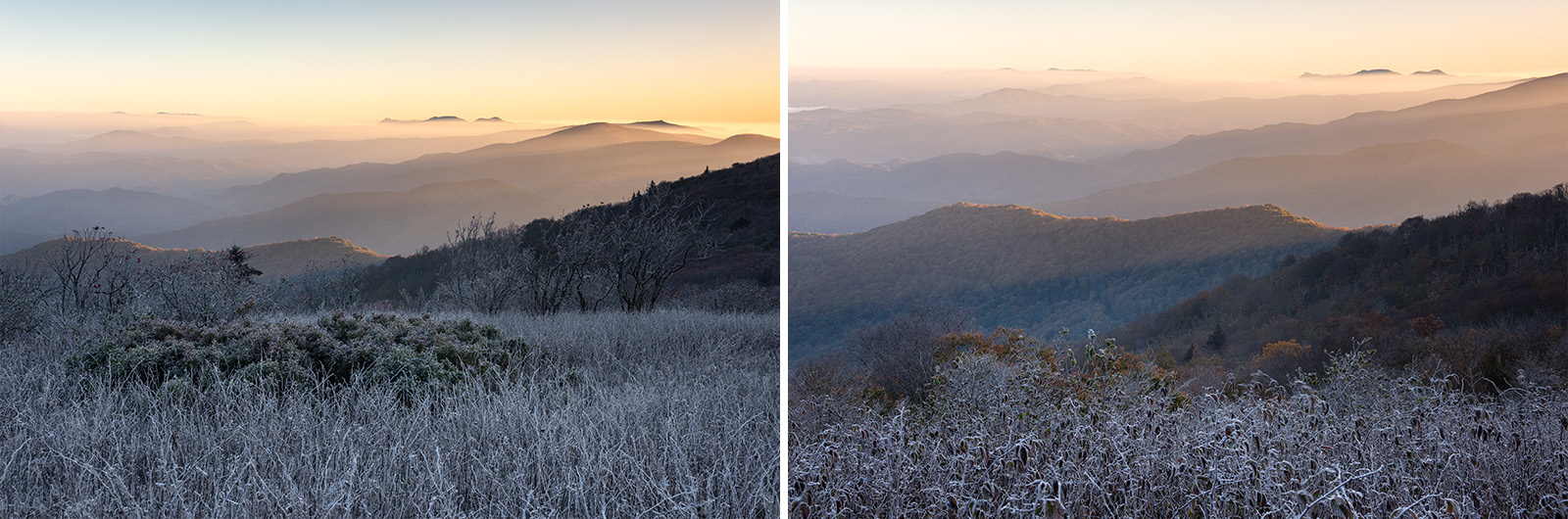
Jane Bald. A heavy autumn frost sits on the long grasses and Mountain Ash trees along the Appalachian Trail as it descends the backside of Jane Bald in the Roan Highlands.
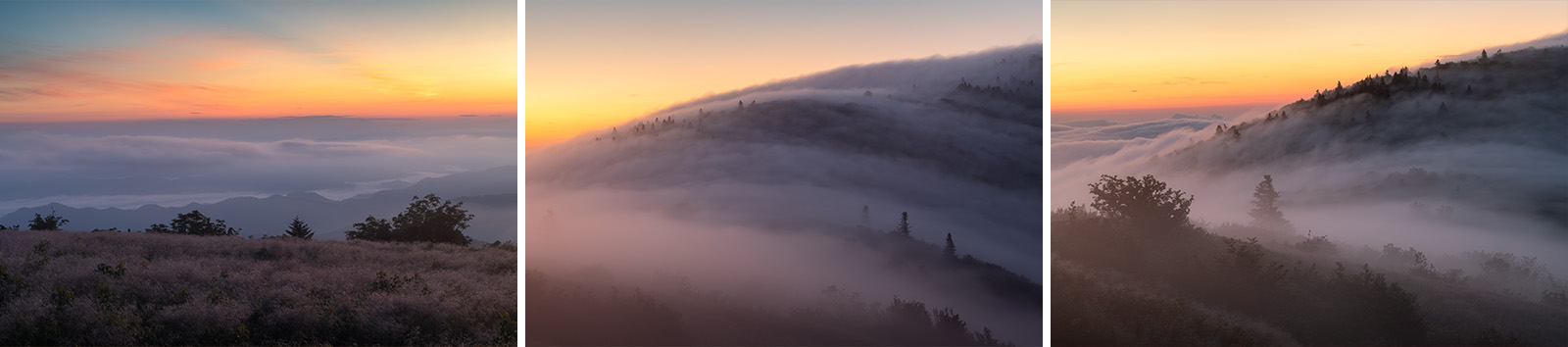
Jane Bald. There are two gaps that I know of in the Roan Highlands that feature an atmospheric phenomena where an inverted cloud embraces the contour of the mountain. This location is the gap between the backside of Jane Bald and the frontside of Grassy Ridge Bald. Sunrise is typically pretty dynamic here.
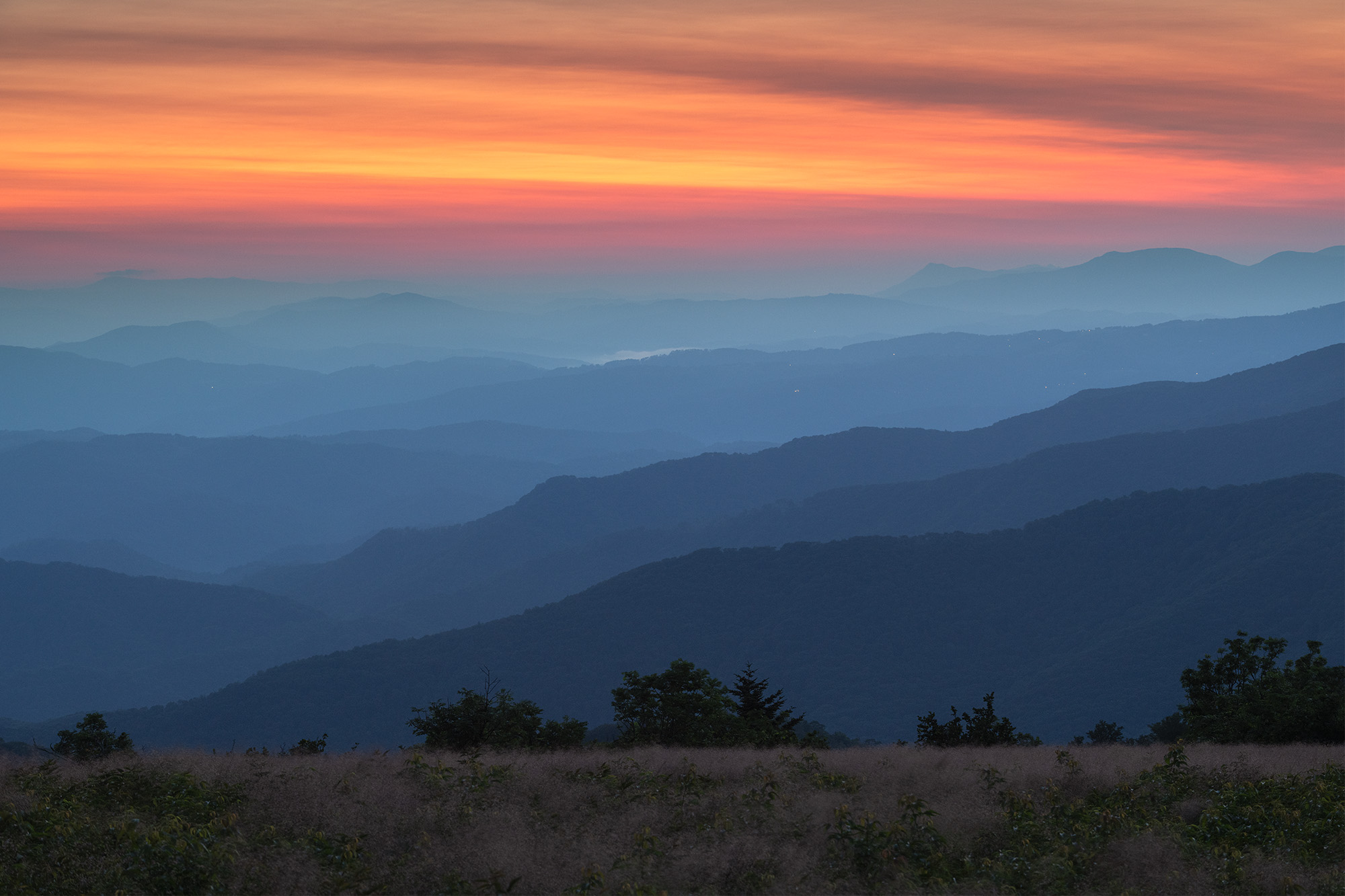
Jane Bald. The thick forests of the Southern Appalachian Mountains are famous for their blue tinted color. Trees emit chemicals like Isoprene into the air. They mix and scatter with light and the shorter wavelengths, blue wavelengths, dominate. Welcome to the Blue Ridge Mountains!
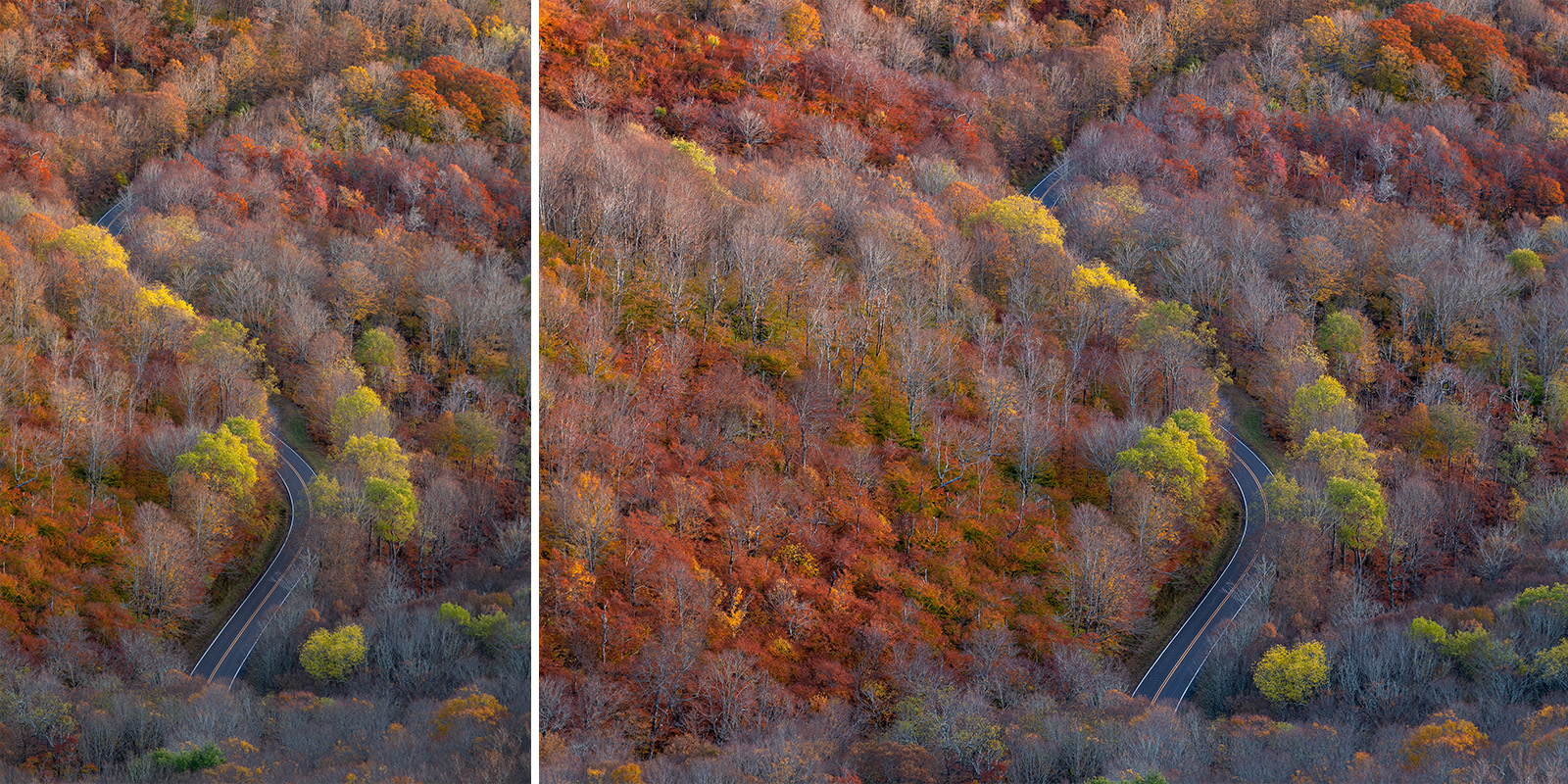
Jane Bald. NC-261 is a two-lane highway carrying traffic from the tiny North Carolina town of Bakersville up to Carver’s Gap and the Tennessee state line. The road is roughly 12.8 miles, seen here from high above on Jane Bald along the Appalachian Trail in the Roan Highlands.
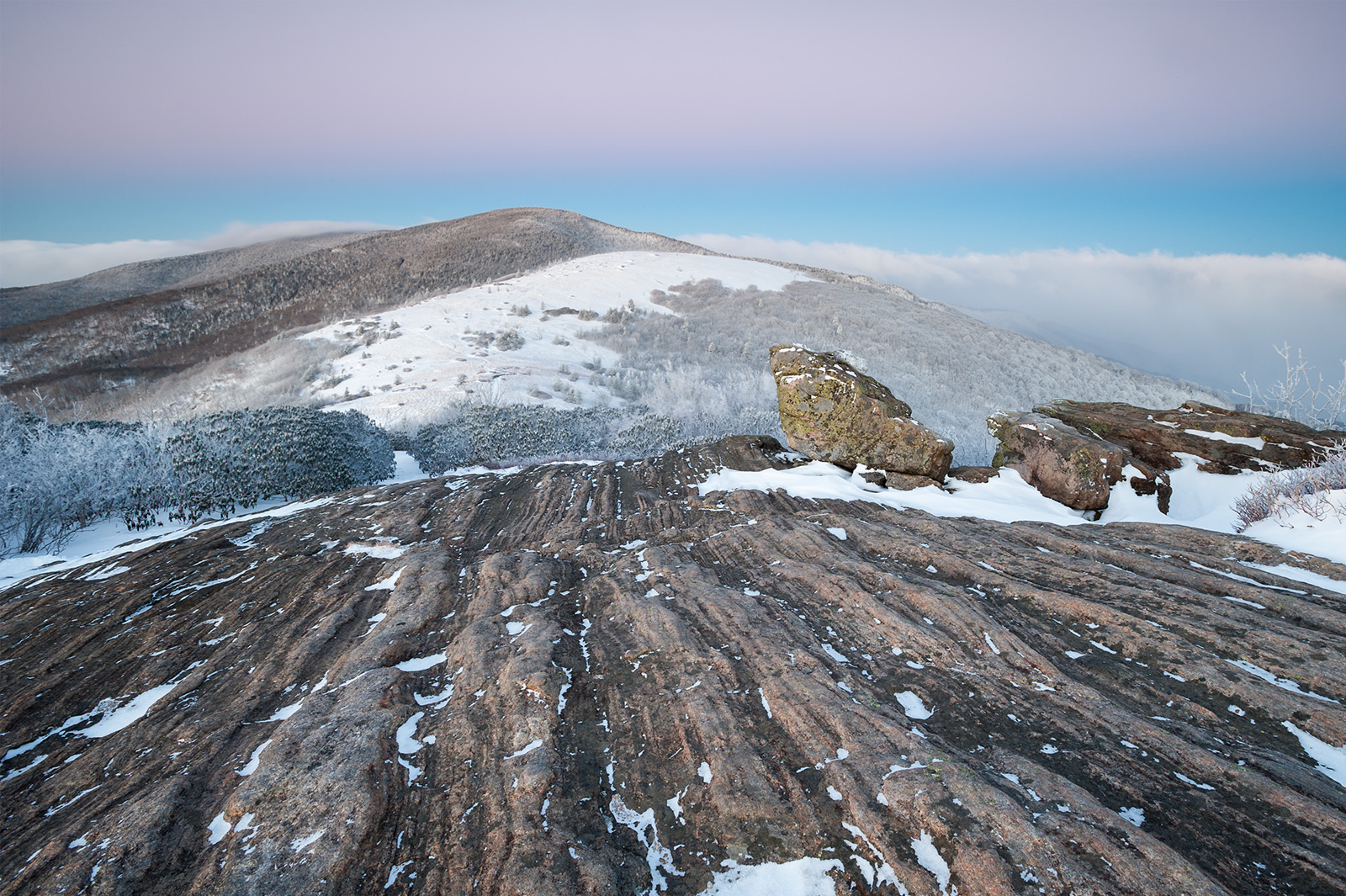
Jane Bald. The Roan Highlands are especially harsh in the winter. Temperatures are routinely below zero and wind chills are serious. It was a dream of mine to reach and hike the mountain in fresh snow for a sunrise. This was very challenging for my truck on unplowed roads and for me hiking in less than optimal gear, and I don’t believe I’ll ever do it again. I was just young enough and dumb enough to toss caution to the wind! It was every bit as beautiful as I imagined.
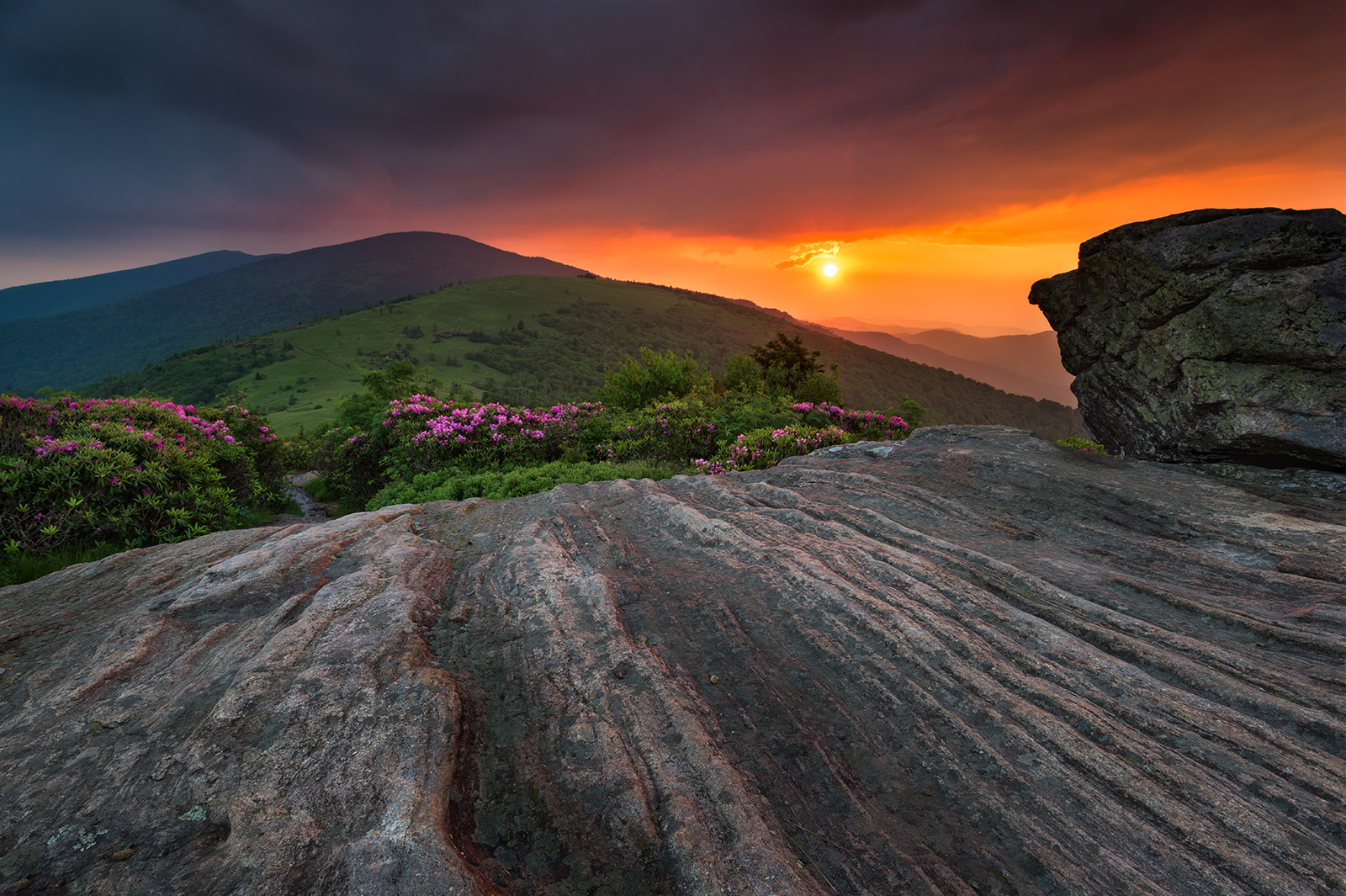
Jane Bald. The rocky summit of Jane Bald is the premier sunset location within the Roan Highlands, often crowded with cameras and visitors eager to witness the last light of day. I was camped on Grassy Ridge Bald on this evening when a thunderstorm moved over the mountains dumping rain and clearing the balds of visitors. I hustled back down the trail in the chance of witnessing a beautiful sunset without the crowds at this iconic location.
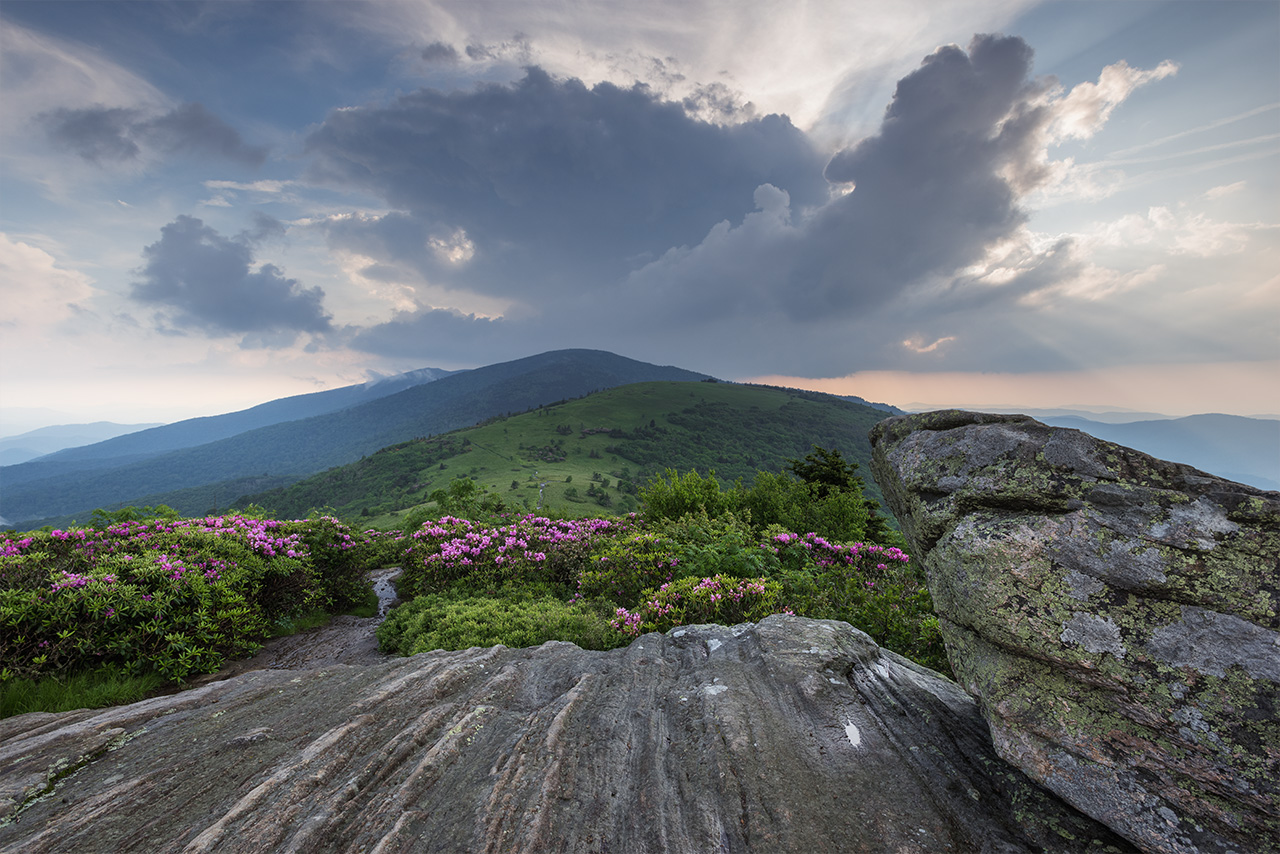
Jane Bald. High elevation peaks create their own weather. They’re unpredictable. The view from Jane Bald out over Round Bald and Roan High Knob is the premier sunset image from Roan Mountain, and often features storms and neat cloud formations in the sky above the tall mountains.
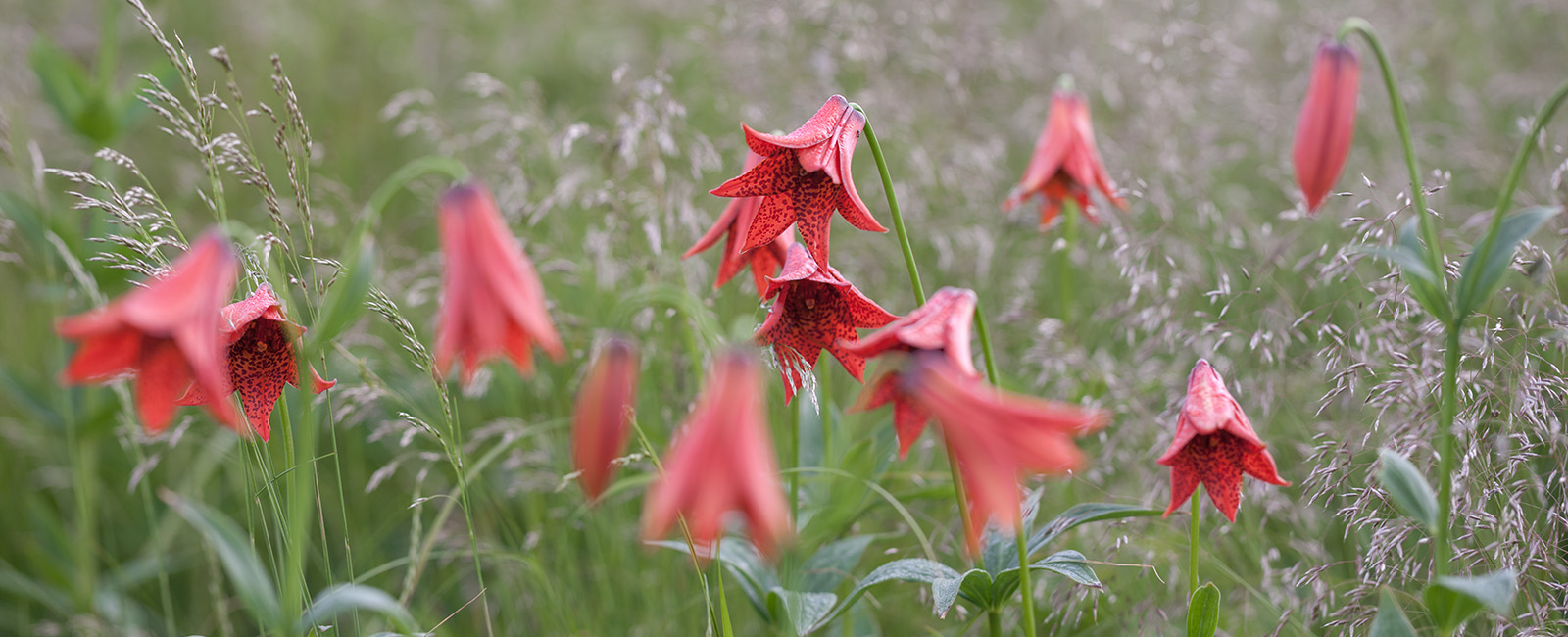
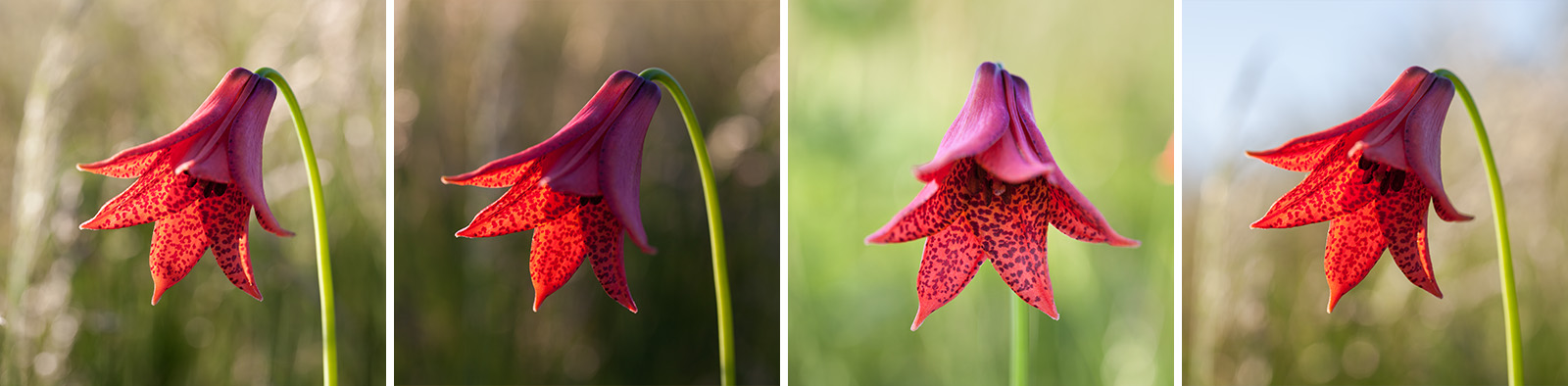
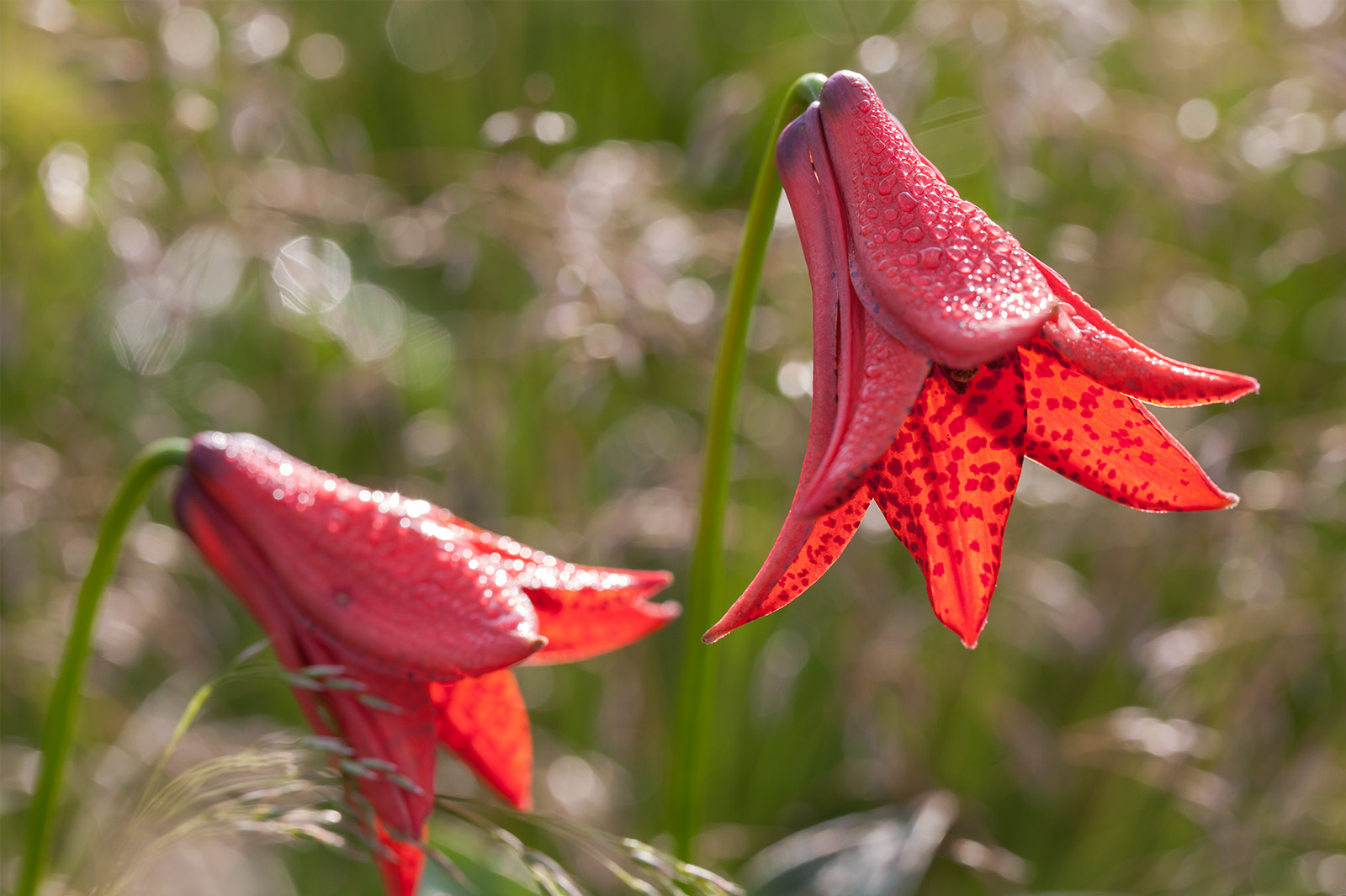
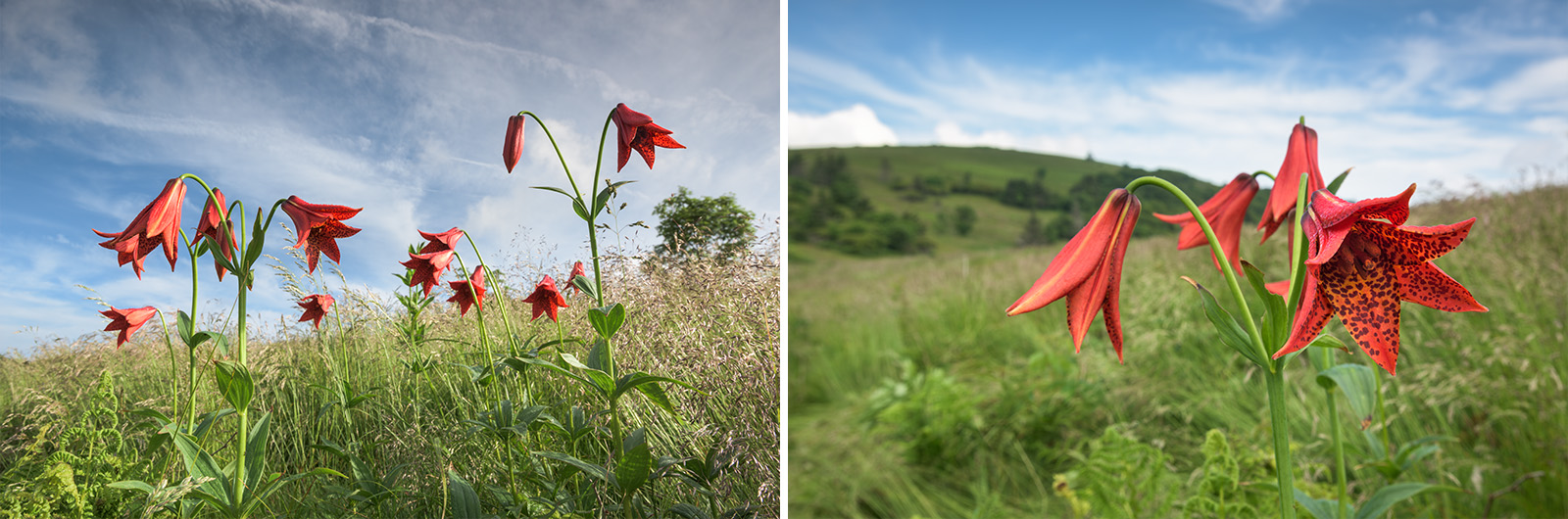
Grays Lily. The rare flower that has the strongest place association with Roan Mountain is the Gray’s Lily (Lilium grayi). NatureServe ranks the Gray’s Lily as G1/S1: Globally and regionally critically imperiled. During the bloom season of 2015 I found an abundance of beautiful Gray’s Lily flowers, one of the best seasons I’ve witnessed.
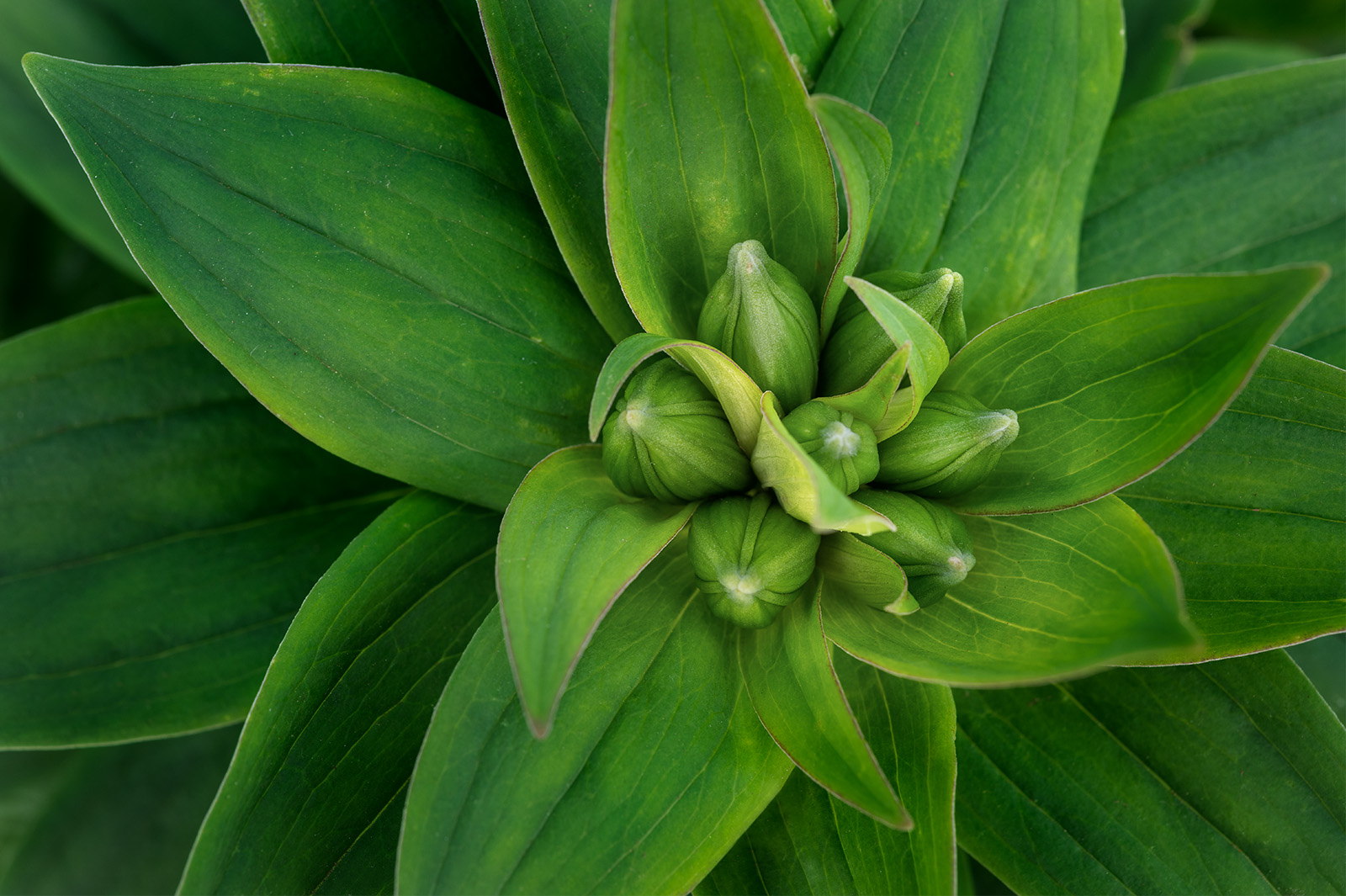
Gray’s Lily. Finding Gray’s Lilies in the bud stage is much harder than the flower stage when their bright red blooms give them away. This Gray’s Lily was near the Appalachian Trail on Jane Bald, giving me an opportunity to appreciate the leaves and buds before the showy flower made an appearance.
Gray’s Lily. The Gray’s Lily grows within the tall grass balds of the Roan Highlands. I wanted to show the relationship between the rare flower and its rare habitat.
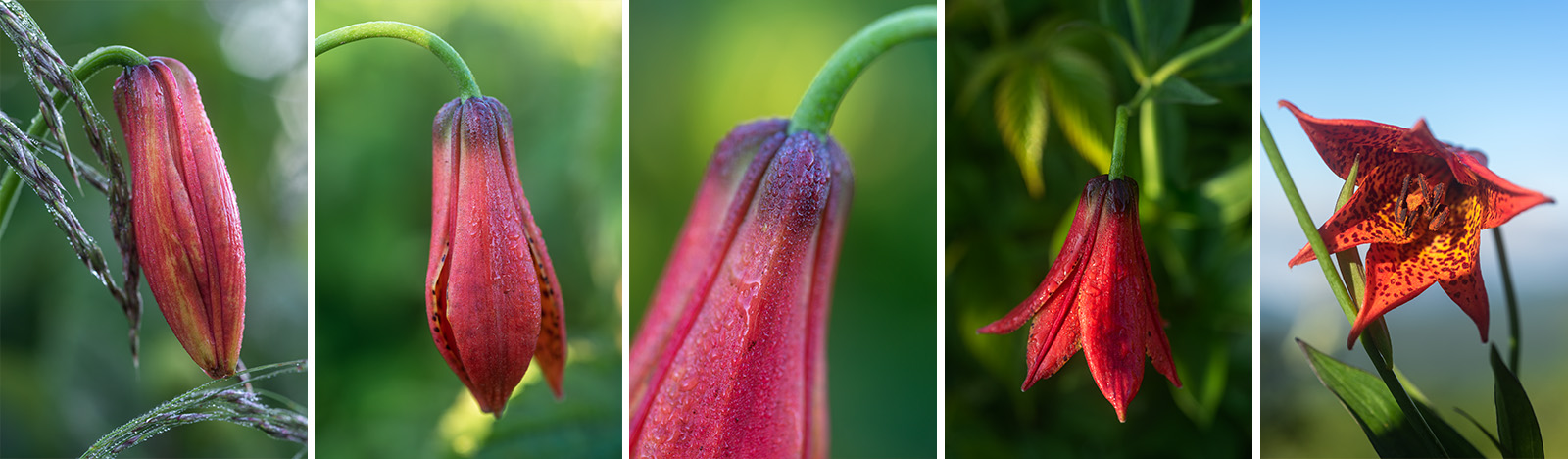
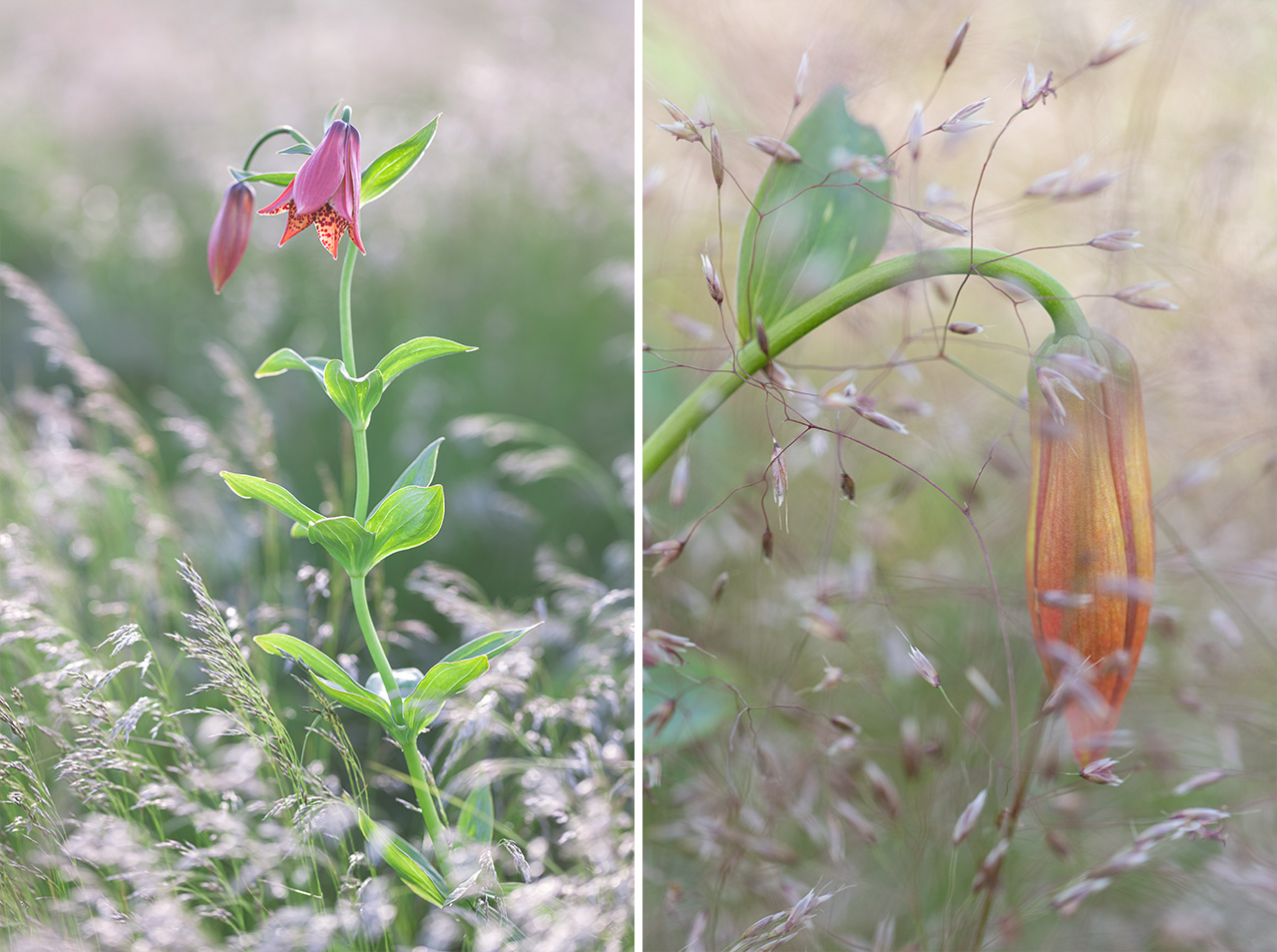
Gray’s Lily. Various stages of bud and bloom for the rare and beautiful Gray’s Lily along the Appalachian Trail in the Roan Highlands. The Gray’s Lily was named to honor Asa Gray, an American Botanist who found them on Roan Mountain in 1840.
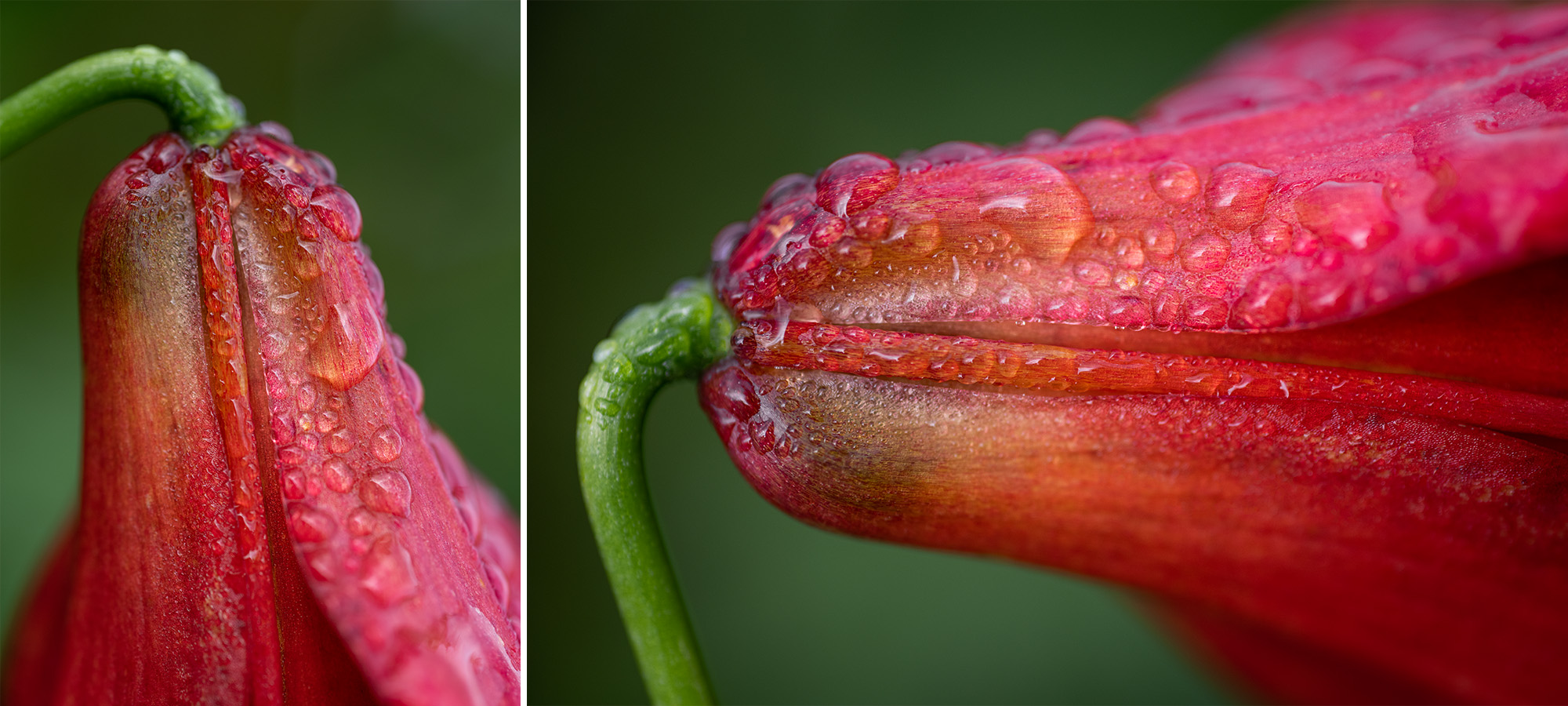
Gray’s Lily. My favorite time to photograph the Gray’s Lily is first thing in the morning when dew sits heavy on their large red flowers. The strong red/green contrast and lush, rich coloring is undeniable. Before I ever knew that these flowers were rare, they stopped me in my tracks and demanded attention behind my lens!
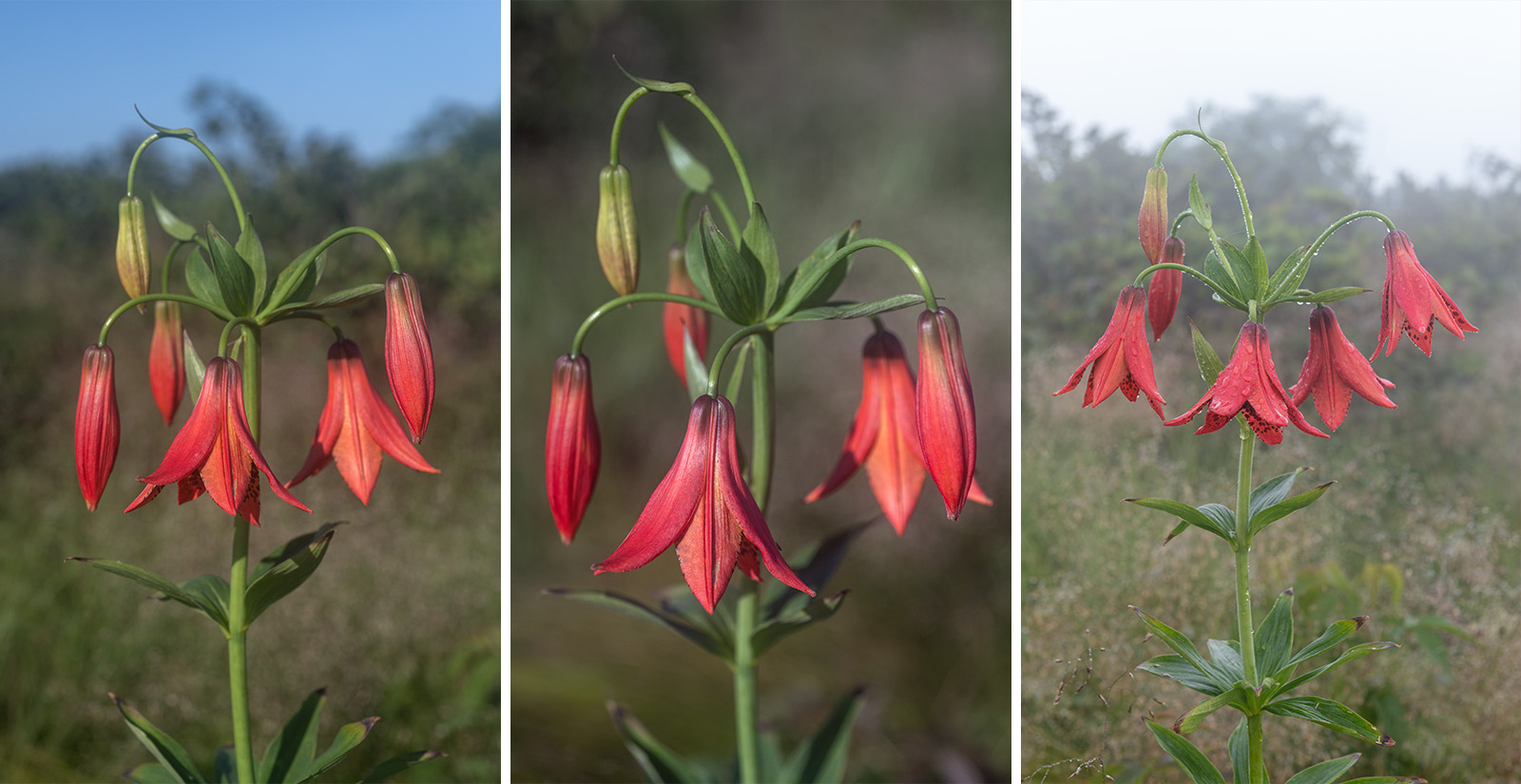
Gray’s Lily. I followed the progress of this beautiful multi-head Gray’s Lily bloom along the Appalachian Trail atop Jane Bald for several days. Blooming in early July, I’ve always associated the Gray’s Lily with the Fourth of July holiday and celebrations. My kind of fireworks!
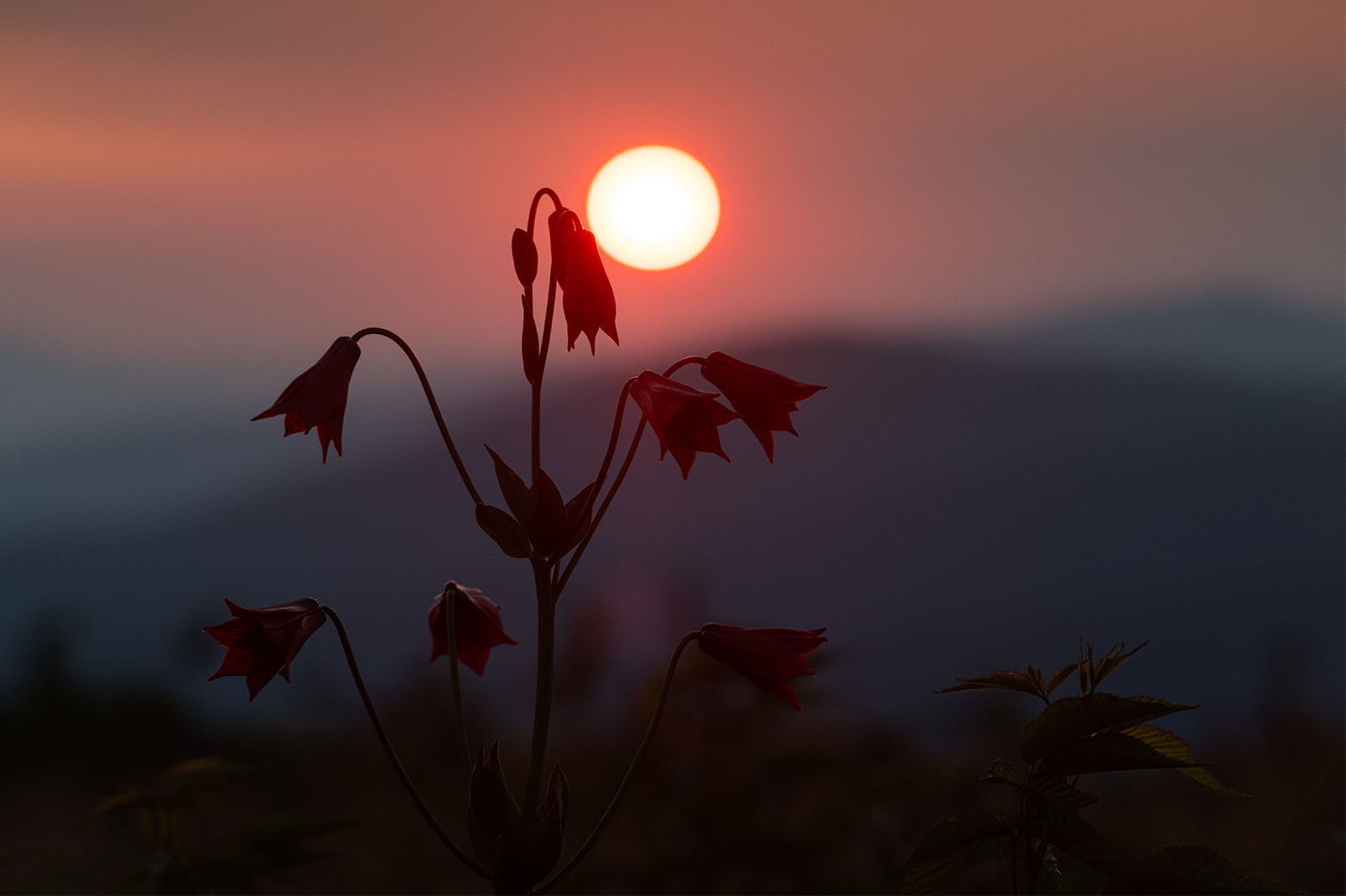
Gray’s Lily. An idea that I haven’t yet perfected: I’ve always wanted a photograph of these beautiful flowers within the burning light of sunrise with the hint of the ridgelines where they grow.
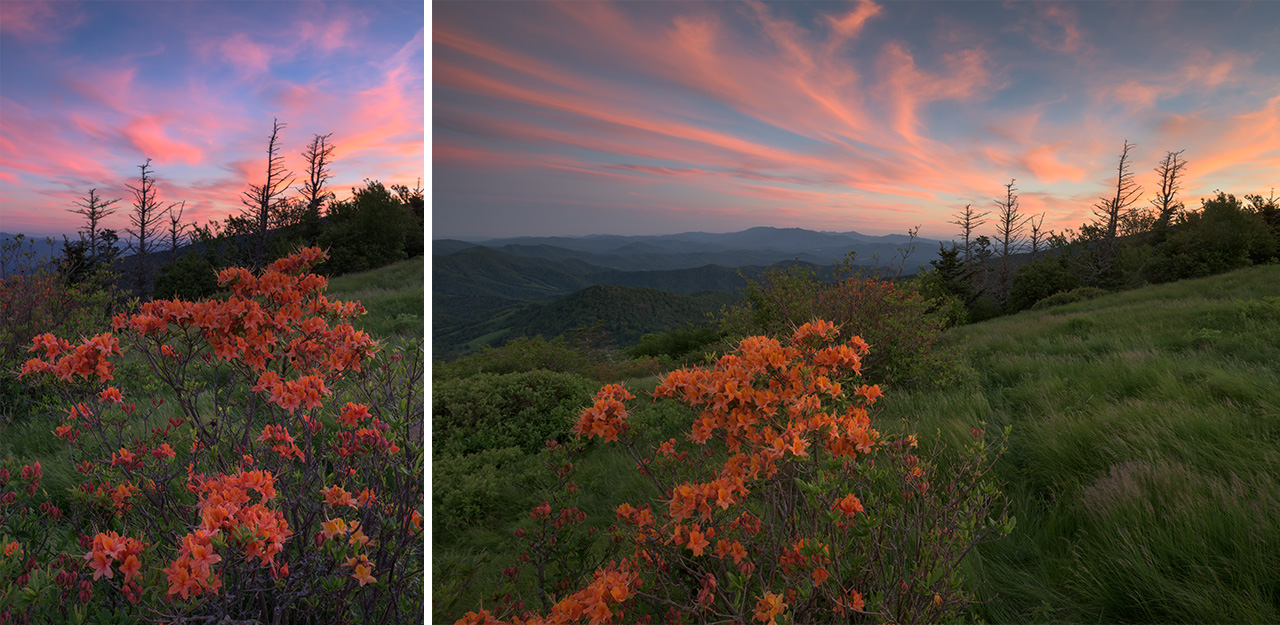
Flame Azalea. While on assignment for a regional magazine to capture azalea in the North Carolina mountains, I found myself trying to catch a colorful sunset with the fiery blooms of Flame Azalea. This was taken on Engine Bald, perhaps the most well known location to capture these amazing orange blooms during the annual spring flowering.
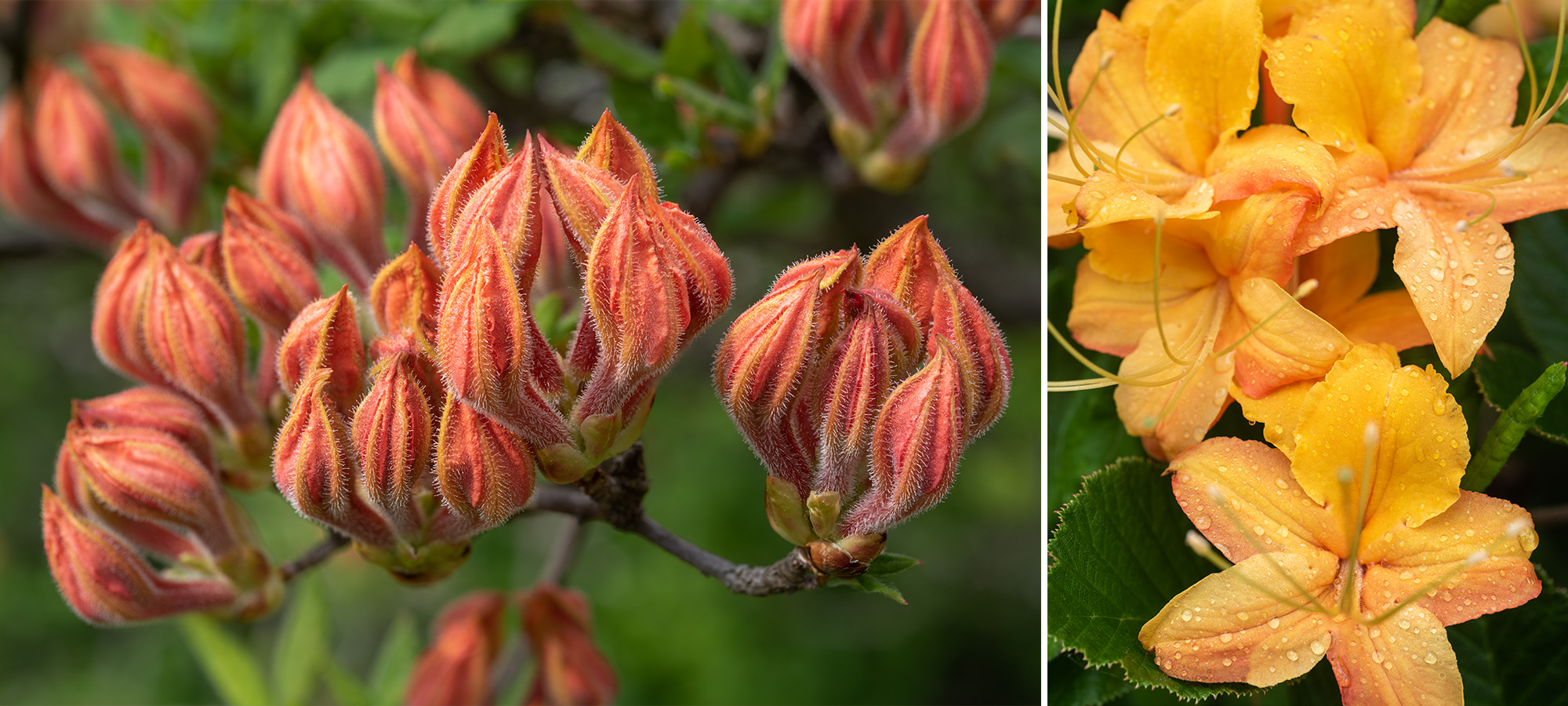
Flame Azalea. The buds of Flame Azalea are shaped and colored like little nips of fire from a candle. I wanted to capture this emotive combination of characteristics. The flowers of Flame Azalea, on the other hand, range from reds to oranges to buttery yellows. Witnessing the variety of shades is one of the neatest parts of Flame Azalea, I think.
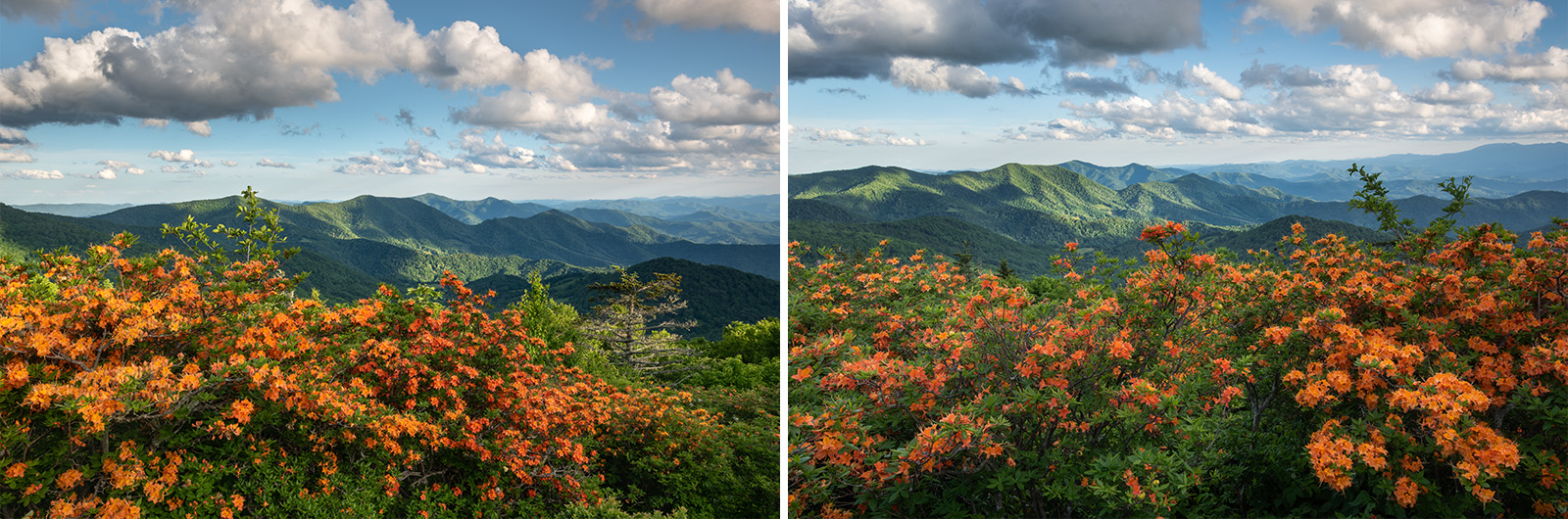
Flame Azalea. The classic view south into North Carolina over gardens of Flame Azalea from Engine Gap along the Appalachian Trail in the Roan Highlands. These beautiful flowering shrubs crowd the trail as it descends the backside of Round Bald and provide ideal foreground against the valley and distant mountains.
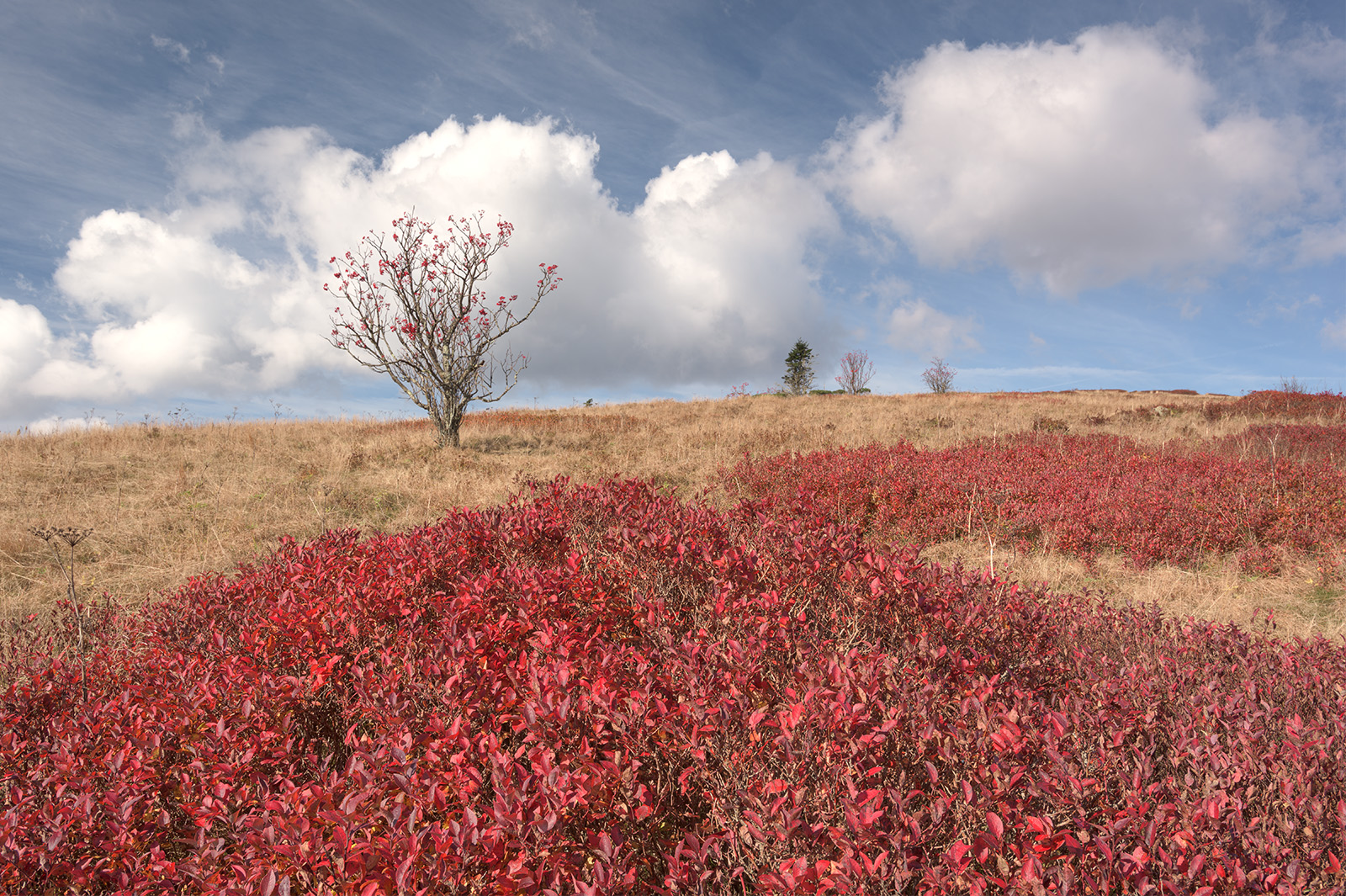
Round Bald. Autumn is different atop a grass bald. Color is found within the heath bushes, which turn bright red and on the berries that adorn the Mountain Ash trees native to this mountain.
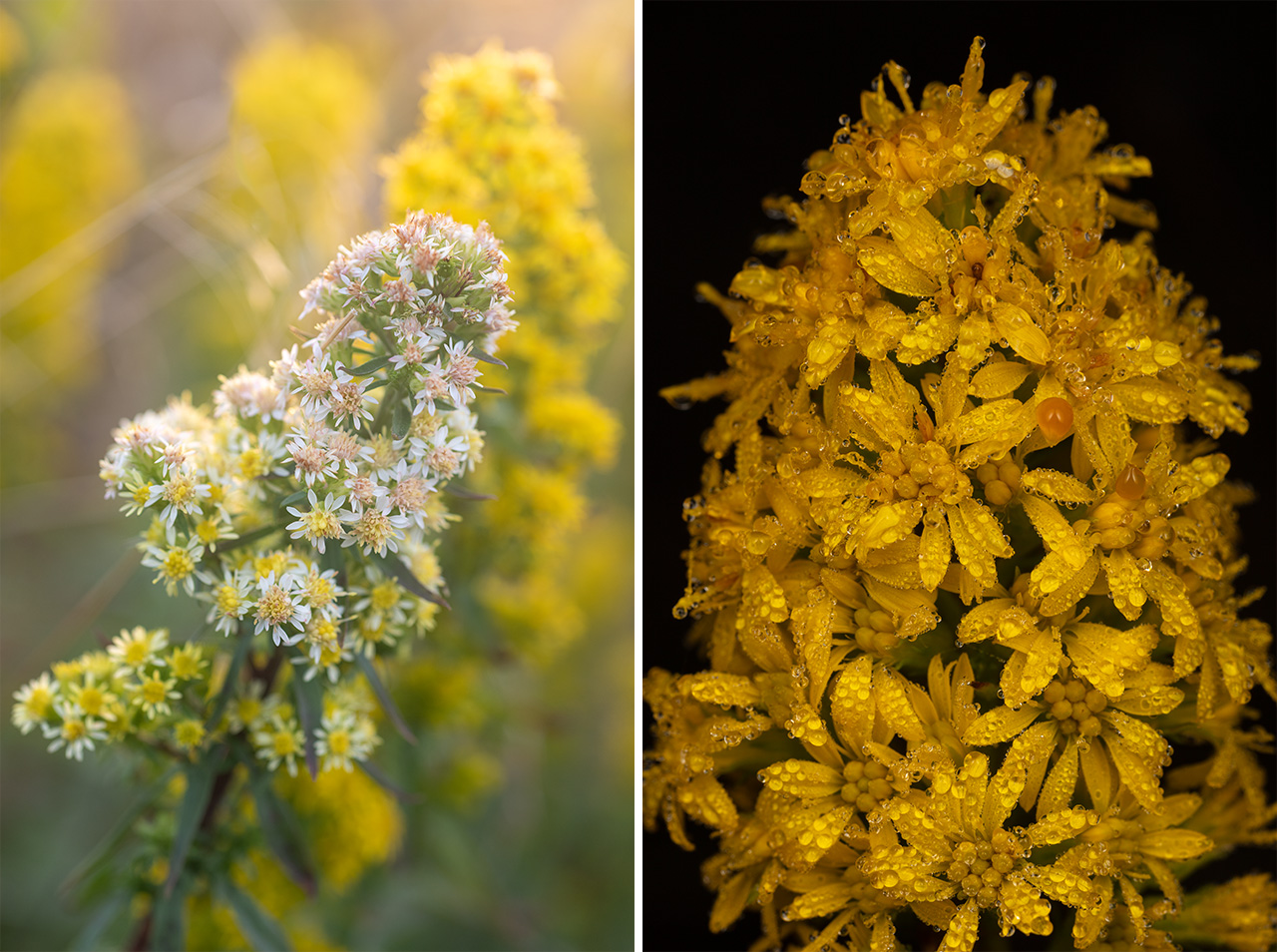
Carver’s Gap. In early to mid-September the grass balds of Roan Mountain turn yellow with Goldenrod. Roan Mountain Goldenrod (Solidago roanensis) pictured here is the most common. However, there is a rare Goldenrod that grows on rock outcroppings that is on my list to find and photograph!
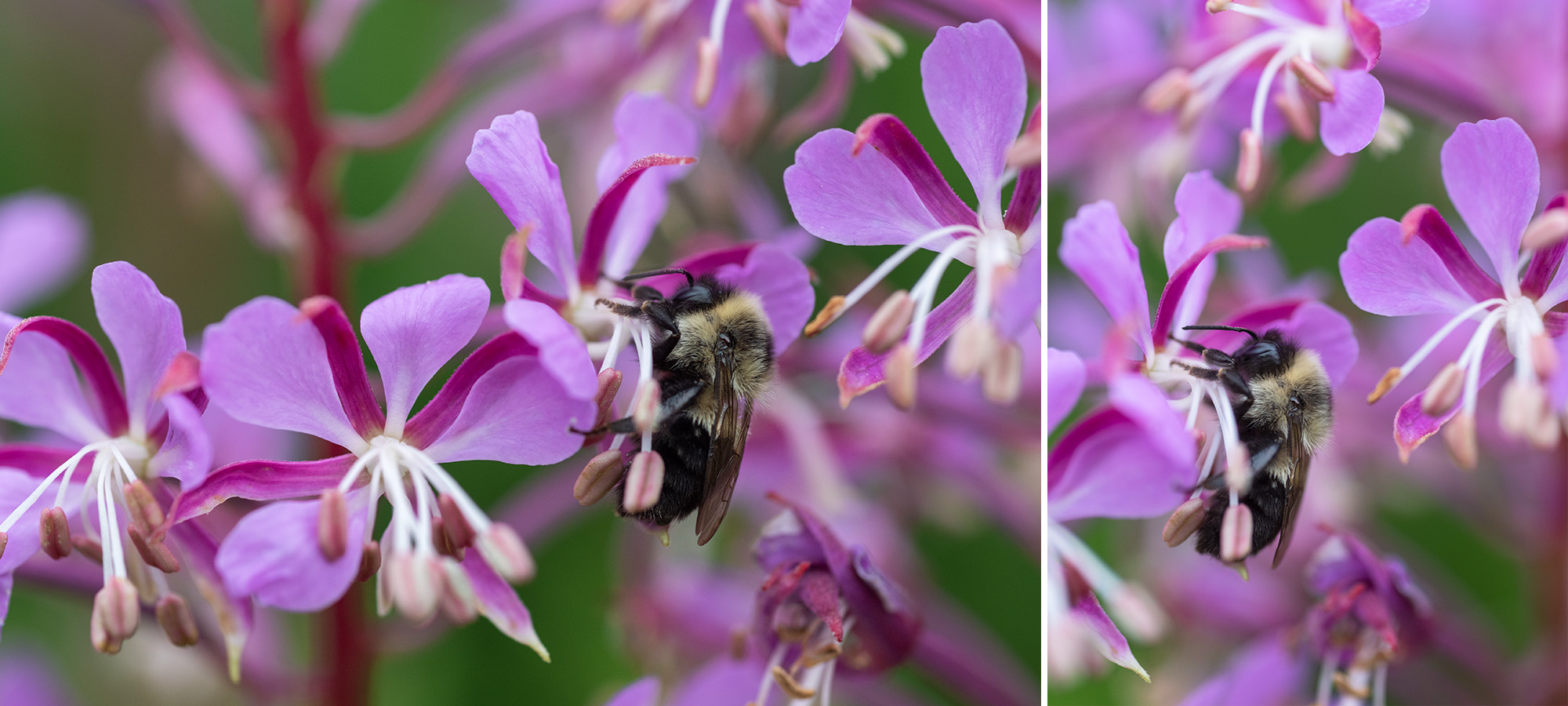
Carver’s Gap. Fireweed (Chamaenerion augustifolium) grows near the parking area at Carver’s Gap in the Roan Highlands. Every time I see it in flower, it reminds me of a trip I took to Alaska to visit my sister (where Fireweed also grew abundantly!).
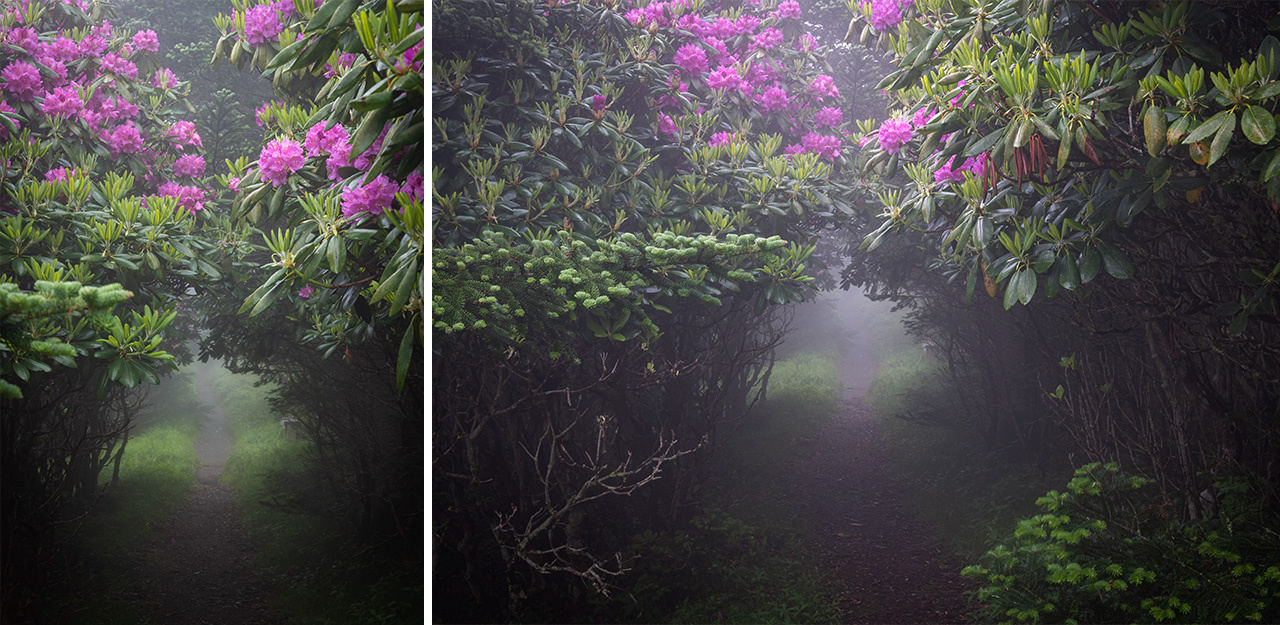
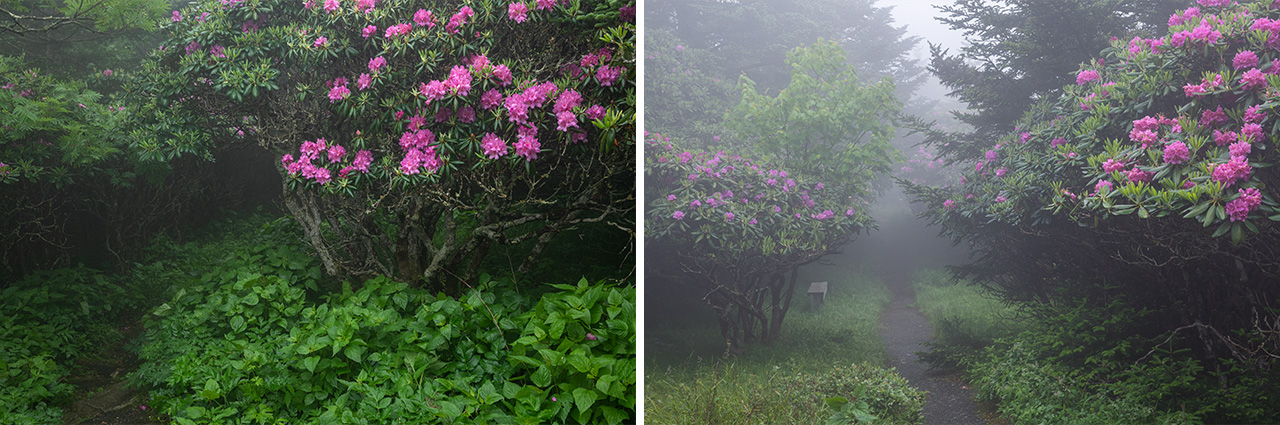
Formal Rhododendron Garden. The Catawba Rhododendron garden atop Roan High Knob is reported as the largest in the world at 200+ acres. Paved and gravel trails lead through the expanse of flowering shrubs, while the atmosphere of nearby Southern Appalachian Spruce-Fir Forest creates mysterious conditions.
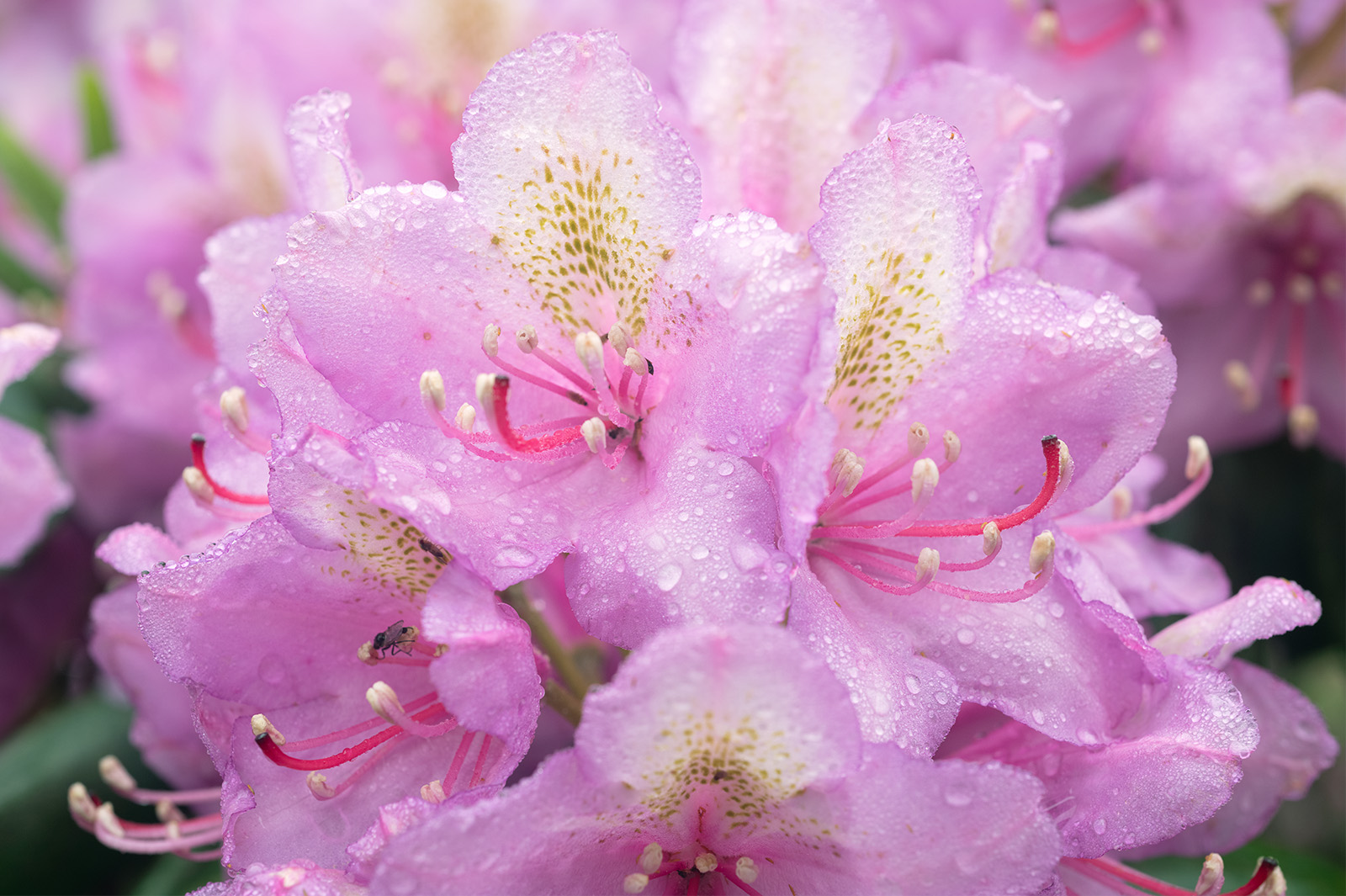
Formal Rhododendron Garden. The Catawba Rhododendron is what pulls most people to Roan Mountain. The chance to see this showy flower bloom in numbers is the prize.
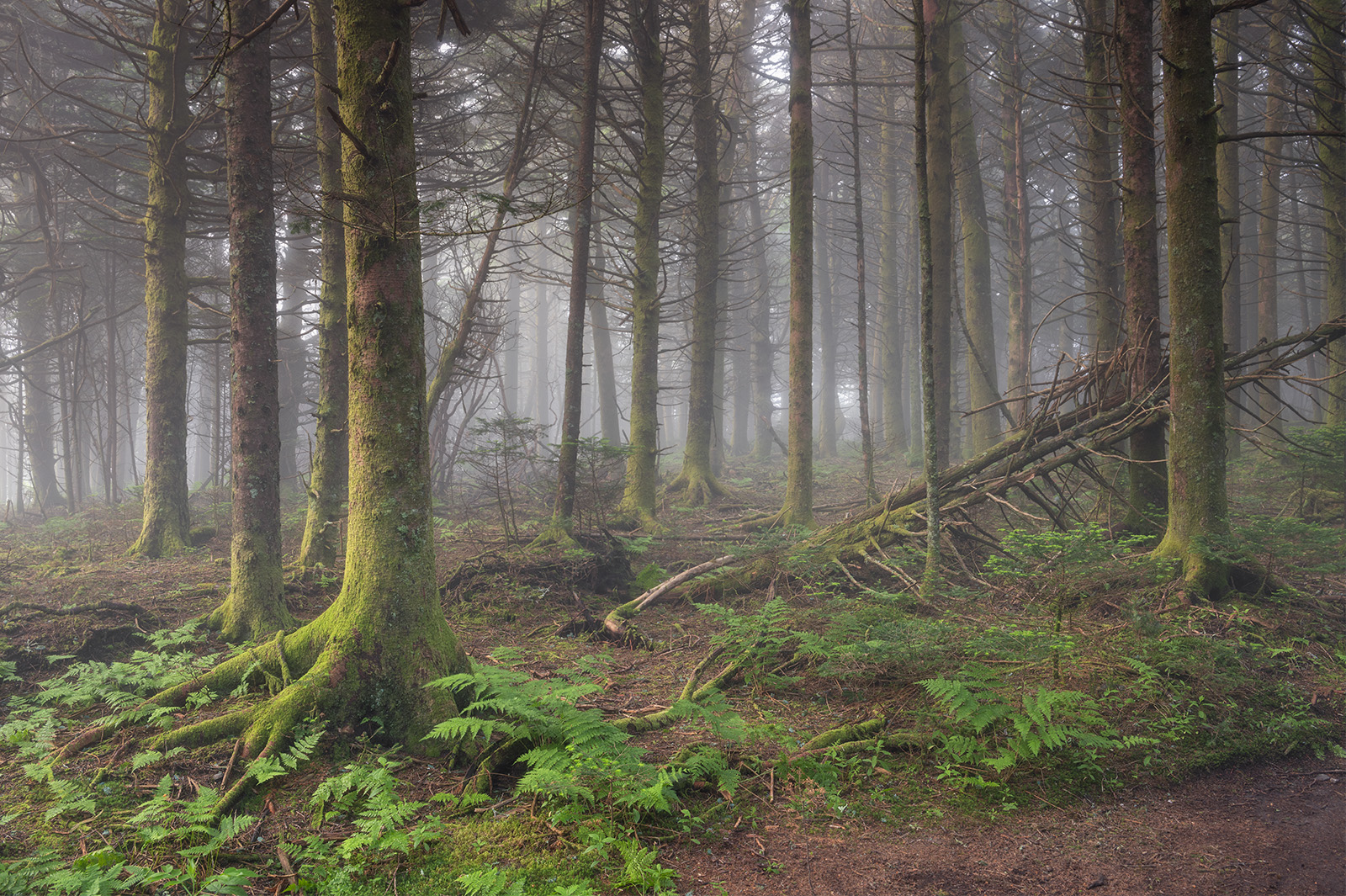
Southern Appalachian Spruce-Fir Forest. This forest type–the Southern Appalachian Spruce-Fir Forest–is the second most endangered habitat in the United States, primarily because of its rarity. It occurs at the highest points in the Southern Appalachian Mountains. I would characterize this forest as dark and mysterious. The ground is quieted by Spruce and Fir needles while clouds and mist create a damp atmosphere where mosses grow on nearly everything. Plant and animal life is not as diverse here as lower elevations; however, what does grow is often rare or remarkable.
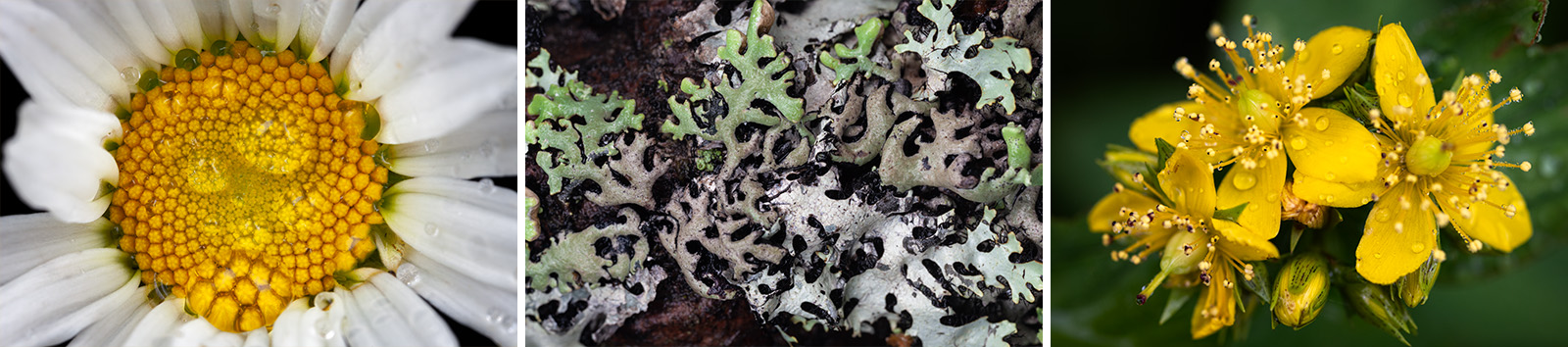
Roan High Knob. A couple of detail shots from the parking areas atop Roan High Knob. (Left) Ox-Eye Daisy. (Center) Lichen. (Right) St. Johns Wort.
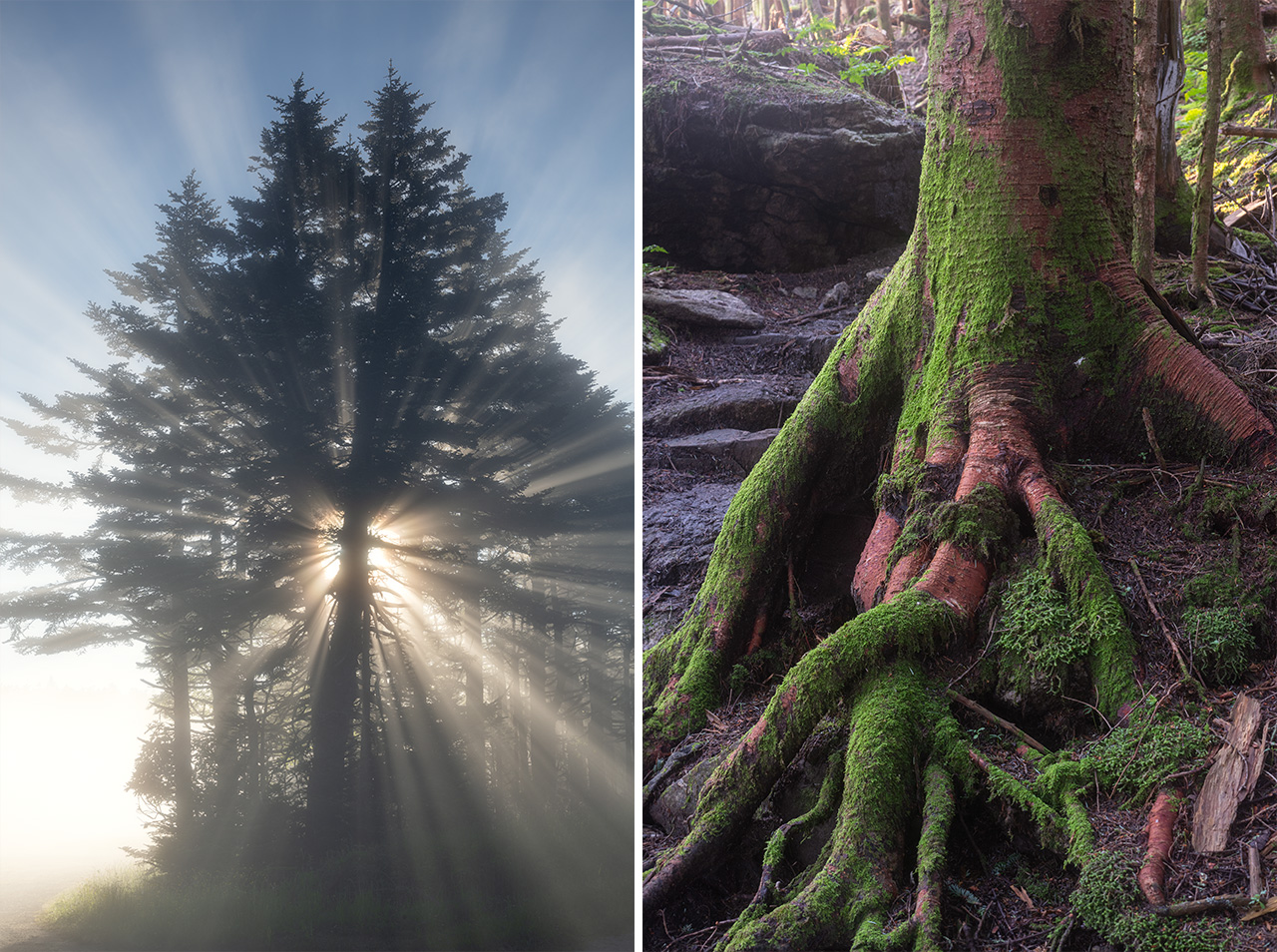
Roan High Knob. Behind the lens, Roan High Knob is often a place I go to find fog/cloud and sun beams. The Spruce-Fir forests, on the other hand, are interesting places to find roots, moss, and woodland scenes.

Roan High Knob. On the borders of the Southern Appalachian Spruce-Fir Forests, I often find beautiful spiderwebs that collect the ample moisture from fog and clouds. Using a macro lens and attached flash unit, the results are very striking. Photographing these is a bit of an addiction for me!
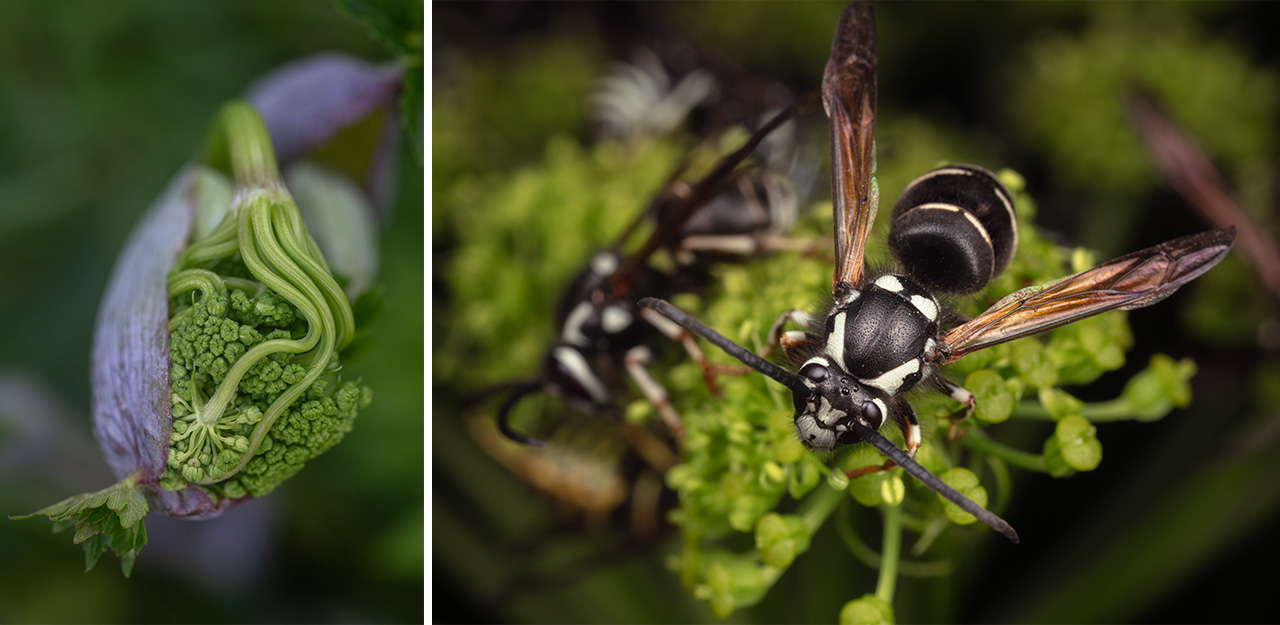
Roan High Knob. Sweat Bees get drunk upon the nectar of Mountain Angelica. This plant has the unique ability to produce nectar that stuns and turns insects lethargic. As a photographer, this makes for some interesting opportunities with the macro!
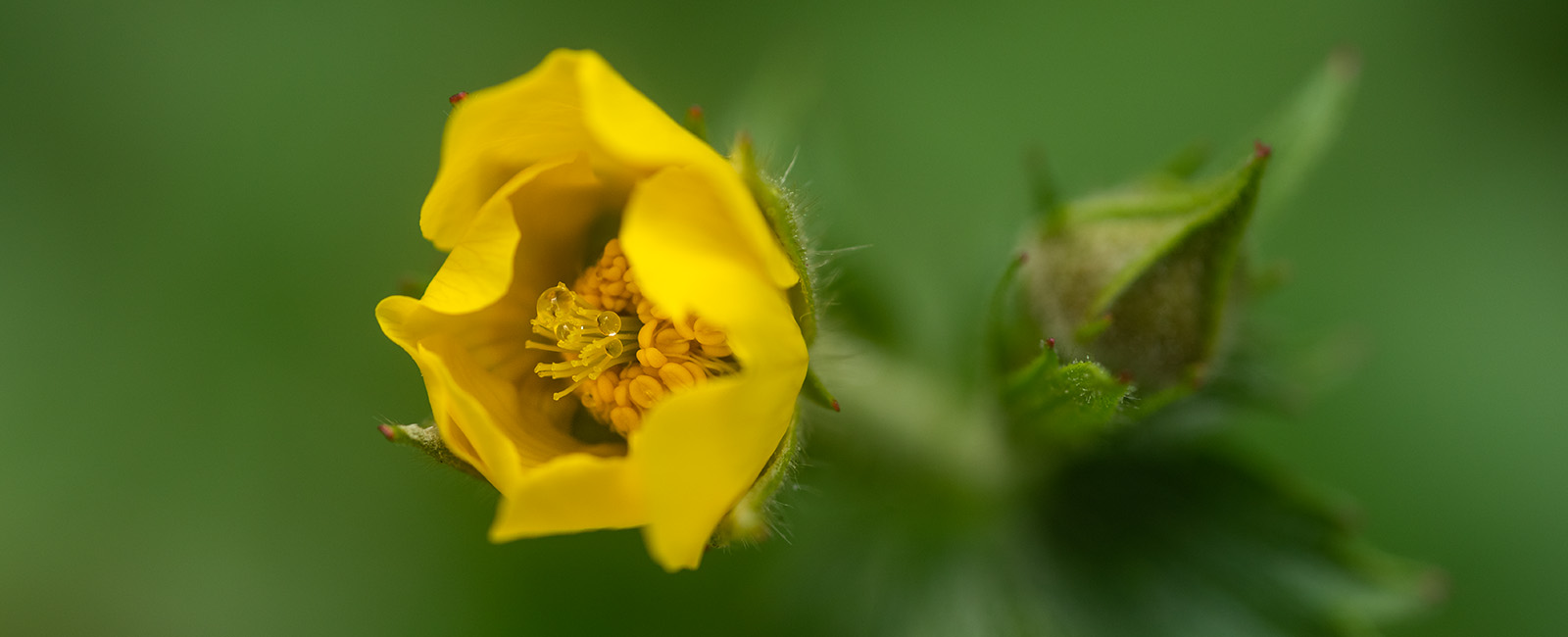
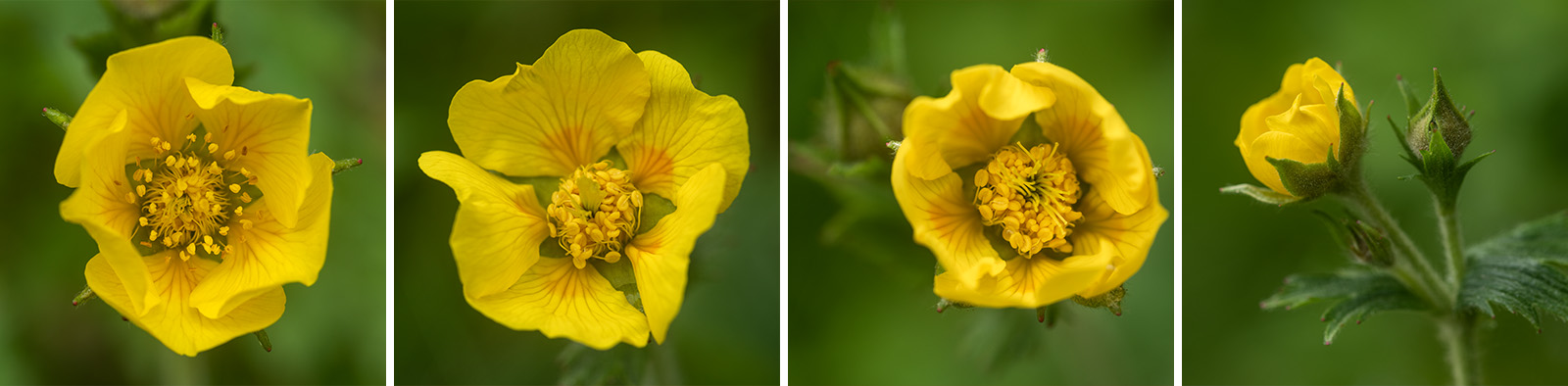
Spreading Avens. The Spreading Aven is a federally endangered plant in the rose family. It grows on rocky cliff faces like the ones found atop Roan High Knob. This habitat is strictly monitored and visitation is both dangerous and forbidden. However, several transplanted blooms can be found within the formal rhododendron gardens. NatureServe ranks the Spreading Aven as G2 Globally Imperiled and S2 Imperiled in North Carolina. Special, I would say.
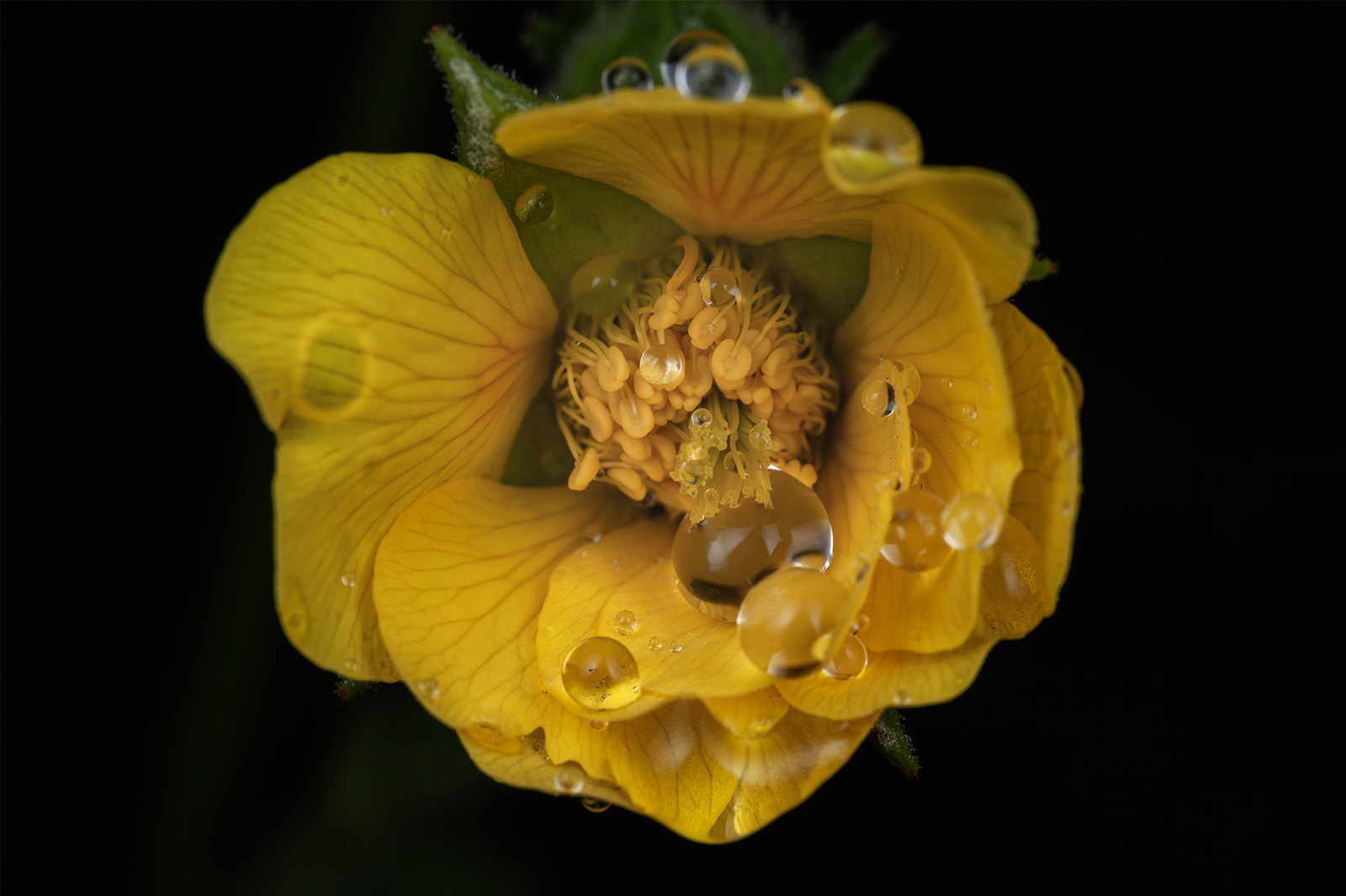
Spreading Aven. Getting a great portrait of this federally endangered plant is always high on my list of challenges. Here, I thought the heavy moisture drops gave the flower some added personality.
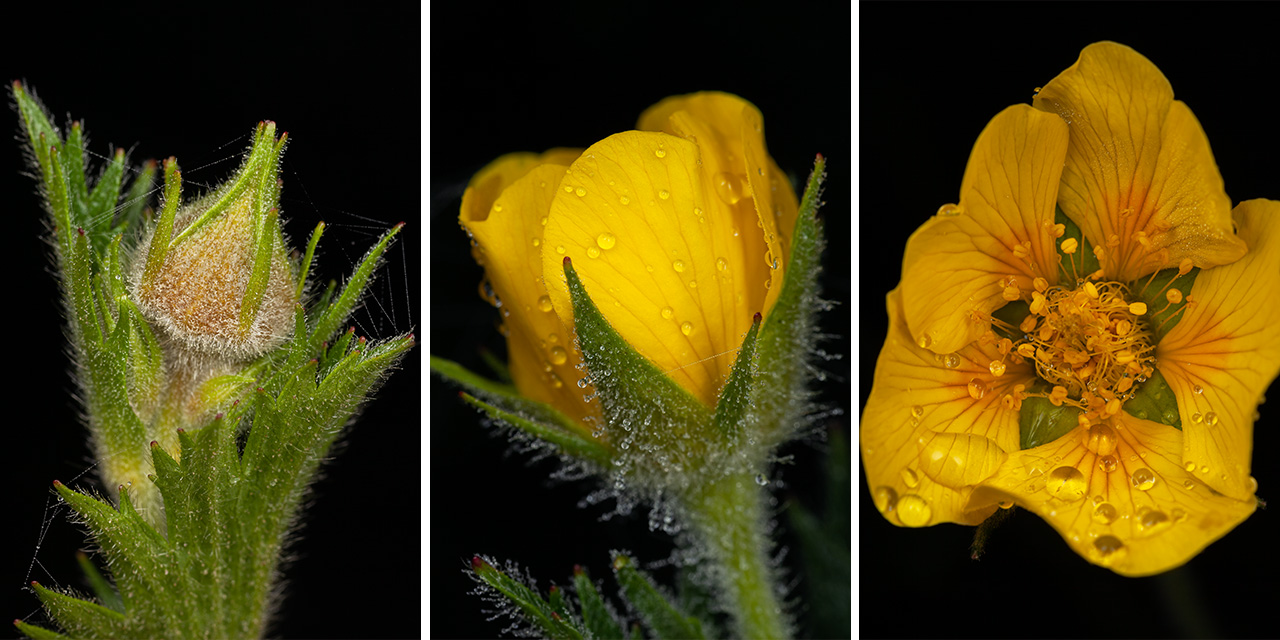
Spreading Avens. Images of the federally endangered Spreading Aven from bud (left) to opening flower (right). I find the side view portrait to be the most congruent with this tiny flower being within the rose family.
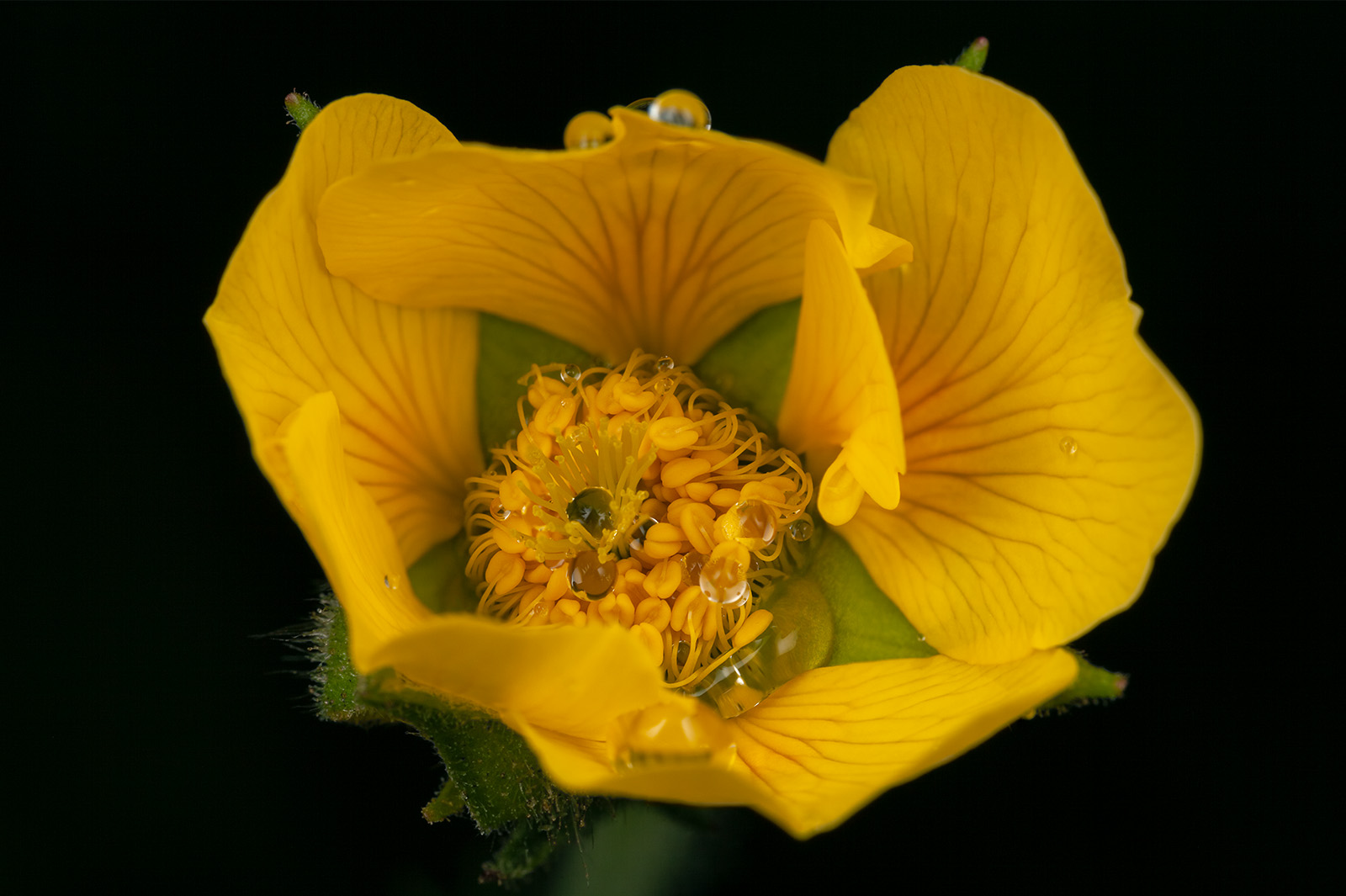
Spreading Aven. Perhaps my best portrait of this amazing federally endangered plant on Roan Mountain? I love the pent up energy in the little cluster of bits that are primed to open and extend as the flower continues to bloom. Using an extreme macro (greater than 1:1), I always guess at whether there will be enough depth to capture the essence of the wildflower.
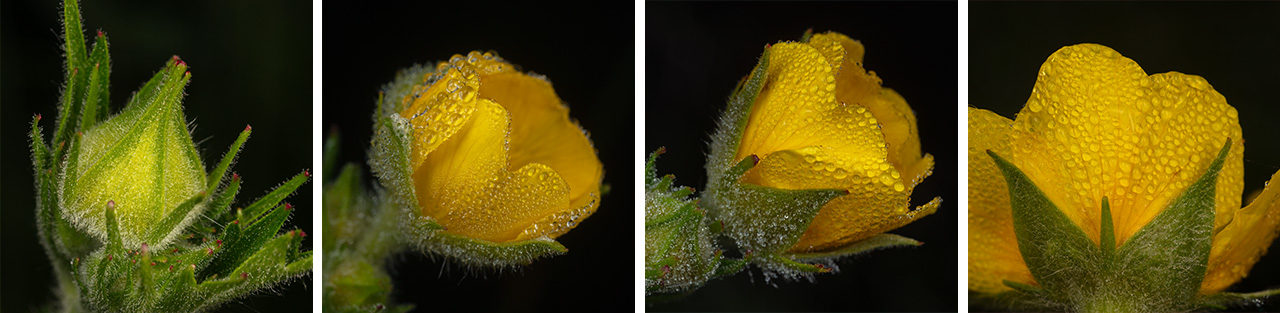
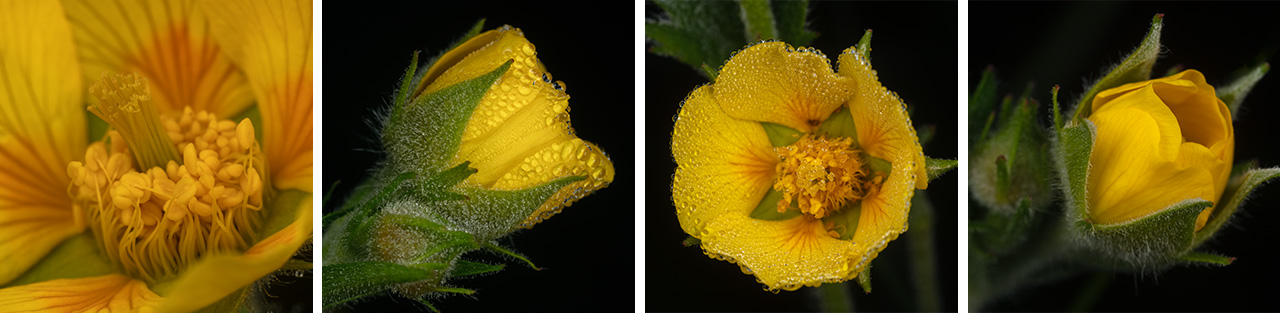
Spreading Aven. Finding these rare, federally endangered wildflowers in bloom and covered in a dusting of morning dew is like Christmas morning for me!
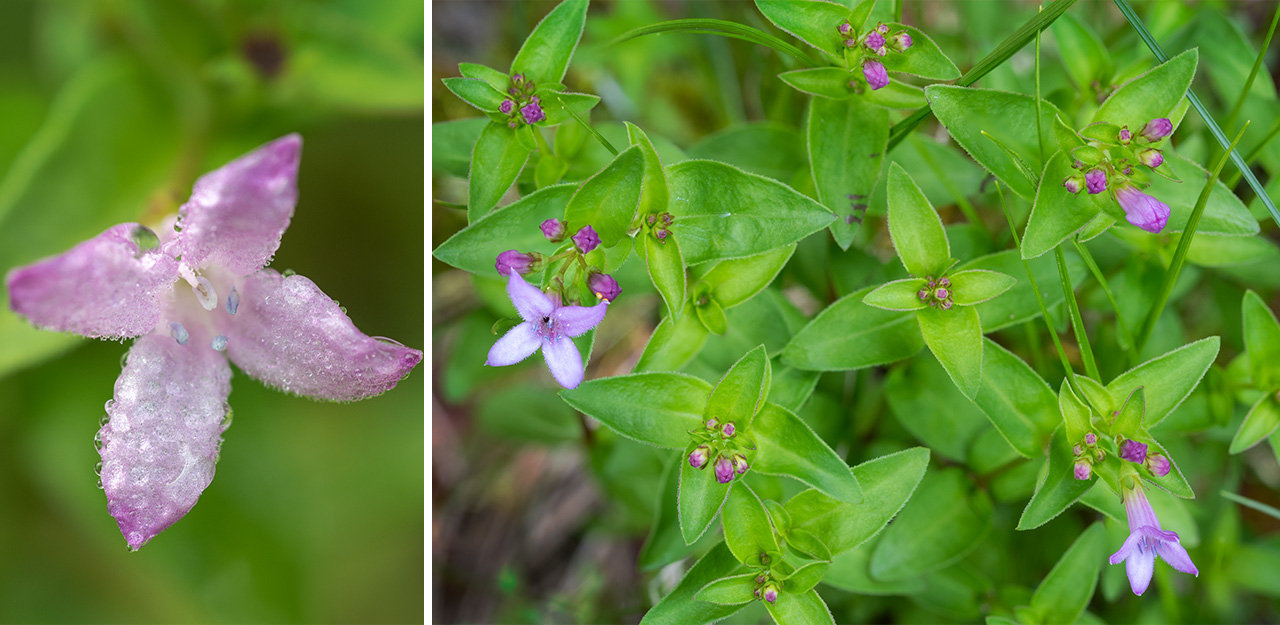
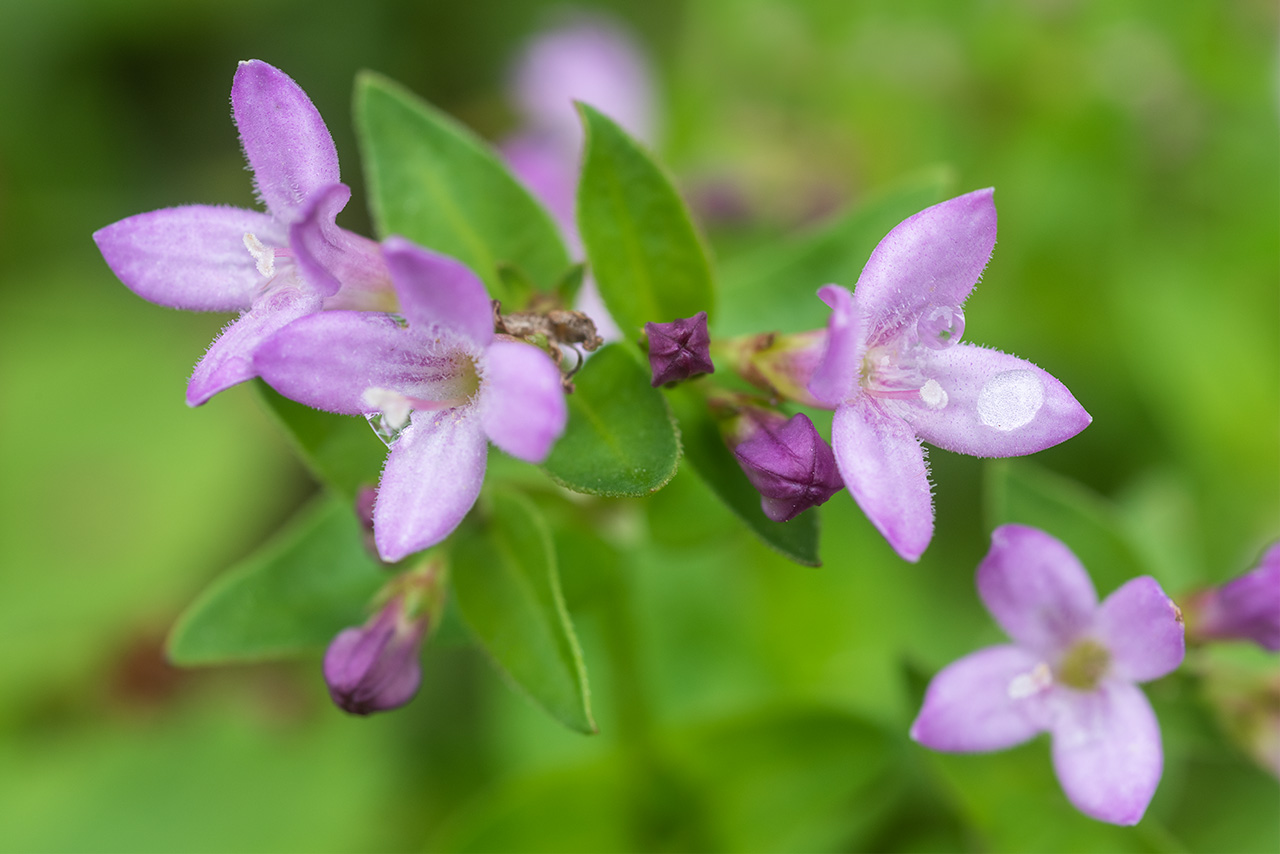
Roan Mountain Bluets. Roan Mountain Bluets (Houstonia purpurea var. montana) are another federally endangered, very rare plant species found atop Roan Mountain. NatureServe ranks the Roan Mountain Bluet G2 globally imperiled and S2 imperiled in North Carolina. I searched for these little flowers for years until I finally found them on both sides of Carver’s Gap. I love the richeness and depth of Roan Mountain!
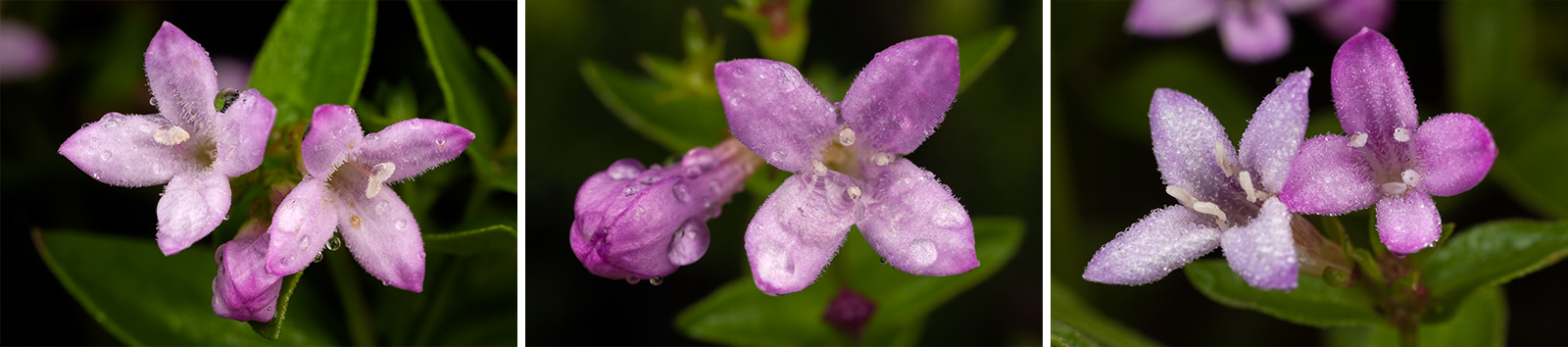
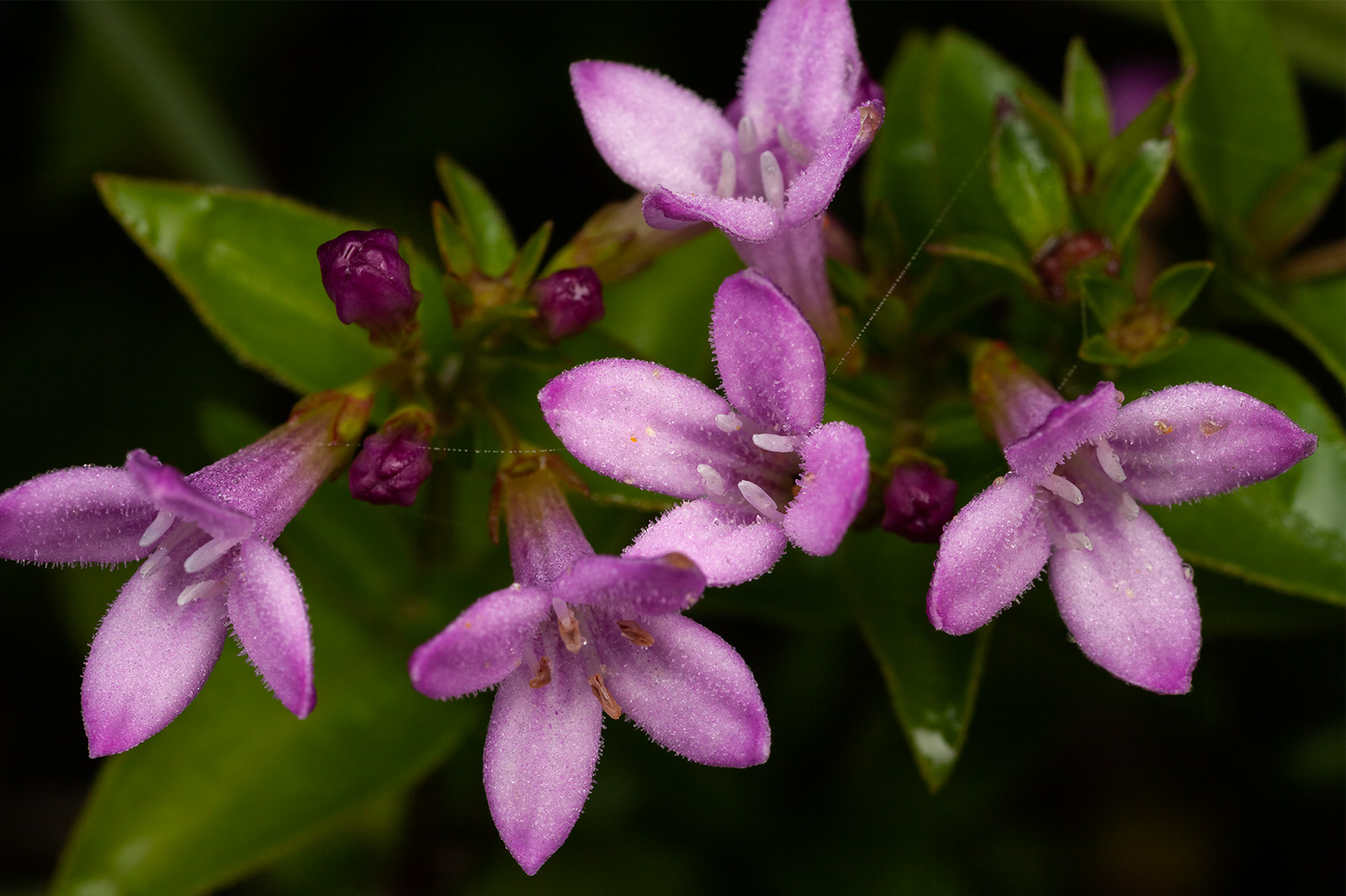
Roan Mountain Bluets. It took me a few years to become comfortable with my macro rig before I could even attempt to make portraits of these tiny wildflowers. I still shoot far more duds than keepers when it comes to Roan Mountain Bluets!
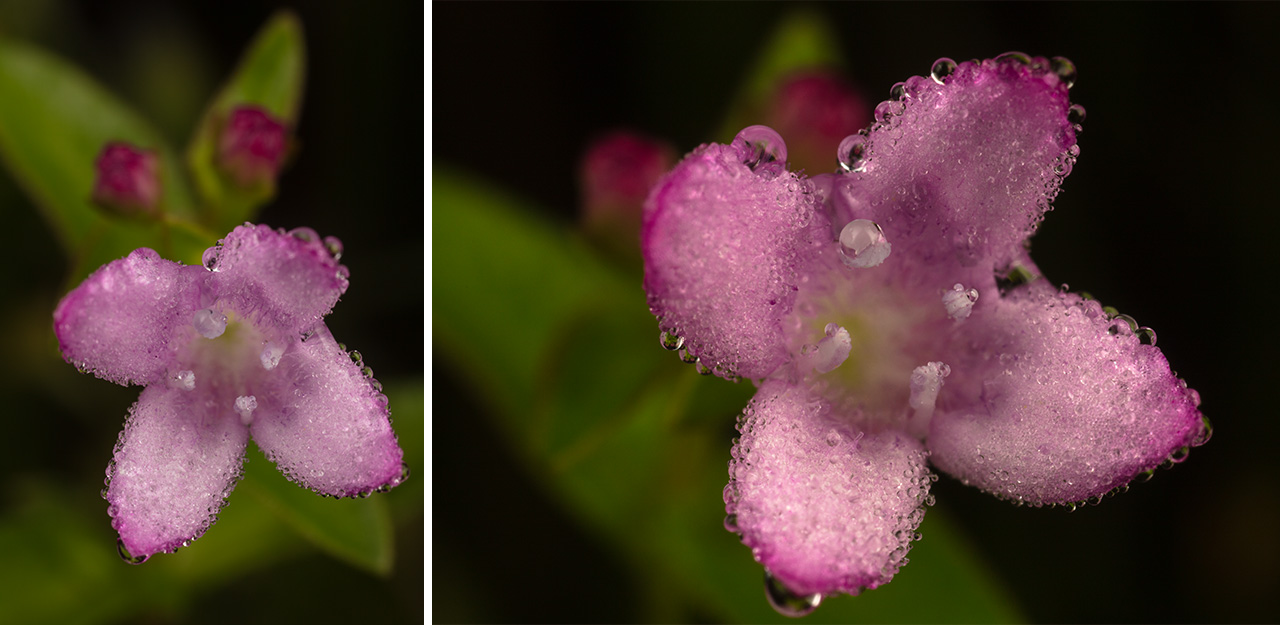
Roan Mountain Bluets. Like many wildflowers, I absolutely love when the moisture of morning coats the delicate flower of a wild plant. It feels to me like it ties the plant to the temperate, humid, wet climate of the Southern Appalachian Mountains.
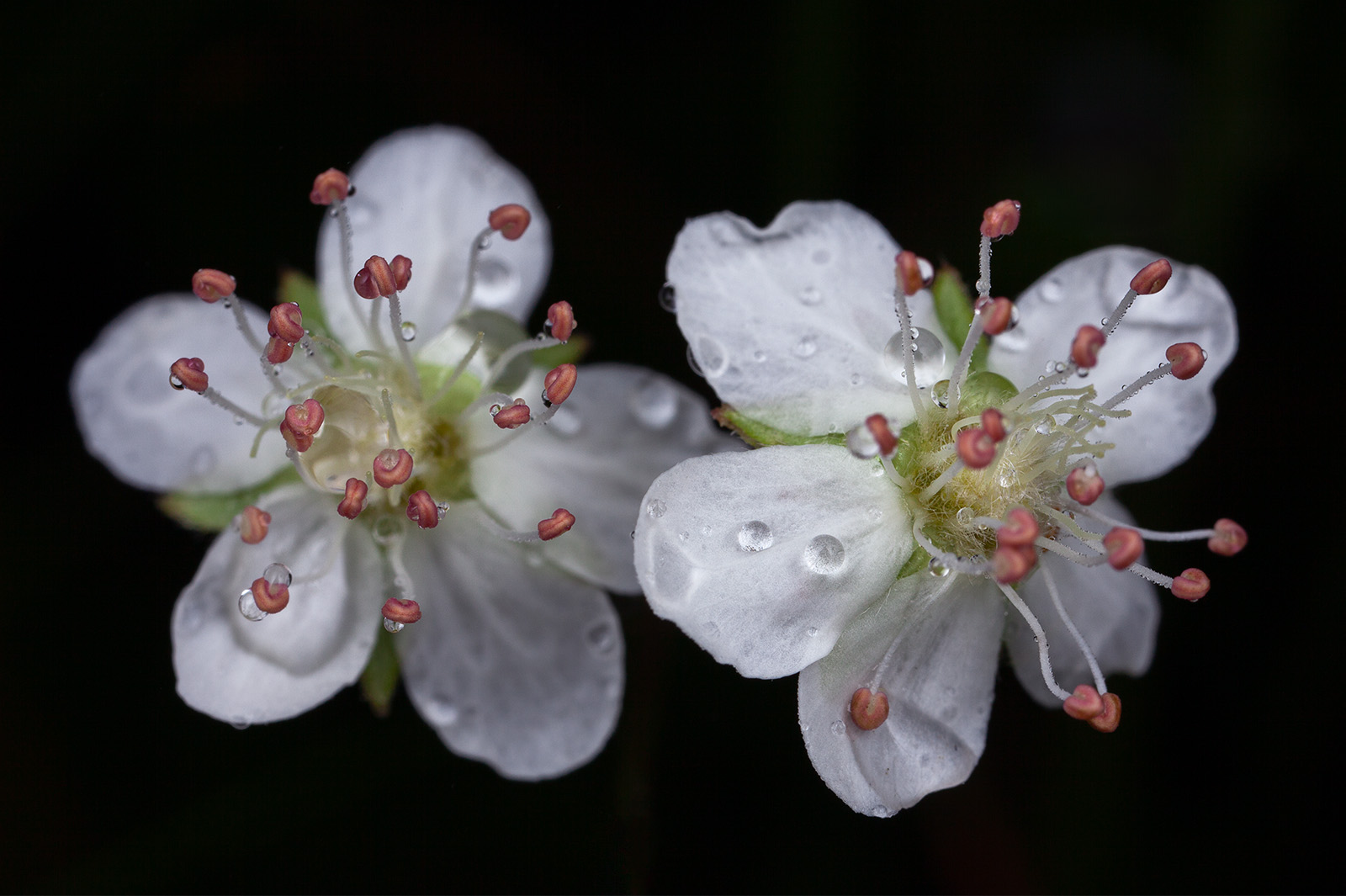
Three-Toothed Cinquefoil. The Three-Toothed Cinquefoil (Sibbaldiopsis tridentata), though not as rare as either the Spreading Aven or Roan Mountain Bluet, is still a special and relatively rare plant that occurs on Roan Mountain. I’ve seen them all along the Appalachian Trail east of Carver’s Gap, as well as along the Cloudland Trail west of Carver’s Gap. The Three-Toothed Cinquefoil is a low-growing, mat-forming perennial that produces tiny white flowers, shown here.
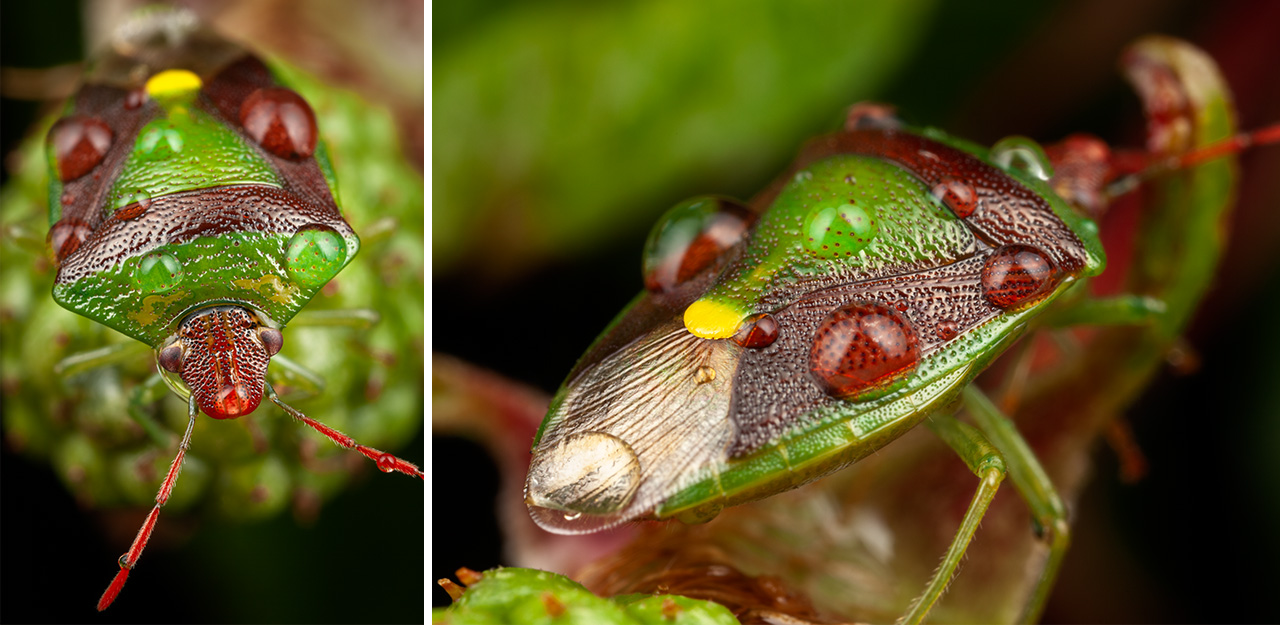
TN-143. While photographing plants along TN-143 near Carver’s Gap, I saw this wonderfully colored Stinkbug and couldn’t help but snap a few frames!
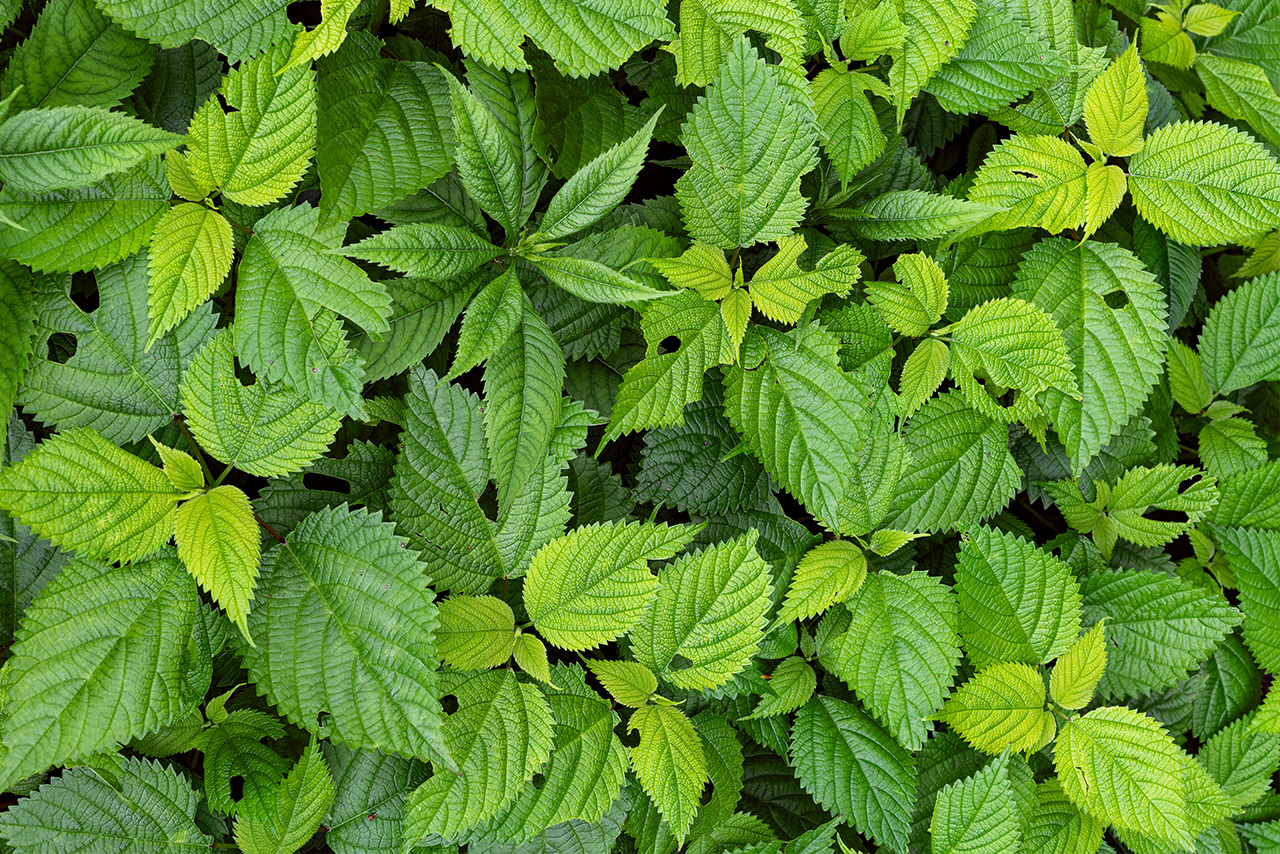
TN-143. I admit, I do a good bit of photography on the roadside of TN-143! There are many interesting and sometimes rare plants right along this two-lane highway, especially towards Carver’s Gap at the top. On the other hand, sometimes it’s just common leaves that catch my eye, like the photo above!
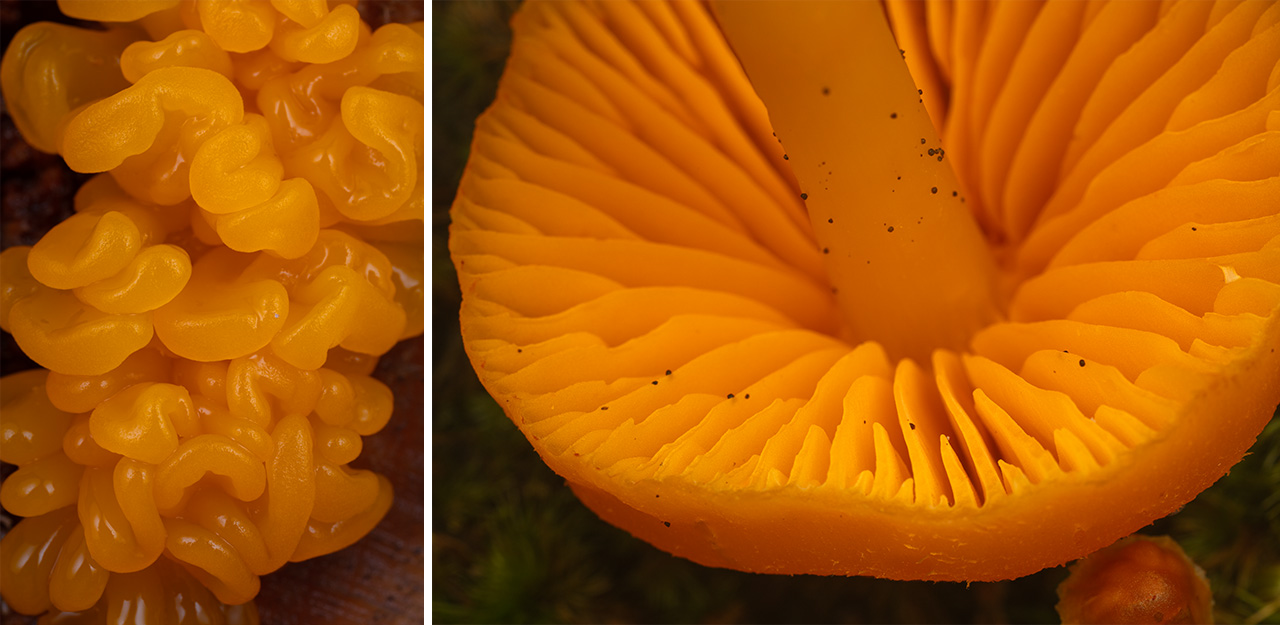
Roan Mountain State Park. I often camp at the official campground within Roan Mountain State Park at the base of the mountain in Tennessee. A healthy trail network leads to many finds within walking distance of my tent, including these two variations of orange fungi.
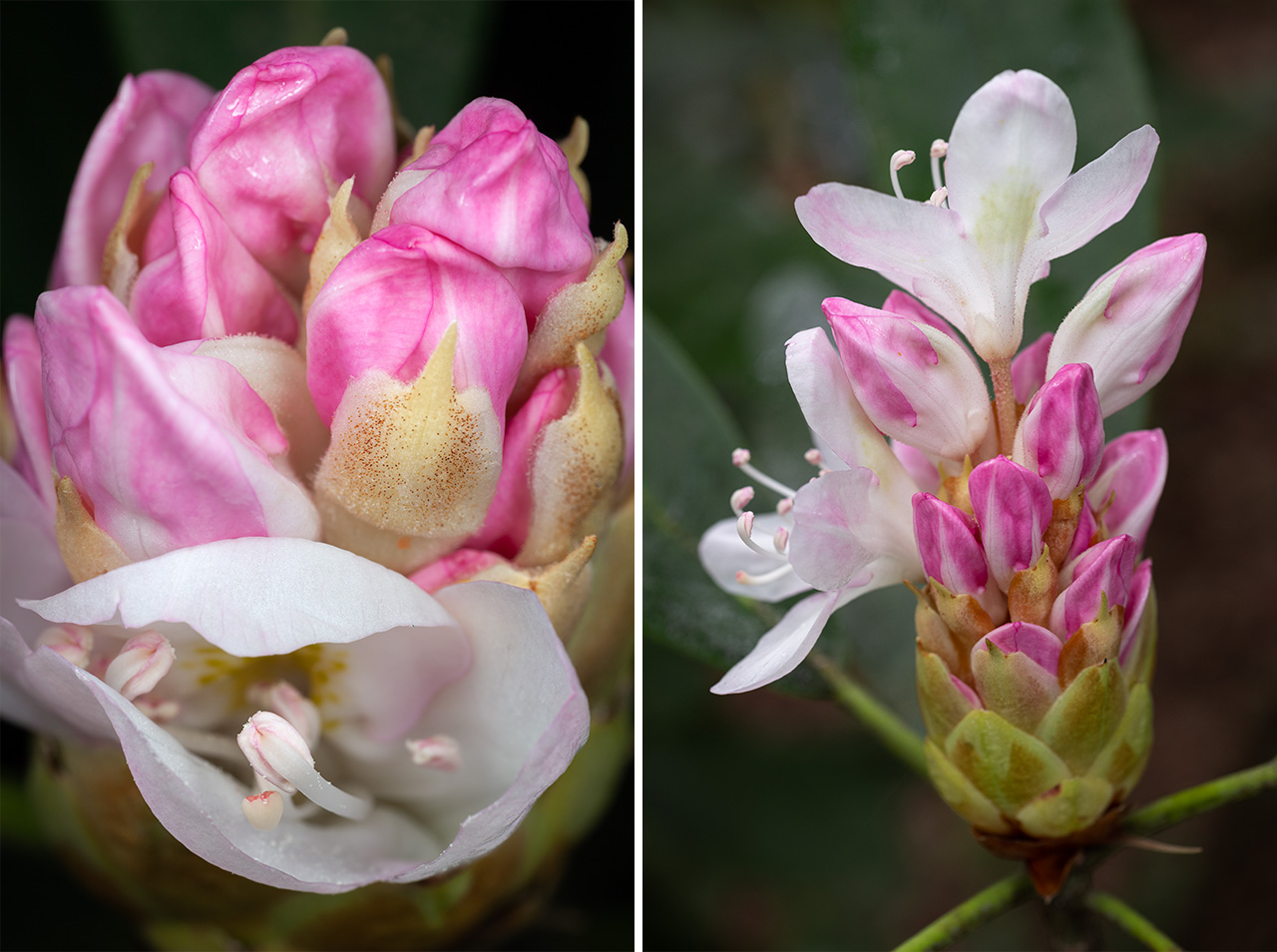
Roan Mountain State Park. Flowering Rosebay Rhododendron are common within the lower elevations of Roan Mountain State Park. I often find beautiful blooms surrounding my site within the campground.
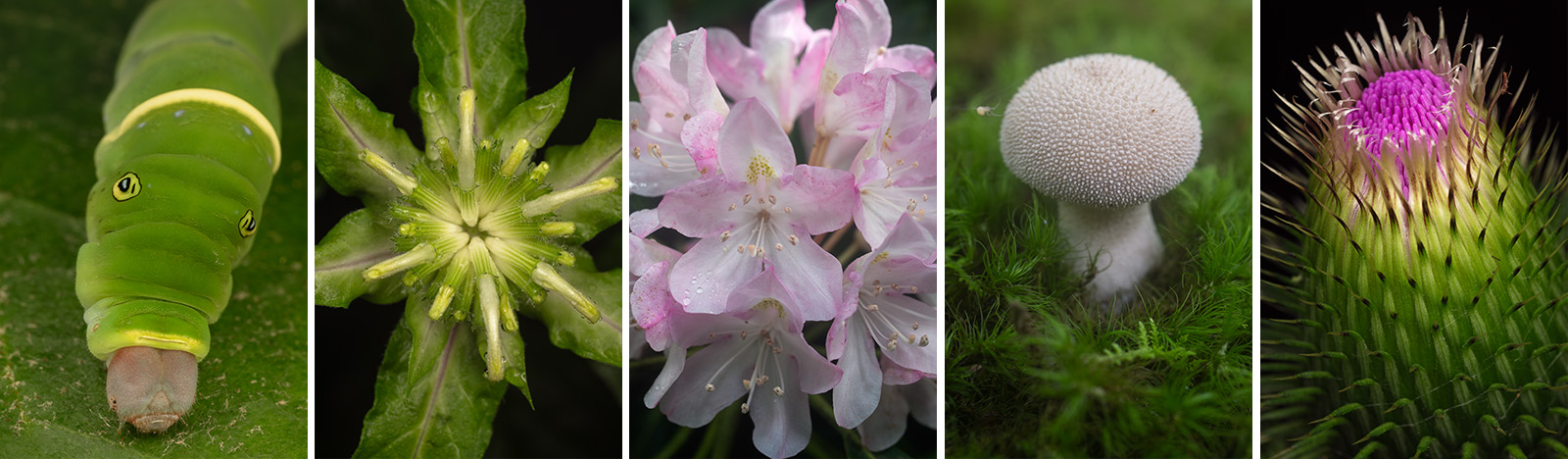
Roan Mountain State Park. Lots of tiny finds within the campground and trails of Roan Mountain State Park at the base of the mountain in Tennessee. A Swallowtail Butterfly caterpillar (Left) and various flowering plants and fungi all keep my attention and lens busy while visiting!