
Tiny Airplanes on the Forest Floor
Gaywings are wildflowers at their southern limit in the mountains of South Carolina and Georgia. I travel to the Chattooga River watershed to visit several populations of this colorful, whimsical wildflower resembling tiny airplanes on the forest floor.
Spring / April 2025 / Mark VanDyke
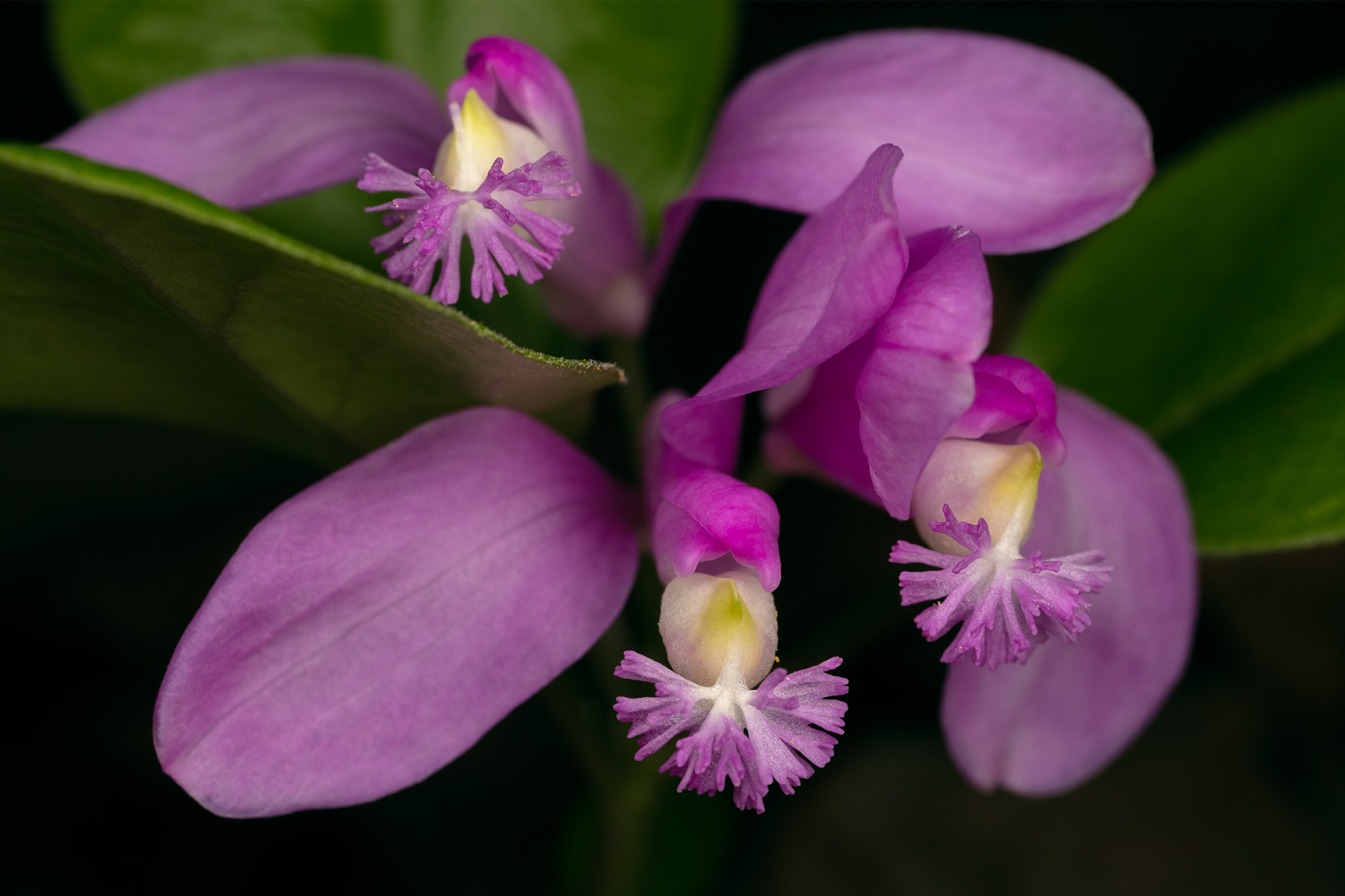
A happy surprise. That’s how I first stumbled upon Fringed Polygala, also known as Gaywings. And that’s my favorite way to find a new-to-me species of wildflower. It feels adventurous and exploratory. Dare I say, lucky. As if the natural world recognized that I might be someone who pays attention and decided to test me. A game. A playful opportunity for an interaction with something new.
The first time I found a Gaywing I was off trail on the Georgia side of the Wild & Scenic Chattooga River. It was a hot, humid spring afternoon and I was sweating and dirty from my efforts. The southern terminus of the Chattooga River Trail is in this area, but it tends to lose contact with the river more than I like. So, I was a few miles into a wondering walk through the forest, trying to maintain that connection with the nearby waterway but also enjoying the simple solitude and the novelty of being somewhere I’ve never been before.
Approaching a bend in the river, my eyes up and towards the water, I almost stepped on my first encounter with these little wildflowers. However, their bright colors and playful shapes quickly caught my attention. I wasn’t equipped at the time for true macro photography (greater than 1:1), but I did my best to make a few frames. I thought–as many before me did as well, apparently–that I had found some sort of small orchid.
Sometimes, in situations like these, it’s more exciting not knowing what I’ve found. It wraps me in a degree of mystery that forces me to interact differently. I’m not one to carry field guides or wildflower identification books in my pack, so I couldn’t assign any arbitrary value to this new-to-me plant. And while naming and identification is important, the practice doesn’t define a relationship for me. In fact, the not knowing often lifts the experience further afield as I’m required to research the new plant upon returning home.
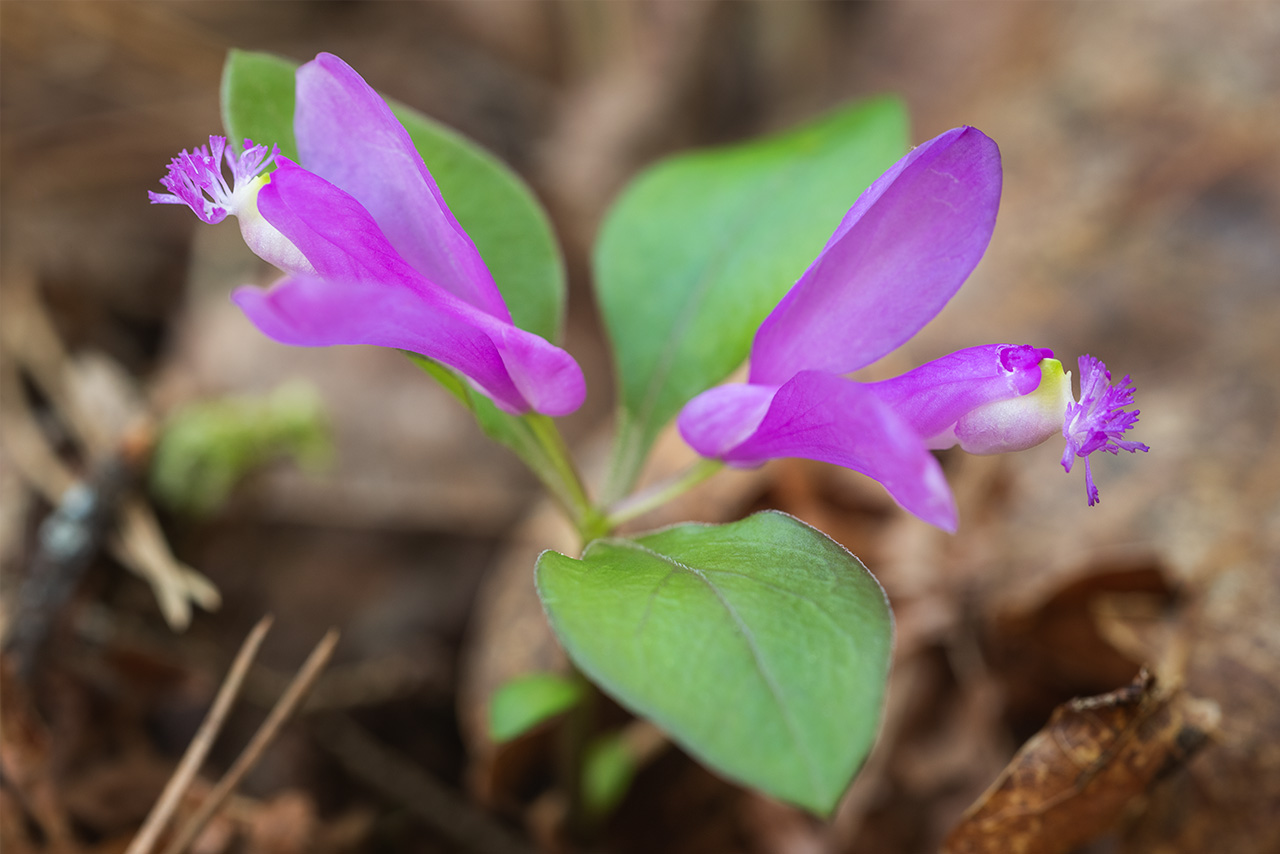
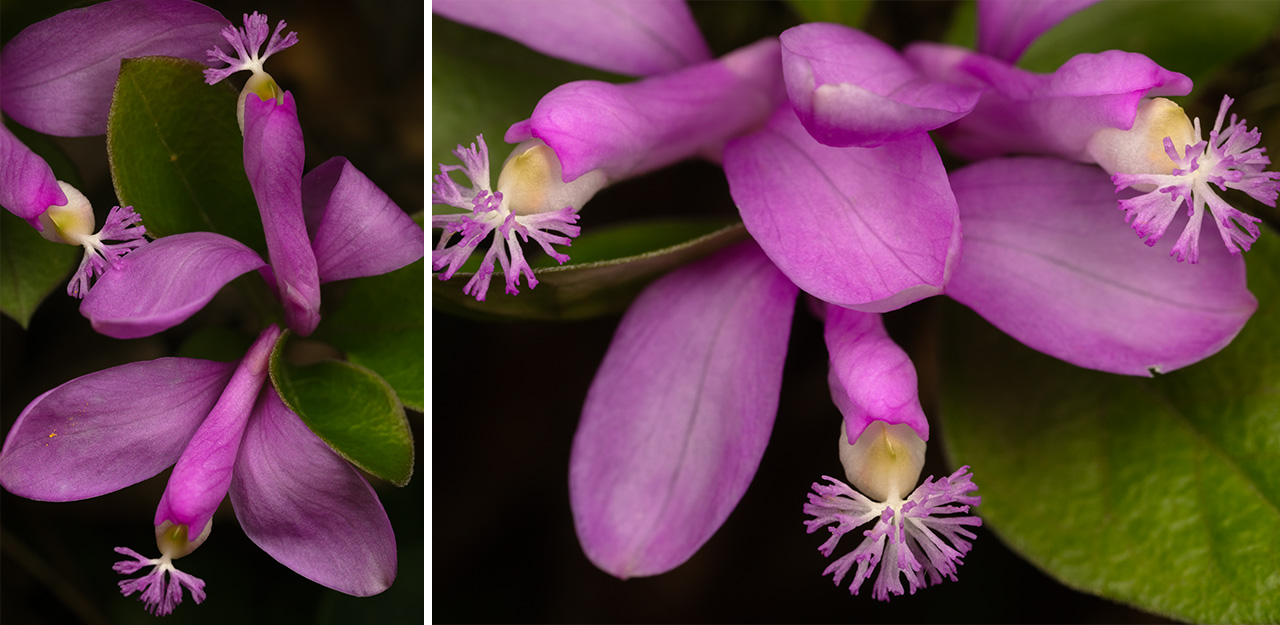
(Above): My first encounter with Fringed polygala (Gaywings), Chattooga River, Georgia (2021).
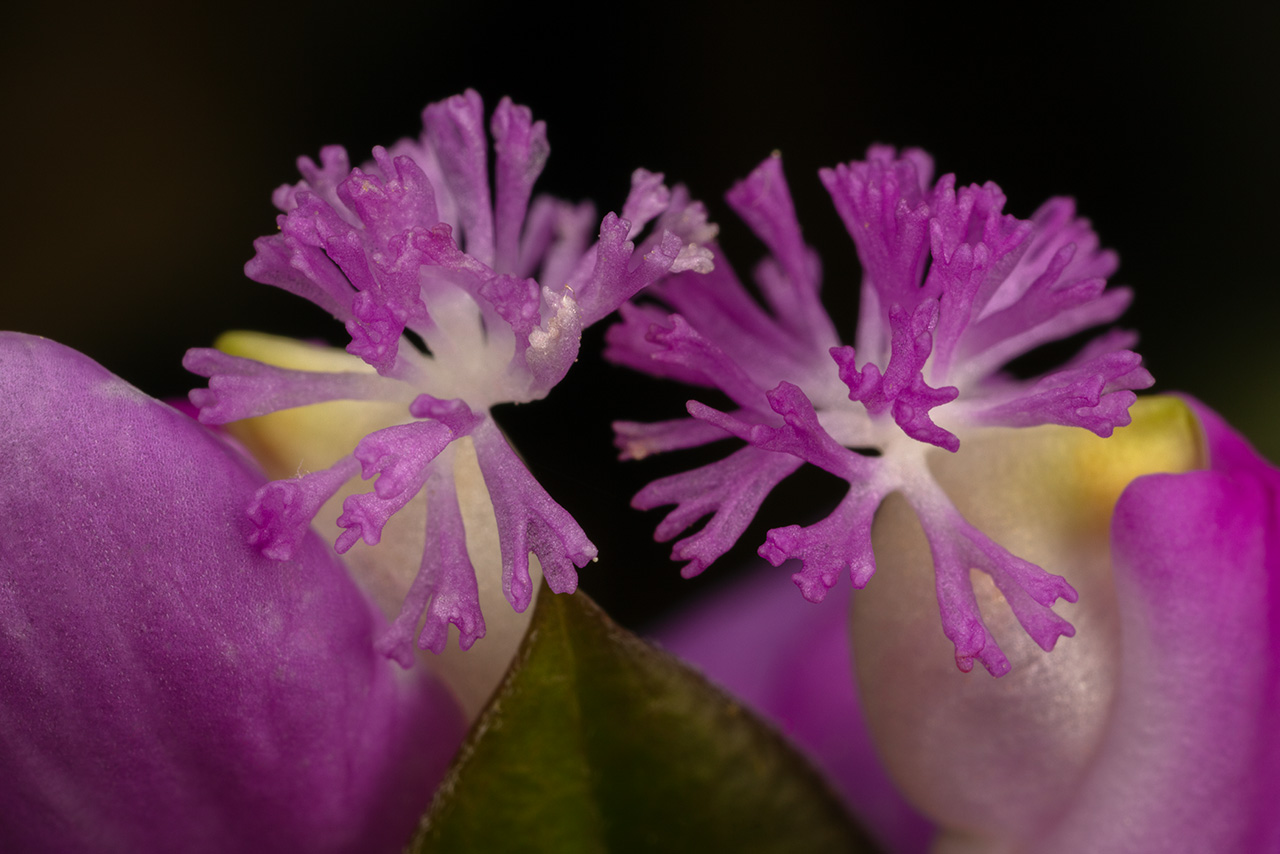
Polygaloides paucifolia, or Fringed polygala, is a perennial plant in the Milkwort family. “Poly” meaning many and “gala” meaning milk in latin. There are one to four flowers per plant and the leaves are alternate with elliptic to ovate shape, resembling wintergreen. The scentless flowers are playful in shape with two flaring sepals (the wings) and a central corolla tube sporting a busy crown of fringe. They look somewhat like birds in flight or tailless airplanes, hence their common name, Gaywings.
While more common in the northeastern United States, Fringed polygala reaches its southern limit here in Georgia and South Carolina. NatureServe ranks Gaywings S2/Imperiled in South Carolina and S3/Vulnerable in Georgia. So, while I didn’t find a rare orchid, it seems that this playful little wildflower holds its own as a unique find in this particular place.
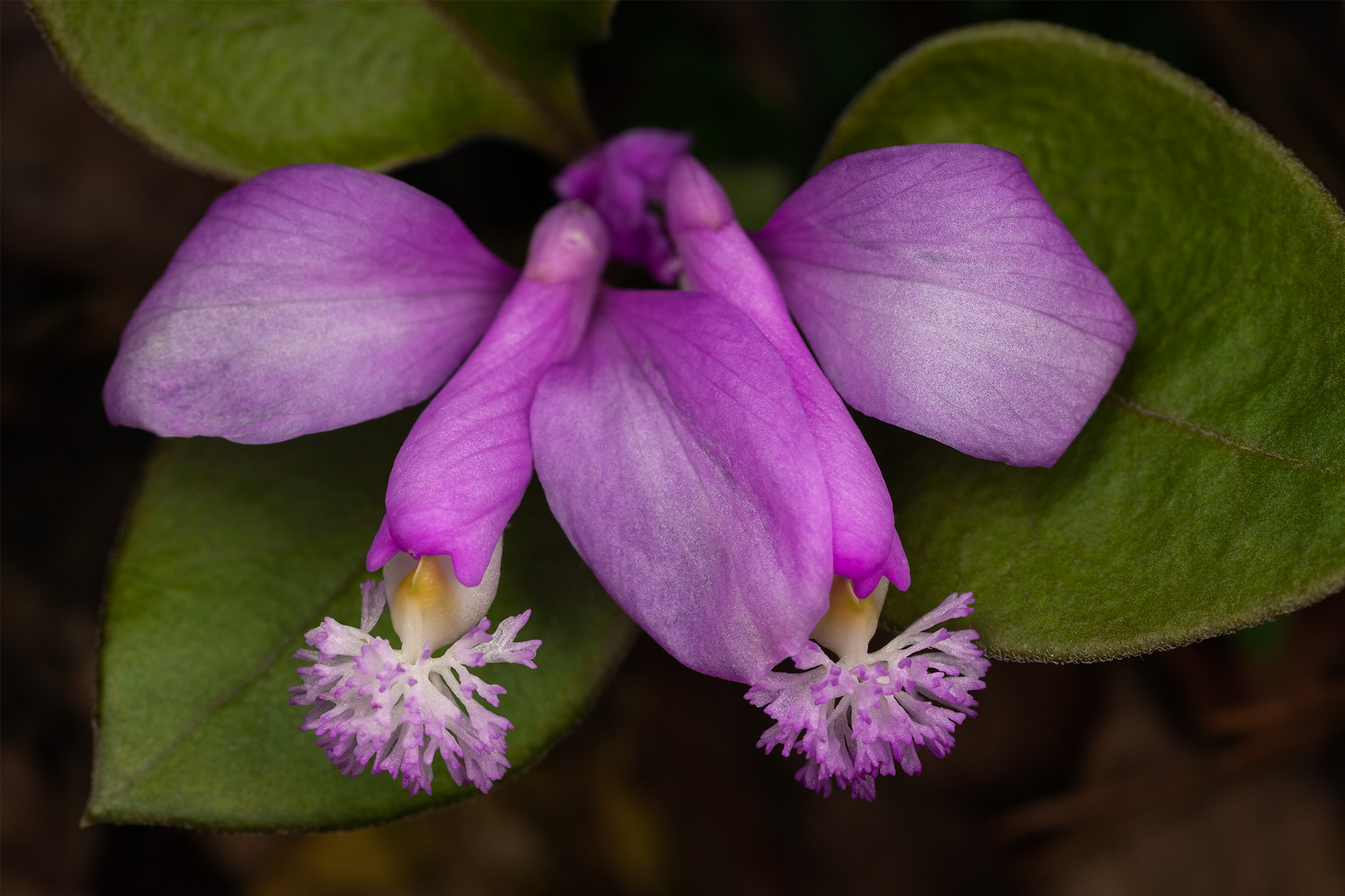
I returned to this small population of Gaywings in the spring of 2022 with a new piece of gear: a Canon 65mm mpe macro lens with a dual-head flash unit capable of working from one- to five-times life size! The potential was intoxicating to me, though my experience and know-how was limited. When a friend and photo-client joined me in mid-April–knowing that he, too, was open to macro and wildflower photography–I tugged him through the chaotic forest to this riverside location in Georgia to meet the Gaywings. I’m not sure how he felt about the exertion to reward ratio on this adventure, but I was excited to share the bloom with another photographer.
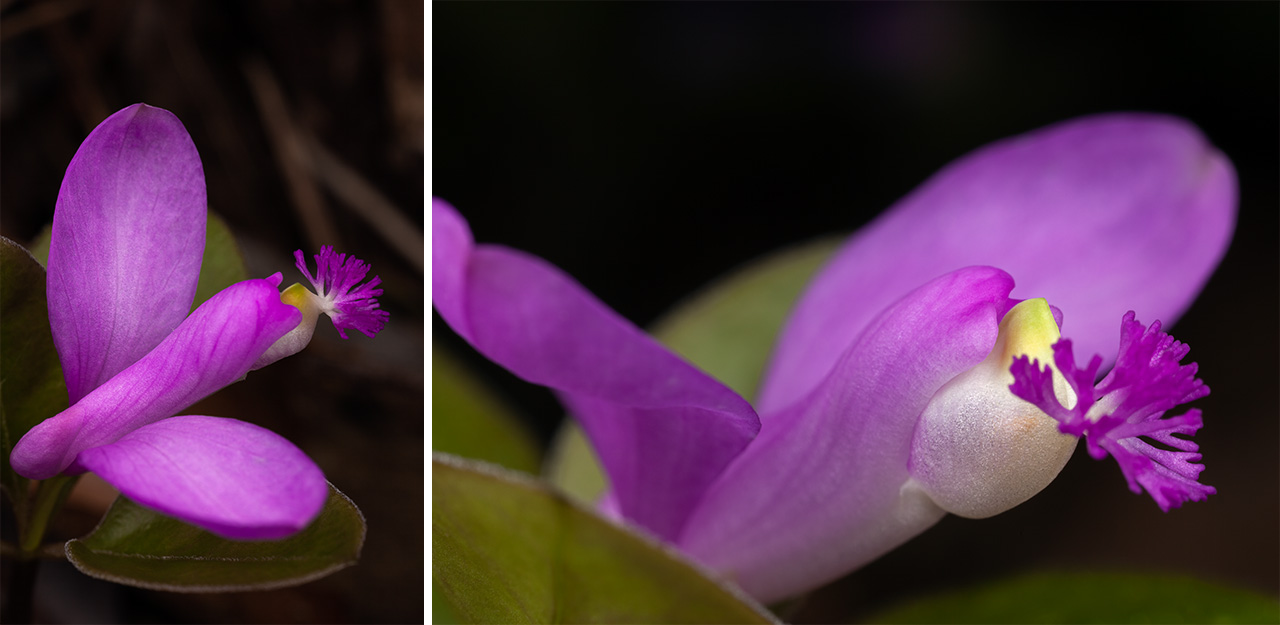
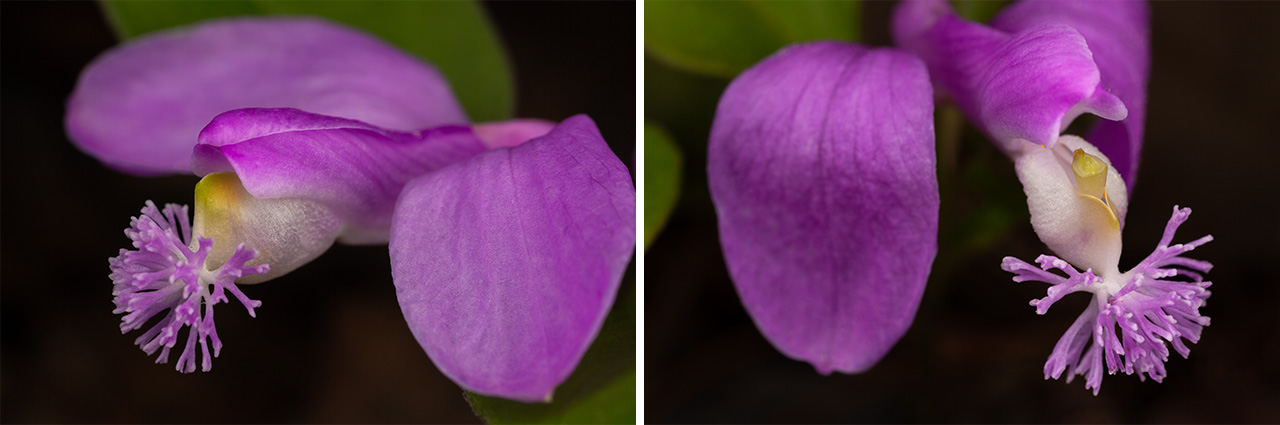
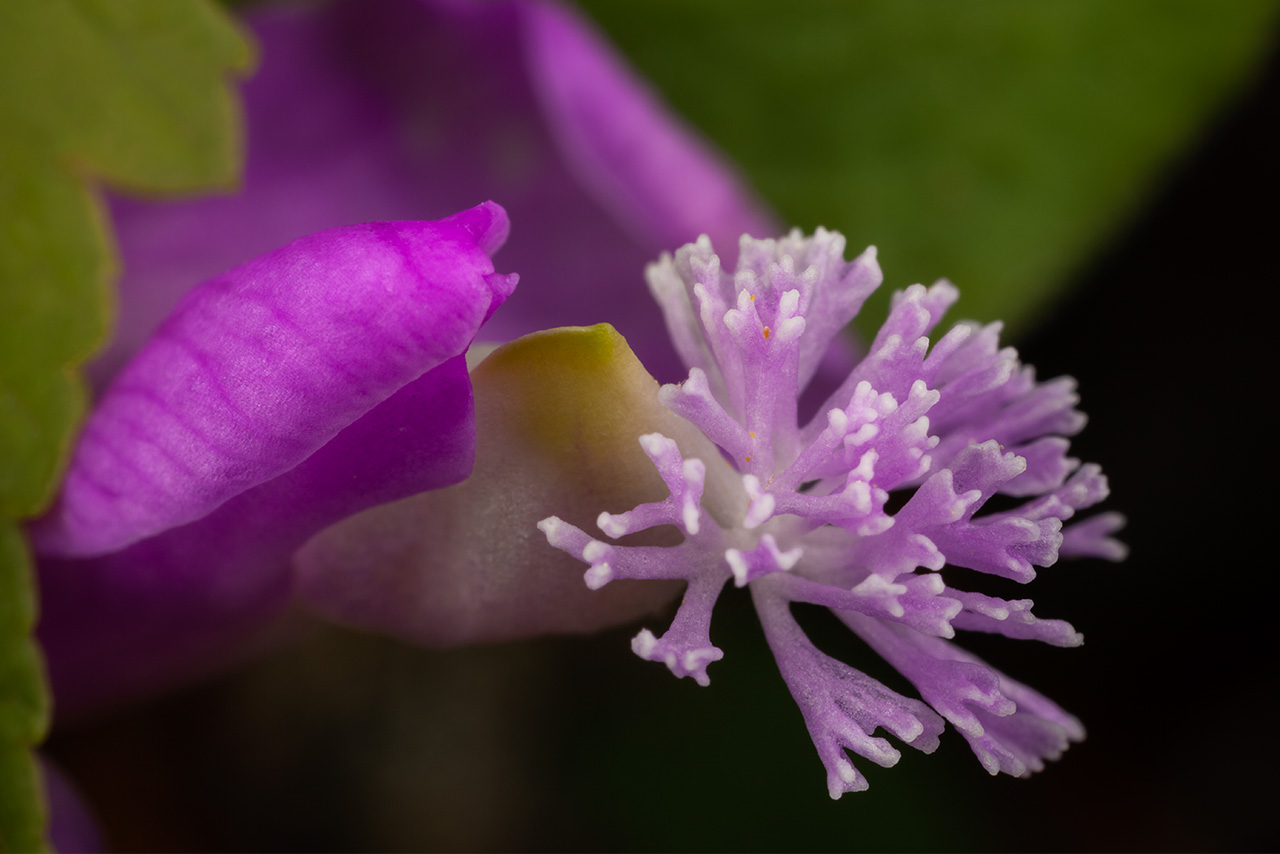
(Above): Gaywings found in Georgia along the Wild & Scenic Chattooga River (2022).
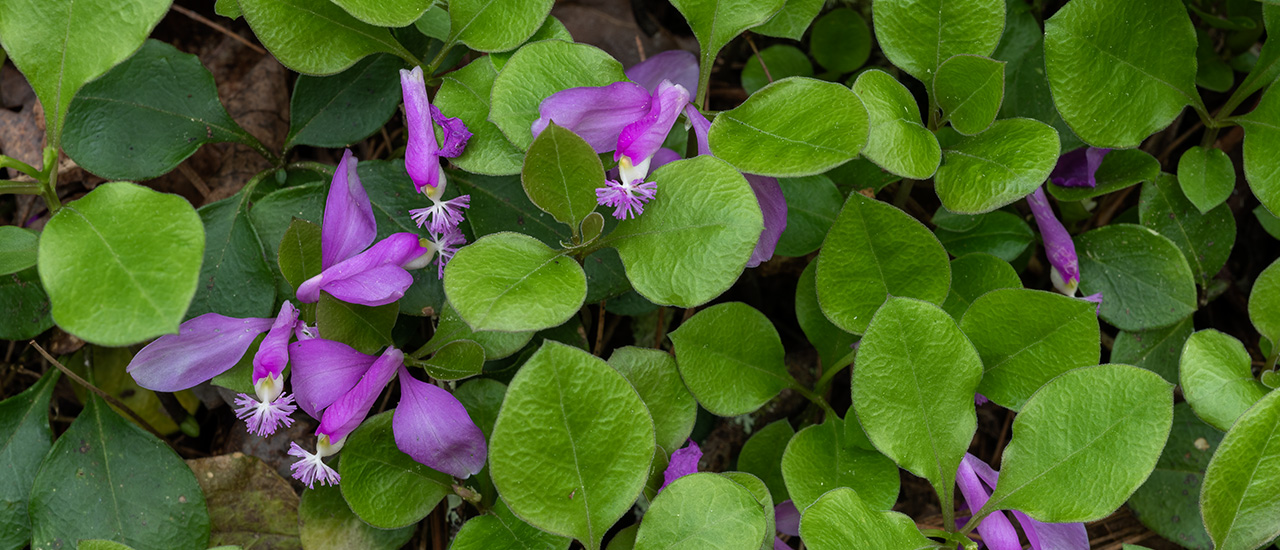
In the years following, I kept my eyes towards finding new locations of this spring wildflower as I worked the landscapes of the Chattooga River corridor. And I was rewarded with several finds near waterfalls on the South Carolina side of the river. A handful here and a handful there; little gems to add to the rich tapestry of plant-life I was learning within this area of the Southern Blue Ridge Escarpment. One location in South Carolina, however, was more prolific than the rest, with hundreds (perhaps more) of these playful little wildflowers right along the trail edges.
In 2025, I finally made it back down to South Carolina to visit the spring bloom. At this point, I had a number of years experience behind my macro rig. I will admit that I’ve never felt mastery in anything that I’ve done. Mastery feels too final for me, as if growth has ended and I’ve reached some high plateau. Suffocating too, as if there’s no longer space available to learn and evolve. So, while I wouldn’t say I acheived mastery with my gear at this point, I did have a relationship that approached competence and familiarity. There was no thought about pushing the buttons or adjusting settings; my complete attention was on the wildflowers and on how I felt while interacting with them. That’s the dance of photography, I think. It’s as close to perfection in process as I’ve been able to achieve. I hunger for more of these opportunities.
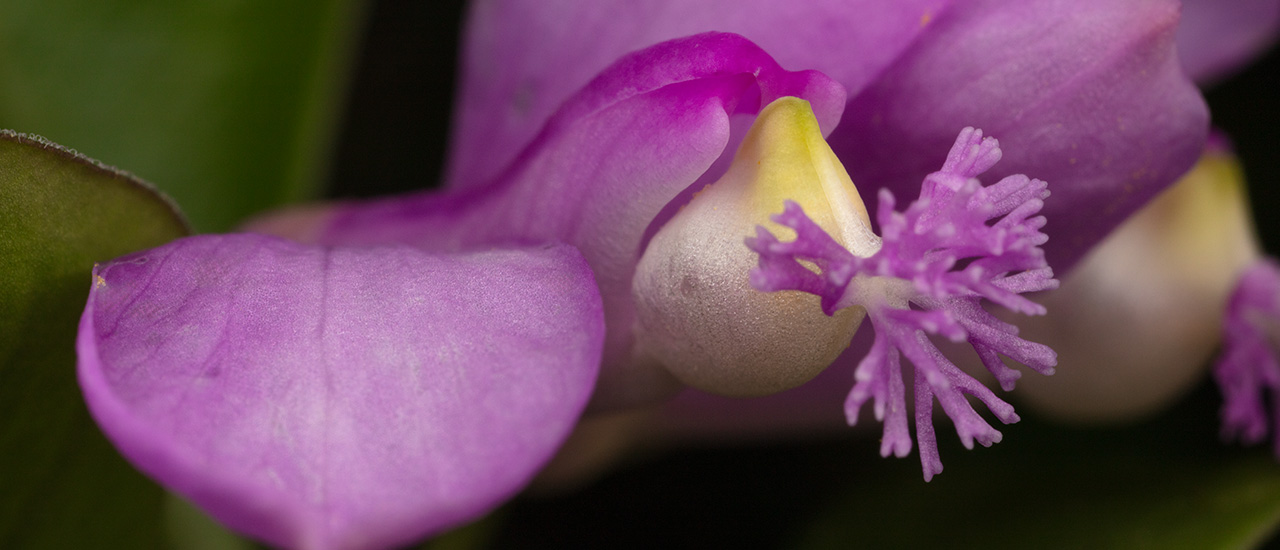
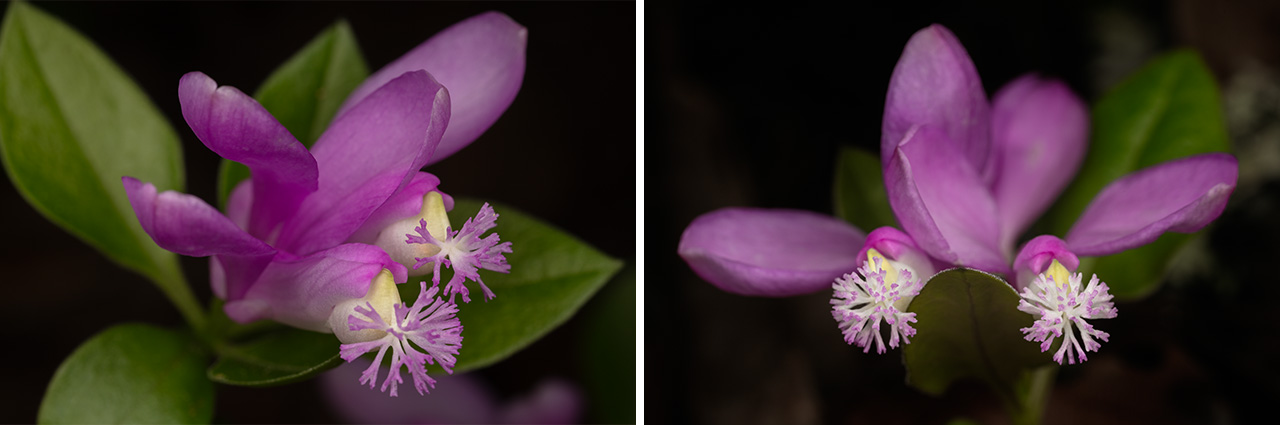
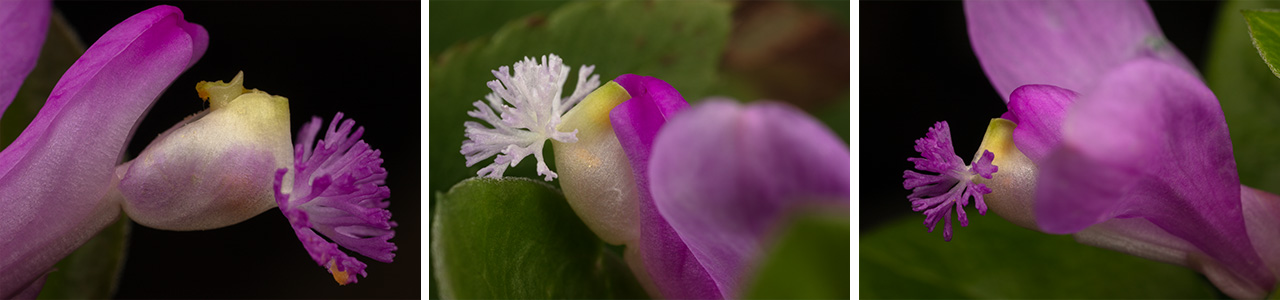
(Above): Gaywings found near the Chattooga River in South Carolina (2022).
Parting Thoughts
Why wildflowers? I photograph the land and I focus on the Southern Appalachian Mountains. The defining characteristic of this place is biodiversity. And biodiversity is found, first and foremost, in plant life. There are over 2500+ species of flowering plants in the Southern Appalachians. Wildflowers are the showiest parts of plants, usually, and in the Southern Appalachians, they are often very small.
Finding wildflowers in the deep, forested landscape of the Southern Appalachians requires learning the land: climate, topography, geology, soils. The relationship between species. The more these inputs are understood, the more frequently wildflowers can be found, from the common to the more rare. Thus, finding wildflowers indirectly and casually draws me closer to the land. This is a win, I think, as a landscape photographer.
I’m an introvert. I prefer solitude when I shoot images. The type of performative photography that generally occurs at overlooks and iconic locations overwhelms me and often turns me away. Wildflowers are found, often, in isolated, off-trail locations with little to no-pressure from other photographers. The experience of finding and photographing wildflowers works for me.
Further, wildflowers, represent, to me, authenticity and non-conformity. They are the definition of wild. They are freedom, living an unmanicured life. Wildflowers feed my appreciation for beauty found within imperfection. The most interesting finds are often the imperfect blooms: the one’s devoid of color or with too many or too few petals. Wildflowers teach me that differences are where character is found; they should be celebrated. And, finally, the process of finding rare wildflowers–or finding rare-to-me wildflowers–feeds my desire for adventure, exploration, and discovery. Wildflowers, in large part, have been the gateway, for me, to learning the land. That’s why wildflowers.

Images & words by:
Mark VanDyke
I’m made alive by wild places. The camera gives me permisson to move through and interact with these landscapes, as well as gifts me an output to share with others. My hope is that our collective attention–yours and mine–will sustain the worth of these places. I focus on the Southern Appalachian Mountains and the Carolina coastlines.
0 Comments